


Last Updated: November 10, 2026
Quick Summary
A sustainable tuxedo coat is one that lasts for years, uses fibers with a lower environmental footprint, and is produced under transparent conditions. Durability matters most, since a coat worn for a decade has a far smaller impact per wear than one replaced after one season.
- Judge a sustainable tuxedo coat on three questions: fabric, where and how it was sewn, and whether it stays good after years of care.
- Wool is the most practical base because it is durable, resists wrinkling, and recovers its shape after wear.
- Ask for fiber content by percentage and production details instead of relying on words like eco or green.
- Renting suits a single event, buying secondhand suits repeat wear, and buying new suits frequent wear over many seasons.
- Divide the total cost by expected wears, since a low cost per wear only holds if the coat is actually worn.
Table of Contents
- What Makes a Tuxedo Coat Sustainable
- Choosing a Tuxedo Blazer for Men or Women by Dress Code
- Green Tuxedo Jackets: Shades, Occasions and Patterns
- Renting, Buying Secondhand or Buying New: The Cost-Per-Wear Math
- Fit, Care and Repair That Extend a Tuxedo Coat's Life
- Booking Your Eleanor Wool Tuxedo Coat for Your Next Formal Event
- Frequently Asked Questions
What Makes a Tuxedo Coat Sustainable
A sustainable tuxedo coat is one that lasts for years, is made from fibers with a lower environmental footprint, and is produced under transparent conditions. Durability matters most, because a coat worn for a decade carries a far smaller impact per wear than one replaced after a single season. The guidance below explains how to judge any tuxedo coat against that standard.
Sustainability in formalwear is not a single label. It rests on three questions: what the coat is made of, where and how it was sewn, and whether it will still look right after a decade of care. Most shoppers only ask the first, which leaves the other two untested.
Fabric Choices: Wool, Mohair, Silk and Blends
Wool is the most practical base for a formal coat. It is durable, resists wrinkling, and recovers its shape after wear, which directly extends the garment's useful life. Mohair, drawn from the Angora goat, adds sheen and a crisp drape, though it wears less forgivingly than wool. Silk contributes the lapel finish and a polished sheen, but it is delicate and sensitive to moisture and friction.
Blends are common, and they are worth reading carefully. A wool-silk or wool-mohair blend can balance drape with resilience. A synthetic-heavy blend may look sharp on the rack but pill and lose its shape faster. When a label lists recycled fibers, check the percentage and whether the rest of the coat is built to last.
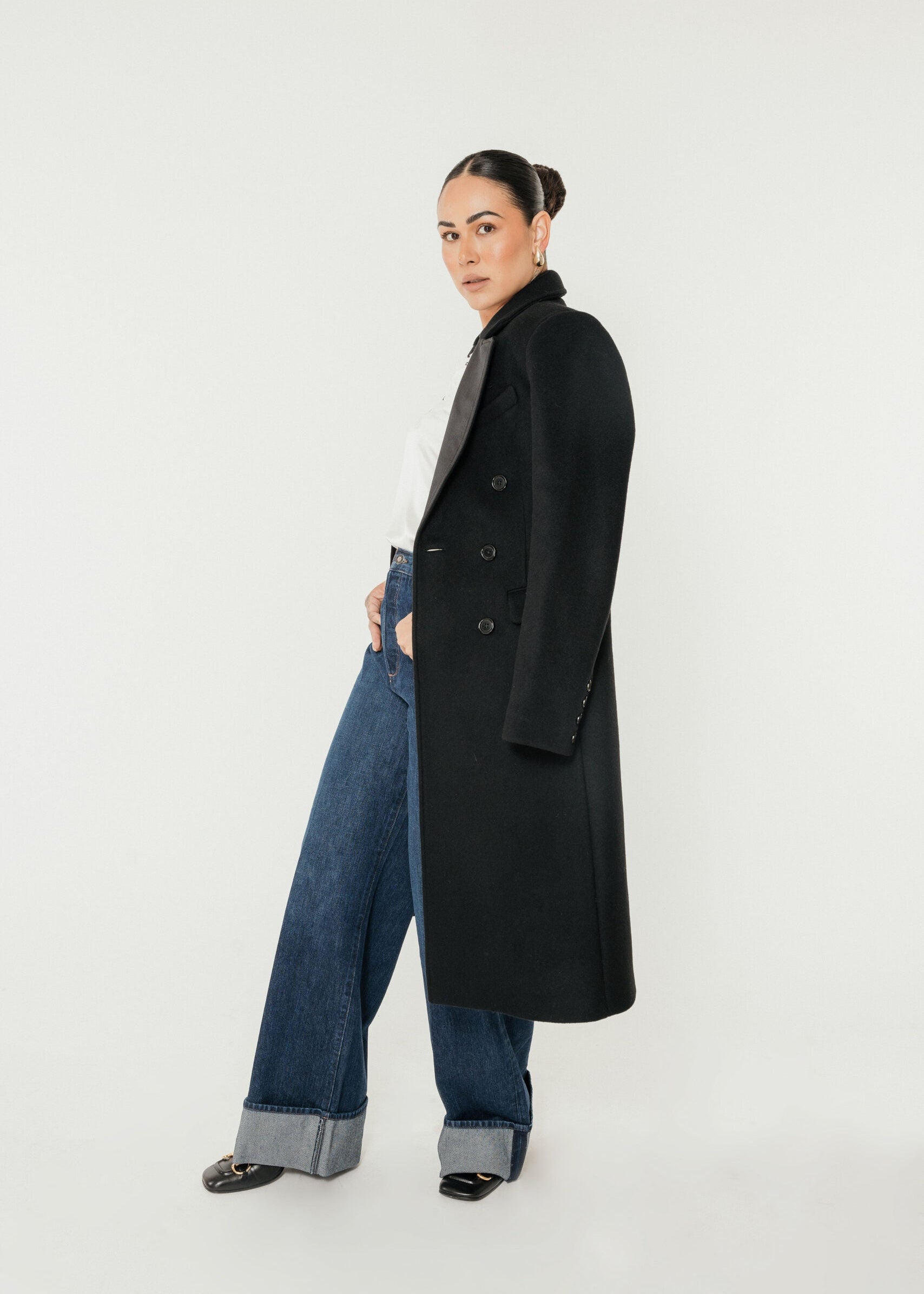
The Eleanor Wool Tuxedo Coat is one option for shoppers who want a natural-fiber coat. It is made from Australian wool with a silk lapel and horn buttons.
How to Verify Sustainability Claims
Words like "eco," "green," or "conscious" are not standards. Ask for specifics: fiber content by percentage, where the coat was cut and sewn, and how it is cared for afterward. A brand that names its factories and explains its materials is easier to trust than one that offers only a leaf icon.
Look for independent certifications where they apply, and treat unexplained claims with caution.
Choosing a Tuxedo Blazer for Men or Women by Dress Code
Dress codes set the frame for the choice. A black-tie invitation calls for a tuxedo coat with satin or silk lapels, while a cocktail or semi-formal event allows a more relaxed wool blazer. Many shoppers search for a tuxedo blazer for men or a tuxedo blazer for women, and the tailoring principles are largely the same: a clean shoulder, a close fit at the waist, and a lapel that suits the event.
Start with the event, then the fabric. A wool coat in black or midnight works for most formal evenings, while a textured or colored jacket suits a daytime wedding or a holiday party.
Green Tuxedo Jackets: Shades, Occasions and Patterns
A green tuxedo jacket is a strong choice for weddings, galas and holiday parties, where a classic black feels too expected. Deep shades such as forest green and evergreen read as formal under low light, while a softer sage suits daytime events. Velvet in green carries an evening feel, and wool in a deep green is more versatile for the office or a winter reception.
Patterned finishes, such as paisley or subtle floral jacquard, belong at events where guests expect some personality. Keep the rest of the outfit restrained so the jacket remains the focal point.
Renting, Buying Secondhand or Buying New: The Cost-Per-Wear Math
The lowest-impact tuxedo coat is usually one that already exists. Renting, buying secondhand, and buying new each serve a different wearing pattern, and the right choice depends mainly on how many times you will wear the coat, not on which option sounds greenest. Whichever route fits your wearing pattern, choosing a coat in a durable, well-made fabric can help it remain in use for years, a consideration reflected in Boutique Rococo.
Renting suits a single event, such as one wedding or one black-tie gala. It avoids producing a new garment for a few hours of use, and it lets you try a color or cut without committing to it. The trade-offs are limited sizing and fit, and the need to return the coat on time. Rental is usually a poor fit if you need the coat for many events or want tailoring that matches your shoulders.
Buying secondhand extends the life of a garment that already has years of use ahead of it. Good condition matters more than brand: check the lining for tears, the lapel for crushing, and the buttons for looseness. A tailor can usually take in or let out a secondhand coat, which makes a well-made vintage wool coat a practical option for repeat wear. Resale platforms and consignment shops are the usual sources.
Buying new makes most sense when you expect to wear the coat often, and when a well-made wool or wool-blend coat is likely to last for many seasons. New purchase also lets you specify fiber content and care instructions, which is harder to do with secondhand.
To compare, divide the total cost by the number of times you expect to wear the coat. Include tailoring, cleaning, and any resale value you expect to recover. A coat costing $1,195.00 and worn 40 times costs about $29.88 per wear, while the same coat worn ten times costs about $119.50 per wear.
Watch out: a low per-wear figure only holds if the coat is actually worn. A cheap coat that sits in the closet has a high cost per wear and a larger environmental footprint than a more durable one that is worn regularly.
The article compares the three options by how often the coat will be worn, using the cost-per-wear figures it gives.
| Option | Best for | Key difference |
|---|---|---|
| Renting | A single event | Avoids producing a new garment; limited sizing |
| Buying secondhand | Repeat wear on a coat with years left | Check lining, lapel and buttons; tailoring is possible |
| Buying new | Frequent wear over many seasons | Lets you specify fiber content and care |
| $1,195.00 coat worn 40 times | Cost per wear | About $29.88 per wear |
| $1,195.00 coat worn 10 times | Cost per wear | About $119.50 per wear |
Fit, Care and Repair That Extend a Tuxedo Coat's Life
A well-fitted coat lasts longer because it is not stressed at the seams or shoulders. Have the shoulder seam, sleeve length and waist checked by a tailor before the event.
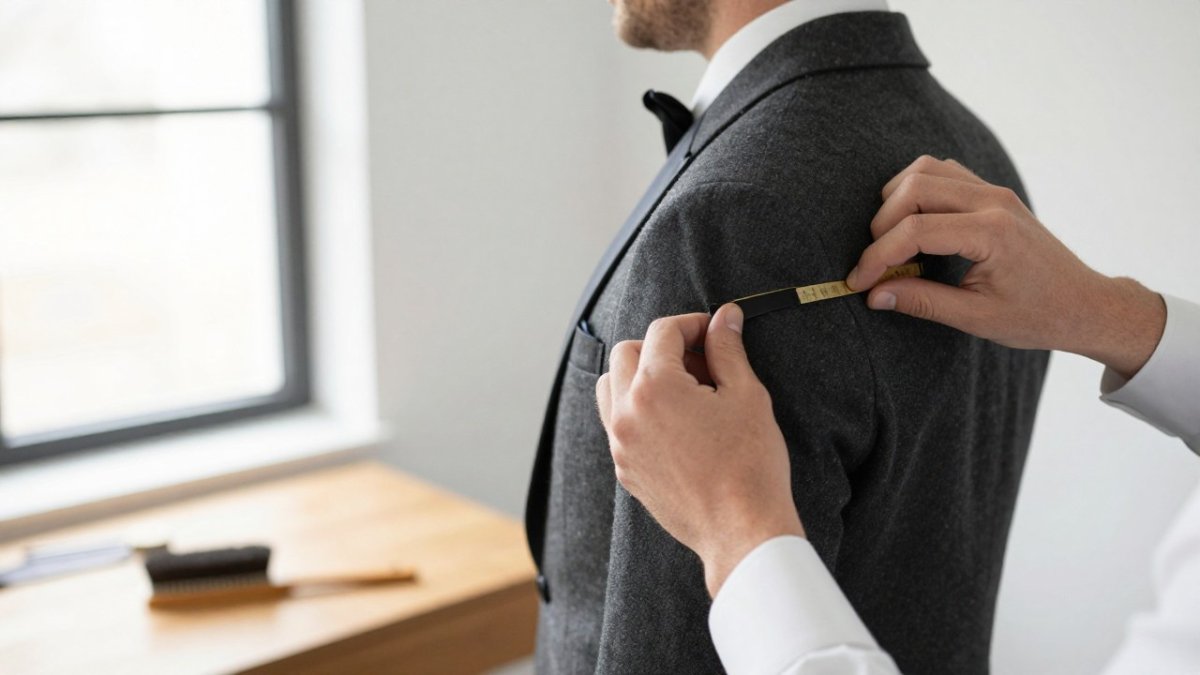
Care matters just as much. Wool should be brushed after wear and aired between uses. Avoid frequent dry cleaning, which can wear fibers faster than necessary, and spot-clean where possible. Store the coat on a wide wooden hanger to keep its shoulders from distorting. Small repairs, such as replacing a loose button or closing a minor seam, keep the coat in use for years. We encourage repairing and re-wearing clothing, because the most sustainable garment is one worn again and again.
Booking Your Eleanor Wool Tuxedo Coat for Your Next Formal Event
If you want a durable, naturally finished coat for your next formal occasion, the Eleanor Wool Tuxedo Coat is a practical place to start. It combines Australian wool, a silk lapel and horn buttons, and it is designed in Idaho and cut and sewn in Manhattan. Check the sizing, fabric and care details on the product page, then choose the option that fits your event and your wardrobe. Discover More about our full range of formal outerwear.
Frequently Asked Questions
What makes a tuxedo coat sustainable?
A tuxedo coat is more sustainable when it is made from durable natural fibers such as wool or silk, constructed with tailoring that can be altered and repaired, and designed to be worn across many occasions rather than once. Ask the brand where and how the coat was made, whether the materials are sourced responsibly, and whether it offers care or repair guidance. Longevity is the strongest sustainability factor: a coat worn for years has a far lower cost per wear and environmental footprint than a cheap piece replaced each season.
Can a tuxedo jacket be worn to a black-tie event?
Yes, provided it follows traditional black-tie tailoring. Classic black-tie dress codes call for a black or midnight-blue dinner jacket with satin or silk lapels, matching trousers, and a formal shirt. A green or patterned tuxedo jacket is usually better suited to semi-formal events, weddings, or holiday parties, where a bit of color is welcome. When in doubt, choose a classic shade for strict black-tie invitations and reserve bolder colors for more relaxed formal occasions.
How should a tuxedo coat fit?
A tuxedo coat should sit close to the body at the shoulders, with the shoulder seam ending at your natural shoulder point. The jacket should close comfortably at the waist without pulling, and the sleeves should end at the base of the thumb so a small amount of shirt cuff shows. Petite and tall wearers often benefit from a tailor's adjustments to sleeve length and body length, which can make a well-made coat look custom rather than off the rack.
How do you care for a tuxedo coat so it lasts longer?
Brush wool and silk coats after each wear to remove dust, and hang them on a wide, padded hanger to preserve the shoulder shape. Spot clean small stains promptly rather than laundering the whole coat, and avoid frequent dry cleaning, which can wear natural fibers over time. Store the coat in a breathable garment bag away from direct sunlight and moisture. Small repairs such as replacing a button or re-stitching a loose seam, done early, prevent larger problems and keep the coat in service for years.


