


What makes a clothing purchase a good investment? It’s not necessarily the highest price tag, but whether the piece earns a regular place in your wardrobe. A polished look or premium label can suggest lasting value, but neither proves a garment suits your life. The right investment clothing pieces 2026 are chosen for how well they serve your real routines, not for their price or momentary excitement.
This guide offers a practical way to compare potential purchases by repeat wear, versatility, material, and responsible making, without treating resale value or a specific lifespan as guaranteed. You’ll learn what investment value means in a considered wardrobe, work through a checklist before buying, and compare examples such as wool coats, trench coats, and linen blazers. Martindale’s garments are designed and sewn in America, with an emphasis on ethical production and lasting use. The goal is simple: fewer impulse buys and more pieces that earn their place.
What Makes Investment Clothing Pieces Worth Considering in 2026?
In fashion, “investment” can mean a garment is expected to last, offers useful value over time, or simply carries a high price. Those meanings aren’t interchangeable. A costly item can sit unworn, while a more modestly priced piece may become part of your regular rotation. To decide which investment clothing pieces 2026 are worth considering, start with how you’ll use them, not the number on the tag.
An investment piece is clothing chosen for repeated wear, versatility, and considered construction. Its value comes from how well it serves your wardrobe over time, not from a promise of savings, resale demand, or heirloom status. Materials and responsible making matter, but they can’t make up for a garment that doesn’t suit your life. The idea of slow fashion similarly prioritizes care and longevity over disposable consumption.
Investment value versus a passing trend
A trend can still earn a place in a considered wardrobe. A current silhouette or color may feel fresh and remain useful if it works with clothes you already own and occasions you regularly dress for. Look past editorial endorsements and 2026 popularity: picture wearing the piece after the season’s styling cues have faded. Martindale’s wool coats, trench coats, satin bomber jackets, and linen blazers are examples of categories to assess through your own needs, not a universal must-buy list.
Why personal wardrobe use matters
Start with the conditions you dress for. Climate affects whether a coat or lighter layer is practical; work, travel, and daily routines influence what you reach for; and your existing wardrobe determines whether a new piece can create several outfits. Ask where you’d wear it, what you’d pair it with, and whether it fills a genuine gap. Martindale garments are designed and sewn in America, with an emphasis on ethical production. Browse the women’s coats, jackets, and blazers for ideas, then choose according to your wardrobe rather than a prescribed checklist.
How Repeat Wear, Versatility, and Craft Shape Clothing Value
Repeat use is a practical measure of wardrobe value: a garment earns its place through the days and occasions it serves, not through the promise attached to its price. For investment clothing pieces 2026, cost per wear can help compare options. It’s a way to think about value, not proof that an expensive purchase saves money.
Use cost per wear thoughtfully
To calculate cost per wear, divide a garment’s purchase price by the number of times you’ve actually worn it. The result reflects real use, not a forecast. Before buying, think through the outfits and circumstances in which you’d wear the piece. After buying, its value depends on how often it truly leaves the closet. A projected number of wears can’t guarantee future savings, and a low cost per wear doesn’t make an unsuitable garment a wise choice.
Consider materials and responsible making
Versatility helps turn good intentions into actual use. Consider whether a cut layers comfortably over clothes you own and whether its color works for different settings, from everyday plans to a more formal occasion. Adaptability doesn’t mean a garment has to be plain. It means you can combine it with different pieces without it feeling out of character. This mindset of versatility and repeat wear extends beyond adult wardrobes to childrenswear and gifting as well, where brands like Maison Q embrace reversible designs and practical designer sets.
Materials offer different qualities, not automatic rankings. Wool, linen, and satin each create a distinct look and feel, so consider which suits your climate, routine, and preferred way of dressing. Then look at the garment’s construction and how it is made, without assuming that a particular fiber or method guarantees a specific lifespan. American-made design and sewing, along with ethical production, can inform your sense of value alongside fit and likely use. Martindale’s collection includes wool coats, English wool trench coats, linen blazers, and mulberry satin jackets. Compare these materials and styles with the clothes you already wear, and consider how often each piece would be useful.
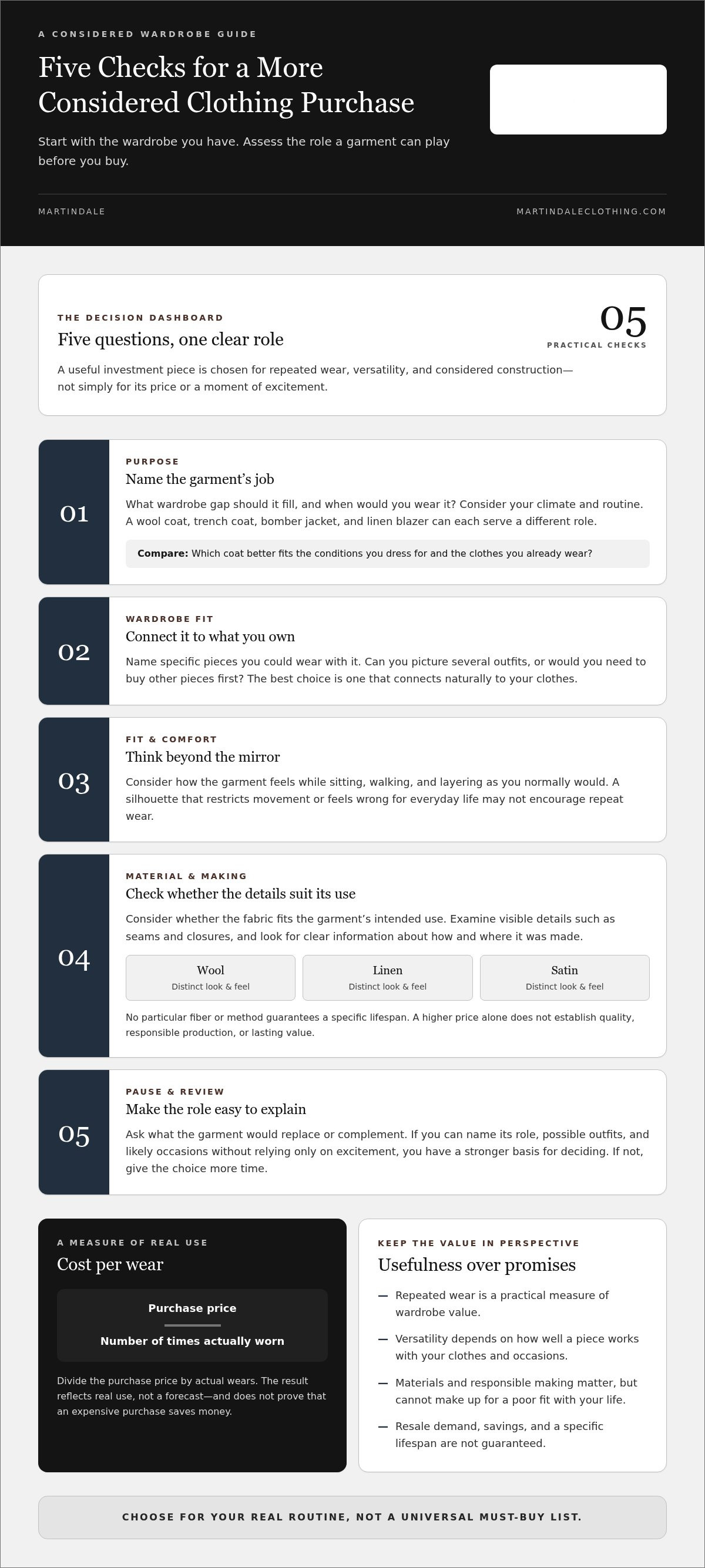
A Practical 2026 Checklist for Choosing Investment Clothing
Use this checklist to turn the idea of investment clothing pieces 2026 into a practical decision. Start with the wardrobe you have, not an imagined one.
- Name the garment’s purpose. What gap should it fill, and when would you wear it? A wool coat may suit cooler conditions, while a trench coat, bomber jacket, or linen blazer serves a different role. Think about your climate and routine. A useful comparison is trench coat versus wool coat: which one fits the conditions you dress for and the clothes you already wear?
- Check its place in your wardrobe. Name specific items you own that could work with it. Can you picture several outfits, or would you need to buy other pieces first? The best choice isn’t a universal capsule essential. It’s one that connects naturally to your clothes.
- Assess fit and comfort. Consider how it feels while sitting, walking, and layering as you normally would. A beautiful silhouette won’t encourage repeat wear if it restricts movement or feels wrong for everyday life. Much like choosing supportive footwear from Feet for Life, daily staples need to support your physical comfort and routine, not just a carefully staged look.
- Look at material, construction, and making. Does the fabric suit the garment’s intended use? Examine visible details such as seams and closures, and look for clear information about how and where the piece was made. A higher price alone doesn’t establish quality, responsible production, or lasting value.
- Pause and review. Ask what the garment would replace or complement. If you can name its role, possible outfits, and likely occasions without relying only on excitement, you have a stronger basis for deciding. If not, give the choice more time.
Martindale’s women’s coats, jackets, and blazers are designed and sewn in America, with an emphasis on ethical production. Explore the collection of coats, jackets, and blazers and consider which piece has a clear place in your wardrobe.
Investment Clothing Examples: From Wool Coats to Linen Blazers
The most useful choice depends on the role a garment can play in your wardrobe, not on a universal ranking. These examples of investment clothing pieces 2026 show how different categories can meet different needs.
Wool coat | The Patrice Wool Coat | Consider for outfits that call for a coat in cooler conditions.
Trench coat | The Maggie Glen Plaid Trench in English Wool | Consider when you want a distinct outerwear option. Its English wool offers a different material choice from other trench styles.
Satin bomber jacket | The Amelia Bomber Jacket in Mulberry Satin | A layering option for occasions when a coat feels like more than you need.
Linen blazer | The Josephine Linen Blazer | A way to add a considered layer to everyday or dressed-up outfits.
Choose the category that answers a real wardrobe need
A wool coat and a trench coat are both outerwear, but they can suit different styling contexts. Think about your climate, what you tend to wear beneath a coat, and the occasions that make you reach for one. For a closer look at a classic trench’s place in a wardrobe, explore a dedicated classic trench coat guide. A satin bomber jacket and a linen blazer offer alternatives when you want a layer rather than a full coat. Let your routine determine which role matters most.
Explore considered American-made options
Martindale garments are designed and sewn in America, and the brand emphasizes ethical production. Material can help distinguish the options: the Maggie Glen Plaid Trench is made in English wool, while the Amelia Bomber Jacket is offered in mulberry satin. Consider these details alongside fit and how each piece works with clothes you already own. They don’t establish a universal best choice or guarantee a particular lifespan. Identify the category that fills a genuine gap, then browse the women’s outerwear collection to explore Martindale’s coats, jackets, and blazers.
Let Your Next Purchase Earn Its Place
A more considered wardrobe doesn’t begin with a perfect shopping list. It begins with a pause: what would make getting dressed easier, and which piece would genuinely serve the life you have? Let that question guide your next choice. The most meaningful investment clothing pieces 2026 won’t be identical for everyone. They’re the pieces you can see yourself wearing, styling, and caring for with intention.
Martindale brings that considered approach to garments designed and sewn in America, with ethical production and a focus on lasting wardrobe pieces. The collection includes wool coats, trench coats, satin bomber jackets, and linen blazers. If one of these categories answers a real need in your closet, explore the details and choose a piece that suits your way of dressing.
Explore Martindale’s considered American-made clothing and make your next addition a thoughtful one.
Frequently Asked Questions
Do investment clothing pieces have to be expensive?
No. A high price alone doesn’t make a garment a sound choice. Investment clothing pieces 2026 can include a lower-priced item if it fits comfortably, suits your routine, and works with what you own. Think about whether you’d wear it in a typical week, not just for a special occasion. Cost per wear can help compare purchases, but only actual use shows how often you wear a piece, and it can’t promise savings.
How many investment clothing pieces should I buy each year?
There’s no useful number to aim for each year. Before shopping, review what you wore through the last season and note where you repeatedly lacked a suitable layer or outfit. Then check whether something you already own can fill that role. This brief wardrobe review can reveal duplicates and help you decide whether a new garment solves a real need or simply adds another option.
Can a trend-led piece still be an investment?
Yes, if it expresses your style and has a place in outfits you’ll actually wear. A trend-forward jacket, for example, may suit your regular plans and pair with several pieces already in your closet. Ask yourself whether you’d want it if the current fashion conversation disappeared tomorrow. Enjoyment matters, but distinguish the pleasure of a new look from evidence that you’ll reach for it often.
Do investment clothes hold their resale value?
Not necessarily. Resale depends on changing demand, the garment’s condition, and the appeal of that particular item to a future buyer. Treat any possible resale as uncertain, not as part of the purchase’s expected return. A more grounded decision is one you’d still feel good about if you kept the garment and wore it yourself. Separate its personal usefulness from assumptions about recovering its cost later.


