


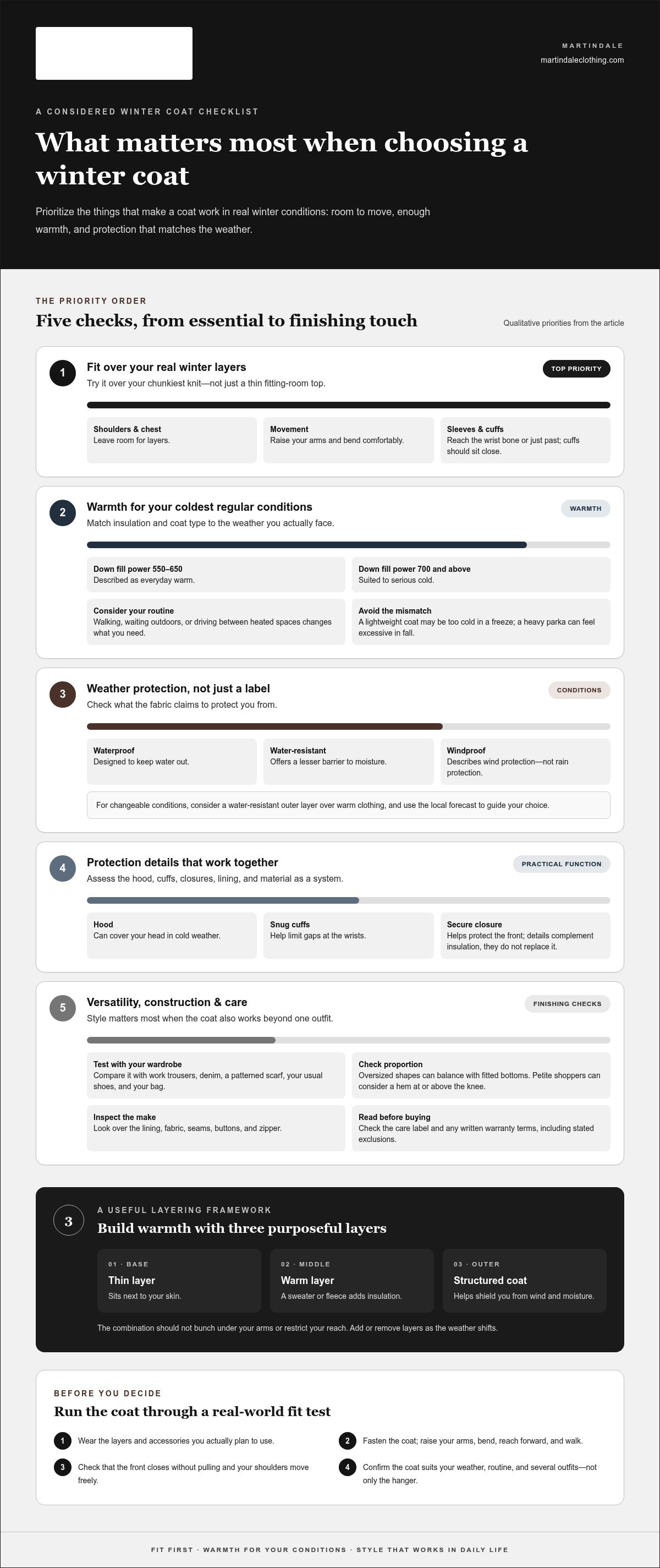
The most important mistakes to avoid when buying a winter coat are choosing a fit that crowds your layers, prioritizing appearance over warmth, and ignoring how the coat moves with you. Try it over your chunkiest knit: you should be able to move comfortably, and the sleeves should reach your wrist bone or just past it. A winter coat should work with the clothes you actually wear, not just a thin top in the fitting room.
It’s easy to focus on silhouette or color first. Both matter, but a beautiful coat won’t earn its place if it feels restrictive or leaves you cold. Choose one that makes room for layers while balancing comfort, practical function, and personal style. Assess fit, sleeve length, coverage, materials, and the conditions you face so your decision feels considered, not rushed.
Table of Contents
1. Choosing a coat and clothing fit that allows layering
Try a winter coat over your chunkiest knit before judging the fit. How should a winter coat fit over layers? It should leave room across your shoulders and chest, with enough ease to raise your arms and bend comfortably. Sleeves should reach your wrist bone or just past it, while cuffs should sit close enough to help keep cold air out. The Centers for Disease Control and Prevention (CDC) recommends several layers of loose-fitting clothing and a water-resistant coat outdoors in winter.
Check the garment label to understand its weather protection: waterproof means designed to keep water out, while water-resistant offers a lesser barrier to moisture. Windproof describes protection from wind, not rain, so it doesn’t mean a jacket is waterproof. For changeable conditions, consider a water-resistant outer layer over warm clothing, and use the local forecast to guide your choice.
Match insulation and coat type to your coldest regular conditions, not just the mildest days. Down fill power of 550 to 650 is described as everyday warm, while 700 and above is suited to serious cold. A trench coat or lightweight wool coat may be too cold for a freeze; a heavy parka can feel excessive in fall. For commuting, walking, and indoor errands, a classic coat that layers over workwear and casual knits can serve more than one activity.
Footwear matters, too. Choose insulated, waterproof winter boots with good traction, especially for icy sidewalks, and avoid weather-sensitive shoes in winter conditions. Before buying, consider whether you’ll walk to work, wait outdoors, or drive between heated indoor spaces. That helps you decide whether you need substantial insulation or a more adaptable jacket. Trying the coat over a sweater and checking the forecast can help prevent regret.
2. Balancing style with practical function
A winter coat should suit your wardrobe and the conditions you face, not just a single photograph. For a first or only coat, a neutral color can work with more outfits, while a classic design is less tied to passing trends. Compare the coat with clothes you already wear, such as dark work trousers, denim, or a patterned scarf. This simple check helps show whether it will remain practical throughout the season.
Proportion matters as much as color. An oversized coat can look balanced with fitted bottoms, such as slim trousers or straight-leg jeans. A hem ending at the widest part of the calf may shorten the silhouette; petite shoppers can consider a hem at or above the knee for balanced proportions. Try the coat with your usual shoes and bag, too. A look that works with only one carefully chosen outfit may be less useful day to day.
For warmth, assess the hood, cuffs, and front closures together. A hood can cover your head in cold weather, snug cuffs limit gaps at the wrists, and a securely fastened closure helps protect the front. The Centers for Disease Control and Prevention (CDC) recommends sleeves that fit snugly at the wrist for cold-weather protection. These details complement insulation, lining, and material; they don’t replace them.
Affordability and warmth aren’t opposites, but a low price alone doesn’t show how well a coat will serve you. Examine the lining and fabric, then consider whether the insulation suits your local winter. A lightweight wool coat may work on milder days, while freezing conditions call for more protection. Paying for a dramatic silhouette makes little sense if it leaves you cold or restricts movement.
Make a practical comparison before deciding: wear the coat, fasten it, raise your arms, and walk as you would on a commute. Then check whether its shape, warmth, and color work with several outfits. This test helps prioritize enduring style over a look that appeals only on the hanger.
3. Allowing room for comfortable layering
Build warmth with three purposeful layers: a thin base layer, a warm middle layer, and a structured outer layer. The base layer sits next to your skin; a sweater or fleece adds insulation; the coat helps shield you from wind and moisture. Each layer should work with the others without bunching under your arms or restricting your reach.
Use the changing season as your guide. On a milder day, a base layer and coat may be enough; when temperatures fall, add a thicker middle layer. A removable vest is another option: it warms the torso while leaving your arms less encumbered than a bulky sweater. Try the vest under the coat you plan to wear, then sit, reach, and fasten the front to see whether the extra layer feels comfortable.
Fit isn’t simply about choosing a larger size. A coat that’s too roomy can let cold air circulate, while a close fit may compress insulating layers and limit movement. Test the combination you intend to wear, such as a long-sleeved top, wool sweater, and vest. Raise both arms, bend your elbows, and reach forward as if carrying a bag. Your shoulders should move freely, and the front should close without pulling.
Plan for the accessories you actually use. Gloves can make narrow sleeves difficult to adjust, so test the cuffs while wearing them. A scarf takes up space at the neckline; check that it fits without pressing against your throat. If you wear a beanie throughout the season, put it on during the fitting to see how the collar and hood sit together.
Before deciding, assemble your cold-weather outfit from the inside out. Check the base layer, middle layer, vest if needed, coat, gloves, and scarf as one system. This sequence reveals whether you can add or remove each piece comfortably, helping the coat work as the weather shifts.
4. Common winter coat buying mistakes
Among the mistakes to avoid when buying a winter coat, relying on its size label is an easy one. Compare the coat’s size chart with your measurements, then try it over the outfit you’ll wear most. A coat that fits over a shirt may pull across the back with a sweater underneath. Check sleeve length, too: the Centers for Disease Control and Prevention (CDC) recommends sleeves that fit snugly at the wrist for cold-weather protection.
Another mistake is judging quality by appearance alone. Examine the lining, fabric, seams, buttons, and zipper to assess how carefully the coat is made. Read the care label before buying, since cleaning requirements affect how you’ll maintain it. Review any written warranty terms, paying attention to what they cover and any stated exclusions. These checks answer practical questions before the coat becomes part of your regular winter wardrobe.
Don’t overlook the weather you face. A trench coat or lightweight wool coat may leave you cold in freezing conditions, while a heavy parka can feel excessive in fall. Choose insulation and coverage for the conditions you regularly encounter. Even a well-made coat needs suitable care: dry wet clothing before wearing it again, and use a water-resistant outer layer when conditions call for one.
Finally, avoid choosing a coat that works in only one setting. Consider your commute, outdoor walks, and indoor stops during a typical day. A coat that feels right for a brisk walk may be uncomfortably warm in a heated car or office. Before deciding, fasten it, move naturally, and inspect its construction and care instructions. The best choice balances weather protection, ease of movement, and a look that complements the clothes you already wear.
Martindale: Women's Coats
Martindale offers women’s coats and wool coats for those seeking considered outerwear beyond passing trends. Its garments are ethically produced and sewn in America, with an emphasis on quality and longevity. If a wool coat suits your climate and wardrobe, it can be a classic alternative to lighter outerwear. For a different silhouette, The Amelia Bomber Jacket in Mulberry Satin and The Amelia Bomber Jacket in Midnight Satin offer distinct styling options.
Use these fit checks when considering any coat: try it with your usual layers, assess your movement, and consider the weather you dress for. A thoughtful choice should serve your daily routine as well as your personal style. Visit martindaleclothing.com to explore Martindale’s women’s outerwear.
Choose a Coat That Belongs in Your Wardrobe
A winter coat is more than a seasonal purchase. It shapes how you move through cold days and how readily you reach for what you own. Let the mistakes to avoid when buying a winter coat guide a more deliberate choice: focus on a piece that suits your routine and personal style, rather than one chosen for a fleeting impression.
Martindale offers women’s coats and wool coats, along with options such as The Amelia Bomber Jacket in Mulberry Satin for a distinct styling choice. Each piece has its own character, so consider which best reflects how you want to dress. A thoughtful selection can bring greater purpose to your wardrobe and make getting dressed feel more considered.
Contact Martindale for help as you explore your next outerwear choice. Choose with care, and let the right coat accompany you through the season with confidence.
Frequently Asked Questions
What mistakes should you avoid when choosing a winter coat?
Key mistakes to avoid when buying a winter coat include judging it by appearance alone and overlooking how it fits your routine. Consider whether you’ll wear it for short car trips, long outdoor waits, or regular walks. Examine its fastenings and care label before deciding, too. A coat that looks right but proves cumbersome to close or maintain may spend more time stored than worn.
Which coat materials provide the most warmth and weather protection?
Warmth depends on insulation and construction, while protection from rain or snow depends on the outer fabric. Wool coats offer a classic option for cold-weather dressing; insulated designs add warmth, and a water-resistant outer layer can help in wet conditions. No single material suits every need. Consider your usual weather, how long you’ll be outside, and whether the coat’s care requirements fit your routine.
What is the difference between down and synthetic insulation?
Down insulation uses clusters of natural plumage, while synthetic insulation uses manufactured fibers. Down is valued for loft and warmth relative to its weight; synthetic fill is often chosen for its ability to insulate in damp conditions. The right choice depends on the weather you face and how you’ll care for the coat. Check the garment’s construction and care label, not just the insulation name.
How much insulation or fill power do you need for a winter coat?
Choose insulation according to the cold you routinely face and how long you stay outdoors. Down fill power of 550 to 650 is described as everyday warm, while 700 and above is suited to serious cold. Fill power indicates down’s loft, but it doesn’t tell the whole story: coverage, garment construction, and your activity level also shape comfort.
How do you choose a coat for your local winter temperatures and climate?
Start with the coldest conditions you regularly encounter, then account for wind, rain, snow, and time spent outside. Someone moving between a heated car and indoor spaces may need a different coat from someone waiting outdoors or walking for long periods. Consider how easily you can add or remove layers during the day. Dry wet winter clothing before wearing it again.
What is a reasonable price for a durable winter coat, and when are the best sales?
There isn’t one reasonable price for every winter coat. Judge value by the materials, construction, expected use, and care involved, rather than the price tag alone. Seasonal clearance can bring lower prices, but the selection may be narrower; shopping before peak winter demand can offer more choice. First decide what warmth and features you need, then compare coats against those priorities.


