

The coat at an interview should make an entrance, then let your qualifications take center stage. Still, deciding what coat to wear to an interview can feel surprisingly uncertain. Your outerwear needs to suit the role and your outfit, keep you comfortable in the weather, and feel polished without looking overdressed.
The right choice is usually a considered one, not a statement piece. Start by checking the employer’s dress guidance, then try your coat over the exact outfit you plan to wear. Make sure it closes comfortably, leaves room for a blazer, and doesn’t hide or pull at your clothes. This guide covers how to match a coat’s formality to the workplace, choose an appropriate layer for the season, and prepare it before interview day. Whether the setting is formal or relaxed, a well-chosen coat can support your presentation without competing with it, and remain useful well beyond the interview.
Interview Coats: The Role of a Polished Outer Layer
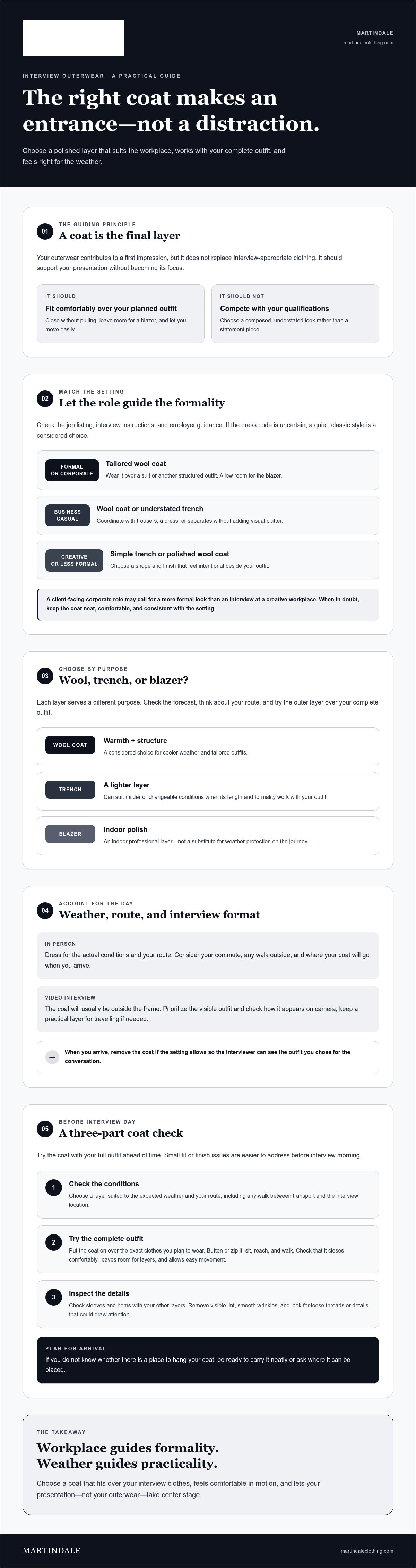
Your coat contributes to a first impression, but it doesn’t replace interview-appropriate clothing. Think of it as the final layer: clean, well-kept, comfortable to move in, and consistent with the formality of what you’re wearing underneath. A polished coat supports your presentation without becoming its focus.
There’s no single answer to what coat to wear to an interview. Workplace norms, the role, the interview format, and the weather all matter. A traditional office may call for a structured, understated coat over a suit, while a business-casual workplace may allow a more relaxed silhouette. If you’re unsure what that dress code means, review the employer’s guidance and the basics of business casual before planning your outfit. For a video interview, outerwear may not appear on screen, but you’ll still want a practical layer for travelling to your location.
Does your interview coat need to match a formal dress code?
Not necessarily. Check the job listing, interview instructions, and employer’s public guidance, then consider what’s appropriate for the role. A client-facing corporate position may call for a more formal look than an interview at a creative workplace. The coat is generally for arrival, not the interview itself, so prioritize a neat, comfortable layer that suits the journey. If the setting remains uncertain, choose a quiet, classic style that won’t compete with your clothing.
Before you leave, check how the coat looks both open and buttoned. It should sit smoothly over your planned outfit, close without pulling, and allow you to walk and move your arms comfortably. Once you arrive, remove it if the setting allows, so the interviewer can see the outfit you chose for the conversation.
The takeaway: Choose a coat that feels composed, fits over your interview clothes, and doesn’t distract. Let the weather guide its practicality and the workplace guide its formality.
How to Choose an Interview Coat for the Role, Outfit, and Season
Match the coat to the setting first, then check how it works with your outfit and the conditions outside. A structured wool coat can complement tailored clothing in cooler weather. A trench offers a lighter layer for milder or changeable conditions, while a blazer is an indoor professional layer, not a substitute for weather protection.
| Workplace or role | Coat choice | Outfit context |
|---|---|---|
| Formal or corporate | Tailored wool coat | Wear over a suit or other structured outfit; allow room for the blazer. |
| Business casual | Wool coat or understated trench | Coordinate with trousers, a dress, or separates without adding visual clutter. |
| Creative or less formal | Simple trench or polished wool coat | Choose a shape and finish that feel intentional beside your outfit. |
Wool coat, trench coat, or blazer: which fits your interview?
Each serves a different purpose. Wool brings warmth and structure, making it a considered choice for cooler days and tailored outfits. A trench is generally lighter and can suit variable weather, provided its length and formality work with what you’re wearing. A blazer sharpens an indoor outfit but may not provide enough warmth or protection for the journey. When deciding, check the forecast, consider how much time you’ll spend outside, and try the outer layer over your complete outfit. For more guidance on wearing a coat over a suit, see Corporette’s interview coat advice.
How should weather and interview format affect your choice?
For an in-person meeting, think beyond the forecast: account for your commute, any walk outside, and where you’ll put your coat on arrival. Dress for the actual conditions and your route rather than following a fixed temperature rule. In a video interview, your coat will usually be outside the frame, so give priority to the visible outfit and check how it appears on camera.
If you’re comparing long-lasting options for professional outfits, consider the different uses of women’s wool coats and trenches. A wool coat may suit colder conditions and structured looks, while a trench can be a lighter choice when the weather is milder or changeable.
How to Prepare Your Interview Coat Before the Big Day
Once you’ve decided what coat to wear to an interview, check how it works in practice before interview morning. Trying it on with your full outfit can reveal small problems, such as a sleeve bunching over a blazer, a hem that catches on another layer, or a closure that feels restrictive.
What should you check before leaving for the interview?
Use this checklist the day before, then confirm the forecast before you leave:
- Check the conditions. Choose a layer suited to the expected weather and your route, including any walk between transport and the interview location.
- Try the complete outfit. Put the coat on over the exact clothes you plan to wear. Button or zip it, sit, reach, and walk. Check that it closes comfortably, leaves room for your blazer or other layers, and allows easy movement.
- Inspect the details. Check how the sleeves and hems sit with your other layers. Remove visible lint, smooth wrinkles, and look for loose threads or other details that could draw attention. Make any simple adjustments ahead of time.
Plan where the coat will go once you arrive. If you don’t know whether the venue has a place to hang it, be ready to carry it neatly or ask where it can be placed. That small decision helps you settle in without fuss.
How can you keep the look composed without overthinking it?
Keep accessories and outerwear in balance. If the coat has a noticeable pattern or detail, let the rest of your outfit remain restrained. Choose clothes you already know feel comfortable, so you can focus on the conversation rather than shifting a collar or adjusting a sleeve.
Condition, comfort, and coordination are the three checks that keep interview outerwear composed.
For a professional wardrobe that works beyond interview day, look for outerwear that coordinates with clothes you already wear.
Choose Interview Outerwear You Can Wear Beyond One Meeting
A thoughtful interview coat should suit the occasion and earn its place in your wider wardrobe. A wool coat can bring structure to professional outfits beyond the interview, while a trench can serve as a versatile layer for work and everyday settings. The best choice depends on your wardrobe, the conditions you dress for, and how often you expect to wear it.
What makes a coat a considered professional wardrobe choice?
Look beyond whether a coat suits one outfit. Consider its versatility, material, construction, and whether you can imagine wearing it repeatedly with clothes you already own. A classic shape may work across more settings than a highly distinctive piece. Think, too, about whether the coat fits comfortably over your usual layers. For a closer look at the differences in purpose and feel, explore a Trench Coat vs. Wool Coat comparison.
Martindale’s women’s outerwear is designed and sewn in the United States, with an emphasis on ethical production and enduring design. Its collection includes wool coats, trenches, satin bomber jackets, and linen blazers. For example, the Patrice Wool Coat in Chestnut and the Eleanor Wool Coat in Noir offer wool coat options, while the Maggie Glen Plaid Trench is made in English wool. These values may matter when choosing a piece for long-term use, but they aren’t prerequisites for interview success. No coat is right for every role, outfit, or climate.
How can you make your final choice with confidence?
Use a simple sequence: check workplace expectations, coordinate the coat with your outfit, account for the weather, confirm comfort, and inspect its condition. This keeps the decision practical rather than trend-led. You don’t need to buy something new just for one meeting. A clean, well-kept coat you already own may be entirely suitable.
If you’re considering an addition to your professional wardrobe, take time to explore the women’s outerwear collection and assess each piece against your needs. The right answer to what coat to wear to an interview is the one that supports the occasion and feels natural in the wardrobe you’ll wear afterward.
Make Your Interview Outfit Feel Like Your Own
The right answer to what coat to wear to an interview depends on the role, your outfit, and the weather. Choose outerwear that feels appropriate without competing with your qualifications, then try it on with your full look to check comfort, condition, and coordination. A little preparation can help you arrive settled and focused.
You don’t need to buy a new coat for a single meeting. A versatile wool coat or trench may serve across professional settings, so consider its material, construction, and how naturally it fits into your existing wardrobe. Martindale’s garments are designed and sewn in the United States, with an emphasis on ethical production and enduring pieces.
If you’re considering a lasting addition to your wardrobe, explore Martindale’s women’s outerwear and choose a piece that suits your needs. Trust your preparation, wear what lets you feel comfortable and composed, and give the conversation your attention.
Frequently Asked Questions
What coat should a woman wear to a job interview?
Choose a coat that suits the role, complements your interview outfit, and feels comfortable in the expected weather. A tailored wool coat may work well over formal clothing, while a simple trench can suit a less formal setting or milder conditions. Check employer guidance if available. Whatever the style, make sure the coat is clean, fits over your layers, and doesn’t distract from your overall presentation.
Is a wool coat appropriate for an interview?
Yes, a wool coat can be appropriate, particularly in cooler weather or over a tailored outfit. Check that it fits comfortably over a blazer, looks well cared for, and suits the workplace’s level of formality. A classic, understated design can complement professional clothing, but wool isn’t automatically the right choice for every role or climate. Let your outfit and the conditions guide the decision.
Can I wear a trench coat to an interview?
Yes, a trench coat can work for an interview if its style and condition suit the setting. Consider whether it coordinates with your outfit and feels appropriate for the employer’s dress expectations. It can be a practical layer in milder or changeable weather, but may not provide enough warmth in colder conditions. Choose a polished, comfortable fit that doesn’t overwhelm your interview clothes.
Should I take my coat off during an interview?
Usually, remove your coat once you’re settled if the setting allows, so it doesn’t cover the outfit you chose for the meeting. Follow the interviewer’s cues and handle the coat discreetly. If there’s no obvious place to put it, keep it neatly folded or ask where you may leave it. Don’t assume the venue has a coat check or dedicated storage.
What should I wear over my interview outfit in cold weather?
Choose a layer that provides practical warmth for your route and fits comfortably over your interview clothes. A structured wool coat may suit a tailored outfit, while another polished outer layer could work better with your workplace expectations or personal wardrobe. Check the actual conditions, and make sure sleeves and hems sit neatly together. Comfort matters too: you should be able to move without adjusting the coat constantly.


