


What if the strongest sign of a sustainable luxury women's coat isn’t its price or polished appearance, but the evidence behind it? A refined silhouette may earn a place in your wardrobe, yet it can’t tell you where the fibers came from, how the coat was made, or whether its construction suits regular wear.
It’s reasonable to expect clear answers before choosing a considered investment. Yet sustainability language can be broad, and material or manufacturing details aren’t always easy to compare. A sustainable luxury women's coat isn’t defined by its label alone: premium positioning doesn’t prove responsible production, lasting construction, or a smaller environmental footprint.
This guide offers practical questions for assessing a coat’s materials, sourcing, production details, and craftsmanship. You’ll also learn how to compare fit and wardrobe use, and what to check in care guidance. Use these questions to decide whether a sustainable luxury women's coat suits your needs, based on available information and how you’ll wear it, not a passing trend.
What Makes a Sustainable Luxury Women’s Coat More Than a Premium Purchase?
Assess a sustainable luxury women's coat through four connected questions: what it’s made from, how and where it was produced, how it’s constructed, and how it should be cared for. These factors matter, but they aren’t interchangeable. A high-end label or timeless silhouette doesn’t, by itself, establish responsible sourcing, fair labor, or a lower environmental impact. The broader Sustainable fashion movement considers how clothing is made and used, not simply how it looks or how long it might last.
Keep the evidence for each question distinct. Fiber composition and sourcing inform your understanding of materials. Manufacturing details explain where and how a garment was made. Construction and care guidance help you assess whether it fits your expectations for regular wear. For production context, the companion guide “American Made Women’s Outerwear: A Guide to Ethical Luxury and Craft” explores what to consider. American manufacturing is useful information, but it doesn’t prove a coat’s complete environmental footprint or every labor condition.
Which sustainability questions should a coat answer?
Start with details you can check on the product page or garment label:
- Materials: Is the full fiber composition listed? Does the brand explain where the fibers come from?
- Production: Does the brand state where the garment is made and provide details about its manufacturing?
- Support for claims: Are specific evidence or credible certifications offered to support environmental or labor statements?
If information is missing, record it as an unanswered question, not proof of wrongdoing. A clear, specific answer gives you more to assess than a broad sustainability claim. When comparing coats, note which details are disclosed for each one rather than assuming that one product’s information applies to an entire collection.
Does a higher-quality coat automatically have a lower impact?
No. Strong seams and resilient fabric may help a coat remain wearable, but longevity also depends on whether you wear it regularly, maintain it appropriately, and continue to find its style useful. A coat that spends most of its life unworn doesn’t provide the same value through repeated use.
Durability can support a longer life, but it isn’t proof of lower environmental impact. Assess a sustainable luxury women's coat through its materials, production evidence, construction, care, and likely use in your wardrobe.
How Materials, Manufacturing, and Construction Shape a Coat’s Sustainability
Assess a coat through its stated facts, not assumptions. Fiber impacts can vary with sourcing, processing, dyeing, and finishing, so a material name alone gives an incomplete picture. The European Parliament outlines concerns linked to the environmental impact of textile production, including pollution and emissions. That wider context makes product-specific disclosure useful, but it doesn’t establish the footprint of an individual coat.
Material: Look for the full fiber composition and any specific sourcing information. Don’t infer a garment’s composition from its name alone.
Manufacturing: Check whether the brand states where the coat is made and describes its production.
Construction: Review seams, closures, lining, and finishing details that may affect how the garment wears.
Care: Read the care instructions before buying and consider whether they fit your routine.
What to check in wool and other coat materials
Read the complete composition rather than inferring it from a product name. “English wool” identifies a stated material, but doesn’t by itself confirm the wool’s origin, processing, or percentage in a particular garment. Martindale states that English wool is used in its outerwear and that its garments are made in the United States. Check the product-specific composition and sourcing details before drawing further conclusions. For a practical comparison of silhouette and wardrobe use, see Trench Coat vs. Wool Coat: Choosing Your Definitive Investment Piece.
What manufacturing transparency can, and cannot, tell you
A country of manufacture is a useful starting point, not a full impact assessment. Look for details about garment production, and verify any facility information, certifications, or labor claims rather than relying on broad ethical language. Before purchase, check the coat’s disclosed fiber composition and sourcing, stated manufacturing location, construction details, and care instructions. If you can’t find a detail that matters to you, ask the brand or treat it as information you don’t yet have.
To compare stated materials and production details, browse women’s coats and outerwear.
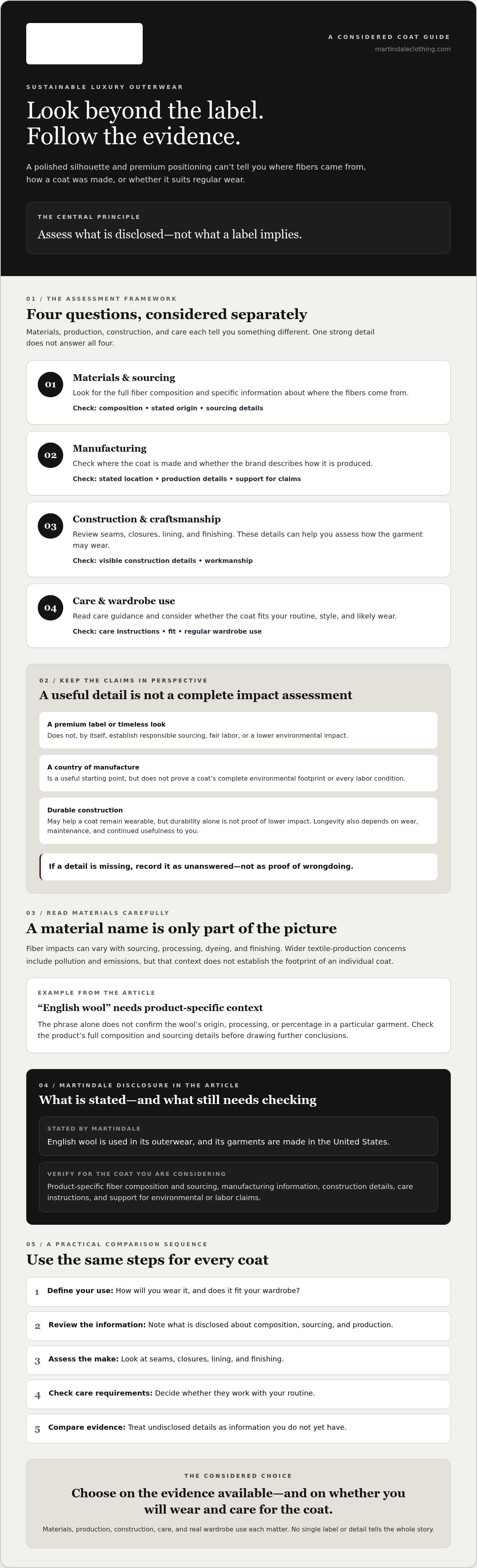
How to Evaluate a Sustainable Luxury Women’s Coat Before You Buy
Use the same sequence for every option: define how you’ll wear it, review the product information, assess the construction, then decide whether its care requirements fit your routine. This makes it easier to compare a sustainable luxury women’s coat on evidence and usefulness, rather than a broad label or first impression. The EPA data on textile waste offers wider context for why keeping garments in use matters. Your own likely wear is still central to assessing a particular coat.
For broader style context, consider The Definitive Guide to Investing in Women’s Coats alongside the practical questions below.
Which questions reveal whether a coat suits your wardrobe?
Picture the occasions, seasons, and outfits the coat needs to work for. Consider your climate and whether you’ll wear it for everyday outings, formal settings, or both. Check the product’s measurements, then think about fit over the layers you’re likely to wear. A close fit may suit lighter outfits but feel restrictive over a sweater. A roomier cut may make layering easier, provided the shoulders and sleeves still feel right.
Cost per wear is a personal comparison, not a promise of savings. Think about how often you expect to wear the coat and whether its color and silhouette work with clothes you already own. If you can name the outfits and occasions it will serve, you have a more practical basis for comparing it with another coat.
How can you check quality and care requirements?
Study the available product images and construction details. Look closely at seams, closures, lining, and finish. Ask whether those features appear suited to the coat’s intended use. If you can inspect it in person, fasten and open the closures, check how the seams lie, and consider whether the fabric and lining feel comfortable for the way you’ll wear it.
Read the care instructions before deciding. Consider whether the recommended routine is practical for you. You can also ask whether the specific garment can be repaired and whether repair support is available. Don’t assume either option is offered unless the brand confirms it.
Once you’ve defined your needs, compare women’s coats and outerwear against the same checklist.
How Martindale’s American-Made Outerwear Fits a Considered Coat Wardrobe
Martindale offers women’s wool coats and trench coats, and English wool is among the materials stated for its outerwear. The brand says its garments are manufactured and sewn in the United States. These details can help you compare coats, but they don’t establish a complete environmental footprint, verify every labor claim, or guarantee how long an individual garment will last.
Use the same framework you’ve applied to any sustainable luxury women's coat: check the specific garment’s disclosed materials and sourcing, production information, visible construction details, and care instructions. Then consider whether its fit, style, and likely use make sense for your wardrobe. Review the details for the individual coat rather than assuming information about one item applies to every piece.
What Martindale’s stated production details mean for shoppers
American manufacturing gives you a concrete production detail to consider. Martindale also presents craftsmanship and timeless design as part of its brand approach. Neither point, on its own, confirms certified sustainability, supply-chain traceability, environmental superiority, or a particular lifespan. For more context on evaluating production and craft, read American Made Women’s Outerwear: A Guide to Ethical Luxury and Craft.
How to take the next step with confidence
Before choosing, revisit the product information for the coat you’re considering. Look for its current fiber composition, any stated sourcing details, construction features, and care requirements. If a point matters to your decision but isn’t addressed, treat it as an open question rather than filling the gap with an assumption.
Explore Martindale’s women’s coats and outerwear collection and compare the available styles with your checklist. A considered choice begins with clear information and a coat that feels right for the way you dress.
Choose a Coat That Earns Its Place in Your Wardrobe
A confident choice rests on more than a refined finish. Assess a sustainable luxury women's coat through its disclosed materials, production information, construction, and care requirements, then consider whether its fit and style suit the way you actually dress. Longevity is a possibility shaped by regular wear and thoughtful care, not a promise made by a premium label.
Martindale states that its garments are made in the United States, and its outerwear includes women’s wool coats and trench coats. English wool is a stated material, but check the individual garment’s composition and sourcing details before drawing conclusions. These facts offer a starting point for comparison, not a complete environmental assessment.
Review the details, weigh them against your needs, and choose with care. Explore Martindale’s women’s outerwear to compare coats and find a style that fits your wardrobe.
Frequently Asked Questions
Is a luxury women’s coat automatically sustainable?
No. A luxury price or polished appearance doesn’t establish a coat’s environmental or social impact. Look for disclosed fiber composition and sourcing, production details, construction quality, and care guidance. Then consider whether the coat suits your climate and is likely to be worn regularly. Durable construction may support longer use, but only if the garment is maintained and remains useful to you.
What makes a women’s coat sustainable?
No single feature determines whether a coat is sustainable. Consider its materials and any disclosed origins, how and where it’s made, its construction, care requirements, and likely use in your wardrobe. For a sustainable luxury women’s coat, specific product information is more useful than broad claims. If a detail is missing, treat it as an unanswered question and seek clarification rather than assuming the claim is true or false.
Are American-made coats more sustainable?
Not automatically. A stated manufacturing country helps you understand where a garment was made, but it doesn’t reveal its full environmental or labor impact. Materials, processing, factory practices, transportation, and how long the coat stays in use also matter. Treat American production as one relevant detail in your comparison, then review the product-specific information the brand provides and note any important gaps.
How can I tell whether a coat will last?
No product detail can guarantee a particular lifespan, but several clues can help you assess likely wear. Review available information about seams, closures, lining, finish, and care instructions. Check the fit over the layers you expect to wear and ask whether the style works with your wardrobe. Premium materials or a luxury label alone aren’t proof that a coat will last.
Is wool a sustainable material for a women’s coat?
Wool’s impact can vary with its sourcing, processing, and the garment’s full lifecycle, so the fiber name alone isn’t enough to judge it. Check the coat’s complete fiber composition and look for specific sourcing information. Consider its care requirements, whether the routine suits you, and how often you expect to wear it. A useful, well-cared-for coat may stay in use longer, but that doesn’t prove its overall impact is low.


