


The most expensive garment you'll ever buy is the one you're forced to replace next year. You've likely felt the frustration of a high-priced luxury piece that thins, pills, or loses its structural integrity before its second winter. It's a betrayal of your aesthetic standards and your ethics. This cycle of disposable consumption is finally breaking as slow fashion women's outerwear transitions from a quiet movement into the definitive standard of 2026 luxury. We're entering an era where moral integrity is as vital as a well-tailored shoulder. You'll discover how the shift toward ethical production and American craftsmanship is redefining the modern wardrobe through permanence and purpose. We'll examine how landmark legislation like California's SB 707 is ending the era of greenwashing. You'll learn why investing in heritage pieces, such as the Patrice wool coat or the Eleanor in Noir, represents a lifetime partnership rather than a fleeting transaction.
The Evolution of Slow Fashion: Defining Ethically Produced Women's Outerwear in 2026
The definition of luxury has undergone a radical transformation. In 2026, the discerning woman no longer settles for the vague promise of sustainability. She demands permanence. This shift represents a move away from the frantic, seasonal cycles of the past toward a lifestyle of deep intentionality. Slow fashion women's outerwear is no longer a niche category; it's the foundation of a modern, considered wardrobe. Today's consumer prioritizes the narrative behind her garment, seeking an origin rooted in domestic transparency and American craftsmanship rather than anonymous, globalized production lines. It's a choice to value the steady pulse of the workshop over the chaotic noise of the mall.
Beyond the Label: What Ethical Production Really Means
Ethical production is a holistic commitment to human dignity and environmental stewardship. True luxury requires a transparent supply chain where fair wages and safe conditions aren't just goals, but absolute requirements. By choosing items designed and sewn in America, you support a legacy of local craft that rejects the systemic failures of the disposable fashion industry. This transparency ensures that the beauty of a garment isn't marred by the conditions of its creation.
Slow Fashion vs. Fast Fashion: A Study in Contrasts
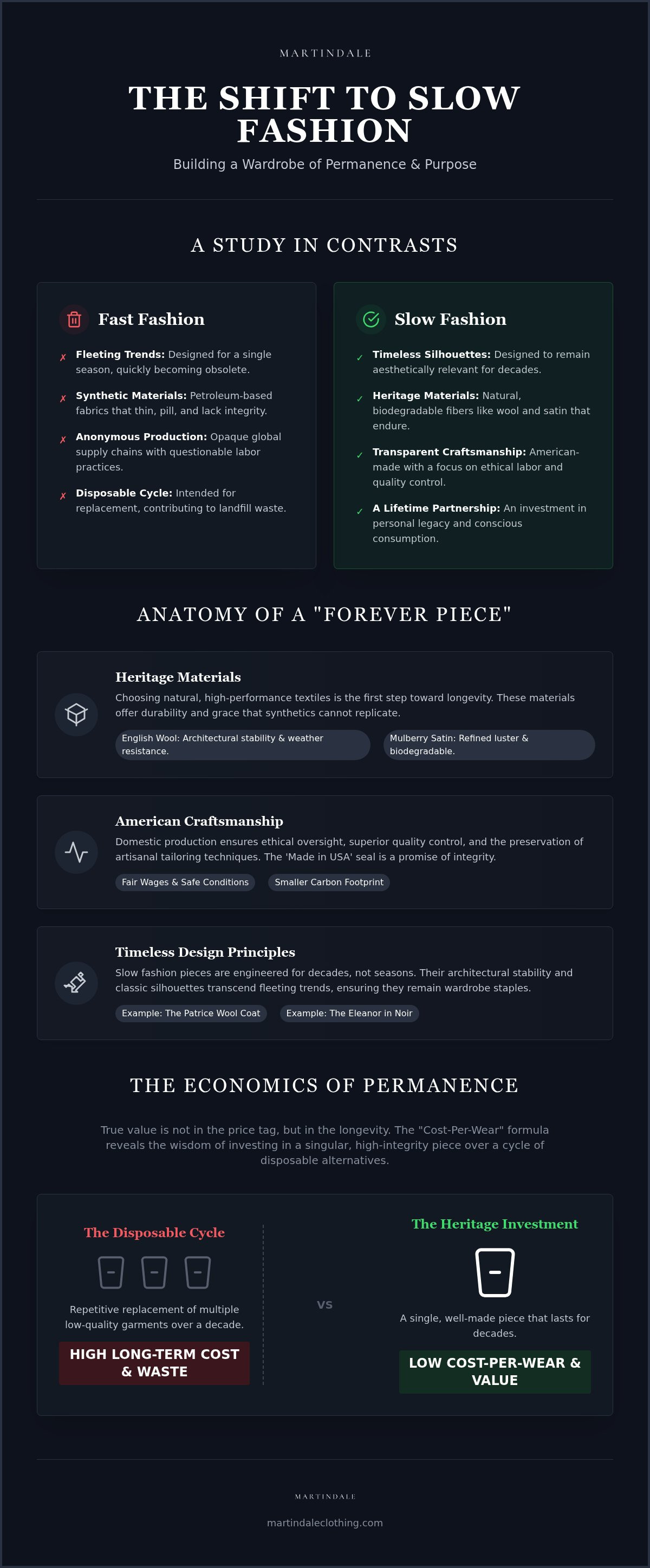
The difference between transience and longevity is found in the fibers. Consider the Amelia Bomber Jacket in Mulberry Satin. Its natural luster and structural integrity stand in stark opposition to the synthetic, petroleum-based alternatives that dominate fast fashion. While mass-market retail relies on fleeting trends, slow fashion design principles focus on architectural stability. Pieces like the Patrice or Eleanor wool coats aren't built for a season; they're engineered for decades. You can explore these enduring silhouettes in our curated collection, where every stitch serves a purpose beyond the temporary. This approach transforms a simple purchase into a lasting investment in your personal legacy.
The Anatomy of a Forever Piece: Materials and the American-Made Distinction
True quality is a dialogue between the fiber and the hands that shape it. While many brands focus solely on eco-friendly labels, slow fashion women's outerwear demands a deeper scrutiny of both origin and assembly. A garment's integrity begins with its raw components. Choosing natural, high-performance materials over synthetic, petroleum-based alternatives ensures that a coat remains a staple for decades, not just a single season. This material choice is a rejection of the temporary, favoring the enduring strength of heritage textiles that perform beautifully in the face of time and weather. By prioritizing the origin of the fabric as much as the origin of the labor, we move toward a wardrobe defined by moral and aesthetic excellence. The 'Made in USA' seal acts as more than a geographic marker; it's a promise of ethical oversight and the preservation of artisanal skill.
The Heritage of English Wool and Mulberry Satin
English wool provides architectural stability and natural weather resistance that synthetic fibers cannot replicate. The Eleanor Wool Coat in Noir exemplifies this, offering a protective texture that softens with age but never loses its silhouette. Similarly, the Amelia Bomber Jacket utilizes mulberry satin for a refined luster. This biodegradable material represents the pinnacle of ethical luxury, offering a durable alternative to the disposable sheen of mass-produced jackets.
The Craftsmanship of American-Sewn Garments
When pieces like the Josephine Linen Blazer are sewn in American rooms, the proximity allows for quality control that globalized production lacks. These workshops preserve traditional tailoring techniques, ensuring every seam is finished with technical precision. This domestic focus also results in a smaller carbon footprint, as the journey from workshop to wardrobe is direct. Explore the results of this meticulous American craftsmanship in our latest collection, where every item is built to endure.
The Economics of Permanence: Calculating the Value of Ethical Outerwear
True luxury isn't a fleeting transaction; it's a deliberate partnership. We must reframe the premium price of slow fashion women's outerwear as a strategic, decade-long commitment. The "Cost-Per-Wear" formula reveals the fiscal wisdom here. Investing in a singular, high-integrity piece is significantly more economical than the repetitive cycle of replacing five lower-quality alternatives that fail by their second winter. Beyond the financial math, there's a profound psychological clarity in owning fewer, better things. This approach replaces the frantic clutter of a transient wardrobe with the stability of a curated collection that serves your life with purpose and poise.
Investing in the Patrice and Eleanor: A Decade of Style
The Patrice Wool Coat in Chestnut and the Eleanor in Noir are designed to transcend the frantic shifts of the trend cycle. Their value lies in their ability to remain aesthetically relevant while maintaining their structural integrity year after year. These aren't just garments; they're heritage assets that retain their aesthetic and resale value long after disposable items have reached a landfill. For those building a legacy wardrobe, The Professional Women's Wool Coat provides deeper insights into why domestic craftsmanship is the ultimate career investment.
The Hidden Costs of Disposable Outerwear
Cheap coats carry invisible burdens. They often fail in construction, leading to frequent landfill contributions and the heavy environmental toll of the "buy-and-discard" cycle. This systemic wastefulness also hides the human cost of unregulated, globalized labor. When a garment is designed for obsolescence, the consumer pays the price in both frustration and repetitive replacement costs. Ethical outerwear rejects this cycle, offering a rejection of the temporary in favor of the enduring. You can start building your permanent wardrobe by choosing from our ethically produced American outerwear today.
Building a Principled Wardrobe: Essential Outerwear for the Considered Life
A principled wardrobe begins with anchor pieces. These aren't mere garments; they're the architectural foundation of an ethical life. While fast fashion demands a constant cycle of acquisition, slow fashion women's outerwear offers the quiet confidence of knowing exactly where you stand. By selecting items that prioritize substance over popularity, you reclaim your agency as a consumer. This deliberate curation centers on pieces that harmonize aesthetic refinement with moral responsibility. It ensures your wardrobe remains a source of pride for years to come. You're choosing stability over the temporary.
The Essential Trench: From the Maggie to the Lou
The trench coat remains the definitive symbol of versatile luxury. The Maggie Glen Plaid Trench in English Wool provides a textured, professional authority that transitions seamlessly from morning meetings to weekend strolls. In contrast, the Lou Trench in Camel offers a minimalist silhouette for those who prefer understated elegance. Each serves a distinct purpose in a capsule wardrobe, yet both share a commitment to domestic craft. For guidance on which silhouette best fits your lifestyle, explore our analysis of the Trench Coat vs. Wool Coat. These investments define your personal aesthetic through quality rather than volume.
Seasonal Transitions with the Josephine and Amelia
Permanence doesn't mean rigidity. The Josephine Linen Blazer in Slate or Ink provides a breathable, ethical layer for warmer months, maintaining a sharp professional edge without the weight of wool. As the light fades, the Amelia Bomber in Midnight Satin offers a sophisticated transition into evening. These pieces prove that ethical luxury adapts to your needs without sacrificing its soul. To understand the full scope of American craftsmanship, consult our American Made Women's Outerwear Guide. By choosing colors like Noir, Camel, and Chestnut, you invest in a palette that endures. You're not just buying a coat; you're authoring a legacy.
Embracing the Future of Considered Luxury
The shift toward slow fashion women's outerwear represents a profound return to value, stability, and moral integrity. We've moved past the era of disposable luxury, arriving at a future where the story of a garment's origin is as vital as its silhouette. By prioritizing pieces designed and sewn in America from premium English wool and mulberry satin, you're securing a partnership that lasts decades. This commitment to permanence ensures your wardrobe remains a curated reflection of your principles rather than a series of fleeting trends. You now have the framework to calculate the true value of your investments and the confidence to choose items that grow more meaningful with every season. It's time to step away from the frantic pace of modern retail and embrace a more intentional way of living.
Explore the Martindale Collection of Ethically Produced Outerwear and discover how timeless silhouettes can redefine your personal legacy. Your journey toward a more purposeful, enduring wardrobe begins with a single, deliberate choice.
Frequently Asked Questions
What exactly is slow fashion in the context of women's outerwear?
Slow fashion women's outerwear represents a deliberate rejection of the frantic, disposable retail cycle in favor of permanence and purpose. It centers on creating garments with architectural stability that transcend seasonal trends. This movement prioritizes ethical labor practices and high-integrity materials, ensuring that a single coat serves as a lifelong partner rather than a temporary solution. It's a philosophy where quality and morality dictate every stage of the design process.
Why is American-made outerwear considered more ethical than imported alternatives?
Manufacturing within the United States provides a level of transparency and ethical oversight that globalized production often lacks. Domestic sewing rooms ensure that artisans receive fair wages and work in safe, regulated environments. This proximity also reduces the carbon footprint; it's a shorter journey from workshop to wardrobe. By supporting American craftsmanship, you invest in a local legacy of skill while ensuring your garment is free from systemic industry exploitation.
How can I tell if a wool coat is high quality enough to last a decade?
A decade-long coat is defined by its raw materials and technical precision. High-quality English wool offers natural weather resistance and a density that maintains its shape over time. You should look for finished seams, substantial weight, and a hand-feel that suggests durability rather than thinning. Structural integrity is found in the details, such as reinforced stitching and the use of natural linings that allow the garment to breathe and age gracefully.
Are ethically produced coats worth the higher initial investment?
The value of an ethical coat is realized through its longevity and superior performance. While the initial price reflects fair labor and premium materials, the cost-per-wear over ten years is lower than replacing disposable items annually. It's a financial logic that rewards patience. Beyond the math, there is a psychological peace in owning a singular piece that aligns with your values. These garments retain their structural and aesthetic integrity for decades.
How do I care for premium materials like English wool and mulberry satin?
Preserving the integrity of English wool and mulberry satin requires a methodical approach to care. Wool coats should be hung on broad, structured hangers to maintain their shoulder shape and brushed periodically to remove surface debris. Mulberry satin benefits from gentle handling and cool storage away from direct sunlight to protect its natural luster. By avoiding frequent, harsh dry cleaning and opting for spot treatments, you'll extend the life of these heritage fibers.


