


A coat that loses its silhouette after a single season isn't just a poor purchase; it's a failure of architectural integrity. When you consider what makes a quality wool coat, you must look past the initial softness to the structural honesty beneath. You likely know the frustration of investing in a garment that feels premium on the rack, only to realize its warmth is an illusion created by high synthetic content and weak construction. It's a common struggle in an era defined by disposable trends and misleading labels that prioritize profit over permanence.
You deserve outerwear that honors the heritage of its materials and the hands that shaped it. In this guide, we'll reveal the essential markers of premium outerwear, from the superior insulating properties of English wool to the rigorous standards of American tailoring. You'll gain the confidence to look beyond the brand name, understanding how fiber composition and structural details transform a simple layer into a lasting investment piece. By prioritizing quality over quantity, you can curate a wardrobe that offers both protection and a sense of moral and aesthetic discernment.
The Foundation of Excellence: Wool vs. Cashmere and Fiber Composition
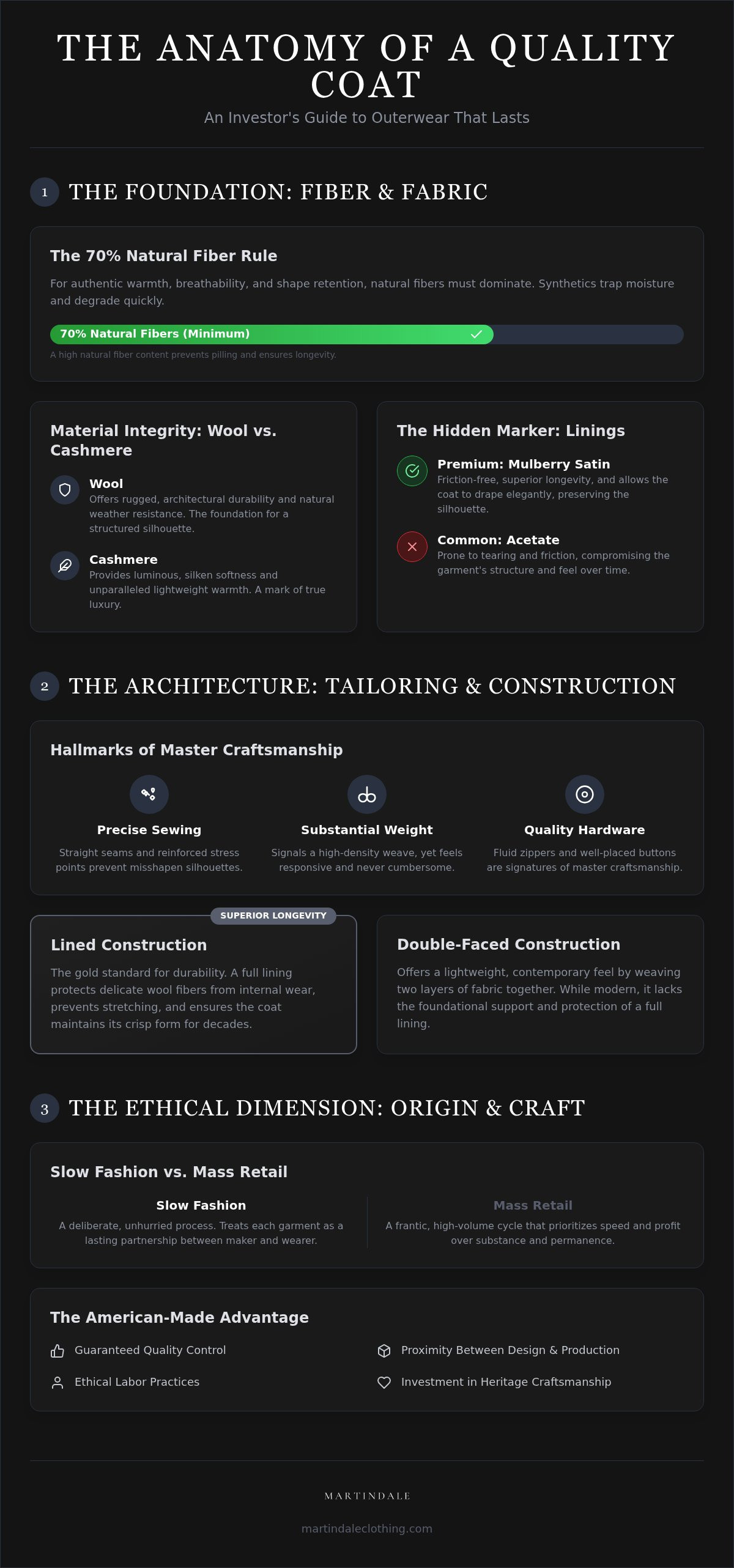
True quality begins at the molecular level. It's about the fiber's integrity before the first stitch is even cast. For a garment to offer authentic warmth and breathability, natural fibers must dominate the composition. A common industry benchmark is the 70% rule; if natural fibers don't make up at least 70% of the blend, the coat often fails to regulate temperature or maintain its shape over time. When you evaluate what makes a quality wool coat, the presence of synthetic "fillers" like polyester or acrylic is a significant warning sign. These materials trap moisture and degrade the garment's lifespan, leading to a piece that feels cold and looks tired within a single winter.
Choosing between wool and cashmere is a study in balance. Wool offers a rugged, architectural durability and natural weather resistance, while cashmere provides a luminous, silken softness. Specialized materials, such as the English wool used in the Maggie Glen Plaid Trench, provide a superior structure that standard blends simply cannot replicate. This foundation ensures the coat remains a staple of your wardrobe rather than a fleeting purchase.
Decoding the Label: What Percentages Actually Mean
A 100% natural fiber composition prevents the unsightly pilling often seen in synthetic blends because natural fibers break away cleanly rather than tangling into knots. The length of the fiber also dictates the "hand" or tactile feel of the coat; longer fibers result in a smoother, more resilient surface that resists wear. Understanding these percentages is the first step in identifying what makes a quality wool coat that lasts for decades.
Satin and Linings: The Hidden Markers of Luxury
The interior is as vital as the exterior. Mulberry satin linings offer a friction-free experience and superior longevity compared to common acetate alternatives. A high-quality lining ensures the coat drapes elegantly against the body, preserving the intended silhouette. This attention to detail defines the long-term value of an investment piece.
The Architecture of Quality: Tailoring and Construction Details
Beyond the fiber, the true measure of a garment lies in its structural honesty. A quality coat is an architectural achievement where every seam serves a purpose. Precise sewing and reinforced stress points prevent the misshapen silhouettes that plague lesser garments after a single season. Weight also plays a critical role. A premium piece should feel substantial, signaling a high-density weave, yet it must never feel cumbersome or restrictive. Hardware serves as the final signature of master craftsmanship. Whether it's the placement of a button or the fluidity of a zipper, these details indicate a level of care absent in fast fashion. When you observe how the Patrice Wool Coat in Chestnut moves with the wearer, you witness the intersection of weight and grace. This responsiveness is a primary marker of what makes a quality wool coat.
Double-Faced vs. Lined Construction
Choosing between these constructions depends on your climate and aesthetic. Double-faced wool offers a lightweight, contemporary feel where two layers of fabric are woven together, but a fully lined garment is often the superior choice for longevity. The lining protects the delicate wool fibers from internal wear and prevents the fabric from stretching out of shape. This internal structure acts as a foundation, ensuring the coat remains as crisp on its tenth winter as it was on its first.
The Significance of the Silhouette
A precise cut is the hallmark of American tailoring. Timeless designs, such as the Eleanor Wool Coat in Noir, maintain their relevance because they prioritize proportion over fleeting trends. You can identify quality by looking for clean lines; the seams should be straight and the drape should be effortless. Mass-produced coats often rely on heavy interlinings to mimic structure, whereas a high-quality piece derives its form from the integrity of the fabric and the skill of the pattern maker.
The Ethical Dimension: Why Origin Defines Modern Luxury
Quality isn't just about the physical object; it's about the systems that brought it to life. When we ask what makes a quality wool coat, we must consider the ethical framework of its origin. Mass retail thrives on a frantic, high-energy cycle that prioritizes speed over substance. In contrast, slow fashion represents a deliberate rejection of this disposable culture. It favors an unhurried production process where every garment is treated as a lasting partnership between the maker and the wearer. This intentionality ensures that the story behind your outerwear is as resilient as the fabric itself.
The American-Made Advantage
Domestic manufacturing provides a level of oversight that high-volume overseas factories simply can't match. When a coat is sewn in the United States, the proximity between design and production ensures that structural defects are caught before they reach your wardrobe. Heritage craftsmanship isn't just a nostalgic concept; it's a practical guarantee of quality control. This unhurried approach ensures that every seam on a Patrice Wool Coat or an Eleanor Wool Coat meets a standard of permanence that transcends seasonal trends. It's the difference between a garment that is merely assembled and one that is truly crafted.
Investing in Ethical Craft
A commitment to ethical labor practices naturally translates to a more carefully finished product. When artisans are respected and given the time to master their craft, the result is a garment defined by moral and aesthetic integrity. You aren't just buying a layer; you're investing in a story of responsibility and excellence. Explore our collection of ethically produced women's outerwear to see the difference that intentional manufacturing makes. Choosing a piece rooted in heritage allows you to build a wardrobe defined by quality rather than volume. By selecting garments with a clear lineage, you reject the temporary in favor of the enduring. If you value transparency and substance, discover our American-made designs to find your next legacy piece.
The Longevity Mindset: Curating a Wardrobe for Life
A coat shouldn't be a fleeting seasonal acquisition; it should be a generational investment. Shifting your perspective toward longevity allows you to see outerwear as a permanent fixture of your identity rather than a temporary solution. When you evaluate what makes a quality wool coat, the true value reveals itself in the cost-per-wear over a decade or more. A premium garment outlasts several lower-priced alternatives, making it the more economical choice for a considered wardrobe. Preserving this structural integrity requires minimal but intentional care. Brush the wool to remove surface debris and store it on wide, structured hangers to protect the mulberry satin lining and keep the silhouette crisp.
Timelessness Over Trends
True sophistication isn't found in the frantic chase of current fashion cycles. To identify a design that will remain relevant in 2036 and beyond, look for architectural simplicity and a refined palette. Classic hues like Chestnut, Noir, and Camel serve as stable foundations for any collection. Anchor pieces, such as the Maggie Glen Plaid Trench in English Wool, provide a versatile elegance that adapts as your personal style evolves. These are the items that define a capsule wardrobe, offering a rejection of the temporary through steadfast aesthetic appeal.
The Final Checklist for Quality
Before committing to a new piece, perform a final assessment of its physical and moral substance:
- Touch: Does the fabric feel dense and resilient rather than thin or scratchy?
- Look: Are the seams straight and the lines clean without visible defects?
- Label: Does the composition favor natural fibers like English wool over synthetic fillers?
Understanding these markers ensures your choice reflects a deep knowledge of what makes a quality wool coat. For those seeking to align their professional image with their principles, read more about why The Professional Women's Wool Coat: Why Made in USA is the Ultimate Career Investment remains the definitive choice for the discerning leader.
Embracing the Permanence of Exceptional Outerwear
Discerning what makes a quality wool coat requires a departure from the frantic pace of modern retail. It's an understanding that true luxury resides in the architectural integrity of the garment and the physical resilience of its fibers. By prioritizing English wool and mulberry satin over synthetic blends, you choose a piece that breathes, moves, and endures. This commitment to quality extends beyond the fabric to the ethical standards of American craftsmanship; it ensures every stitch represents a partnership between the maker and the wearer.
These garments aren't merely seasonal additions. They're legacy pieces designed for decades of wear, not just a season. When you invest in substance over fleeting trends, you build a wardrobe that reflects both your values and your discernment. You deserve a garment that remains as steadfast as your own ambitions. Discover Martindale's Collection of Timeless, American-Made Wool Coats and find a piece that honors your commitment to enduring style.
Frequently Asked Questions
Is 100% wool always better than a wool blend for a winter coat?
Pure wool is superior for thermal regulation, but the answer depends on the quality of the fiber itself. While 100% natural fiber prevents pilling, don't assume every blend is inferior. To understand what makes a quality wool coat, ensure natural fibers comprise at least 70% of the garment. This avoids the cold feel of synthetics. High natural content ensures the piece remains a long-term partner in your wardrobe.
What is the difference between English wool and standard wool?
English wool is distinguished by its exceptional structural integrity and crisp hand. Unlike standard wool blends that can feel soft but lack resilience, English wool provides the architectural foundation necessary for tailored pieces. It's superior for weather resistance and holds its shape through years of wear. This makes it a preferred choice for heritage-style outerwear that rejects the temporary nature of mass-produced fashion. It represents stability over transience.
How can I tell if a wool coat is ethically produced?
Transparency in the supply chain is the most reliable indicator of ethical production. Look for garments manufactured in the United States, where labor laws and quality control are strictly regulated. Ethical brands often prioritize slow movements and can name their material sources. Knowing the story behind the garment's creation ensures your purchase supports fair labor practices. It represents a commitment to moral integrity rather than disposable retail cycles.
Does a high-quality wool coat need to be heavy to be warm?
Warmth is a product of fiber density and quality rather than sheer weight. A high-quality wool coat can be relatively lightweight if it uses premium fibers with superior insulating properties. The architectural achievement of a well-tailored coat provides warmth through structure and natural heat retention. You don't need a cumbersome garment to stay protected. Instead, look for the substantial feel of a high-density weave that offers protection without restricting movement.
How do I maintain the shape of a premium wool coat over many years?
Preserving a coat's silhouette requires a commitment to intentional care. Always use a wide, structured hanger to support the shoulders and prevent the fabric from stretching. Brush the wool regularly with a soft garment brush to remove surface debris and maintain the luster of the fibers. Avoid overcrowded closets. This protects the mulberry satin lining and keeps the architectural lines of pieces like the Eleanor Wool Coat crisp and defined.


