


A coat isn't just a layer against the cold; it's a silent commitment to how you intend to move through the world for the next decade. Many of us have felt the frustration of an outer layer that looks beautiful on the rack but fails when the temperature drops, or a piece that feels stylish today only to look dated by next November. It's a common struggle to find that balance between immediate utility and lasting relevance. This guide clarifies the wool coat vs trench coat debate, helping you determine which silhouette aligns with your local climate, lifestyle, and personal aesthetic. We'll explore the technical integrity of English wool, the protective heritage of traditional gabardine, and how to select a piece that serves as a permanent foundation for your wardrobe. By understanding the physical and moral integrity of these garments, you can move away from the cycle of disposable fashion toward a more intentional, ethical way of dressing that values quality over quantity.
Thermal vs. Atmospheric Protection: Defining the Core Functionality
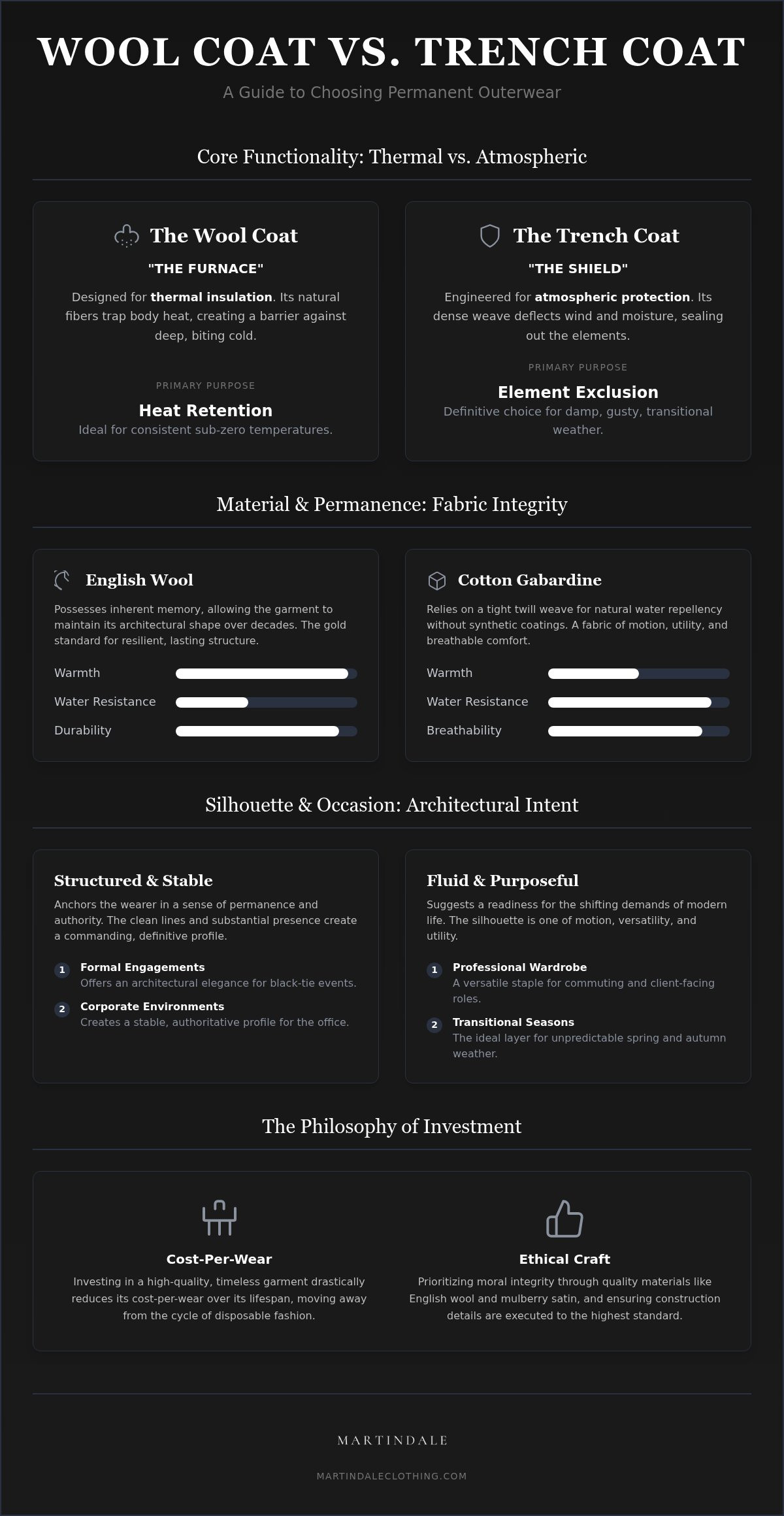
The fundamental distinction in the wool coat vs trench coat debate lies in the specific environmental adversary each piece is designed to defeat. One acts as a furnace. The other acts as a shield. Understanding this binary is essential for building a wardrobe that remains functional across shifting seasons. Rather than viewing these items as interchangeable, we should recognize them as two distinct pillars of a permanent wardrobe. One prioritizes the retention of heat, while the other prioritizes the exclusion of the elements.
The Wool Coat for Thermal Insulation
Wool is a masterpiece of natural engineering. Its fibers possess a structural crimp that creates millions of microscopic air pockets. These pockets trap body heat, forming a reliable thermal barrier that resists the biting chill of deep winter. Pieces like The Patrice Wool Coat utilize this natural density to provide significant warmth without the cumbersome bulk of synthetic alternatives. For those living in climates with consistent sub-zero temperatures, the weight and physical structure of premium wool offer a sense of security and stability that lighter fabrics simply cannot replicate.
The Trench Coat for Precipitation and Wind
While wool manages temperature, the Trench coat manages the atmosphere. Originally developed for utility in harsh, wet conditions, its strength lies in a dense, protective weave that deflects wind and moisture. Features like the storm flap and belted silhouette are functional components designed to seal out driving rain and gusty transitions. This makes the trench the definitive choice for coastal environments where moisture is the primary concern. It serves as a sophisticated barrier during those months when the air is damp but the deep freeze has not yet arrived.
Adopting a two-coat philosophy ensures your wardrobe remains intentional and ethically sound. By identifying whether your primary challenge is the dry, piercing cold or the damp, gusty transition, you can invest in a piece that offers genuine durability. A well-curated capsule wardrobe acknowledges that a single garment rarely solves every atmospheric problem.
The Materiality of Permanence: English Wool vs. Gabardine
The decision between a wool coat vs trench coat is ultimately a choice of substance. One offers the dense, storied resilience of English wool. The other provides the technical ingenuity of cotton gabardine. Both materials represent a rejection of the temporary, yet they serve different structural roles in an intentional wardrobe. Understanding the physical integrity of these fabrics allows you to move beyond the aesthetic and into the realm of true investment.
The Structural Resilience of English Wool
English wool is the gold standard for a reason. It possesses an inherent memory that allows a garment to maintain its architectural shape over decades. Unlike mass-market blends that lose their silhouette after a single season, premium wool remains steadfast. This resilience is perfectly captured in the Maggie Glen Plaid Trench. It bridges the gap by utilizing the thermal weight of English wool within the classic lines of a trench, offering a heritage-grade hybrid for those who refuse to compromise on substance.
The Versatility of Traditional Trench Fabrics
Traditional cotton gabardine relies on a tight twill weave to create natural water repellency. It's a fabric of motion and utility, ideal for the professional woman who requires protection without the weight of a winter layer. When evaluating quality, look for the precision of pattern matching at the seams and the physical strength of the stitching. American-made construction ensures that these details aren't overlooked. The tactile integrity of the lining is equally vital. We favor mulberry satin over synthetic alternatives because it breathes with the wearer, ensuring comfort rather than clamminess. Investing in these materials is an act of moral discernment. You can explore our full range of ethically made women's coats to see how these fabrics translate into lasting style.
Silhouette and Architectural Intent: Navigating Occasions
The silhouette of a garment is its most immediate form of communication. When weighing a wool coat vs trench coat, you're choosing between the definitive stability of a structured wool piece and the fluid, purposeful movement of a military-inspired classic. One anchors the wearer in a sense of permanence. The other suggests a readiness for the shifting demands of a modern life. These architectural choices define how we present ourselves to the world during different chapters of our day.
For formal engagements or black-tie events, the Eleanor Wool Coat in Noir offers an architectural elegance that lighter fabrics cannot match. Its clean lines and substantial presence provide a definitive finish to a refined evening look. It stands as a testament to the idea that true sophistication doesn't need to be loud to be noticed. It simply needs to be intentional.
Tailoring the Professional Wardrobe
Professionalism often requires a visual expression of authority. The structured shoulders of a wool coat create a stable, commanding profile in corporate environments. When considering a wool coat vs trench coat for the office, think about the level of structure your role demands. The trench coat offers a different form of intentionality through its belt. A buckled belt suggests a disciplined, formal approach. A knotted tie projects a more relaxed, effortless sophistication. For those seeking professional depth, layering a trench over the Josephine Linen Blazer creates a multi-dimensional silhouette that remains comfortable during indoor-to-outdoor transitions.
Transitional Styling for Travel and Commuting
The trench coat is the ultimate travel companion. Its lightweight nature and atmospheric protection make it indispensable for navigating unpredictable weather across different regions. It packs with ease. It provides a reliable barrier against wind without the bulk of a heavy winter layer. You can find more detailed advice on these versatile pieces in our Classic Women's Trench Coats: The Ultimate Guide. Whether you're commuting or crossing continents, these silhouettes ensure your presence remains intentional. Discover your next foundation piece by exploring our premium women's outerwear collection.
The Philosophy of Investment: Cost-Per-Wear and Ethical Craft
Choosing between a wool coat vs trench coat is more than a stylistic preference. It's a calculated decision regarding value and responsibility. The financial logic of permanence is clear. One high-quality investment piece is significantly more economical than five seasonal replacements that lose their shape within months. This approach reduces environmental impact by favoring garments designed to last for decades rather than weeks. It's a commitment to the slow fashion movement, where quality always triumphs over quantity.
Ethical manufacturing serves as a definitive indicator of a garment's lifespan. When a piece is born in a transparent American atelier, every seam is a testament to craftsmanship. Maintaining these pieces is an act of preservation. Caring for premium wool through regular brushing and proper storage ensures it becomes a future vintage piece. These natural fibers possess a physical integrity that synthetic alternatives can't replicate. They grow with you, becoming a reliable partner in your daily life.
The Value of American-Made Excellence
Domestic production allows for superior oversight of every construction detail. It ensures that the moral and physical integrity of the coat remains uncompromised. This level of care is why The Professional Women's Wool Coat: Why Made in USA is the Ultimate Career Investment for 2026 represents a vital choice for the modern professional. By prioritizing local craft, you support a system that values substance over fleeting popularity.
Building Your Legacy Closet
Anchoring a wardrobe with items like The Patrice or The Maggie provides a sense of stability. These garments serve as the foundation of a curated, ethical wardrobe. There's a profound psychological peace in a simplified closet filled with high-quality anchors. You're no longer a participant in the frantic, high-energy cycles of disposable retail. Instead, you're a curator of your own legacy. Selecting the right pillar in the wool coat vs trench coat debate is the first step toward a more mindful and enduring aesthetic.
Cultivating a Wardrobe of Lasting Intent
The decision in the wool coat vs trench coat debate ultimately rests on how you define your relationship with the elements. Whether you require the thermal sanctuary of English wool or the protective shield of a traditional trench, your choice should reflect a commitment to durability and ethical craft. By prioritizing American-made excellence and premium materials like mulberry satin, you move away from the transience of seasonal trends toward a legacy of permanence. These garments aren't just layers; they're anchors for a simplified, intentional life. Each piece is ethically designed and sewn in the United States, ensuring that your investment supports both physical integrity and responsible production. Building a permanent wardrobe is a slow, considered process that rewards discernment over impulse. We invite you to explore our collection of investment-grade wool and trench coats to find the pillar that best serves your journey. Step into a future where your outerwear is as enduring as your values.
Frequently Asked Questions
Is a wool coat warmer than a trench coat?
A wool coat is significantly warmer because its natural fibers create microscopic air pockets that trap body heat. While a trench coat provides a reliable barrier against wind, it doesn't have the thermal density required for freezing temperatures. For those in cold climates, a piece like The Patrice Wool Coat offers the insulation needed for sub-zero days. A trench is better for transitional seasons where atmospheric protection is the priority.
Can you wear a wool trench coat in the rain?
You should avoid wearing a pure wool trench coat in heavy rain to preserve the physical integrity of the fibers. While wool is naturally water-repellent to a degree, saturation can cause the garment to become heavy and lose its architectural shape. For wet weather, a traditional cotton gabardine trench like The Lou is the superior choice. If you choose a hybrid like The Maggie, treat it as a dry-weather thermal layer.
Which coat is more formal for professional environments?
Both silhouettes serve professional wardrobes, but they communicate different levels of formality. A structured wool coat like The Eleanor in Noir projects a stable, authoritative aesthetic ideal for high-stakes meetings or evening events. The trench coat offers a fluid, purposeful look that is perfect for daily commuting. Choosing between a wool coat vs trench coat for work depends on whether you value architectural stability or versatile, lightweight movement in your professional attire.
How should an investment coat fit in the shoulders and sleeves?
An investment coat must fit precisely at the shoulders, with the seam sitting exactly where your natural shoulder ends. This ensures the garment maintains its intended silhouette without sagging or pulling. Sleeves should reach the base of your thumb to provide adequate coverage for your wrists and under-layers. A proper fit is the hallmark of American-made quality, ensuring the piece remains a comfortable and sophisticated pillar of your wardrobe for many years.
Is a trench coat appropriate for winter temperatures?
A traditional trench coat isn't sufficient for deep winter unless it's paired with substantial thermal layers. It is designed as a shield against wind and rain rather than a source of heat. In regions with mild winters, you might layer a trench over heavy knitwear. However, in the wool coat vs trench coat comparison for extreme cold, the wool coat remains the definitive choice for genuine thermal protection and safety.


