


A coat is not merely a shield against the elements; it is a definitive piece of your personal architecture. You likely understand that a true investment should outlast the fleeting trends of the season, yet the debate of a wool vs cashmere coat remains a source of frustration when faced with pilling fabrics or ambiguous blends. The disappointment of a sagging shoulder line or a thinning sleeve is a symptom of an industry that often prioritizes the temporary over the timeless.
We believe your outerwear should reflect a standard of craftsmanship that mass-produced retail ignores. This guide explores the technical and ethical distinctions between these noble fibers, allowing you to choose a garment that balances thermal efficiency with aesthetic permanence. We will examine specific micron counts, the reality of cost-per-wear, and the durability standards that define a genuine lifetime piece. You'll gain the confidence to select a silhouette that honors your commitment to quality, ensuring your choice remains a cornerstone of your wardrobe for decades to come.
Understanding the Fiber: What Distinguishes Wool from Cashmere?
At the heart of every enduring garment lies the raw integrity of its fiber. When you weigh the merits of a wool vs cashmere coat, you aren't just choosing a texture; you're selecting the architectural foundation of your winter wardrobe. Wool, harvested from sheep, has served as the bedrock of protective outerwear for centuries. In contrast, cashmere is a rare gift from the fine undercoat of the Kashmir goat, prized for its ethereal lightness. This choice represents the first chapter in the story of a garment's longevity and its relationship with the wearer.
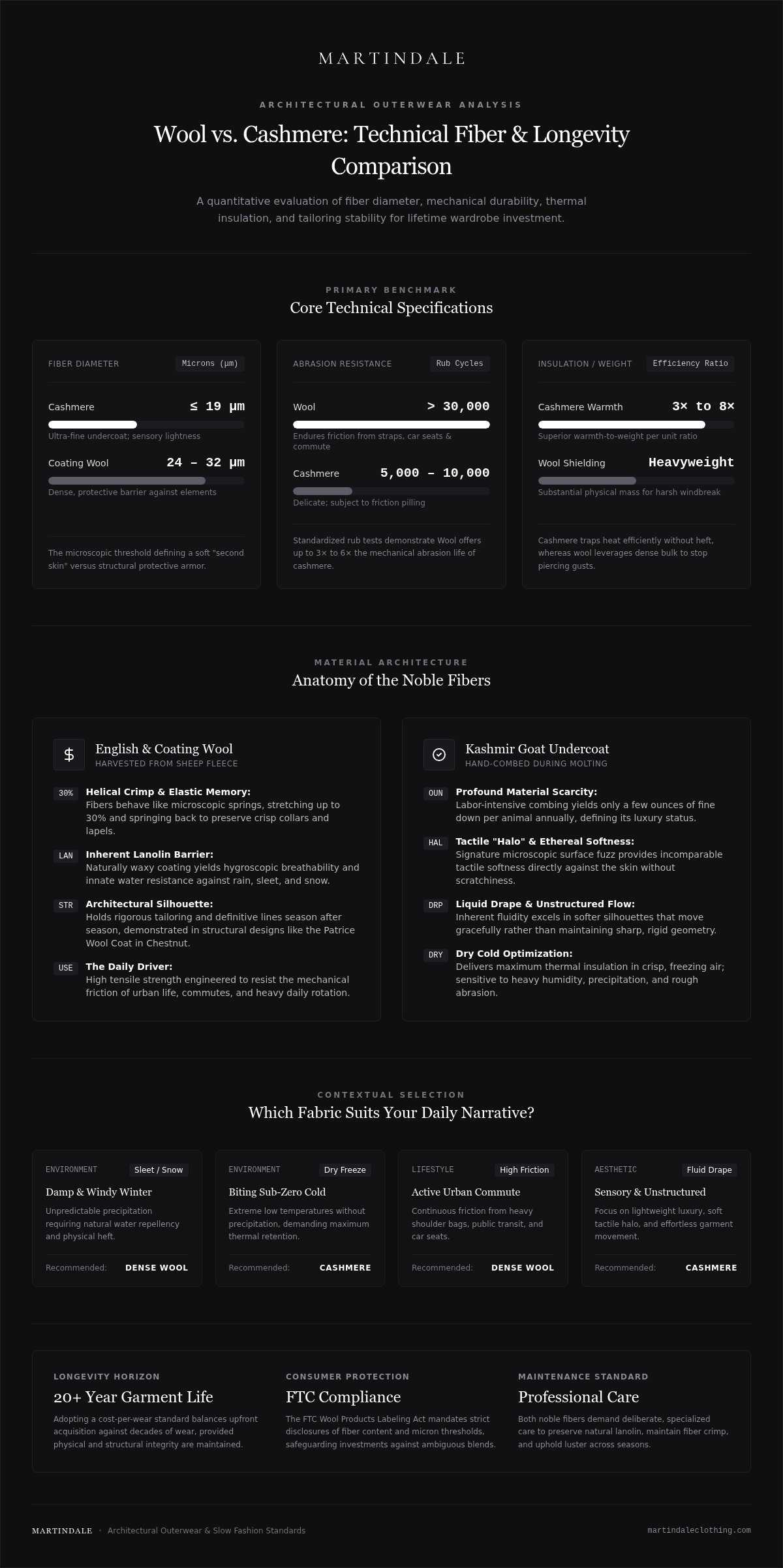
The technical soul of this decision is the micron count. This measurement of fiber diameter dictates how a fabric behaves against the skin and how it resists the passage of time. While traditional coating wools often sit between 24 and 32 microns, premium cashmere must measure 19 microns or fewer. This microscopic difference creates the binary between the sturdy protection of a wool vs cashmere coat and the soft, sensory indulgence of the latter. It's the difference between a garment that acts as armor and one that feels like a second skin.
The Heritage of Wool
Wool is a study in resilience and character. From the rugged depth of tweed to the refined structure of premium English wool, its versatility remains unmatched. This fiber contains natural lanolin, a waxy substance that provides inherent water resistance and durability. It's why architectural pieces like the Patrice Wool Coat in Chestnut maintain their sharp, professional silhouettes through heavy wear. Wool doesn't merely drape; it holds its shape with a quiet authority that defines the wearer's presence for years.
The Allure of Cashmere
Scarcity defines the cashmere experience. The labor-intensive process of hand-combing the soft underbelly of goats during their molting season yields only a few ounces of fiber per animal. This scarcity, paired with specific cashmere wool fiber characteristics like the signature tactile "halo," creates a garment of profound softness. While it lacks the dense armor of wool, it offers a superior warmth-to-weight ratio. You can explore how these materials are elevated in our curated collection of women's coats, where craft meets conscience.
Performance and Longevity: A Technical Comparison
Choosing a wool vs cashmere coat requires balancing sensory pleasure with mechanical endurance. Cashmere provides exceptional thermal insulation, often three to eight times warmer than sheep's wool per unit of weight. However, wool offers a substantial, protective weight that many prefer for harsh, windy winters. Wool is naturally hygroscopic, meaning it manages moisture and fluctuating temperatures with ease. Its fibers possess a natural, helical crimp that acts like a microscopic spring, providing the tensile strength necessary to resist the rigors of a daily commute. When deciding on a wool vs cashmere coat, one must consider how the garment responds to the friction of a life in motion.
Durability and Resilience
Wool is the architect's choice for a "daily driver." In standardized abrasion tests, high-density wool coatings often endure over 30,000 rub cycles before fiber breakdown occurs. Cashmere, being a finer and shorter fiber, typically shows wear between 5,000 and 10,000 cycles. This makes wool far less prone to the pilling paradox, where friction from handbag straps or car seats creates surface pills. For those seeking a garment that maintains its integrity through decades of professional life, the structural resilience of wool is unmatched.
Shape Retention in Tailoring
Precision tailoring relies on dimensional stability. Wool’s ability to stretch up to 30% and spring back ensures that lapels and collars remain crisp, even after a long day of wear. Cashmere’s inherent fluidity results in a softer, more liquid drape that suits unstructured silhouettes. To ensure you receive the quality promised by these materials, the FTC Wool Products Labeling Act requirements mandate strict disclosure of fiber content and micron thresholds. This transparency protects your investment in a garment designed for a lifetime. If you value a coat that holds its sharp silhouette season after season, consider the structured wool coats in our current collection.
Lifestyle and Climate: Which Fabric Suits Your Daily Narrative?
Your environment dictates the fiber that serves you best. The choice of a wool vs cashmere coat often settles in the context of the elements. Dense English wool excels in damp, unpredictable climates, shielding you from snow and sleet with its natural lanolin barrier. Cashmere, while offering superior insulation in dry, biting cold, is more sensitive to moisture. This distinction is vital for those who view their wardrobe as a functional narrative rather than a collection of items.
Adopting a cost-per-wear philosophy transforms a high-ticket purchase into a sensible investment. A garment designed to endure for 20 years or more requires a foundation of physical and moral integrity. Both materials demand professional care to maintain their luster, yet the choice ultimately hinges on how you move through the world. Choosing a piece that aligns with your climate ensures you aren't just buying a coat, but a reliable partner for the seasons ahead.
The Professional Wardrobe
A structured silhouette projects a quiet authority that softer fabrics cannot replicate. Choosing a timeless wool coat for women ensures your professional image remains steadfast, regardless of passing trends. For those who find themselves debating between different weights and styles, our guide on trench coat vs wool coat selections offers deeper insight into architectural layering.
Travel and Versatility
Cashmere is the definitive choice for the frequent traveler who prioritizes weightless warmth. As detailed in Encyclopaedia Britannica's guide to cashmere, the intensive harvesting process results in a fiber that is exceptionally light yet thermally efficient. Conversely, wool is the low-maintenance luxury option for those on the move. Its natural elasticity resists wrinkles, allowing you to step off a plane in a coat that looks as sharp as when you boarded. Discover the perfect companion for your journey by exploring our ethically crafted women's coats.
The Martindale Standard: Investing in Architectural Outerwear
Martindale stands as a deliberate choice in a world often defined by transient trends and disposable quality. While the wool vs cashmere coat debate frequently centers on tactile indulgence, we prioritize the architectural integrity of the garment. We believe true luxury is found in a piece that retains its sharp lines and moral substance long after the first season. Our commitment to slow fashion means rejecting the fragile for the formidable, ensuring that your investment reflects a standard of excellence that mass-market luxury simply cannot replicate.
The Integrity of English Wool
We select English wool for its unparalleled ability to balance a refined hand-feel with exceptional durability. Unlike standard fibers, this material possesses a density that allows for precise, clean tailoring that holds its shape against the elements. The Patrice Wool Coat serves as a definitive testament to this philosophy. It offers a structured, professional silhouette that remains crisp through years of wear, proving that resilience and elegance are not mutually exclusive when the raw materials are chosen with intention.
Ethical Luxury in 2026
In 2026, the modern woman views her wardrobe as an extension of her values. Choosing American-made outerwear is a statement of both moral and aesthetic discernment. Every Martindale piece, such as the Eleanor Wool Coat in Noir, is a study in structural permanence, crafted in the United States to ensure fair labor practices and uncompromising quality control. This proximity to production allows us to oversee every stitch, ensuring each coat meets our rigorous standards for longevity.
A coat shouldn't be a fleeting transaction; it's a partnership between the maker and the wearer. When you shop the collection, you aren't just acquiring a garment. You're securing a legacy piece designed to endure for decades. We invite you to step away from the cycle of disposable industry trends and invest in a standard of craftsmanship that honors the story of the fiber and the hands that shaped it.
Choosing a Legacy of Craftsmanship
Selecting between a wool vs cashmere coat is a choice between two distinct philosophies of luxury. While one offers an ethereal, sensory lightness, the other provides the architectural permanence required for a lifetime of wear. You now understand that your decision hinges on the balance of climate, structural needs, and the personal story you wish your wardrobe to tell. A coat shouldn't just be an item you wear; it's a testament to your values and a shield for your professional narrative.
At Martindale, we prioritize the enduring strength of premium English wool construction. Our pieces are ethically produced in the USA, ensuring that every stitch meets a standard of integrity that transcends the frantic cycles of modern retail. These garments are designed for decades of wear, offering a stable alternative to the temporary nature of mass production. We invite you to embrace a more considered way of dressing and a commitment to quality that remains steadfast over time.
Invest in your legacy: Shop Martindale's American-made wool coats. Choose a garment that stands as a definitive statement of your discernment and craft.
Frequently Asked Questions
Is a wool coat warmer than a cashmere coat?
Cashmere offers up to eight times the thermal insulation of sheep's wool by weight, making it exceptionally warm without being bulky. However, a dense wool coat often feels warmer in bitter, windy conditions because its substantial weight acts as a windbreak. The superior choice depends on your local climate; cashmere excels in dry cold, while wool provides a heavier, more protective barrier against harsh winter gusts.
Do cashmere coats pill more than wool coats?
Cashmere fibers are shorter and more delicate, which makes them more prone to pilling than long-staple wool. In a technical wool vs cashmere coat evaluation, wool’s higher abrasion resistance ensures the surface remains smooth through frequent wear. While cashmere provides a unique tactile halo, it requires more consistent maintenance to remove the pills that form when the fine fibers rub against handbags or car seats.
How long should a high-quality wool coat last?
A high-quality garment, such as the Patrice Wool Coat, is an investment intended to last twenty years or more. These pieces are built on a foundation of structural permanence, utilizing premium English wool and meticulous American craftsmanship to prevent sagging or shape loss. When you step away from disposable industry trends, you acquire a coat that serves as a reliable partner, maintaining its professional integrity for decades.
Can I wear a cashmere coat in the rain or snow?
Cashmere is a sensitive fiber that performs best in dry, cold environments. Significant exposure to rain or snow can cause the fibers to mat and lose their natural luster over time. Wool is the more resilient choice for damp climates, as its natural lanolin content provides a degree of water resistance. If you anticipate frequent encounters with sleet or heavy snow, wool’s moisture-wicking properties offer superior protection.
What is the best way to store a premium wool or cashmere coat?
Preserve the architectural integrity of your coat by using a wide, contoured hanger to support the shoulder structure. Avoid plastic covers, which trap moisture; instead, use a breathable cotton garment bag to allow the fibers to respire. Storing your piece in a cool, dry place with natural cedar blocks protects the material from moths and environmental damage, ensuring your investment remains in pristine condition for years.


