


Your wardrobe is only as resilient as the fibers that compose its foundation. We've been conditioned to accept outerwear that pills after a single winter or loses its silhouette before the first frost. Identifying the best coat materials for a capsule wardrobe isn't just an aesthetic choice; it's a commitment to permanence in an era of disposability. It's frustrating to invest in a piece only to see it degrade, leaving you with the environmental guilt of another discarded garment. You're seeking a long-term partnership with your clothing, not a fleeting transaction.
You deserve to understand the architectural integrity of high-quality fabrics that ensure your outerwear remains a timeless cornerstone for decades. By choosing heritage-grade natural fibers, you can move away from confusing synthetic blends toward a collection of fewer, better things. This guide explores the physical and moral superiority of materials like English wool and mulberry satin. You'll gain the confidence to make high-ticket investment purchases that reflect your discernment and your values.
The Philosophy of Permanence: Why Material Choice Defines Your Capsule
Outerwear serves as the definitive anchor of a luxury capsule wardrobe. It's the piece that commands the most attention and provides the structural foundation for every other garment you wear. Selecting the best coat materials for a capsule wardrobe requires a mental shift from chasing seasonal aesthetics to prioritizing material integrity. While synthetic blends dominate the market, they often lack the breathability and structural memory found in natural fibers. This distinction is vital for those who value a collection that remains relevant for decades rather than months.
Beyond the Trend Cycle: Longevity vs. Transience
The psychological weight of a permanent wardrobe piece shouldn't be overstated. When you own an archetype like the Patrice or Eleanor wool coat, you aren't just buying clothing; you're securing a legacy. These pieces reject the frantic pace of retail cycles in favor of stability and quiet authority. This concept of a legacy garment is also central to bespoke bridal fashion; you can check out Hanna Peters to learn about their approach to custom couture wedding dresses. Slow fashion is a commitment to ethical craftsmanship and material excellence that prioritizes the long-term partnership between the wearer and the garment. By focusing on high-quality natural fibers, you simplify daily styling and dramatically reduce the long-term costs of your wardrobe through a superior cost-per-wear ratio.
The decision to invest in natural materials is as much a moral choice as it is a stylistic one. Petroleum-based synthetics contribute to a cycle of environmental guilt and disposal that many modern consumers now reject. In contrast, natural fibers offer a path toward circularity and reduced waste. For a comprehensive overview of different fiber types, it's clear that natural origins provide superior durability over time. Understanding The Evolution of Slow Fashion helps explain why ethically produced outerwear is the standard for 2026 luxury. Choosing English wool or mulberry satin ensures your coat won't end up among the unsold textiles that are now banned from destruction in the EU. Quality always outlasts the temporary allure of the trend.
The Essential Natural Fibers: Wool, Satin, and Linen
Selecting the best coat materials for a capsule wardrobe requires an understanding of how specific weaves influence longevity. While mass-market retail often prioritizes seasonal shades, true wardrobe permanence is found in the structural memory of natural fibers. Identifying the best coat materials for a capsule wardrobe is about choosing fabrics that resist the fatigue of daily wear while maintaining a sophisticated, intentional silhouette.
English Wool: The Ultimate Heritage Insulation
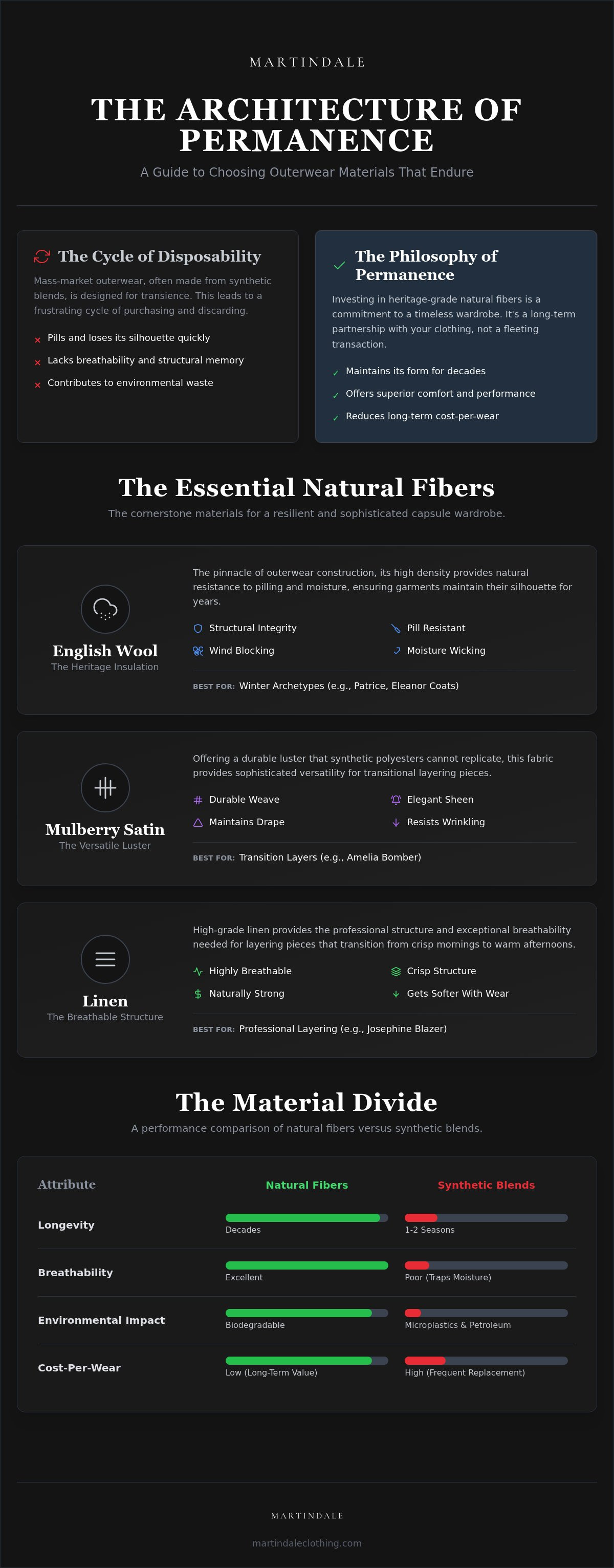
English wool represents the pinnacle of outerwear construction. Its high density provides natural resistance to pilling and moisture; this ensures that archetypes like the Patrice Wool Coat maintain their silhouette through years of winter use. Unlike flimsy synthetic blends, this material offers a definitive weight that blocks the wind while remaining breathable. For deeper insights into thermal performance and sustainable sourcing, explore our guide on Ethical Winter Coats. It's a fabric built for a long-term partnership with the wearer.
Mulberry Satin and Linen: Elevating the Lightweight Layer
A sophisticated capsule requires versatility across shifting seasons. Mulberry satin, featured in the Amelia Bomber Jacket, offers a durable luster that synthetic polyesters can't replicate. Similarly, high-grade linen provides the professional structure needed for pieces like the Josephine Blazer. According to sustainable fashion research, choosing these natural fibers supports a garment's lifecycle and reduces microplastic shedding. These materials transition seamlessly from crisp spring mornings to late summer evenings. You can explore our full collection to see these fabrics in person.
| Material | Primary Attribute | Best For |
|---|---|---|
| English Wool | Insulation and Structure | Winter Archetypes (Patrice, Eleanor) |
| Mulberry Satin | Versatility and Luster | Transition Layers (Amelia Bomber) |
| Linen | Breathability | Professional Layering (Josephine) |
Assessing Quality: Weaves, Weights, and Weather Resistance
Discerning the best coat materials for a capsule wardrobe involves looking beyond the surface. Weight and weave are the silent indicators of how a garment will perform over time. For instance, the Eleanor Wool Coat utilizes a heavy tuxedo wool for maximum structure and warmth in deep winter. In contrast, the Lou Trench offers a lighter weight that suits transitional climates without sacrificing elegance. This balance allows you to build a wardrobe that responds to the environment rather than just the calendar.
Natural fibers possess an inherent ability to regulate temperature, a feat petroleum-based synthetics cannot match. This thermal intelligence ensures comfort in fluctuating conditions, keeping you warm without overheating. When evaluating a potential investment, examine the tightness of the weave. A dense, compact weave acts as a barrier against wind and surface abrasion, extending the physical lifespan of the piece by years. You're looking for stability, not just style.
Glen Plaid and Gabardine: Texture with Purpose
These weaves are hallmarks of traditional American Made Women’s Outerwear. Patterns like the Glen Plaid found in the Maggie Trench aren't merely decorative. They provide a multi-dimensional structural integrity that resists stretching and distortion over time. Historically, these weaves were engineered for the rigors of outdoor life, making them ideal for the modern curator who values resilience. Choosing these patterns adds a layer of heritage to your capsule foundation.
The Lining Matters: Why Interior Construction Defines Exterior Longevity
A coat’s interior is as vital as its shell. A premium lining, such as mulberry satin or silk, serves two purposes. It protects the outer fibers from internal friction and ensures the garment drapes perfectly over your underlying layers. Cheap, static-heavy linings often signify a lack of overall quality and can cause the coat to lose its shape prematurely. Check for a smooth, high-end finish to confirm you're making a lasting investment in your wardrobe's future. You can browse our collection of architectural outerwear to find your next permanent piece.
The Ethical Investment: Why Origin and Construction Matter
The best coat materials for a capsule wardrobe achieve their true potential only through masterful construction. Selecting premium English wool or mulberry satin is the first step, but the integrity of the garment relies on the hands that sew it. American-made garments often utilize higher-tier raw materials because domestic production allows for rigorous quality control that mass-produced imports cannot match. This "slow fashion" premium isn't just about ethics; it's about the physical durability that comes from intentional sewing and fair wages. When a piece is crafted with care, it remains a stable pillar in your collection for decades. To complement these foundation pieces, you can explore Direct-to-Consumer Product Sales for accessories that share this commitment to craftsmanship.
Identify superior tailoring by examining the silent architecture of the coat. Reinforced seams and hand-finished edges prevent the structural fatigue common in disposable fashion. Substantial hardware, such as heavy-duty zippers and securely anchored buttons, provides a tactile confirmation of quality. These details ensure your investment doesn't just look premium on the rack but maintains its sophisticated silhouette through years of consistent wear.
Domestic production fosters a sense of pride and responsibility that's reflected in the final product's resilience. There's a profound difference between a garment made for a season and one made for a lifetime. Martindale’s design-to-sew process in the USA ensures every Patrice and Eleanor coat meets heritage standards by keeping the entire production cycle under expert oversight. This commitment to local craftsmanship results in a more reliable, ethical, and enduring piece of outerwear.
Building Your Legacy Wardrobe
Your capsule wardrobe is an evolving story of quality over quantity. As you refine your collection, use this final checklist to ensure every purchase is a deliberate choice:
- Material: High-density natural fibers like English wool or linen.
- Origin: Transparent, ethical, and domestic manufacturing.
- Construction: Hand-finished details and reinforced stress points.
- Timelessness: Archetypal silhouettes that reject the trend cycle.
Choosing with discernment allows you to move through the world with a sense of moral and aesthetic confidence. Explore the Martindale collection of ethically made, American-sewn investment pieces to secure the foundation of your permanent wardrobe.
Defining Your Permanent Silhouette
The pursuit of a curated lifestyle begins with the rejection of the temporary. By prioritizing material integrity and ethical construction, you transform your outerwear from a seasonal purchase into a lasting legacy. Identifying the best coat materials for a capsule wardrobe requires looking for the physical durability of English wool and the refined luster of mulberry satin. These fibers don't just endure; they age with grace, maintaining their architectural form through years of consistent wear. You're no longer just buying a coat; you're securing a foundation.
Every garment you choose is a chapter in your personal story of quality over quantity. When you invest in American-made craftsmanship, you support a system that values the maker as much as the wearer. Our collection is ethically produced in the USA, utilizing heritage fabrics designed for decades of wear. This approach ensures your Patrice or Eleanor coat remains a stable anchor in an ever-shifting world. It's time to embrace a wardrobe that reflects your discernment and commitment to slow fashion.
Invest in a Lifetime of Style: Shop the Martindale Outerwear Collection
Frequently Asked Questions
What is the most durable material for a winter coat?
High-density English wool is the most durable material for a winter coat. When evaluating the best coat materials for a capsule wardrobe, wool stands out for its natural resistance to pilling and moisture. Unlike synthetic blends that degrade quickly, heritage-grade wool fibers possess a memory that maintains the coat's architectural integrity. This makes it the premier choice for those seeking a long-term partnership with their outerwear through shifting seasons.
Is wool or cashmere better for a capsule wardrobe?
Wool is the superior choice for a capsule wardrobe foundation due to its structural resilience and longevity. While cashmere offers a soft luster, it's significantly more delicate and prone to pilling under daily friction. High-quality wool, such as the English wool used in the Maggie trench, provides the stability required for a permanent collection. It balances thermal performance with a physical integrity that outlasts more fragile, fleeting luxury fibers.
How do I identify high-quality satin in a jacket?
Identifying high-quality satin requires assessing the density of the weave and its luster. Premium mulberry satin, featured in the Amelia Bomber, displays a sophisticated, deep sheen rather than the artificial shine of polyester. It should feel cool to the touch and possess a substantial drape that holds a silhouette. High-tier satin won't snag easily and maintains its physical and moral integrity through years of intentional, mindful wear.
Why are American-made coats considered a better investment?
American-made coats represent a superior investment because domestic production allows for meticulous oversight of every seam and detail. By keeping the design-to-sew process within the United States, we ensure every Patrice or Eleanor coat meets heritage standards. This proximity guarantees the use of premium raw materials and ethical labor practices. The result is a garment that physically lasts longer and carries a story of craftsmanship rather than disposable trends.
Can linen be part of a professional capsule wardrobe?
High-grade linen is a vital component of a professional capsule wardrobe, especially for structured layering in transitional seasons. The best coat materials for a capsule wardrobe include linen because of its exceptional breathability and crisp silhouette. Pieces like the Josephine Linen Blazer offer a sophisticated alternative to heavier fabrics, maintaining a polished appearance. Its natural texture adds depth and stability to a collection focused on quality over quantity.


