


What if the most radical choice you could make this winter isn't following a fleeting trend, but investing in a garment designed to outlive it? You've likely felt the sting of a high-priced coat that loses its shape after one season, or the confusion of navigating "green" labels that don't actually mean anything. It's a common frustration in a world where disposable quality has become the norm. This shift toward slow fashion women's coats represents more than just a style preference; it's a structural commitment to human dignity and garment permanence that defines 2026 luxury.
In this article, you'll discover how ethical manufacturing is reclaiming the soul of outerwear through domestic craftsmanship and a rejection of the "fast" cycle. We'll examine the impact of new regulations, such as the EU ban on destroying unsold goods effective July 2026, and the rising value of heritage materials like fine wool. By the end, you'll have the clarity to choose pieces that reflect your moral integrity and provide a lifetime of warmth.
Beyond the Label: The Rising Demand for Ethical Integrity in Outerwear
For years, the fashion industry obscured its practices behind vague marketing. But 2026 marks a definitive shift in consumer consciousness. We're moving from a simple interest in eco-friendly materials toward a profound demand for human-centric production. Ethical manufacturing is no longer a peripheral benefit; it's a holistic system that prioritizes fair wages, physical safety, and radical transparency across the entire supply chain.
This movement rejects the frantic, high-energy urgency of modern retail. Instead, the slow fashion movement embraces an unhurried, intentional pace that honors the artisan. A coat serves as the ultimate benchmark for a brand’s moral integrity. Because of its structural complexity, requiring precise tailoring, heavy-duty hardware, and multiple layers of lining, an ethically made coat cannot be rushed. It demands a level of oversight that mass-production facilities simply cannot provide.
The Human Cost of Disposable Outerwear
The "race to the bottom" in fast fashion has devastating consequences for garment workers. Low-cost outerwear often depends on opaque subcontracting chains where accountability disappears. This system thrives on transience, producing coats that fall apart after one season while leaving behind a trail of human exploitation. Choosing slow fashion women's coats is a quiet act of rebellion against this cycle. It represents a choice for permanence over the temporary.
By investing in pieces like those found in the Martindale shop, you align your wardrobe with your values. These garments aren't just objects; they're stories of domestic craftsmanship. When a piece is designed and sewn in America, the distance between the maker and the wearer vanishes. It's replaced by a sense of shared responsibility and enduring quality that defines a truly ethical purchase.
The Architecture of an Ethically Manufactured Wool Coat
A coat's true value isn't found in a logo. It resides in the hidden architecture beneath the surface. Unlike the flimsy alternatives of the frantic retail cycle, slow fashion women's coats rely on internal structural integrity to provide lasting elegance. This begins with premium tailoring techniques, such as reinforced seams that resist tension and high-quality interlining. These invisible components act as a skeleton, ensuring a garment like the Eleanor Wool Coat retains its crisp, intentional silhouette through years of winter weather.
This emphasis on foundational strength and quality construction is not unique to fashion; it is also the hallmark of professional contracting firms like The Martinez Company, which brings similar precision to commercial and residential projects.
The choice of material is equally vital to this permanence. Premium natural fibers, specifically English wool, offer a resilient "memory" that synthetic blends lack. This allows the fabric to breathe and recover its shape after wear, preventing the sagging or pilling common in disposable outerwear. Small-batch production further secures this quality. By limiting output, craftsmen can maintain rigorous standards that mass manufacturing simply ignores. Ethical labor directly correlates to the precision of a coat’s finish, as a respected artisan has the time to ensure every stitch is perfect.
This connection between fair labor and high-quality results is central to specialized garment makers; for an example of this craftsmanship in action, you can visit PowerSweet Fashion.
Why Domestic Production Remains the Luxury Standard
Choosing garments "Designed and Sewn in America" provides a level of transparency that global supply chains often obscure. Domestic manufacturing hubs preserve a rich heritage of skilled craftsmanship, where traditional methods are protected from the pressures of the "race to the bottom." This shift toward slow fashion women's coats is rooted in geographic heritage and a refusal to compromise on quality. It ensures every piece meets The Definitive Standard for Premium American Made Women's Outerwear in 2026. When you explore the curated selection at Martindale, you're not just buying a garment. You're participating in a legacy of stability and moral discernment.
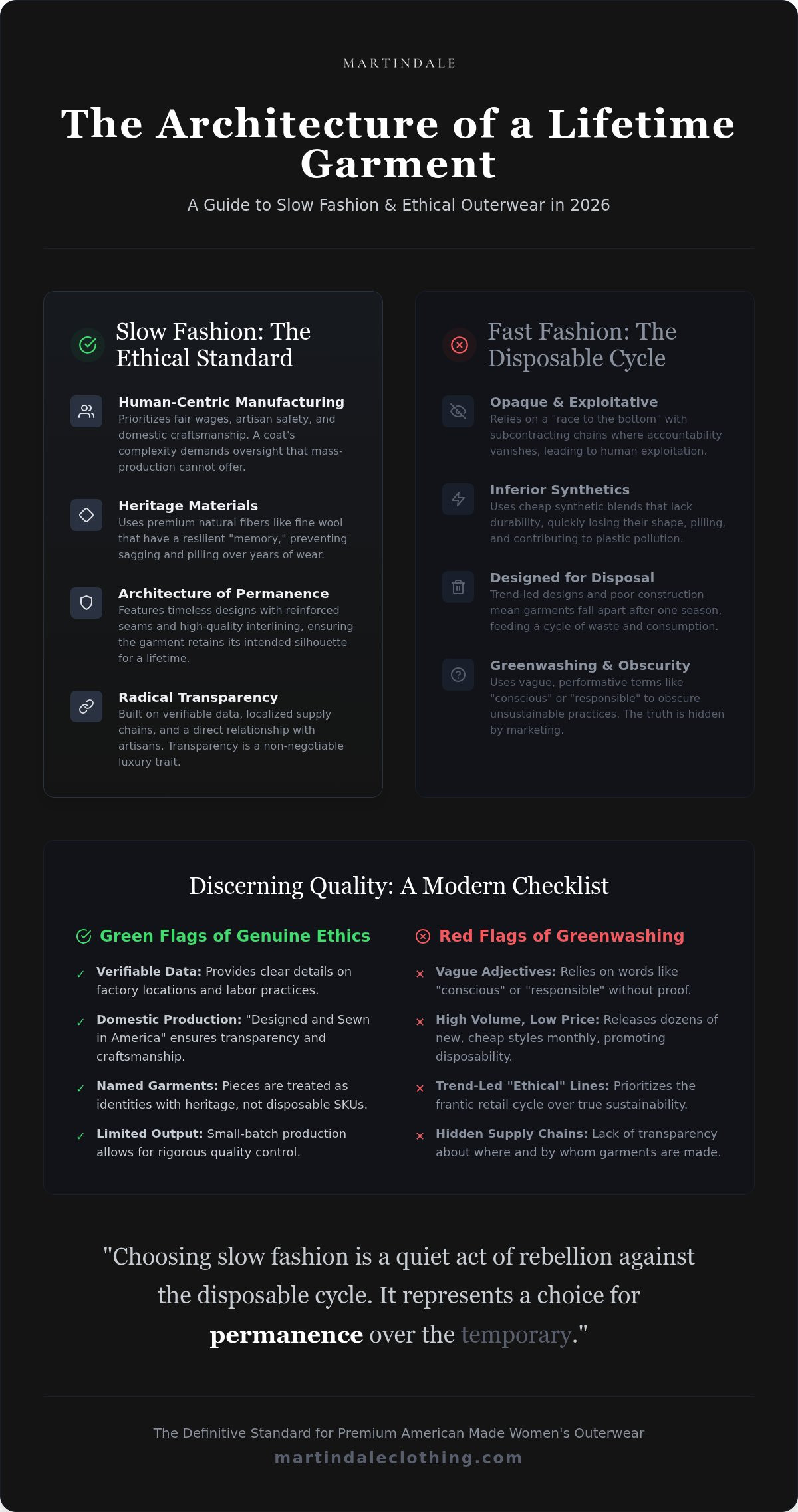
Identifying Greenwashing vs. Genuine Ethical Standards
In a marketplace saturated with performative marketing, discerning the truth requires looking past ethereal adjectives like "conscious" or "responsible." Genuine ethical standards are built on verifiable data rather than vague promises. By 2026, regulations like the EU Digital Product Passport will require brands to provide detailed information on materials and origin. A brand truly committed to slow fashion women's coats will already provide this transparency regarding factory locations and labor practices. Transparency isn't a marketing feature; it's a non-negotiable luxury trait.
Localized supply chains serve as the most effective method for ensuring this accountability. By centralizing production, brands drastically reduce their carbon footprints and maintain a direct relationship with their artisans. This proximity eliminates the systemic opacity that allows exploitation to thrive in global networks. You should also look for brands that personify their pieces. When a coat is given a name like The Patrice or The Eleanor, it's treated as a distinct identity with a heritage, rather than a nameless SKU destined for a clearance rack. This personal connection is a hallmark of high-quality slow fashion women's coats.
The Red Flags of Fast Fashion Outerwear
Trend-led "ethical" collections are almost always a contradiction. If a brand releases dozens of new styles every month, their commitment to ethics is secondary to the frantic retail cycle. Physical indicators of poor construction are often hidden in plain sight. You might find thin, synthetic linings that offer no thermal value, brittle plastic buttons, or loose threads at the hem. These are the hallmarks of a garment built for transience. True luxury is found in the substantial weight of English wool and the enduring luster of mulberry satin.
To build a wardrobe that aligns with your personal moral values, explore our collection of ethically made outerwear and invest in a piece that lasts.
Investing in Permanence: The Role of Timeless Design
A garment cannot be considered ethical if it's designed to become obsolete within a year. Obsolescence is the enemy of integrity. True sustainability requires a rejection of the disposable mindset that fuels modern retail. When we discuss slow fashion women's coats, we're describing an intentional departure from the frantic cycle of trends. Pieces like the Maggie Glen Plaid Trench are crafted to transcend seasonal boundaries, offering a silhouette that remains as relevant in a decade as it is today.
Investing in ethical luxury is a deliberate choice to enter a long-term partnership with your clothing. While a premium coat at this level of craftsmanship may require an initial investment of $1,000 or more, its twenty-year lifespan creates a superior value proposition. This cost-per-wear logic reveals the hidden expense of fast fashion, where low prices mask the recurring cost of constant replacement and environmental decay. A coat isn't just a purchase; it's an enduring asset.
From Trend to Tradition: Building a Legacy Wardrobe
The aesthetic of enduring sophistication is personified by items like the Patrice Wool Coat. Rather than following a fleeting aesthetic, these garments lean into heritage and classic lines. We invite you to view your wardrobe not as a revolving door of temporary styles, but as a curated collection of meaningful chapters. Each piece should tell a story of moral discernment and physical durability.
For those seeking to refine their selection, The Longevity of High Quality Fabric Women's Coats: An Investment Guide provides deeper insight into the materials that make this permanence possible. By choosing slow fashion women's coats, you're not just buying outerwear. You're securing a legacy of style that honors both the maker and the wearer.
Cultivating a Legacy of Intentional Style
Choosing a coat is an act of curation that defines your relationship with the world. True integrity in manufacturing isn't a marketing veneer; it's a structural commitment to human dignity and garment permanence. We've examined how domestic craftsmanship and premium natural fibers provide the architecture for pieces that transcend the frantic retail cycle. Genuine slow fashion women's coats offer a rejection of the temporary, replacing disposable trends with stability and heritage. By looking past vague marketing and demanding transparency, you secure a wardrobe that reflects your moral discernment.
Martindale stands as a principled visionary in this cultural shift. Each garment is Designed and Sewn in America, crafted with the resilient weight of English wool and the sophisticated luster of Mulberry satin. These timeless silhouettes are built to endure for decades, ensuring your investment remains a cornerstone of your collection. Explore the Martindale Collection of Ethically Manufactured Outerwear today. You deserve a wardrobe that feels as good as it looks, built on a foundation of steadfast ethics and quiet authority.
Frequently Asked Questions
What does "ethical manufacturing" actually mean for a winter coat?
Ethical manufacturing for a winter coat refers to a production model where human dignity and environmental stewardship are prioritized over speed. It involves paying living wages, ensuring safe factory conditions, and maintaining a transparent supply chain from the raw wool source to the final stitch. For a garment as complex as a coat, this also means rejecting the frantic pace of seasonal trends in favor of intentional, small-batch craftsmanship.
Is a coat made in the USA automatically more ethical than one made abroad?
Domestic production provides a higher level of transparency and accountability than opaque global supply chains. When a garment is designed and sewn in America, it must adhere to strict labor laws and environmental standards that are often bypassed in overseas subcontracting. While "made in the USA" isn't a singular guarantee of perfection, it serves as a primary trust builder for those seeking slow fashion women's coats with verifiable labor standards.
How can I tell if a brand is greenwashing its ethical claims?
Greenwashing is often identified by the use of vague, unregulated terms like "conscious" or "earth-friendly" without supporting data. A brand with genuine integrity will provide specific details about their factory locations, material origins, and production methods. Look for a refusal to follow mainstream industry cycles and a focus on permanence. If a company releases high volumes of new styles while claiming sustainability, their actions likely contradict their marketing veneer.
Why are ethically manufactured wool coats significantly more expensive?
The higher cost reflects the physical and moral integrity of the production process. Premium materials like English wool carry higher market values, evidenced by Australian wool prices increasing over 51 percent year over year by August 2026. Beyond materials, you're paying for fair wages and the time required for skilled artisans to execute complex tailoring. This investment secures a garment designed for a twenty-year lifespan rather than a single season.
Does ethical manufacturing affect the warmth or durability of a coat?
Ethical production directly improves both warmth and durability by prioritizing high-quality natural fibers over synthetic blends. Slow fashion women's coats utilize dense wool and reinforced internal architecture, ensuring the garment retains its shape and insulating properties for decades. In contrast, mass-produced outerwear often uses thin linings and plastic interlinings that degrade quickly. A responsibly made coat is a partnership built on stability and enduring physical performance.


