


The best fall coats for the office balance the day’s temperature with the shape and formality of your work clothes. A lightweight jacket suits a mild, crisp day, a trench adds polish and versatility, and wool offers a more substantial layer when the weather turns colder.
A coat should sit comfortably over a blazer, dress or weekday layers without overwhelming them. A defined waist, thoughtful structure or distinctive pattern can add character while keeping the outfit office-ready.
Use these practical tips to compare lighter layers, classic trenches and wool coats, then choose a style that works with clothes you already wear. A versatile coat can make your fall wardrobe feel considered rather than crowded.
Table of Contents
1. Layering for cooler weather
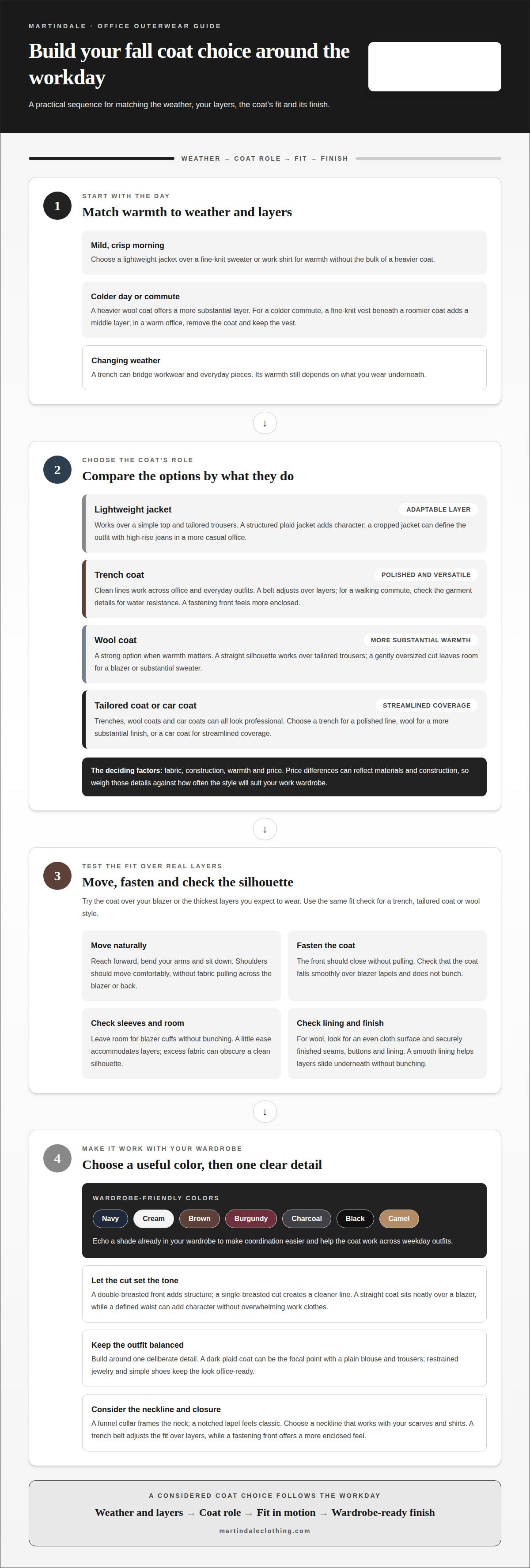
On a mild fall morning, wear a lightweight jacket over a fine-knit sweater or work shirt for warmth without the bulk of a heavier coat. A structured plaid jacket can serve as the main layer over a simple top and tailored trousers. For a more casual office, pair a cropped jacket with high-rise jeans; the waist-length hem gives the outfit definition. The best fall coats for the office include lighter options for days that call for adaptable layers.
Check the fit with a work layer underneath. Reach forward and bend your arms: the shoulders should move comfortably, and the front should close without pulling across a blazer or cardigan. A little ease leaves room for layers, but excess fabric can obscure a clean silhouette. Check the sleeves, too, so jacket cuffs don’t bunch against your shirt cuffs.
Navy, cream, brown and burgundy are versatile fall colors for professional wardrobes. Navy pairs readily with denim, cream, burgundy and brown, making it a useful anchor for existing pieces. Choose a coat color that echoes a shade in your wardrobe to make coordination easier.
Compare office coats by fabric, construction, warmth and price. Look closely at seams and materials, then consider the coat’s weight and lining. Price differences can reflect materials and construction, so weigh those details against how often the style will suit your work wardrobe. These comparisons help you find the best fall coats for the office for your priorities.
On a colder commute, a vest can add a middle layer beneath a roomier coat. Wear a fine-knit vest over a shirt, then add a coat with enough room through the armholes. In a warm office, remove the coat and keep the vest as part of your outfit. This adds a useful layer without relying on one heavy garment.
2. Trench coats
A trench is a versatile office staple, with clean lines that bridge workwear and everyday pieces. A belted, wrap-style coat defines the waist while keeping the fit relaxed. Tie the belt loosely over a sweater, or leave the coat open over a structured jacket when temperatures allow. Its collar adds polish and frames the face without needing extra accessories.
For a walking commute, choose a trench described as water-resistant. Check the garment details for that feature, then consider how its closure and collar cover you in changing weather. A belt adjusts the fit over layers, while a fastening front offers a more enclosed feel. Warmth still depends on what you wear underneath.
With jeans, a trench contrasts tailored outerwear with a relaxed base. Try straight-leg denim, a fine-knit sweater and a camel trench for a restrained combination. Dark denim and a navy trench look especially composed; leather loafers or simple ankle boots keep the outfit office-ready. Mixing textures adds dimension without relying on a bold print.
Try a trench over the thickest layers you expect to wear before choosing a size. Fasten it, sit down and reach forward; the shoulders and sleeves should allow movement without pulling. A double-breasted front adds structure, while a single-breasted cut creates a cleaner line. Either should fall smoothly over a blazer without bunching at the lapels.
For a polished finish, turn up the collar slightly and let the belt hang neatly rather than knotting it tightly. A camel, navy or other wardrobe-friendly trench can work across weekday outfits. Explore trench coat styles for examples of classic, office-ready shapes.
3. Office-appropriate blazers and tailored coats
A tailored coat should sit neatly over a blazer without competing with it. Wear a single-button blazer under a straight-cut coat, or pair a softly structured coat with a fine sweater. Charcoal, navy and camel work across office outfits. A darker printed jacket can also feel considered when its pattern echoes colors already in your wardrobe.
Trench coats, wool coats and car coats can all look professional at the office. Choose a trench for a polished line, wool for a more substantial finish, or a car coat for streamlined coverage. The best style depends on your layers and the weather you expect outside.
Shoes and accessories complete the look. Leather loafers or low-profile ankle boots complement tailored trousers, while clean leather flats work with a midi skirt or dress. Match a structured work bag to the coat’s formality, then keep jewelry restrained: small earrings or a simple watch won’t crowd a strong collar or lapel.
Build an editorially minded outfit around one deliberate detail rather than several competing ones. A dark plaid coat, for example, can add pattern to a plain blouse and trousers; let the print remain the focal point. A smooth leather belt or understated scarf adds texture without making the outfit feel casual.
Check the silhouette over your usual office layers. Fasten the coat over a blazer, sit at a desk and reach forward; the fabric should fall smoothly across your shoulders and back. Sleeves should leave room for blazer cuffs without bunching. These fit checks help keep tailored outerwear comfortable from the commute through the workday.
4. Wool coats
A wool coat earns its place in an office wardrobe through warmth, structure and repeat wear. On colder fall days, a heavier wool style can offer more warmth than a lightweight layer. A straight silhouette works over tailored trousers, while a gently oversized cut leaves room for a blazer or substantial sweater. Choose a shape that suits the layers you actually wear.
Color can determine how often you reach for a coat. Navy, charcoal, camel and black coordinate with familiar work clothes, from patterned skirts to neutral trousers. Before choosing a seasonal shade, consider the colors already in your closet. A restrained palette keeps the coat useful beyond one fashion moment.
Durability and comfort depend on more than the fabric name. Look for an even cloth surface, then check that seams, buttons and lining are securely finished. Move your arms and sit down: the shoulders should allow movement, and the body shouldn’t pull over your work outfit. A smooth lining helps layers slide underneath without bunching.
Details shape a coat’s character. A double-breasted peacoat typically has two rows of buttons, creating a defined front that suits office separates. A single-front style gives a dress or suit a quieter line. A funnel collar frames the neck, while a notched lapel feels classic; choose a neckline that works with your scarves and shirts.
Compare a coat with an outfit you actually wear to work. Put it over a blazer, check the sleeve and hem proportions, then fasten it to assess the fit. Wool is a strong option when warmth matters, but the best cut accommodates your layers without feeling restrictive. That balance makes a coat practical for the commute and polished indoors.
For cold fall and winter weather, heavier suede, faux fur, wool, and lined jackets can provide warmth. This wider range of options can help when comparing office outerwear, with material and lining considered alongside the coat’s cut and room for layers. Keeping these factors in view supports a choice suited to cold-weather wear.
Martindale: Women's Coats
Martindale offers women’s outerwear for those seeking considered pieces beyond a single season. Its Patrice Wool Coat in Chestnut is a double-breasted coat with a shawl collar, while the Eleanor Wool Tuxedo Coat in Noir has a slim, double-breasted silhouette and silk lapel. Both are made in America and ethically made. For a lighter layer, Martindale also offers the Amelia Bomber Jacket in Mulberry Satin and Midnight Satin.
Choose a wool coat for a more substantial layer over workwear; consider a satin bomber for milder days or a more relaxed office. Martindale’s Patrice and Eleanor wool coats offer distinct silhouettes, while the Amelia satin bomber provides a lighter alternative.
Explore Martindale’s women’s coats and wool styles at martindaleclothing.com.
Choose a coat that earns its place
Let your weekly routine guide the choice. Think about what you wear on office mornings, how you travel and whether your coat needs to fit over a blazer. The best fall coats for the office support those habits, not just a single outfit. A considered choice can bring consistency to weekday dressing season after season.
Martindale offers women’s coats, including the Patrice Wool Coat and Eleanor Wool Tuxedo Coat, as well as the Amelia Bomber Jacket in Mulberry Satin. Compare their different weights and silhouettes as you build an office wardrobe around enduring outerwear.
Take the next step at your own pace and explore what suits your workday. Contact Martindale to discuss your needs, and choose a piece that feels right for the way you dress.
Frequently Asked Questions
Compare fabric, seams, closures and lining rather than choosing by appearance alone. A neutral color can make one piece useful across several work outfits. Check the garment’s listed price before buying, since materials and construction vary between styles and retailers.
A tailored silhouette can work for meetings and commutes, while a restrained pattern adds character without limiting outfit pairings. Consider how often you’ll wear the coat and how it works with your wardrobe. A premium label alone doesn’t guarantee better quality.
Which fall office coats are warm, lightweight, and suitable for commuting?
A midweight coat paired with a removable layer offers a practical balance for changing temperatures. Wear a light jacket over a thin sweater on a cool walk, then remove it indoors. A wool coat offers a more substantial option for colder conditions, while a lighter trench suits milder weather. For rainy commutes, look for a coat specifically described as water-resistant.
How should an office fall coat fit over a suit or business-casual outfit?
Choose a cut that accommodates your usual work clothes without pulling at the shoulders or chest. Try it over a complete outfit, including a suit jacket, then fasten it and move naturally. Check that the outer sleeves cover the suit sleeves and that the coat hangs without catching on the jacket underneath. For business-casual wear, a closer silhouette can keep the look neat.
How do popular office coat brands compare on quality, warmth, and price?
Compare materials and seams for quality, and check the coat’s weight and lining when judging warmth. Price differences reflect materials and construction, so weigh those details against how often the coat will suit your work wardrobe.


