


A blazer is a sound choice for an interview in a traditional industry; in a creative setting, a tailored cardigan or smart jacket can also suit the room. The right interview blazer for women should look polished on its own, without needing to match a suit. Above all, it should fit comfortably and let you move with ease.
Choosing what to wear can feel like a test before the interview even begins. A considered blazer helps create a composed impression, but the details matter: a strained button or shoulder seam can undermine an otherwise professional outfit.
Here, you’ll learn when a blazer is appropriate, how to pair it with trousers or a pencil skirt, and what to look for in its fit and fabric. These practical choices can help you create a balanced, professional outfit and prepare with greater confidence.
Table of Contents
Should I Wear a Blazer to an Interview?
For traditional industries, a blazer is a considered interview choice. Creative workplaces allow more flexibility, but polish still matters.
Tailored and Relaxed Styles
A tailored blazer creates a defined line through the shoulders and waist. Choose one that buttons comfortably without pulling or puckering, so you can sit, reach, and gesture naturally. A more relaxed style can work in a less formal workplace, provided its shape still looks intentional. Pair it with structured trousers or a pencil skirt to balance ease with polish without making the outfit feel rigid.
Fashion-Industry Interview Style
For a fashion-industry interview, let the blazer show discernment rather than dominate your outfit. A clean, classic shape feels sophisticated, while a distinctive color or considered proportion adds personality. Keep the rest composed: for example, wear a navy blazer with simple trousers and a refined top. Make deliberate choices that leave room for conversation about your ideas. Fit and overall balance communicate confidence more effectively than decorative details alone.
Buttons and Collar Details
Button placement affects both appearance and comfort. Before the interview, fasten the blazer while standing and sitting; the front should lie smoothly without strain. A single-button front creates a simple focal point, while a two-button style feels more traditional. Lapels also shape the look: classic notched lapels feel familiar, while a collarless neckline reads as more minimal. Choose details that suit the role and outfit rather than compete with them.
Year-Round Blazer Options
A versatile blazer can work across seasons and changing weather. For a warm-weather meeting, lightweight linen or cotton-blend fabric can help maintain a professional appearance. In cooler conditions, choose fabric with enough substance to sit neatly over your shirt. Consider how the blazer layers, whether the sleeves allow comfortable movement, and how it feels indoors. A versatile piece should work in different settings, not just with one interview outfit.
Pairing blazers with trousers or pencil skirts
For a corporate interview, tailored dress pants or a pencil skirt create a composed foundation. Match your blazer’s formality to the setting, then keep the silhouette balanced. The right pairing makes professional attire feel deliberate rather than overly coordinated.
With trousers, start with a fitted blazer and dress pants that sit smoothly at the waist. High-waisted pants can elongate the silhouette, while a straight or gently tapered leg keeps the line clean. Black, navy, beige, and gray make restrained color combinations. For example, pair a gray jacket with navy trousers, or wear matching navy pieces for a more unified impression. Check the hem with your interview shoes; the fabric should fall neatly rather than bunch at the ankle.
A knee-length pencil skirt is a polished option for corporate interviews. Pair it with a fitted blazer that ends around the hip to keep the proportions balanced. A black skirt with a light blouse and navy jacket creates contrast without competing colors. Try the complete outfit before interview day: the skirt should stay comfortable as you move, and the jacket should lie smoothly whether open or fastened.
A pantsuit pairs matching trousers and a jacket for a continuous, formal look. A skirt suit creates the same coordinated effect with a skirt. Neither is automatically the stronger choice; consider which lets you sit, walk, and present yourself comfortably. Separates allow more variation. For instance, a double-breasted jacket can add structure, while a simple skirt keeps the outfit measured. Let fit guide your decision: a well-proportioned pairing looks sophisticated without relying on extra detail.
Blazer fit for women
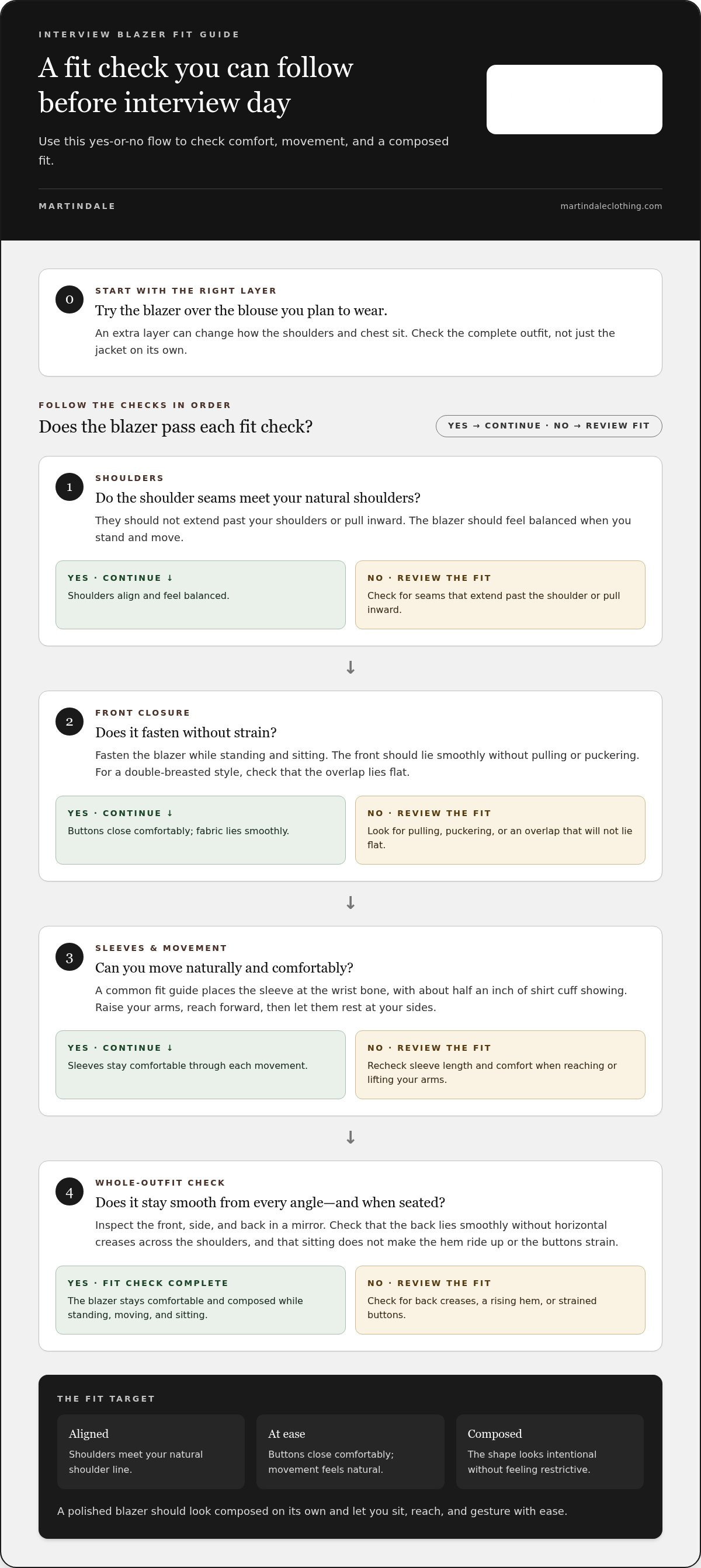
Fit shapes a blazer’s appearance before color or styling comes into play. Start with the shoulders: the seams should meet your natural shoulders without extending past them or pulling inward. The blazer should feel balanced when you stand and move. Try it over the blouse you plan to wear, since an extra layer can change how the shoulders and chest sit. An interview blazer for women should look composed without feeling restrictive.
Next, fasten the front and check the waist. The buttons should close comfortably, without pulling or puckering the fabric. A gently tapered shape can define the waist, while a hem at hip length or slightly below creates a clean line with trousers or skirts. If the blazer is double-breasted, make sure the overlap lies flat. Aim for ease, without strained buttons or excess fabric.
Check the sleeve length closely. A common fit guide places the blazer sleeve at the wrist bone, with about half an inch of shirt cuff showing. Raise your arms, reach forward, then let them rest at your sides. The sleeves should stay comfortable throughout. These simple checks can distinguish a polished fit from a jacket that looks borrowed or feels restrictive.
Finally, inspect the fit from the front, side, and back in a mirror. The back should lie smoothly, without horizontal creases across the shoulders. Sit down to see whether the hem rides up or the buttons strain. A slightly relaxed cut can still look professional if the shoulders align and the shape remains intentional. For a women’s interview blazer, choose a fit that suits your style and works across your wardrobe, rather than serving only one outfit.
What blazer mistakes should women avoid for a job interview?
A blazer can look considered on a hanger but distracting in motion. Before interview day, wear the complete outfit and check it from several angles. Look for details that draw attention away from your words: strained closures, bulky layers, overly casual pieces, or styling that feels disconnected from the role. A brief rehearsal can reveal problems a mirror check alone misses.
- A strained or loose fit: Don’t wear a blazer that pulls across the front, bunches at the back, or slips beyond your shoulders. Fasten it, sit down, and reach forward. These movements reveal whether the garment stays comfortable and composed.
- Bulk beneath the jacket: Thick knits and gathered sleeves can distort the blazer’s lines. Choose a lightweight, smooth top instead. A white or light-blue button-down creates a neat base without competing layers.
- Distracting styling: Avoid plunging necklines and overly decorative tops. Large embellishments, busy prints, or several statement pieces can draw focus from the conversation. Keep the outfit’s details deliberate and restrained.
- A mismatch with the workplace: Distressed jeans and leggings can read too casual unless the role explicitly allows them. For a traditional office, choose tailored trousers or a pencil skirt. A creative workplace may allow more personal expression, but the complete look should still feel intentional.
Fabric matters, too. A heavy layer can feel uncomfortable in a warm interview room, while a lightweight blazer may need a smooth top underneath. For warm weather, linen or cotton blends are breathable options. Check the fabric in indoor lighting, where creases and shine can appear more pronounced than outdoors.
Finally, avoid a blazer that feels unfamiliar or limits your movement. Walk, sit, and gesture in it before the appointment. If the outfit still feels balanced, explore blazer styles that suit a polished interview wardrobe.
Martindale: Women's Coats
Martindale offers considered outerwear for the journey to an interview, from a wool coat for cooler weather to the Amelia Bomber Jacket in Mulberry Satin or Midnight Satin for a more relaxed layer. These pieces complement a professional wardrobe when you need warmth on the way to an appointment; they are not a substitute for the blazer you wear inside.
Each garment is designed and sewn in America, with an emphasis on quality and lasting wear. For a composed arrival, choose a coat that sits comfortably over your interview outfit and can be removed without disturbing its lines. The Amelia Bomber Jacket offers a different silhouette for less formal settings or plans after the meeting.
Explore Martindale’s women’s outerwear at your own pace, or visit martindaleclothing.com.
Choose a layer that serves beyond interview day
Your interview outfit is one decision within a longer-term wardrobe. Consider whether the blazer or outer layer you choose will work in other professional settings, too. A lasting piece earns its place through thoughtful construction, versatility, and a style that still feels like you after the meeting.
Martindale’s women’s coats and wool coats offer considered options for cooler journeys, while the Amelia Bomber Jacket in Mulberry Satin brings a softer alternative for less formal plans. These pieces complement, rather than replace, an interview blazer. Choose a layer that suits your route, the weather, and the impression you want to make on arrival.
If you’re still refining an interview blazer for women, let comfort and personal style guide the final choice. Contact Martindale to discuss your needs, and take your next step with confidence.
Frequently Asked Questions
How Should a Blazer Fit on a Woman?
A blazer should sit smoothly across the shoulders and close without strain. Check the back for pulling, then move your arms forward and sit down. The fabric shouldn’t bunch or restrict you. Try it with the blouse you plan to wear, since different layers can change how the chest and sleeves feel. A comfortable fit looks composed from every angle.
What is Worn Under a Blazer?
A blouse, button-down shirt, or simple knit top can work under a blazer. For an interview, choose a smooth, lightweight fabric that won’t add bulk beneath the sleeves or across the back. A white or light-blue button-down is a classic option. Keep the neckline and details restrained, so the top complements the jacket rather than drawing attention away from your conversation.
What blazer styles are appropriate for a women's job interview?
A tailored, classic blazer suits interviews in traditional industries. In creative workplaces, a smart jacket or tailored cardigan may also feel appropriate. Choose a style that reflects the workplace while keeping the outfit polished. A simple single-button blazer offers a quiet profile, while a more relaxed cut can soften the look. The best choice supports your presentation without overpowering it.
How should a blazer fit for a professional interview outfit?
For a professional outfit, the shoulder seams should align with your natural shoulders, and the blazer should fasten comfortably at the waist. Sleeves typically finish at the wrist bone, with about half an inch of shirt cuff visible. Check the fit while standing, seated, and reaching forward. A blazer that stays smooth through these movements will feel considered throughout the meeting.
What should women wear under a blazer to an interview?
Wear a neat, lightweight top that lies flat beneath the blazer. A white or light-blue button-down works well, as does a simple, smooth blouse. Avoid plunging necklines, decorative details, or bulky sleeves that interrupt the jacket’s clean lines. Before leaving, fasten and open the blazer; make sure the top remains presentable either way.
How to style a blazer with pants, a skirt, or a dress for an interview?
Pair a blazer with tailored dress pants for a coordinated professional outfit, or wear it with a knee-length pencil skirt for a similarly polished effect. With a dress, select a jacket whose hem and shape complement it rather than crowding it. Keep colors and proportions balanced, then try the complete outfit with your interview shoes. Sit and walk to check that every layer moves comfortably.


