


A trench coat’s value isn’t measured by how new it looks this season, but by how well it serves you over time. A gabardine trench coat is one option for a lasting wardrobe: it’s made from a distinctive fabric construction, not simply from any material with a twill weave.
What makes gabardine worth considering, and how can you judge whether a trench coat is built for regular wear? This guide explains the fabric’s structure, offers practical ways to assess fit and construction, and considers how a garment’s production fits into its story. Martindale’s women’s outerwear is designed and sewn in the United States, with a focus on slow fashion and timeless pieces. The Lou Trench in Camel offers a classic silhouette, while the Maggie Glen Plaid Trench is made from English wool. They illustrate two different approaches to a versatile outer layer.
Table of Contents
The Architecture of Gabardine: Why Material Choice Defines the Trench
Gabardine is a tightly woven fabric, traditionally made from wool or cotton, with a fine diagonal surface. Twill is the broader family of weaves; gabardine is a particular construction within it. Its warp-faced weave places more warp yarns on the fabric’s surface, producing diagonal ribs and a smooth, structured finish. For a useful overview, read about the history and properties of gabardine fabric, including how its construction shaped its association with outerwear.
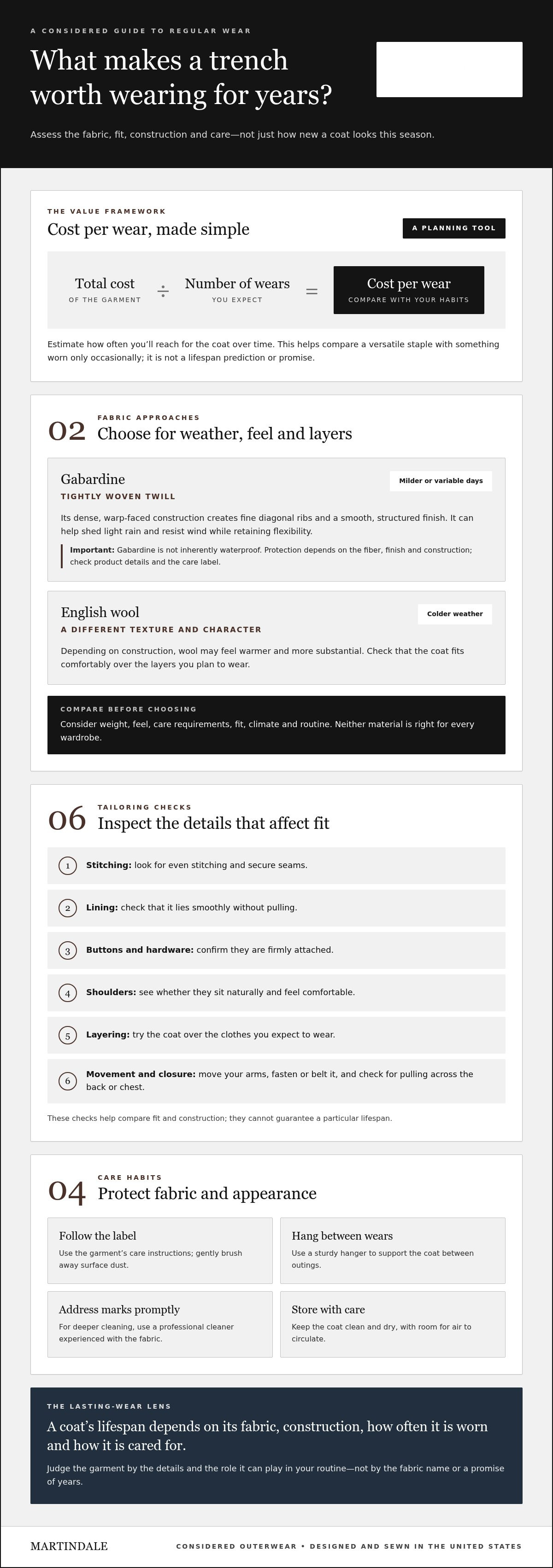
In a trench coat, that dense structure can help shed light rain and resist wind. Gabardine is not inherently waterproof, and its performance depends on the fiber, finish, and construction. A water-resistant treatment may affect performance too, so consider the garment’s care label and product details rather than relying on the fabric name alone. Fiber content and finishing also influence how a coat feels, breathes, and changes with wear.
The Technical Superiority of the Twill Weave
A dense twill has fewer open spaces between yarns than a looser weave, which can make it a useful barrier against wind and light moisture while retaining flexibility. Woven fabric is not the same as a sealed waterproof shell, and breathability varies with the fibers and finish. When comparing coats, look for clear details about material and care, then consider whether the level of weather protection suits your usual conditions.
Gabardine vs. Traditional Wool: Choosing Your Shield
Gabardine can suit changeable weather and adaptable layering. English wool, as used in the Maggie Glen Plaid Trench, offers a different texture and character and may feel warmer and more substantial, depending on its construction. Choose based on the conditions you dress for and the layers you want to wear:
- For milder or variable days: consider a lighter fabric that leaves room for comfortable layers.
- For colder weather: consider wool and check that the coat fits comfortably over the layers you plan to wear.
Neither material is right for every wardrobe. Compare weight, feel, care requirements, and fit, then choose the coat that works with your climate and routine.
Evaluating the Investment: Longevity and the Cost-Per-Wear Framework
A lasting wardrobe calls for a different measure of value than a fast-fashion cycle. Instead of asking whether a coat feels current this season, consider whether its design, construction, and care requirements suit years of regular use. A well-made trench can retain its shape and drape through repeated wear, but its lifespan depends on the fabric, construction, how often it is worn, and how it is cared for.
Cost per wear is a straightforward way to compare purchases: divide the garment’s total cost by the number of times you wear it. You can estimate how often you expect to reach for the coat across the years, then compare that use with how frequently you wear other outerwear. The calculation is a planning tool, not a prediction or a promise of lifespan. It helps you judge whether a versatile staple fits your habits better than a garment you might wear only occasionally.
The Markers of Superior Tailoring
Inspect the details that affect how a coat sits and holds together. Look for even stitching, secure seams, and a lining that lies smoothly without pulling. Check that buttons and other hardware are firmly attached, and that the shoulders sit naturally. Try the coat over the layers you expect to wear, move your arms, and fasten or belt it to see whether the fabric pulls across the back or chest. These checks can help you compare construction and fit, though they cannot guarantee a particular lifespan. Martindale garments are designed and sewn in the United States. Explore the curated collection of premium outerwear with these practical details in mind.
Maintaining the Integrity of Your Trench
Care helps protect a coat’s fabric and appearance. Follow the care label, gently brush away surface dust, and hang the coat on a sturdy hanger between wears. Address marks promptly, and use a professional cleaner experienced with the fabric when deeper cleaning is needed. Store the coat clean and dry, with room for air to circulate. To learn more about responsible textile practices, see Textile Exchange’s work on ethical and sustainable textile practices.
Styling the Permanent Wardrobe: From Professionalism to Leisure
A useful coat works across different parts of your day. The Lou Trench in Camel is a classic neutral layer for professional dressing. Wear it over a tailored suit, a fine-knit sweater, or a simple dress, and let its color bring the outfit together. A gabardine trench can play a similar role, pairing easily with pieces already in your wardrobe.
That versatility extends beyond work. For evening, layer a trench over a streamlined dress and choose refined shoes. For a weekend, wear it with denim, a soft knit, and comfortable flats. Rather than reserving the coat for one occasion, build it into outfits you already wear. For everyday layering staples and casual pieces to pair underneath your outerwear, guides and collections from MY STORE offer practical inspiration. The most versatile choice is usually the one that works with your existing clothes and feels comfortable in your routine.
The Power of the Silhouette
Classic trench details have practical roots as well as visual impact. A belt can define the waist or be tied loosely; epaulets add structure at the shoulder, while storm flaps create the coat’s distinctive layered lines. These details vary by design. When trying on a coat, check how the belt sits, whether the shoulders feel comfortable, and whether the overall shape works worn open as well as closed. For more perspective on enduring shapes, explore classic women’s trench coats.
The Plaid Alternative
When you want pattern and texture, the Maggie Glen Plaid Trench in English Wool offers an alternative to a neutral coat. Keep the rest of the outfit simple, or pick a shade from the plaid for trousers or a knit, so the pattern remains the focus. Consider whether you want a coat that blends easily with many outfits or one that gives simpler looks a more distinctive finish.
A signature piece doesn’t need to be novel. It becomes personal through regular wear. Choose a silhouette and palette that work with your wardrobe, then explore Martindale’s outerwear for options designed with a considered, lasting style in mind.
The Ethical Distinction: Why American-Made Gabardine Matters
A coat’s story includes more than its fiber and silhouette. It also includes how and where it is made. Martindale’s slow-fashion philosophy favors considered design and garments intended to serve for years rather than pieces made for a short-lived trend. Choosing a trench with longevity in mind can help you build a wardrobe around repeat wear rather than frequent replacement.
Martindale garments are designed and sewn in the United States, bringing design and garment-making together within one national context. That information describes where the garments are designed and sewn; it does not, by itself, establish the origin of every material or component. Clear production details help you understand what a label says and make a more informed choice.
Craftsmanship Over Convenience
A finished garment reflects both design decisions and the work involved in sewing it. Construction details shape how a coat looks and feels in use. Martindale’s approach places garment-making in the United States and prioritizes timeless pieces intended to last. For a closer look at the values behind domestic outerwear, read this guide to American-made women’s outerwear.
The Future of Luxury
Luxury can mean choosing with discernment: considering a garment’s purpose, construction, and production rather than following every new trend. A thoughtful purchase does not guarantee a particular lifespan or environmental impact. It does put intention at the center of the decision. A considered wardrobe takes shape through deliberate choices, one useful piece at a time.
Choose a coat that suits the way you dress and the values you want your wardrobe to reflect. Explore the Martindale collection to find outerwear designed with permanence in mind.
Choose the Coat That Will Move Forward With You
Rather than choosing another layer for a single season, think about what you want your wardrobe to keep: a classic silhouette in a versatile fabric, or the warmth and character of English wool. A gabardine trench coat is worth considering for its distinctive weave, while English wool offers a different feel and material story. The right choice depends on how naturally the coat fits your life and how often you expect to wear it.
Martindale brings that longer view to its outerwear, with garments designed and sewn in the United States. The Lou Trench in Camel offers a classic silhouette, while the Maggie Glen Plaid Trench is made from English wool. Compare the styles, materials, and fit, then choose what suits your wardrobe.
Discover the Lou Trench and the Maggie at Martindale, and choose a piece you’ll be glad to wear again and again.
Frequently Asked Questions
What is the difference between gabardine and other trench coat fabrics?
Gabardine is a particular fabric construction, while trench coats can also be made from cotton, wool, synthetic blends, and other woven materials. The fiber and construction affect the coat’s feel and use. A lighter fabric may suit transitional weather, while wool can feel more substantial. Look beyond the word “gabardine” and compare fiber content, weight, finish, care instructions, and how the coat fits your daily needs.
Is a gabardine trench coat waterproof enough for heavy rain?
Don’t assume a gabardine trench coat is waterproof in a prolonged downpour. Its closely woven surface may repel light rain, but that isn’t the same as a waterproof membrane or a tested waterproof rating. For a brief shower, it may offer useful coverage. In heavy or sustained rain, carry an umbrella and avoid relying on the coat alone to keep clothing underneath dry.
How should a premium gabardine trench coat fit?
A trench should sit smoothly across the shoulders, fasten comfortably when belted, and allow you to move without pulling across the back or arms. Try it over the layers you expect to wear most often, such as a blazer or medium-weight sweater. Check that the sleeves allow movement and that the hem feels practical for walking and sitting in your usual settings.
Can I wear a gabardine trench coat in the winter?
A gabardine trench can work in winter if your climate is mild and you can layer comfortably beneath it. Pair it with a warm sweater, scarf, and insulating mid-layer, then check that the coat still closes easily and does not restrict your arms. In colder conditions, a wool coat such as the Maggie Glen Plaid Trench in English Wool may better suit your preference for a more substantial layer.
Why is an American-made trench coat considered a better investment?
American-made is not an automatic guarantee of superior quality, but knowing where a garment is designed and sewn can help you understand its production story. Martindale designs and sews every garment in the United States, with a focus on timeless pieces intended to last. For a considered purchase, weigh that information alongside fit, construction, material, and how often you expect to wear the coat.


