


A heavier fabric isn’t automatically better. GSM means grams per square meter: it measures a fabric’s weight, not how well a garment is made. This fabric quality guide for clothing looks beyond the label to explain how fiber, construction, and finish affect quality.
It’s natural to look for a simple rule when comparing clothes. But high GSM can suit a warm coat, while lighter fabric may work better for a breathable layer. Weight matters in context, not on its own.
Learn how cotton, linen, silk, and wool compare with regenerated fibers such as rayon, modal, and lyocell, and what GSM can tell you before buying. You’ll also find practical ways to assess a fabric’s weave, recovery, and surface, so your choice reflects how you want a garment to feel and wear over time.
Table of Contents
1. Characteristics of cotton, linen, silk, and wool
Start with the fiber, then judge how its construction suits the garment. Breathable cotton is versatile for everyday clothing, though it can wrinkle, shrink, and dry slowly. Extra-long-staple cotton fibers measure 1.5 inches or longer, and about 3% of cotton grown is Pima cotton. Longer fibers can produce smoother yarns. Organic cotton is one option among sustainable materials, alongside recycled fabric, organic linen, hemp, and wool.
Linen is breathable and durable, with fibers described as approximately 30% stronger than cotton counterparts. It wrinkles easily and may shrink, so care instructions matter. Silk helps regulate temperature and calls for gentle care. Wool offers warmth, insulation, and moisture-wicking properties; its fiber fineness affects feel, with finer fibers generally feeling softer and coarser ones more likely to feel scratchy. Wool can return to shape after stretching by up to 20%, making resilience part of its appeal.
Blends balance different qualities. Cotton-polyester combines cotton’s breathability with polyester’s quick-drying, wrinkle-resistant character, though polyester is less breathable than cotton. That trade-off can suit garments where easy care matters, while a higher cotton share may feel more comfortable in warm conditions. For health, wool may feel scratchy against skin; environmental concerns include microfiber release from synthetics. A synthetic fleece jacket releases 1.7 grams of microfibers per wash, and the World Wildlife Fund states that growing enough cotton for one T-shirt and one pair of jeans uses over 5,000 gallons of water.
Assess each fiber for the garment’s intended role. For a summer layer, linen’s breathability may matter more than its tendency to wrinkle; for insulation, wool’s warmth and recovery may matter more. Organic cotton and recycled fibers can inform a sustainability choice, but weave, finish, and care needs also affect durability. A fabric quality guide for clothing compares these qualities together rather than treating “natural” or “luxurious” as proof of lasting performance.
2. Natural fibers including wool, silk, linen, and hemp
Fiber origin affects a garment’s feel, care, and wear. Cotton comes from a plant, wool from animal fleece, silk from silkworm filaments, and linen from flax. Their natural origins don’t make them interchangeable. Choose cotton for versatile everyday garments, linen for an airy texture, silk for fluid softness, or wool for warmth and resilience.
Hemp is another plant fiber, spun into yarn for more than 10,000 years. It is strong, softens with wear, and can feel rough on its own. A 50/50 hemp blend with organic cotton or linen can temper that texture. For wool, fiber fineness helps explain softness: finer fibers tend to feel softer against skin. Fiber content matters, but the blend and construction also affect stretch, comfort, and durability.
Cotton is breathable and versatile, linen is durable but wrinkles, wool is warm and resilient, and silk regulates temperature but needs gentle care. Polyester dries quickly and resists wrinkles, while rayon can feel fluid but may shrink. No fiber guarantees quality on its own: yarn, weave, finish, and care all affect performance.
In the United States, clothing labels generally identify fiber content and provide care instructions. Read both: the content label tells you whether a garment is cotton, wool, or a synthetic blend, while care directions guide washing and drying. For example, a silk garment needs gentler care than a quick-drying polyester garment.
Sustainability involves more than choosing natural over synthetic fibers. Consider organic cotton, organic linen, hemp, wool, or recycled fabric, along with expected wear and care. Synthetic fibers such as polyester are manufactured rather than grown or harvested. They can offer practical traits, but washing synthetic textiles can release microfibers. Match the fiber to where and how often you’ll wear the garment, then consider its care needs and likely lifespan.
3. Characteristics of rayon, modal, lyocell, hemp, and synthetic blends
Regenerated fibers begin with plant cellulose, then undergo processing into textile fibers. Rayon often feels fluid and smooth, which makes it useful for jacket linings; rayon and viscose may shrink, so follow the garment’s care label. Modal and lyocell are related regenerated fibers. A fabric made from 100% lyocell, including Tencel-branded lyocell, offers a plant-derived alternative with a soft hand.
Hemp brings strength and softens with wear. It can be blended with linen or cotton to adjust texture and drape. Synthetic fibers have different origins and functions: polyester and nylon are manufactured fibers, while spandex adds stretch. In a blend, each fiber contributes a trait, so check the content percentages rather than judging the fabric by its name alone.
Polyester dries quickly, wicks moisture, and resists wrinkles, but it is less breathable than cotton. That balance can suit activewear or easy-care pieces. Spandex improves stretch, but spandex-heavy fabrics may breathe less well; it is rarely used above 15% of an apparel blend. Four-way stretch fabric extends in both directions and returns to its original shape. Nylon is another synthetic fiber to consider when comparing fabric options.
Fabric quality and price don’t rise in lockstep across clothing brands. Compare fiber content, weave, finish, and care needs. Construction and material choices help explain price differences, but a higher price alone doesn’t prove durability. Smooth lyocell and a polyester-spandex blend, for example, serve different purposes, so assess each against the garment’s intended use.
Care should suit the fiber and follow the garment’s label. Allow for possible shrinkage with rayon or viscose, and use gentle care for delicate silk. To reduce pilling in knits, wash them inside out in cool, gentle conditions and avoid rough friction. These habits help preserve softness, surface, and shape through repeated wear.
4. How to assess fabric quality before buying
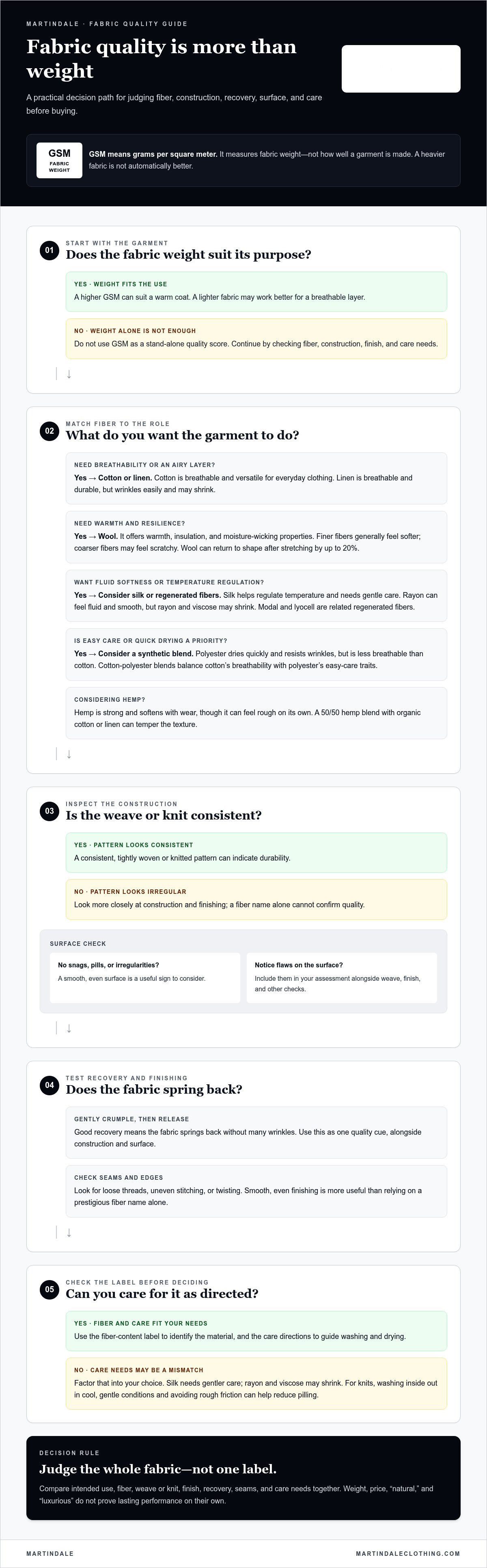
Inspect construction before judging a garment by its label or weight. Hold the fabric up to the light: a consistent, tightly woven or knitted pattern can indicate durability. Check the surface for snags, pills, and irregularities. Smooth, even finishing is a more useful sign than a prestigious fiber name alone. Two cotton garments, for example, can feel different because their yarn, weave, and finishing differ.
Gently crumple a fabric in your hand, then release it. Good recovery means it springs back without many wrinkles. Check seams and edges for loose threads, uneven stitching, or twisting; these details can reveal how carefully the garment was made. Compare the same areas across garments, especially when choosing lightweight pieces that make construction easy to see.
GSM measures fabric weight, not quality by itself. The right fabric weight depends on the garment’s purpose. Consider comfort, warmth, moisture, and drape together: a lightweight layer and a structured coat need different character. Choose the weight that suits the environment and intended use, then inspect construction and finish.
Which fabrics best resist pilling, fading, shrinking, and stretching? No single fiber resists every kind of wear; performance depends on fiber, construction, dye, and care. Assess the surface and recovery, then follow the care label. Washing and drying fabric as the finished garment will be cared for, before cutting or sewing, can reveal shrinkage, color bleeding, and texture changes.
For a considered purchase, look for GOTS or OEKO-TEX® STANDARD 100 certifications when choosing fabrics. These names offer additional information alongside the fiber label, but they don’t replace a tactile check of the weave and finish. Use this fabric quality guide for clothing as a practical sequence: inspect the pattern, test recovery, review weight and care, then assess surface consistency. Explore thoughtfully made clothing with those criteria in mind.
Martindale: Women's Coats
Martindale is a natural next step when applying fabric-quality criteria to considered outerwear. Its women’s collection includes wool coats and satin bomber jackets for different wardrobes. The Amelia Bomber Jacket comes in Mulberry Satin and Midnight Satin, while wool coats offer a classic outer layer.
Apply the same care to fiber, construction, and use. Martindale creates ethically produced garments designed and sewn in America, including timeless pieces intended to outlast short-lived trends. Its outerwear can suit shoppers seeking enduring wardrobe foundations rather than a passing seasonal choice. Explore the collection and consider which material and silhouette fit your needs.
Visit Martindale’s clothing collection to explore its women’s coats and jackets.
Choose pieces with a longer view
A thoughtful wardrobe begins with choices that suit your real life, not an imagined version of it. Before your next purchase, consider which garments you’ll reach for often, what role they need to play, and whether their material and care fit your routines. A fabric quality guide for clothing is most useful when it helps turn those preferences into a deliberate choice.
For considered outerwear, Martindale offers women’s coats and wool coats. The Amelia Bomber Jacket in Mulberry Satin is another option, with a satin finish that brings a distinct character to a wardrobe. Weigh each piece against your personal style and the garments you already own.
Let your next addition earn its place through intention rather than impulse. Explore Martindale’s women’s coats and clothing as you consider what belongs in your wardrobe.
Frequently Asked Questions
What Is Fabric GSM?
GSM means grams per square meter, the weight of one square meter of fabric. It helps compare fabric weight, but doesn’t tell you the fiber quality or how the garment will feel. T-shirt fabrics commonly weigh between 160 and 220 gsm. Use that range as a reference for tees, then consider how a fabric’s structure and intended use affect its drape and comfort.
What does two-ply mean and is it better?
Two-ply yarn is made by twisting two strands together. This describes yarn construction, not an automatic quality grade. Two-ply fabric may suit a garment where you want a substantial feel, but it isn’t necessarily better for every piece. Compare how the finished fabric feels, hangs, and performs for its intended use instead of choosing by the term alone.
Why does my knitwear pill and how do I avoid it?
Knitwear pills when loose fibers gather into small knots, often where fabric repeatedly rubs. A shoulder bag can cause friction along a sweater’s sides, while cuffs may rub against a desk. Turn knits inside out before washing, choose a cool, gentle cycle, and avoid washing them with rough items such as garments with exposed zippers.
How can you tell if clothing fabric is high quality?
Assess the whole garment, not just its fiber name. Check that color looks even across panels, seams lie flat, and the fabric moves comfortably when you bend your arms or sit. A jacket, for example, should hold its shape through ordinary movement without pulling at the shoulders. Compare these details with the garment’s intended use.
What fabric weight (GSM) is best for different types of clothing?
There isn’t one ideal GSM for every garment. T-shirts commonly use fabric weighing 160 to 220 gsm, while the right weight for a coat, blouse, or lining depends on its purpose, structure, and season. For an everyday layer, consider whether the fabric feels comfortable and drapes as you want. Use GSM to compare similar garments, not unlike categories.
What fabric labels and fiber percentages should you look for when buying clothes?
Start with the fiber-content label and read each fiber and its percentage. The largest share tells you the blend’s dominant fiber, while smaller shares may change stretch or feel. Then read the care instructions to see whether the garment’s upkeep suits your routine. GOTS or OEKO-TEX® STANDARD 100 certifications can provide additional information when evaluating fabric choices.


