


The most expensive garment in your closet might be the one that fails you first. While a high price tag suggests quality, it often acts as a mask for the same transient manufacturing methods that define modern fast fashion. You've likely felt the sting of a purchase that lost its shape by mid-winter or the quiet guilt of contributing to a cycle of disposable trends. It's exhausting to search for long lasting women's coats only to be met with confusing fabric blends and hollow promises of durability.
We believe that a coat is more than just a seasonal layer; it's a long-term partnership between the wearer and the craft. This guide will help you identify the markers of superior craftsmanship and the physical integrity required for a piece to transcend passing trends. You'll learn how to see through common industry myths that prioritize quick profit over permanence. We'll provide the clarity you need to curate a wardrobe of high-quality pieces that offer a lower cost-per-wear and a much deeper sense of aesthetic discernment.
Myth 1: A High Price Tag Guarantees a Long Lasting Coat
In the 2026 market, the distinction between marketing luxury and material luxury has become increasingly opaque. A high price tag often funds a global advertising campaign rather than the physical integrity of the garment itself. Many designer houses now utilize synthetic blends, such as poly-viscose or low-percentage wool mixes, to maximize margins while maintaining a premium facade. True long lasting women's coats are not defined by the label, but by their textile performance and the honesty of their fibers. A legacy garment is a piece designed to endure for decades, transcending the fickle nature of seasonal trends.
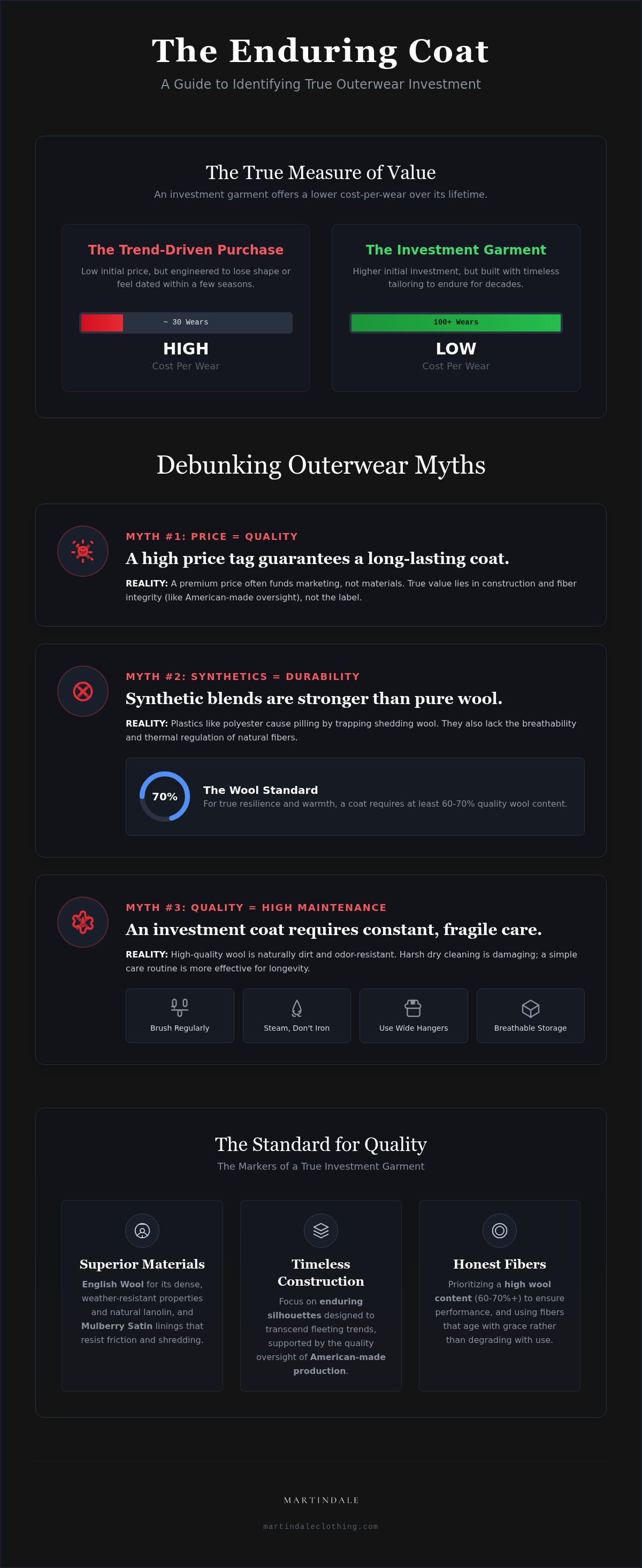
The most reliable metric for an investment is not the initial transaction, but the Cost Per Wear. A coat that lasts thirty wears before pilling or losing its structure is far more expensive than a high-quality piece that remains pristine after a hundred outings. Choosing a coat based on substance rather than status ensures your wardrobe remains an asset, not a liability.
The Trap of Trend-Driven Outerwear
Fast-fashion silhouettes are intentionally engineered to feel dated within two years. They rely on exaggerated, temporary proportions that eventually look out of place. Conversely, timeless tailoring focuses on enduring elegance. Consider the Lou Trench in Camel; its silhouette is a study in stability, designed to remain relevant as the cultural landscape shifts around it. Investing in permanence means rejecting the frantic cycle of "in" and "out."
Identifying Real Value in Construction
Superior craftsmanship requires proximity and oversight. Domestic, ethical production allows for a level of scrutiny that mass-market factories simply cannot replicate. By choosing American-made outerwear, you're investing in a system that prioritizes substance over scale. This commitment to quality is detailed in our Definitive Standard for Premium American Made Outerwear, which outlines the rigorous markers of true garment longevity.
Myth 2: Synthetic Blends are More Durable Than Pure Wool
In the 2026 apparel market, a common misconception persists that adding polyester or nylon to a garment increases its lifespan. While these plastics are strong, they often compromise the integrity of long lasting women's coats. Synthetic fibers don't break; instead, they trap shedding wool fibers. This leads to the unsightly pilling that defines lower-quality outerwear. True long lasting women's coats rely on fiber integrity rather than chemical additives. To ensure genuine resilience, a coat should contain at least 60-70% wool. Anything less is essentially a synthetic garment that won't provide the expected warmth or durability.
The difference in thermal performance is striking. Natural fibers breathe, allowing moisture to escape while retaining heat. Synthetics create a "sweat-trap" effect, making the coat uncomfortable in fluctuating temperatures. Scientific assessments like The Martindale Standard demonstrate that while plastics resist abrasion, they lack the multi-dimensional durability of high-end natural fibers. Understanding the Longevity of High Quality Fabric is essential for identifying a true investment piece.
The Resilience of English Wool
English wool is renowned for its density and weather resistance. In pieces like the Maggie Glen Plaid Trench, the fiber's natural lanolin creates a protective barrier against moisture. This organic coating preserves the wool's luster and prevents the fabric from becoming brittle. It's a heritage material that ages with grace rather than degrading with use.
Mulberry Satin and the Integrity of Linings
The lining is the internal architecture of a coat, yet it's often where manufacturers cut costs. Cheap polyester linings shred and pull away from the seams within a few seasons. The Amelia Bomber Jacket in Mulberry Satin utilizes a superior silk-like weave that resists friction. This choice ensures the interior remains as pristine as the exterior. You can explore these detailed construction choices in our curated collection of wool coats.
Myth 3: Long Lasting Coats Require Impossible Maintenance
A common misconception suggests that long lasting women's coats demand a life of fragile care and constant dry cleaning. The reality is quite the opposite. High-quality natural fibers, particularly the wool used in premium outerwear, possess an inherent resilience that synthetic alternatives lack. Wool is naturally dirt and odor-resistant; its microscopic scales repel grime and prevent the buildup of bacteria. Excessive dry cleaning uses harsh chemicals that strip these natural oils and weaken the fiber structure over time. A considered approach to maintenance ensures your investment remains pristine for decades without industrial intervention.
A simple "Investment Care" routine is far more effective for garment longevity. Regularly brushing your coat with a soft garment brush removes surface dust before it settles into the weave. Steaming is preferred over ironing, as it relaxes the fibers and removes wrinkles without the damage of direct heat. Always use a wide, contoured hanger to maintain the shoulder's silhouette. For a deeper understanding of these quality markers, consult our Checklist for Curating Investment Pieces.
The Art of the Seasonal Refresh
Proper storage is the bridge between seasons. When the weather warms, store pieces like the Patrice Wool Coat or the Eleanor Wool Coat in breathable cotton garment bags. Avoid plastic covers, which trap moisture and can lead to mildew. This small act of stewardship preserves the integrity of the wool, ensuring it's ready for the first frost of 2026. You can explore our collection of investment coats to find your next legacy piece.
Repair vs. Replace Philosophy
Premium outerwear is built with the intention of being mended, not discarded. Superior craftsmanship includes generous seam allowances and high-quality hardware that can be repaired if necessary. This "Slow Fashion" philosophy views a small tear or a loose button as a chapter in the garment's story rather than its conclusion. By choosing pieces designed for repairability, you reject the disposable culture that dominates modern retail.
The Martindale Standard: Why American-Made is the Antidote
Martindale positions domestic production as the primary defense against the disposable nature of global fashion. By keeping craftsmanship close, we ensure that every stitch meets a standard that mass-market factories cannot reach. This commitment to American-made quality is the foundation of long lasting women's coats. It's a rejection of the temporary in favor of the enduring. Slow Fashion is not a trend; it's a return to the logical necessity of permanence in an era of systemic waste.
Ethical Manufacturing as a Quality Signal
Ethical manufacturing is not just a moral choice; it's a technical one. Skilled American labor results in significantly fewer construction defects compared to high-volume overseas production. When workers are valued and expertise is prioritized, the result is a garment that resists the wear of time. This reflects the Ethical Manufacturing Shift Toward Permanence that defines our 2026 philosophy. Quality oversight is a constant presence in our process, not just a final checklist before shipping.
Building Your Legacy Wardrobe
Selecting your first investment piece is a deliberate act of discernment. The Patrice Wool Coat in Chestnut and the Eleanor Wool Coat in Noir are designed to serve as the cornerstone of a thoughtful closet. These pieces don't just survive the years; they gain character through consistent use. There's a profound emotional value in owning a garment that becomes a part of your personal history rather than a footnote in a landfill. To see how these long lasting women's coats redefine the standard of modern quality, we invite you to shop the collection and experience the tactile difference of true craftsmanship.
Cultivating a Wardrobe of Permanence
The pursuit of long lasting women's coats is a rejection of the temporary and a commitment to material integrity. By dismantling the myths of marketing luxury and synthetic durability, you've shifted your perspective from fleeting consumption to meaningful investment. You now understand that true value resides in the physical and moral honesty of the production process. Superior outerwear is defined by the resilience of English wool, the stability of Mulberry satin, and the precision of American craftsmanship.
Choosing a garment that transcends the seasons is an act of aesthetic and ethical discernment. It's a choice to value substance over trends and heritage over convenience. When you prioritize pieces that are ethically produced and sewn in America, you aren't just buying a coat; you're securing a legacy for your closet. We invite you to begin this journey with a piece designed to age with grace and serve you for decades.
Invest in Permanence: Shop the Martindale Outerwear Collection
Step forward with the confidence that your wardrobe reflects your values and your vision for a more considered future.
Frequently Asked Questions
How long should a high-quality wool coat actually last?
A high-quality wool coat should last between 10 and 20 years with proper stewardship, often becoming a multi-generational heirloom. Its longevity is rooted in the natural resilience of fibers like English wool, which retain their structure far longer than synthetic alternatives. While fast fashion pieces degrade within two seasons, a well-made coat is designed for a lifetime of wear. This permanence makes long lasting women's coats a superior investment for a considered wardrobe.
Is a 100% wool coat better than a wool-cashmere blend for longevity?
Pure 100% wool generally offers greater longevity than a wool-cashmere blend because wool fibers are thicker and more resistant to abrasion. Cashmere adds a luxurious softness and warmth, but it's a delicate fiber that can pill or wear thin more quickly under heavy use. For a coat intended to withstand daily wear for decades, a high-percentage wool construction provides the necessary physical integrity to endure the elements without losing its shape.
How can I tell if a coat is well-constructed just by looking at it?
You can identify superior construction by examining the internal finishings and the alignment of patterns at the seams. A well-made garment features generous seam allowances and clean, bound edges rather than raw or overlocked threads. Look for high-quality hardware and reinforced buttonholes, which indicate a commitment to detail. If a pattern matches perfectly across a seam, it proves the piece was cut with precision rather than mass-produced haste.
Are American-made coats really higher quality than imported ones?
American-made coats represent a higher standard of quality because domestic production allows for rigorous, hands-on oversight of the manufacturing process. Skilled labor in the USA typically operates under higher ethical standards, which directly translates to fewer construction defects and more durable seams. This proximity between design and creation ensures that every piece meets a standard of excellence that global mass-production facilities frequently sacrifice for speed and volume.
What is the best way to prevent pilling on a long-lasting coat?
Preventing pilling starts with selecting long lasting women's coats made from high-quality natural fibers rather than synthetic blends. Pilling occurs when shorter fibers break and tangle, a process accelerated by the friction of plastics like polyester. To maintain your coat, use a soft garment brush to lift away surface dust and keep fibers aligned. This simple habit prevents the entanglement that leads to pills, preserving the smooth, sophisticated texture of the wool for years.


