


What if a wardrobe that works all year didn’t require four separate wardrobes? Building a four-season capsule wardrobe starts with a practical idea: create outfits you can repeat, then adapt them with layers as the weather changes. The challenge is choosing pieces that work across more than one season without making a smaller wardrobe feel limiting.
You don’t need to replace everything at the start of each season. First, look at what you already wear, identify combinations that suit your routine, and add only what fills a genuine gap. This keeps personal style at the centre of your wardrobe rather than impulse purchases.
This guide explains how to plan a cohesive wardrobe for all four seasons, choose versatile foundations and useful layers, and make considered additions that work with clothes you own. The goal is a lasting system that can adjust throughout the year, not a rigid formula.
What a four-season capsule wardrobe is and what it is not
A four-season capsule is a coordinated set of clothes for your life throughout the year. It includes dependable foundations, weather-specific layers, and options for occasions outside your usual routine. A capsule wardrobe is a flexible system of complementary clothes, not a minimalist uniform or a fixed number of garments. The Capsule wardrobe concept has a longer history, but its practical value is simple: choose pieces that work together instead of accumulating clothes without a plan.
Building a four-season capsule wardrobe doesn’t mean dressing the same way in January and July. Climate matters: a cold winter may call for substantial outerwear, while a mild climate may need lighter layers. Your work requirements, daily activities, and personal preferences matter too. Build around the conditions you actually dress for, not an idealised checklist.
Does a capsule wardrobe need a set number of pieces?
No universal count can account for different climates, routines, or laundry habits. A more useful test is whether your clothes cover everyday, work, and occasion needs, and combine into outfits you enjoy wearing. Start with garments you already reach for. Note what makes them useful, then build around those proven choices instead of clearing your closet to meet an arbitrary limit.
Which parts of a wardrobe should work year-round?
Start with the roles your clothes need to fill. Everyday foundations might include familiar tops and bottoms, while work and occasion dressing depend on your settings and dress codes. Some pieces are specific to one season. Others can work across more months when you pair them with a layer or style them differently.
Outerwear and layering pieces are options, not mandatory purchases. A linen blazer may add structure in milder weather, while a wool coat or trench can provide an outer layer when conditions call for it. Before adding one, check whether something you already own fills the same role.
How to build a four-season capsule wardrobe from your existing clothes
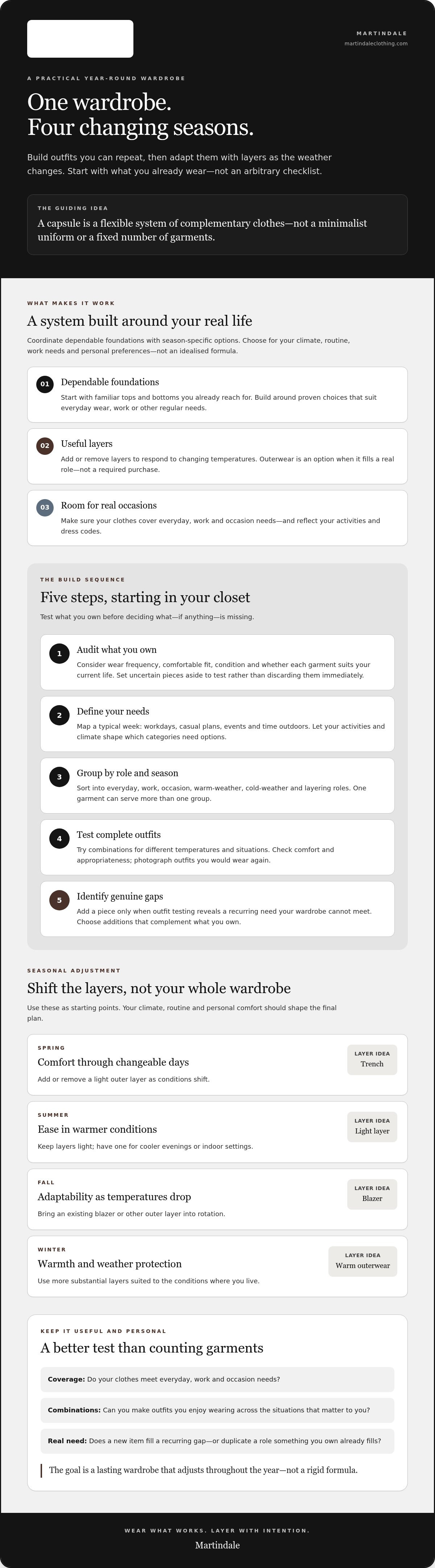
Building a four-season capsule wardrobe is less about starting over than helping your current clothes work harder. Use this order: audit what you own, define your needs, group garments by role and season, test outfits, then identify genuine gaps. Shop only after you have tested what is already in your closet.
- 1. Audit: Note how often you wear each garment, whether it fits comfortably, its condition, and whether it suits your current life. Set uncertain pieces aside to test rather than discarding them straight away.
- 2. Define your needs: Record a typical week, including workdays, casual plans, events, and time outdoors. Use those activities and your climate to decide which categories need options.
- 3. Group: Sort clothes into everyday, work, occasion, warm-weather, cold-weather, and layering roles. A garment can belong in more than one group.
- 4. Test outfits: Combine what you own for different temperatures and situations. Note which combinations feel comfortable and appropriate.
- 5. Identify gaps: Add a piece only when outfit testing reveals a recurring need your wardrobe cannot meet.
Audit your wardrobe against real routines
Wear frequency alone doesn’t tell the whole story. A coat worn only in cold weather may still be essential, while an item you rarely wear may no longer suit your routine. Consider fit, condition, and actual use together. Compare your clothes with your weekly activity record to tell a genuine need, such as an appropriate work layer, from an imagined one prompted by a passing trend.
Create outfit combinations before filling gaps
Try complete combinations for the situations that matter to you, such as a workday, a casual day, and an occasion. Check that each outfit feels comfortable and suits the weather. Photograph combinations you’d wear again so you can remember what works. This practical approach makes good use of what you own, an idea also explored in discussions of sustainable fashion. If testing reveals a specific outerwear or layering gap, consider additions that complement your existing clothes rather than replacing them.
How to adapt your capsule wardrobe for spring, summer, fall, and winter
Seasonal dressing works best as a shift in layers, not a separate set of outfits for every change in weather. As you build a four-season capsule wardrobe, use the examples below as a starting point. Your climate, daily routine, and personal comfort should shape the final plan.
| Season | Outfit priority | Layering approach |
|---|---|---|
| Spring | Comfort through changeable days | Add or remove a light outer layer, such as a trench. |
| Summer | Ease in warmer conditions | Keep layers light; carry a layer for cooler evenings or indoor settings. |
| Fall | Adaptability as temperatures drop | Bring a blazer or other existing outer layer into rotation. |
| Winter | Warmth and weather protection | Use more substantial layers suited to your climate. |
Which layers help bridge changing seasons?
Look for combinations you can adjust. A familiar outfit may work in more of the year when you add or remove a layer. A blazer can suit work or milder days, while a trench can serve as transitional outerwear. Neither is essential if something you already own fills the role. For more on this adaptable category, see classic women’s trench coats.
How should a capsule change from summer to winter?
Summer often calls for fewer or lighter layers, while winter in colder climates may require more insulation and weather protection. You don’t have to duplicate every outfit as the seasons change. Keep combinations that work and adjust the layers around them. A trench and a wool coat serve distinct outerwear roles, so consider the conditions you need to dress for before adding either. Explore outerwear options if your current wardrobe leaves a clear seasonal gap.
How to keep a four-season capsule useful, personal, and considered
A capsule is not a finished set. Revisit it when your routine, preferences, or local seasons change. Before adding anything, look for recurring outfit gaps, check that existing clothes still fit and are wearable, and consider what you’ll realistically need in the coming months. Building a four-season capsule wardrobe is an ongoing practice of adjustment, not a reason to replace pieces that still serve you.
How can you avoid buying pieces that do not earn their place?
Test a potential addition against several outfits you already wear. Ask whether it addresses a recurring need, works with your existing colours and shapes, and suits the occasions on your calendar. Look beyond appearance too: consider construction, materials, available production information, and care requirements. Quality, ethical production, and American craftsmanship can inform a thoughtful choice, but none guarantees that a garment will last. Consider the item’s details alongside how you expect to use it.
When does outerwear belong in a four-season capsule?
Outerwear earns space when it answers a real need in your climate and routine. Wool coats, trench coats, satin bomber jackets, and linen blazers have different roles. One may provide a more substantial layer, while another adds coverage or structure in milder weather. No category is essential for every wearer. First consider what your current layers can do, then look for a piece that complements them. Martindale garments are designed and sewn in America, with ethical production and lasting design at the centre of the brand’s approach. If a considered addition genuinely fills a gap, explore Martindale’s women’s clothing as one possible source for a complementary layer.
Let your wardrobe evolve with the seasons
A four-season capsule takes attention, not a single overhaul. Start with clothes you already wear, build outfits around your actual routine, and use removable layers to adapt as the weather shifts. Review fit, wear, and upcoming needs before making an addition. The most useful wardrobe is personal, flexible, and allowed to change with you.
Building a four-season capsule wardrobe also means choosing with care. Consider how a garment fits into your existing outfits, how it is made, and whether its role is clear. Martindale creates premium women’s garments designed and sewn in America, with ethical production and timeless design at the centre of its approach. Its apparel includes wool coats, trench coats, satin bomber jackets, and linen blazers. Each can be considered as an optional layer, not a complete wardrobe solution.
If a specific gap remains, look for a piece that complements what you own and suits the way you live. Explore Martindale’s considered women’s clothing for potential additions. A thoughtful wardrobe doesn’t need to be finished all at once. Let it grow with purpose, one well-chosen piece at a time.
Frequently Asked Questions
How many pieces should a four-season capsule wardrobe have?
There’s no universal piece count for a four-season capsule wardrobe. The right size depends on your climate, weekly routine, laundry habits, and the occasions you dress for. Focus on whether your clothes combine into useful outfits and cover your needs, rather than aiming for a prescribed number. Start with the garments you wear regularly, then assess what, if anything, is missing.
Can one capsule wardrobe work for all four seasons?
Yes. One coordinated wardrobe can serve all four seasons if it combines year-round foundations with layers suited to changing weather. The same outfit might work in mild conditions with a light outer layer, then adapt to colder days with warmer pieces. Your climate matters, so a capsule for a mild winter may look different from one designed for prolonged cold.
What should I include in a four-season capsule wardrobe?
Include clothes that match your daily life: everyday outfits, workwear if needed, and options for occasions you attend. Add season-appropriate layers based on local weather, such as a trench for transitional conditions or a warmer coat for colder days. Tops, bottoms, and outerwear should work in combinations you enjoy. There’s no universal checklist; your existing wardrobe and routine are the best guide.
How do I transition a capsule wardrobe between seasons?
Transition your wardrobe by adjusting layers rather than replacing complete outfits. As temperatures change, bring suitable outerwear and layering pieces into rotation, and set aside garments that aren’t useful for the current weather. Try combinations before the season shifts fully to see whether they work for your routine. A blazer or trench may bridge milder days, while colder conditions may call for greater insulation.
Do I need to buy new clothes to build a capsule wardrobe?
No. Building a four-season capsule wardrobe can begin with the clothes you already own. Review what fits, suits your routine, and gets worn, then try combinations for the situations and weather you encounter. Only consider buying something if testing reveals a genuine, recurring gap. If you add a piece, check that it works with several existing outfits and meets a clear need.


