


A steamer can soften linen creases, but an iron usually gives a sharper finish. To learn how to get wrinkles out of a linen blazer safely, work while the fabric is slightly damp, use smooth strokes along the grain, and protect it with a pressing cloth. Linen will crease again with wear, so aim for a polished finish rather than a perfectly unmarked one.
Linen’s natural rumpling can make it hard to choose between steam and heat, especially when you want to preserve your blazer’s shape and finish. A measured approach can ease folds without treating every wrinkle as a flaw.
Here, you’ll learn how to choose between an iron and a garment steamer, press carefully, and reduce sharp creases when storing or packing your blazer. You’ll also see why linen wrinkles, so you can care for it confidently while letting its character remain part of the fabric.
Table of Contents
Preventing linen wrinkles during storage and travel
For a linen blazer worn on a special occasion, dry cleaning is recommended. For everyday creases, careful hanging and packing can reduce sharp folds before pressing.
- Hang the blazer after wearing it. Use a shaped hanger that supports the shoulders, then let the garment rest between wears. Most wrinkles may fall out after a couple of days hanging, while natural creasing from wear can remain.
- Pack with fewer hard folds. Fold the blazer carefully and place thin paper between fabric layers to reduce rubbing and sharp creases. Keep the packed garment where it’s unlikely to shift around during travel, rather than beneath heavier items.
- Unpack and hang it promptly. Once you arrive, remove the blazer from your bag and hang it freely. Give the fabric time to relax before deciding whether it needs steaming or ironing; repeated tight folding can set more pronounced creases.
- Wash linen gently to limit shrinkage. Hand-washing in cold water is ideal, while a gentle machine cycle is a close alternative. Avoid hot water, follow the care tag, and handle the blazer carefully during its first washes. Heat and agitation can cause linen garments to shrink.
- Air-dry and smooth the damp fabric. After washing, shake the blazer out, hang it to dry, and smooth wrinkle-prone areas while they’re damp. A low dryer setting is also suitable, but avoid high heat. Hanging is preferable because heat and agitation can contribute to shrinkage.
- Choose professional cleaning for special occasions. Dry cleaning is recommended for linen garments worn to special occasions, when a composed finish matters. For routine storage creases, hanging the blazer first gives the fabric time to settle without immediately applying heat or pressure.
Is it as effective as a steam iron or garment steamer?
A steamer softens creases; an iron generally creates a sharper finish. Choose based on how crisp you want the blazer to look.
-
Steam or iron linen wrinkles
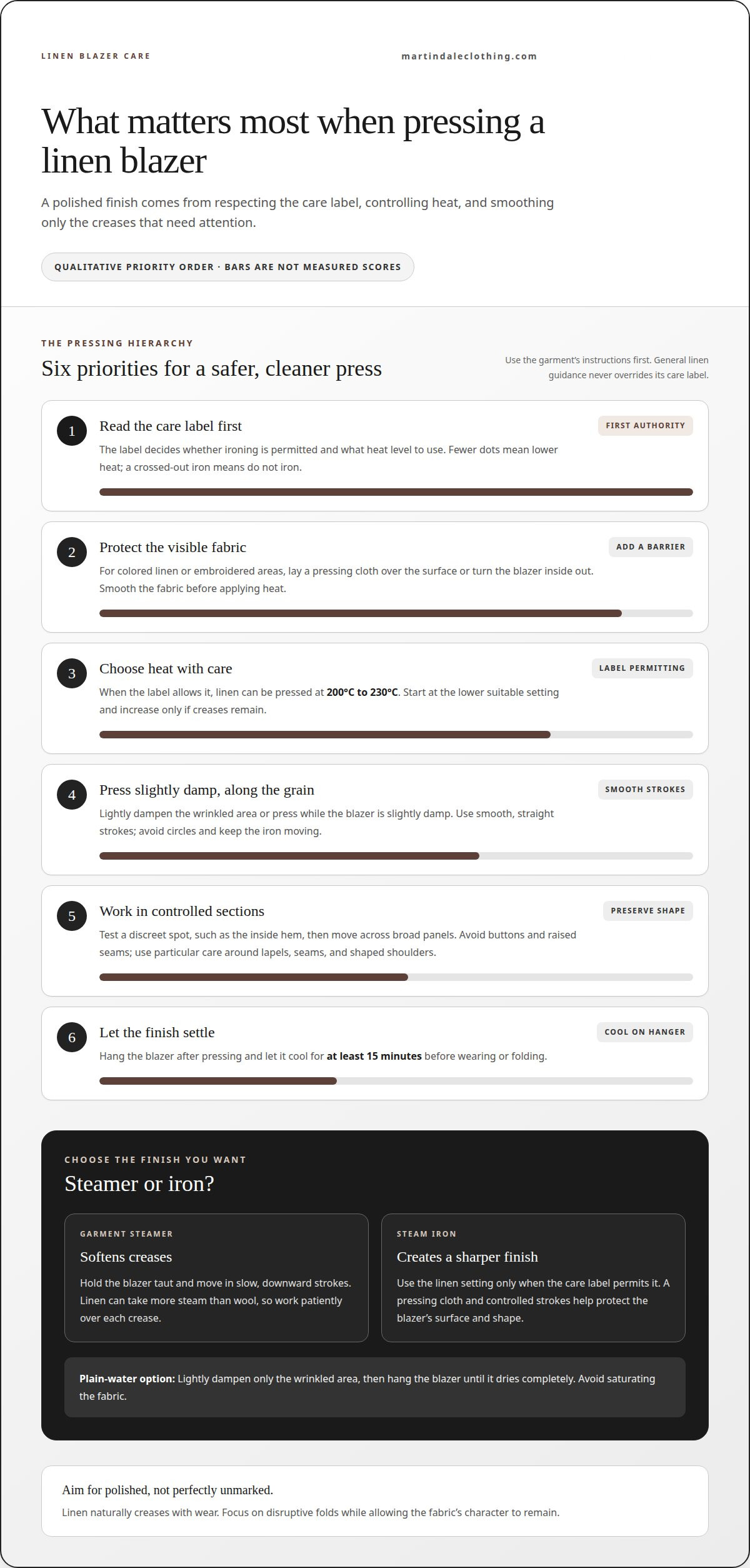
Hold the blazer taut and move a garment steamer in slow, downward strokes. Linen can take more steam than wool, so work patiently over each crease rather than rushing across the garment. For a sharper result, use a steam iron on the linen setting. A high-heat setting of 200°C to 230°C is used for pressing linen, but take care around structured areas where pressure may affect the blazer’s shape.
-
Iron linen while it is damp
Lightly dampen the wrinkled fabric before ironing, or press the blazer while it remains slightly damp. Moisture helps relax creases, while smooth, straight strokes along the grain keep the iron’s movement controlled. Don’t move it in circles. After pressing, place the blazer on a hanger and let it cool for at least 15 minutes before wearing or folding it. This rest helps the pressed fabric settle.
-
Consider wrinkle-release spray
A light spray of plain water can help ease linen creases. Dampen only the wrinkled areas, then hang the blazer and let it dry completely before wearing. Avoid saturating the fabric: aim for slight dampness, not a wet garment. Commercial wrinkle-release sprays contain more than plain water, so don’t assume their ingredients suit every linen blazer. Use a steamer or iron when you want a more defined finish.
High heat is recommended when steaming or ironing linen garments for a sharp press. Several Styleforum members reported steaming linen garments without ill effects, while one Styleforum member said an iron works better than a steamer on linen. A forum participant recommends a steam iron because a regular iron may flatten the fabric without reducing creases.
Iron temperature and protective pressing
A care label’s iron symbol shows whether pressing is permitted; dots indicate the heat level, and a crossed-out iron means do not iron. Follow the garment’s label, even when general linen settings suggest higher heat.
- Protect the surface before applying heat. Lay a pressing cloth over colored linen or embroidered areas, or turn the blazer inside out. This barrier helps protect the visible side from direct contact with the iron’s soleplate. Smooth the fabric first, and keep the iron moving rather than leaving it in one place.
-
Set the iron temperature
Choose the linen setting only when the care label permits it. Linen can be pressed at 200°C to 230°C, but that range does not override a garment’s care instructions. Start at the lower suitable setting, then increase only if creases remain. Avoid prolonged pressure on lapels, seams, and shaped shoulders, where excess heat or force can alter the blazer’s structure.
-
Read the care-label ironing symbols
Check the label before using an iron. Fewer dots indicate a lower heat setting; more dots allow a higher setting, while a crossed-out iron means do not press. If ironing is permitted but the fabric is colored or detailed, use a pressing cloth or work inside out. Follow any steam instructions on the label.
- Press in controlled sections. Start in a discreet area, such as the inside hem, to see how the fabric responds. Then work across broad panels with smooth strokes along the grain. Keep the iron away from buttons and avoid dragging it over raised seams. On a structured blazer, pressing only visible creases can preserve its shape better than flattening every area.
Why linen wrinkles
Linen creases because its fibers absorb moisture and hold the shape they take while damp. Understanding this response helps you distinguish ordinary movement from a sharp fold worth smoothing.
- Notice where creases form. Linen absorbs moisture from the body and surroundings. When the fabric bends at an elbow or folds across the back, its fibers can retain that shape. A soft crease after wearing is different from a hard line caused by folding the blazer tightly in a bag.
- Allow for linen’s limited recovery. Unlike more elastic fibers, linen doesn’t spring back easily after bending. That’s why a sleeve may retain a crease after you take off the blazer, even though the fabric is strong. Linen fibers are stronger than cotton fibers, but that doesn’t mean the cloth resists wrinkling.
- Separate natural rumpling from deep folds. A little texture across the body or at the elbows is part of linen’s character. A pronounced line across the lapel or front panel may come from folding or packing. Smooth only disruptive creases rather than pressing the entire blazer flat every time you wear it.
- Expect creases to return with movement. Sitting, reaching, and bending repeatedly fold linen. The fabric can wrinkle again soon after you put the blazer on, even after careful pressing. Treat a crisp finish as temporary, and avoid applying heat repeatedly to chase every small mark.
- Use moisture as a guide, not a reason to overpress. Since damp linen holds its shape, slight dampness can help relax a crease; too much moisture can leave the fabric holding new folds as it dries. Let the blazer hang freely after smoothing it. Remove sharp, unwanted creases while accepting the gentle rumpling that comes with wear.
For a considered linen wardrobe, explore linen blazer styles.
Martindale
Knowing why linen wrinkles helps you care for it with a lighter hand: smooth the sharp folds, then let the fabric’s natural texture remain. Martindale offers enduring wardrobe pieces, including women’s coats and wool coats, for those who value considered clothing beyond fleeting trends. Its Amelia Bomber Jacket is available in Mulberry Satin and Midnight Satin. These pieces are distinct from linen, but share a place in a thoughtful wardrobe built around lasting style rather than constant replacement. If you’re considering a garment to complement your wardrobe, explore the collection with the same attention you bring to caring for linen. Contact Martindale to discuss your next piece.
Let linen keep its character
The best approach to how to get wrinkles out of a linen blazer isn’t to erase every trace of wear. A considered routine helps you decide which creases need attention and which belong to the fabric’s natural character. That distinction can make caring for a blazer feel less like constant correction and more like knowing what suits the garment.
As you build a wardrobe, look for pieces you’ll want to care for and wear repeatedly. Martindale offers thoughtfully made clothing, including women’s coats, wool coats, and the Amelia Bomber Jacket in Mulberry Satin. Choose pieces that suit your style and habits.
Contact Martindale with questions about its clothing. Let each garment earn its place in a wardrobe you’ll enjoy wearing.
Frequently Asked Questions
Is this method as precise as ironing?
No. A garment steamer relaxes creases, but usually won’t create the crisp finish an iron can. If you’re deciding how to get wrinkles out of a linen blazer before a meeting, use steam for broad, soft rumpling and careful ironing for a defined crease or smooth front panel. For example, steam an all-over rumpled back, but carefully press a stubborn fold on the lapel.
How do you steam wrinkles out of a linen blazer at home?
Hang the blazer securely, then hold the steamer upright and move it slowly down the fabric. Keep the cloth taut with your free hand, and avoid lingering over seams, buttons, or shaped shoulders. Work on one panel at a time, including the sleeves, then let the blazer hang until dry. Distilled water can help reduce mineral buildup in the steamer.
Can you iron a linen blazer, and what temperature should you use?
Yes, linen can be ironed, provided the care label allows it. A linen or high-heat steam setting of 200°C to 230°C is used for linen, but the blazer’s label takes priority. Press a small, less visible area first, then continue with light, controlled passes. A pressing cloth helps shield colored fabric and delicate details from direct contact.
How do you remove wrinkles from linen without an iron or steamer?
To learn how to get wrinkles out of a linen blazer without either tool, hang it in a steamy bathroom for 15 to 20 minutes, then let it air-dry. This can soften some creases, though it may not remove a sharp fold. You can also lightly mist a wrinkled area with water, smooth it by hand, and leave the blazer hanging until fully dry.
Should you dampen linen before ironing out wrinkles?
Slightly damp linen is easier to smooth than completely dry fabric. Lightly mist the creased area, or press the blazer while it’s still a little damp after washing. Avoid wet patches, which can dry unevenly and leave the cloth holding new folds. After pressing, leave the garment on a hanger until the fabric is fully dry and cool.
How do you safely remove wrinkles from a lined linen blazer?
Read the care label first, since the outer linen and lining may respond differently to heat. If ironing is permitted, turn the blazer inside out or place a pressing cloth over the outer fabric. Use light pressure and avoid stretching the lining or pressing hard over seams. When steaming, keep the head moving and avoid saturating the lining.


