


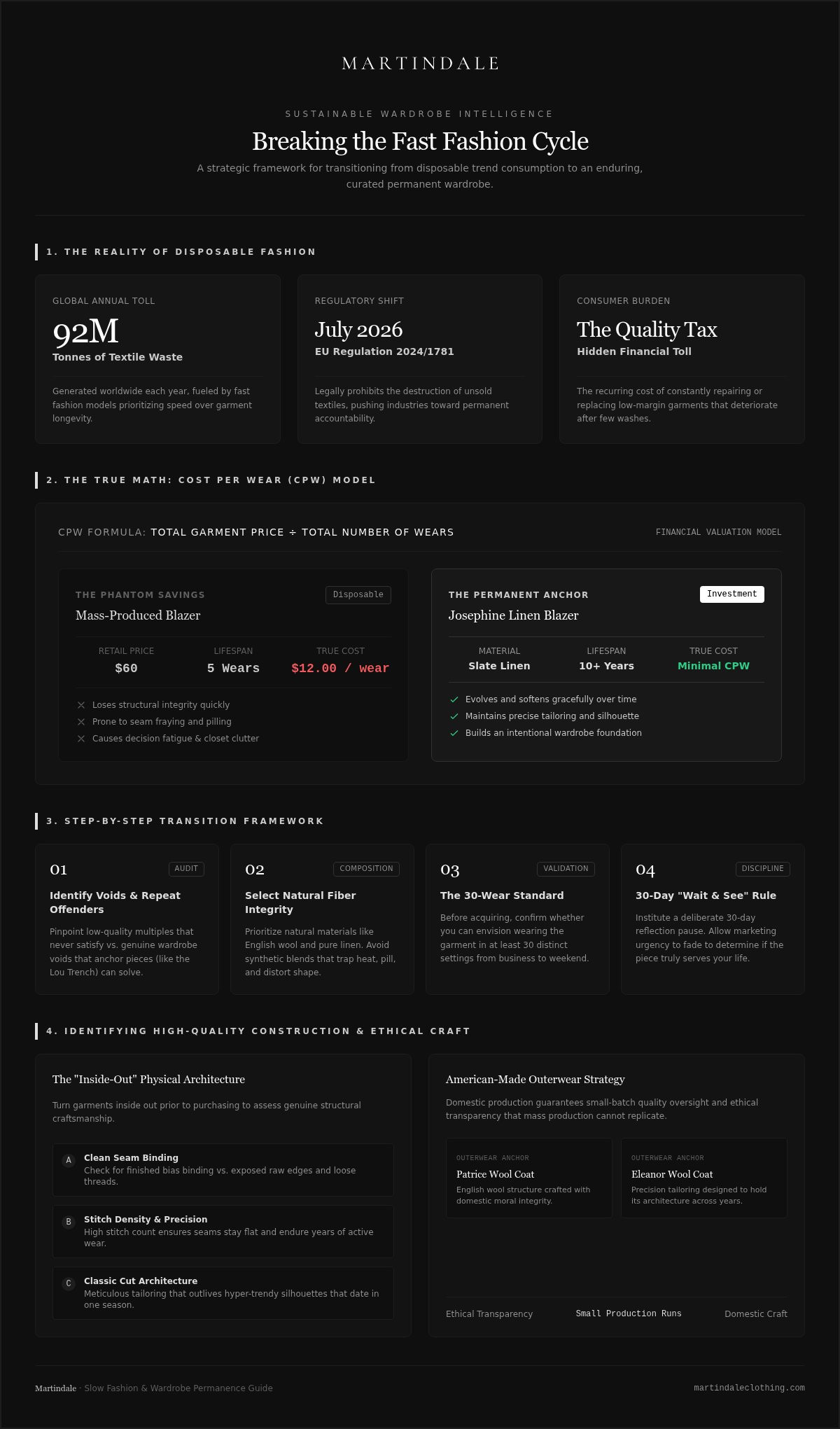
What if the most expensive item in your closet is actually the one you paid the least for? We've all felt the frustration of a wardrobe that feels cluttered yet empty, where seams fray after just a few washes and trends expire before the season even ends. This cycle doesn't just drain your budget; it contributes to the 92 million tonnes of textile waste produced annually. Learning how to stop buying fast fashion is the first step toward reclaiming your time and your values. It's a shift from the frantic pace of modern retail toward a more intentional, grounded way of dressing.
In this guide, you'll discover the psychological and practical shifts required to transition from a consumer of trends to a curator of a permanent wardrobe. We'll examine the true cost per wear of your purchases and identify the high-quality construction markers, such as stitch density and material integrity, that ensure a garment lasts a lifetime. You'll learn to invest in anchor pieces that provide confidence and pride for years to come.
Understanding the Fast Fashion Cycle and the Cost Per Wear Model
Fast fashion is a system built on transience. It relies on a fast fashion business model that prioritizes speed over substance, creating a relentless cycle of perceived obsolescence. This model encourages us to view clothing as disposable rather than durable. To understand how to stop buying fast fashion, we must shift our perspective from the checkout price to the long-term value. This is where the Cost Per Wear (CPW) model becomes essential. It's a simple calculation: the total price divided by the number of times an item is worn.
Consider the "phantom savings" of a $60 mass-produced blazer. If it loses its structure after five wears, your cost is $12 per use. Alternatively, an anchor piece like the Josephine Linen Blazer, crafted from premium slate linen, offers a far lower CPW over a decade of wear. This transience creates emotional clutter and decision fatigue. A closet full of fading trends leaves us with nothing to wear, while a few intentional pieces provide a stable foundation for personal style.
The Hidden Costs of Disposable Clothing
The true price of low-margin manufacturing is often hidden. Beyond the quality tax, which is the financial burden of constantly repairing or replacing failing garments, there is a systemic toll. As of July 2026, the EU legally prohibits the destruction of unsold textiles under Regulation 2024/1781. Choosing American-made garments like the Patrice Wool Coat avoids these ethical pitfalls. It replaces environmental guilt with the quiet confidence of supporting domestic craftsmanship and moral integrity.
Why Wardrobe Permanence is the New Luxury
Luxury is no longer about the volume of one's possessions; it's about the integrity of the few. Learning how to stop buying fast fashion requires a rejection of the temporary. Shifting to a permanent wardrobe means choosing the story of English wool over the anonymity of synthetic blends. It's an act of curation that values heritage. When you invest in quality outerwear, you aren't just buying a coat. You are choosing a partner for the seasons ahead.
A Step-by-Step Framework for a Sustainable Transition
Breaking the cycle of overconsumption begins with a deliberate pause. Understanding how to stop buying fast fashion requires moving beyond the urge for immediate gratification. Start by auditing your current collection to identify "voids" and "repeat offenders." Repeat offenders are those low-quality items bought in multiples that don't satisfy. Voids are the genuine gaps that, once filled with a quality piece like the Lou Trench, make the rest of your wardrobe functional and cohesive.
This philosophy of intentional curation should extend to every part of your lifestyle, including your athletic pursuits; for high-performance technical apparel that prioritizes durability, visit Pulco Studios.
The Wardrobe Audit: Identifying Your Style Identity
Analyze the pieces you reach for daily. Is it the weight of the fabric? Perhaps it's the precision of the fit. Most impulsive purchases end up in landfills, contributing to the staggering volume of discarded clothing shown in EPA textile waste data. When you research fabric compositions, prioritize natural fibers like English wool or linen over synthetic blends. Synthetics often pill, trap heat, and lose their shape after a few washes. In contrast, natural materials possess a physical integrity that evolves with you, becoming more comfortable and personal over time.
The 30-Wear Rule and Beyond
Before any transaction, apply the 30-wear rule. Ask yourself if you can envision wearing the item at least 30 times across different settings. A truly versatile piece transitions seamlessly from a professional morning to a weekend event. This discipline is essential for Curating Investment Pieces for Women's Wardrobes. By adopting a 30-day "Wait and See" rule for new acquisitions, you ensure every addition is an intentional choice rather than a fleeting whim. This period of reflection allows the initial marketing urgency to fade, leaving only the clarity of whether the garment truly serves your life. You can explore our collection of American-made women's coats to find your next permanent anchor piece.
How to Identify High-Quality Construction and Ethical Craft
Mastering how to stop buying fast fashion requires a discerning eye for the physical architecture of a garment. Turn a piece inside out before purchasing. Are the seams finished with clean binding, or are there raw edges and loose threads? A high-quality garment, such as the Eleanor Wool Coat, features meticulous tailoring that ensures the structure remains stable for years. Avoid hyper-trendy silhouettes that date within a single season. Instead, look for classic cuts that transcend the frantic cycles documented in the UN Environment Programme analysis on fast fashion.
The Significance of American Craftsmanship
Domestic manufacturing serves as a reliable proxy for ethical oversight and quality control. When a garment is designed and sewn in America, it involves smaller production runs and greater transparency. This proximity allows for a level of craftsmanship that mass-market brands cannot replicate. It ensures that every Patrice Wool Coat meets a high standard of moral and physical integrity. By choosing domestic production, you support local artisans who prioritize substance over fleeting popularity.
Fabric Integrity: Why Materials Matter
Materials are the bedrock of permanence. When inspecting a garment, check the tag for natural fiber dominance. English wool and linen offer a breathability and resilience that synthetic polyester blends lack. While synthetics pill and degrade, natural fibers age with grace. The inclusion of a mulberry satin lining, found in the Amelia Bomber Jacket, provides a level of luxury and structural longevity that ensures the piece remains a staple. These monomaterials are easier to maintain and align with a more considered lifestyle.
Begin building your permanent wardrobe by choosing pieces with a story. Explore our collection of ethically crafted wool coats and blazers.
Investing in Your First Anchor Piece: The Outerwear Strategy
Outerwear serves as the most strategic entry point for anyone mastering how to stop buying fast fashion. It represents the highest utility per item in your closet. While a trendy shirt might be worn twice a month, a coat is worn daily for entire seasons. This high frequency makes it the most effective place to apply the Cost Per Wear model. A single premium item has the power to transform a simple outfit of basics into a deliberate, polished ensemble. It's about shifting the focus from a high volume of low-quality items to a curated selection of permanent anchors that reflect a lifetime of style.
The Wool Coat: A Masterclass in Wardrobe Permanence
A pure wool coat is a definitive statement of intent. Styles like the Patrice Wool Coat in Chestnut or the Eleanor Wool Coat in Noir provide the structural integrity required to endure decades of use. Unlike fast-fashion alternatives that use thin, synthetic-heavy fabrics, these pieces rely on the natural resilience of premium wool. This material, combined with domestic tailoring, ensures the garment retains its silhouette rather than sagging or pilling. It's a choice that favors legacy over the temporary. To find your ideal match, consider our analysis of Trench Coat vs. Wool Coat: Choosing Your Definitive Investment Piece.
The Blazer and Trench: Professionalism Meets Ethics
The Josephine Linen Blazer and the Maggie Glen Plaid Trench are essential for a versatile, ethical wardrobe. These pieces provide a quiet authority in professional settings, where the quality of the drape and the precision of the stitch speak to your discernment. Investing in high-end materials like English wool or mulberry satin creates a sense of pride that disposable fashion can never provide. It's a way to align your professional image with your personal values while you learn how to stop buying fast fashion for good. Explore the Martindale Collection and begin your journey toward a permanent wardrobe today.
Cultivating a Legacy of Style
The transition from a transient closet to a permanent wardrobe is a profound shift in mindset. It's a move away from the frantic urgency of trends toward the quiet stability of heritage. By embracing the Cost Per Wear model and prioritizing physical integrity, you reclaim control over your personal aesthetic. Understanding how to stop buying fast fashion is more than a budgeting exercise; it's a commitment to moral and aesthetic discernment. You are no longer just a consumer, but a curator of objects that carry a story and a sense of place. This journey replaces the fatigue of disposable choices with the confidence of a well-tailored foundation.
Every piece in our collection is ethically produced in the United States, utilizing premium materials like English wool and mulberry satin. These garments are designed for decades, not seasons, serving as the reliable anchors of a more considered life. When you choose quality over quantity, you invest in a long-term partnership with the items you wear. Take the first step toward a cohesive, high-integrity closet that reflects your values and stands the test of time.
Invest in Wardrobe Permanence: Shop Martindale Outerwear
Frequently Asked Questions
Is ethical fashion always more expensive than fast fashion?
Ethical fashion requires a higher initial investment but costs significantly less over time. While a mass-produced garment might appear cheaper at checkout, its rapid degradation necessitates frequent replacement. A permanent piece, such as a well-tailored wool coat, retains its value and structure for decades. This shift in perspective is central to learning how to stop buying fast fashion, moving from fleeting transactions to long-term partnerships with your clothing.
How can I tell if a brand is truly slow fashion or just greenwashing?
True slow fashion brands provide specific details about their supply chains and construction methods. Look for concrete information on where items are sewn and the exact origin of materials like English wool. Greenwashing often relies on vague marketing terms without substantiating their claims. A brand committed to permanence will prioritize small production runs and traditional craftsmanship over the high-volume, rapid-turnaround cycles typical of the disposable retail industry.
What are the first three items I should replace in a fast-fashion wardrobe?
The most effective strategy is to start with high-impact anchor pieces. Begin by replacing a synthetic jacket with a premium wool coat, followed by a classic trench and a structured blazer like the Josephine Linen Blazer. These items endure the highest frequency of wear across multiple seasons. By investing in these foundations first, you immediately elevate the aesthetic of your wardrobe while learning how to stop buying fast fashion through intentional curation.
Does "Made in USA" automatically mean a garment is high quality?
Domestic manufacturing is a strong indicator of ethical oversight, but quality ultimately depends on the specific standards of the maker. At Martindale, "Made in USA" represents a commitment to high-register craftsmanship and physical integrity. It allows for closer monitoring of stitch density and finishing details that mass production overlooks. While origin provides a moral foundation, the true mark of quality lies in the marriage of traditional methods and premium materials.
How do I care for high-end wool and satin to ensure they last decades?
Longevity requires intentional maintenance. High-end wool should be brushed with a soft garment brush to remove surface debris and hung on wide, contoured hangers to preserve its silhouette. For mulberry satin linings, avoid excessive heat and store garments in breathable cotton bags rather than plastic. These simple, considered actions protect the physical integrity of your investment. Proper care ensures your permanent wardrobe remains a source of pride for decades.


