


Spring layers work best when each piece has a purpose: start with a breathable cotton tee or lightweight long-sleeve top, add a fine cardigan or knit for warmth, then finish with transitional outerwear for spring, such as a trench or bomber. Keep the layers light and easy to adjust as the day changes. Pair them with ankle-length trousers, a midi skirt, or jeans for a polished outfit that doesn’t feel heavy.
The challenge is rarely finding a jacket; it’s making the whole outfit work in changeable weather. A good layer can be worn open over a simple base, adds warmth without bulk, and fits naturally with clothes you already own. This guide covers breathable layers, trench coats and bombers, and ways to pair spring outerwear with dresses, skirts, and everyday trousers. The goal is a considered wardrobe that moves easily from cool mornings to milder afternoons, without relying on fleeting trends.
Table of Contents
1. Layering with breathable base layers and mid-layers
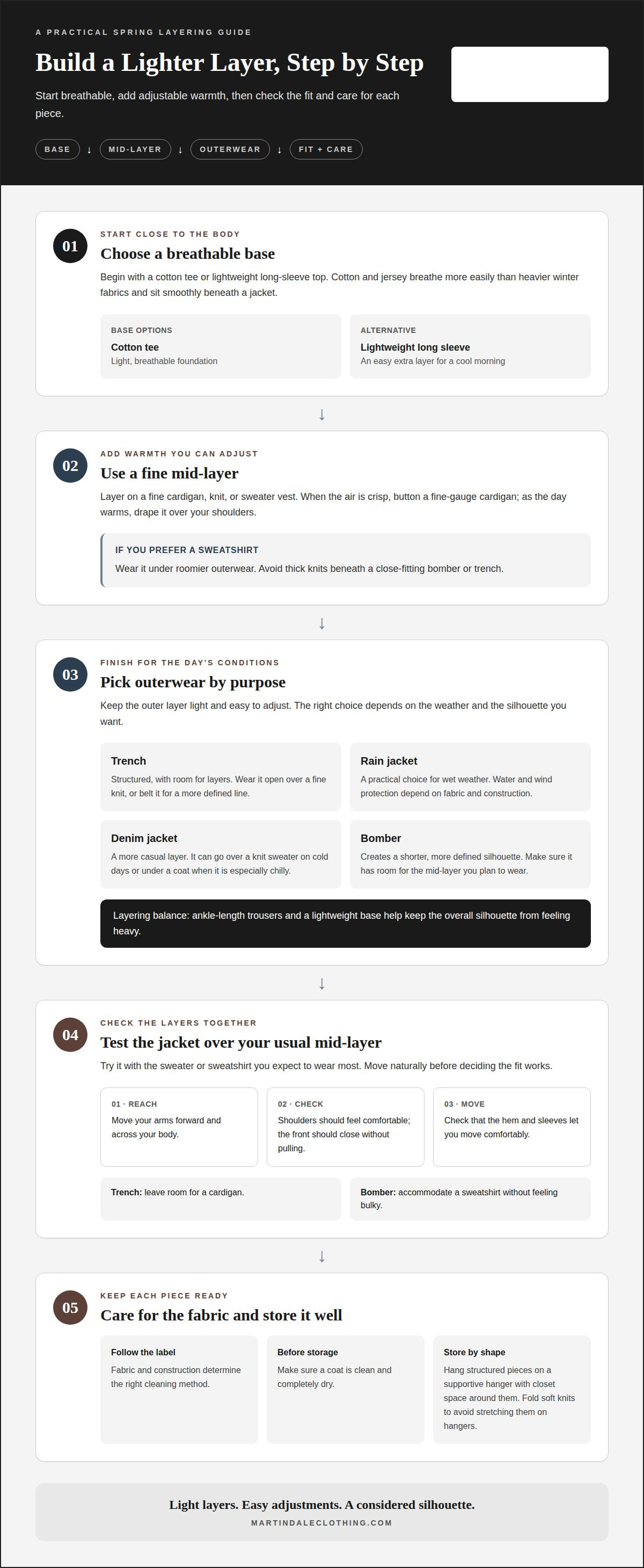
Build a spring outfit from the body outward. Start with a cotton tee or lightweight long-sleeve top, then add a fine cardigan, knit, or sweater vest. Cotton and jersey breathe more easily than heavier winter fabrics and sit smoothly under a jacket. That gives transitional outerwear for spring a lighter foundation while keeping you warm on a cool morning.
When temperatures fluctuate, choose pieces you can adjust without rebuilding your outfit. Button a fine-gauge cardigan when the air is crisp, then drape it over your shoulders as the day warms. A sweatshirt can work as a mid-layer under roomier outerwear, but avoid layering thick knits beneath a close-fitting bomber or trench. Ankle-length trousers and a lightweight base help balance the overall silhouette.
There isn’t one best-quality brand for every wardrobe; look for considered construction, useful layering room, and materials suited to your season. Current US jacket prices vary with fabric, lining, construction, and design, so compare those features rather than treating every spring jacket as equivalent. In fashion, lasting value rests on wearability and quality, not a passing trend.
To check whether a jacket fits over sweaters, try it with the mid-layer you expect to wear most. Reach your arms forward and across your body: your shoulders should feel comfortable, and the front should close without pulling. A trench needs room for a cardigan, while a bomber should accommodate a sweatshirt without feeling bulky. Make sure the hem and sleeves allow you to move comfortably.
Follow the garment label for care, since fabric and construction determine the right cleaning method. Before storing a coat between seasons, make sure it’s clean and completely dry. Hang structured pieces on a supportive hanger, leaving space around them in the closet. Fold soft knits rather than stretching them on hangers, and keep each layer ready for the next cool spell.
2. Layering with trench coats and bombers
A classic trench gives winter-to-spring dressing a defined outer layer without the weight of a heavy winter coat. Wear it open over a fine knit, then belt it for a more structured line. Ankle-length trousers and loafers keep the look polished; a scarf adds warmth when the day turns cool. This versatile staple can make simple pieces feel effortlessly put together.
Trench coats, rain jackets, denim jackets, and bombers each serve a different purpose in spring. A trench offers structure and room for layers, while a rain jacket is a practical choice for wet weather. Denim feels more casual, and a bomber creates a shorter, more defined silhouette. Choose according to the day’s conditions and the shape you want.
A belted cropped trench defines the waist and keeps the hem above the hip. Its shorter length pairs naturally with wide-leg trousers, a midi skirt, or a dress. Keep the rest of the outfit streamlined, then add accessories such as a lightweight scarf or simple leather bag. The belt adds polish without requiring extra layers.
Cropped trench coats suit outfits where a long coat might overwhelm the proportions. Try one with high-rise trousers and a fine knit, or wear it over a dress for a sharper outline. A full-length classic trench creates a different balance, especially with ankle-length trousers and boots. Either length can work across the season when its proportions complement the clothes beneath it.
Cotton and jersey are breathable choices for layers beneath outerwear. A jacket’s protection from water and wind depends on its fabric and construction, so don’t assume every trench or bomber offers the same coverage. For an adaptable outfit on a changeable day, wear a lightweight knit under a trench; choose a bomber for a shorter silhouette. Leather adds a distinctive finish, but warmth and weather protection depend on the garment’s design.
3. Spring outerwear outfit pairings
Start with the outfit’s shape, then choose a jacket that complements it. A fitted leather jacket pairs neatly with straight-leg jeans, a midi skirt, or tailored trousers. For a longer line, wear a long leather jacket over a simple dress or tailored separates. Black and brown are versatile choices; matching the jacket to your leather shoes creates a subtle, deliberate finish.
For a casual look, pair an olive, khaki, or sand utility jacket with lightweight jeans or stone-colored chinos. These neutral shades coordinate easily, while lighter bottoms soften the weight of darker winter pieces. Clean, light-colored sneakers can refresh a charcoal outfit without changing its practical foundation. It’s a useful combination for mild weather and everyday dressing.
A trench coat gives a crisp shirt and ankle-length trousers a more polished outline. For a softer contrast, layer it over a knit dress and add ankle boots while temperatures remain cool. Midi dresses and skirts also work with ankle boots; switch to white sneakers as the weather warms. A cropped jacket can balance a midi skirt’s longer hem.
Try a suede collared jacket with denim and a crisp shirt for a polished casual outfit. It also pairs naturally with a knit dress, where the contrasting textures add interest without bold accessories. Sporty windbreakers offer another option: wear one with sleek denim for relaxed dressing, or with trousers and heels for a sharper mix. Each combination shifts the mood of the outerwear.
On gusty days, a lightweight cotton or silk-blend scarf adds warmth and color. Choose a muted scarf with a patterned jacket, or a brighter shade with neutral pieces. Transitional outerwear works over knits on cooler mornings and lighter spring staples later in the day. These considered pairings make a timeless wardrobe useful through changing temperatures.
A denim jacket can go over a knit sweater on cold days or under a coat when it’s especially chilly.
4. Which lightweight jackets are best for unpredictable spring weather?
Choose a jacket for the weather it needs to handle and the layers you’ll wear beneath it. A funnel-neck jacket covers more of the neckline on breezy mornings, while a slim cropped puffer adds warmth without the bulk of a heavier coat. These shapes serve different needs: one frames the neck, the other insulates the body. Wear either over a cotton top or fine knit for adaptable transitional outerwear for spring.
A lightweight puffer is useful when temperatures rise during the day. Carry it over your arm or place it in a tote when you no longer need the extra warmth. Its cropped shape pairs neatly with straight trousers, a midi skirt, or jeans. Keep the base layer simple so the jacket is easy to remove and carry.
A lined Harrington jacket can be a versatile everyday option between seasons. Its typically light lining works over a T-shirt in spring, while its clean shape suits casual trousers or a simple dress. Wear it open when the afternoon warms, then close it against a cool breeze. The layer beneath determines how much warmth the outfit holds.
A bomber creates a shorter silhouette and brings structure to relaxed spring pieces. Pair it with a fine knit and tailored trousers for a considered contrast, or wear it over a T-shirt with jeans. For comfort, leave room through the shoulders and sleeves so it fits over a mid-layer without restricting movement.
Choose according to how the day is likely to change. Select a funnel neck for breezy conditions, a slim puffer when warmth matters, or a lined Harrington for everyday wear. A tote gives a lightweight puffer a convenient place once the sun appears. The most useful jacket works with your usual layers and feels comfortable both on and off.
Martindale: Women's Coats
Martindale offers considered outerwear for women seeking lasting pieces to wear across changing seasons. Its Women's Coats and Wool Coats provide classic options, while The Amelia Bomber Jacket in Mulberry Satin and The Amelia Bomber Jacket in Midnight Satin offer lighter alternatives for spring layering. Choose a bomber for a shorter silhouette over a breathable top, or a coat when your outfit calls for more coverage.
Each garment is designed and sewn in America, with a commitment to ethical production and enduring wear. Instead of building a wardrobe around passing trends, choose a distinctive piece that works with familiar spring outfits and stays relevant beyond one season. Explore Martindale’s outerwear at martindaleclothing.com.
Choose a Layer You’ll Return to
Start your next outerwear choice with the way you actually dress. Consider what you reach for on a cool morning, which layers fit beneath it, and what you want to wear as the day warms. This practical approach makes transitional outerwear for spring feel less like a seasonal purchase and more like a lasting part of your wardrobe.
Rather than building an outfit around a passing look, choose a silhouette and color that feel natural with clothes you already own. A considered coat or bomber can bring continuity to everyday dressing, while breathable layers give you room to adapt. The best choice earns its place through regular wear, not novelty.
If you’re ready to find a piece that suits your spring wardrobe, contact Martindale for help. Take the next step toward dressing with intention, and let the season unfold in a style that feels distinctly yours.
Frequently Asked Questions
What is transitional outerwear for spring?
Transitional outerwear for spring means a coat or jacket suited to the shift from colder conditions to milder days. It bridges the gap between heavy winter layers and clothing that feels too light for cool mornings. Think of a trench, bomber, or lightweight puffer worn with removable layers, keeping the outfit comfortable as conditions change.
What are the best layers to wear under a spring jacket?
Choose a smooth base layer, then add a thin mid-layer that won’t bunch beneath the jacket. For example, wear a cotton shirt under a fine knit with a trench, keeping the collar and cuffs neat at the openings. Before leaving, raise your arms and sit down; the layers should stay in place without pulling across your back.
What spring outerwear works best for cold mornings, rain, and warm afternoons?
For a day that shifts from a cold commute to rain and milder afternoon weather, wear a light insulating layer under an outer layer suited to rain. A trench can provide a structured top layer, while a removable knit lets you adjust your warmth indoors or later in the day. Keep a compact umbrella in your bag rather than assuming every jacket offers the same protection.
Which spring outerwear brands offer the best value and quality?
There isn’t one best-quality brand for every wardrobe. Compare construction, room for layers, and season-appropriate materials; lasting value comes from wearability and quality.
What spring outerwear fabrics are breathable, water-resistant, and windproof?
Cotton and jersey are breathable and layer smoothly, but protection from wind and water depends on a jacket’s fabric and construction. A rain jacket is a practical choice for wet weather.


