


A utilitarian coat can undo weeks of sartorial planning in a single second. When sub-freezing temperatures arrive, determining what to wear over a formal dress in winter often feels like an impossible compromise between preserving your gown's architectural line and surviving the walk from the car. Most women have endured that freezing arrival in a flimsy chiffon wrap, or surrendered to an oversized puffer that crushes silk and tulle into submission.
You shouldn't have to sacrifice genuine warmth to maintain an evening silhouette. With deliberate tailoring, intentional proportions, and heirloom textiles, winter outerwear becomes an integral part of your ensemble rather than an awkward afterthought. This definitive guide explores how to balance necklines, hemlines, and luxurious fabrics so you stay comfortable through every gala and black-tie gathering.
The Architectural Rules of Formal Winter Layering: Silhouette, Hemline, and Proportion
Winter evening wear demands structural discipline. Outerwear cannot simply sit on top of a gown as an insulating shell; it must act as an architectural extension of the dress beneath. The primary secret of what to wear over a formal dress in winter lies in controlling visual weight, ensuring that lapels, seams, and hemlines work in concert with the evening line rather than cutting it in two.
Pairing Coat Lengths with Gown Silhouettes
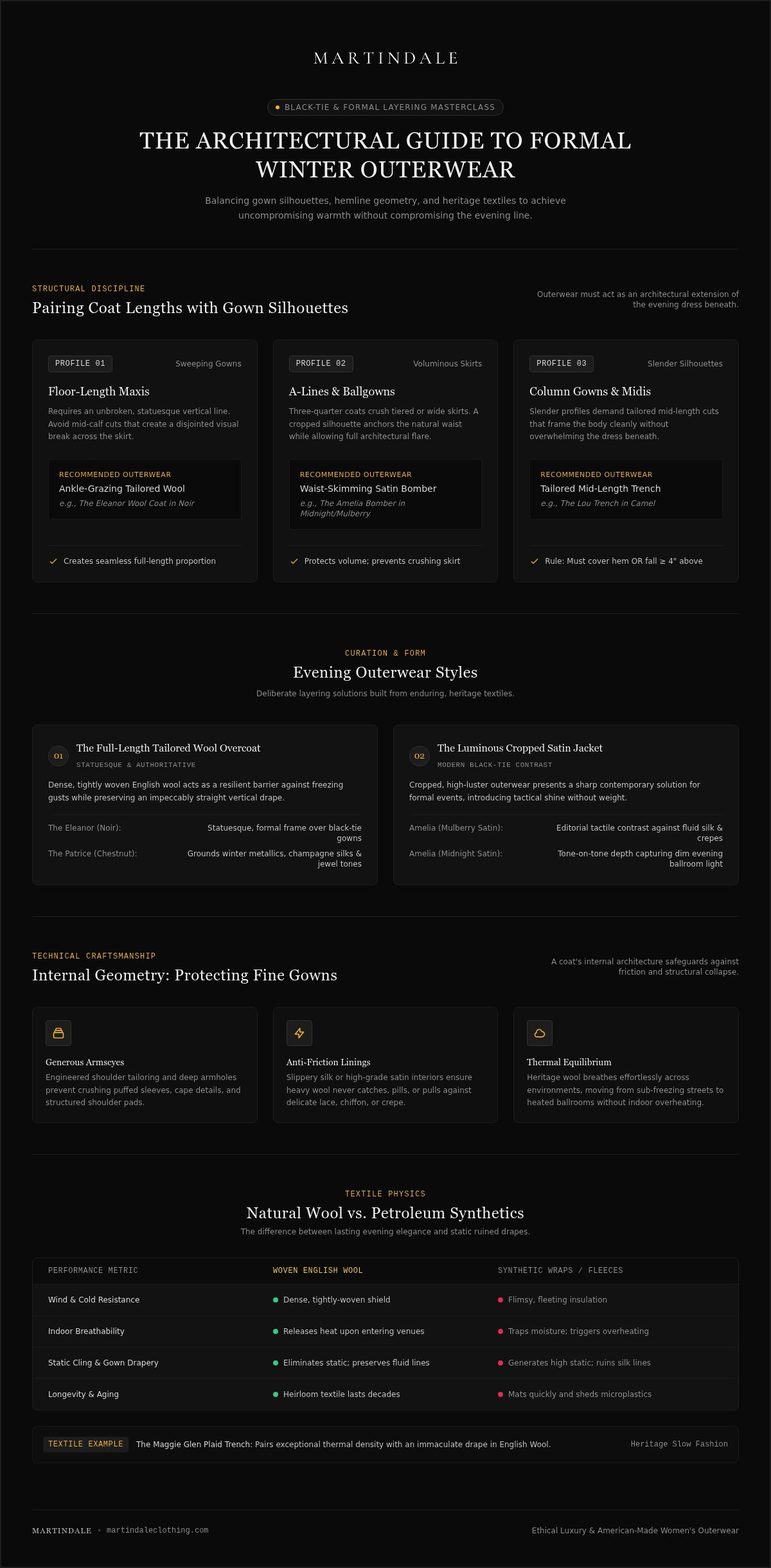
Length determines elegance. When deciding what to wear over a formal dress in winter, the relationship between your coat's hem and your dress hem makes all the difference:
- Floor-Length Maxis: Pair sweeping gowns with ankle-grazing, tailored wool pieces like The Eleanor Wool Coat in Noir. Drawing inspiration from classic overcoat styles, a clean, unbroken vertical line avoids the disjointed effect created by mid-calf cuts.
- Structured A-Lines and Ballgowns: Avoid three-quarter coats that compress voluminous skirts. Instead, choose waist-skimming silhouettes like The Amelia Bomber Jacket in Midnight Satin, which anchors the natural waist while letting the skirt flare cleanly.
- Column Gowns and Midis: Tailored mid-length trench cuts, such as The Lou Trench in Camel, frame slender column dresses without overwhelming them. Ensure the coat either completely covers the dress hem or falls at least four inches above it.
Balancing Volume, Shoulders, and Draped Sleeves
Outerwear requires deliberate inner geometry. To preserve puffed sleeves, cape details, or structured shoulders, select outerwear cut with generous armscyes and clean shoulder tailoring. Friction is another quiet threat to formal fabrics; an interior lined with slippery satin or silk prevents heavy wool from catching against delicate lace, chiffon, or crepe during movement.
The Best Outerwear Styles to Wear Over a Formal Dress in Winter
Flimsy wraps and shapeless knitwear inevitably diminish high-formality attire. When considering what to wear over a formal dress in winter, genuine luxury requires pieces with internal structure and undeniable presence. Rather than reaching for synthetic covers that offer fleeting warmth, deliberate styling pairs evening wear with garments built from enduring, heritage textiles. Exploring the tailored offerings within the Martindale collection demonstrates how purposeful craft transforms seasonal necessity into a masterclass of evening composition.
The Full-Length Tailored Wool Overcoat
Nothing commands an arrival quite like substantial wool tailoring. Dense, tightly woven English wool acts as a resilient shield against bitter winds while preserving a pristine vertical profile. The Eleanor Wool Coat in Noir delivers an authoritative, statuesque frame over black-tie gowns, ensuring your entrance remains impeccably formal. For softer evening palettes, The Patrice Wool Coat in Chestnut provides an earthy, rich grounding that warms winter metallics, champagne silks, and soft jewel tones without diminishing their luminescence.
The Luminous Satin Jacket for Modern Black-Tie
Traditional galas often invite unexpected contrasts. Cropped, high-luster outerwear presents a sharp, contemporary solution for what to wear over a formal dress in winter, especially when navigating tiered or high-volume skirts. Consider how these statement pieces refine evening proportions:
- Mulberry Satin: The Amelia Bomber Jacket in Mulberry Satin creates a striking, tactile contrast against fluid silk or column crepes, delivering warmth alongside an editorial edge.
- Midnight Satin: The Amelia Bomber Jacket in Midnight Satin offers restrained tone-on-tone depth over dark gowns, capturing low evening light without the utilitarian look of standard evening wraps.
Material Mastery: Selecting Fabrics That Provide Warmth Without Ruining the Gown
Textile physics matter as much as outward appearance. Deciding what to wear over a formal dress in winter requires evaluating how different fibers perform across contrasting microclimates. Moving between freezing outdoor sidewalks and heated ballrooms places unique demands on cold-weather evening layers. Cheap petroleum synthetics trap moisture against the body, sparking awkward overheating indoors and static cling that ruins fluid silk lines. Investing in ethically tailored layers crafted from natural fibers protects both your comfort and your gown.
Natural Wool vs. Synthetic Evening Wraps
Dense natural fibers offer unmatched thermal equilibrium. Unlike polyester fleeces or acrylic wraps that mat quickly and shed microplastics, woven English wool breathes effortlessly. It blocks sharp winter winds while releasing excess interior heat the moment you enter an event venue. Consider structural options like The Maggie Glen Plaid Trench in English Wool, which pairs exceptional thermal density with an immaculate drape. Discover how domestic slow fashion transforms these heritage fibers by exploring this guide to american made women's outerwear.
Lining Considerations and Preventing Gown Abrasion
A coat's internal architecture safeguards fine evening wear. The primary culprit behind ruined chiffon, organza, or beaded embroidery is coarse interior construction. Keep these construction markers in mind when assessing potential evening layers:
- Satin or Cupro Linings: A frictionless interior lets outerwear slip cleanly over delicate silks without catching, bunching, or introducing static charge.
- Concealed Hardware: Exposed metal teeth on utilitarian zippers, coarse internal stitching, and sharp hook fasteners can easily pull fine lace threads.
- Seamless Inner Facings: Smooth, tailored facings distribute pressure evenly across fragile bodice elements and fragile shoulder straps.
When selecting what to wear over a formal dress in winter, inspect the inner construction as thoroughly as the exterior silhouette. Explore timeless pieces in the Martindale outerwear collection to secure an ethical evening layer built to protect fine gowns for decades.
Investment Strategy: How to Choose a Formal Winter Coat You Will Wear for Decades
Disposable fast fashion encourages buying flimsy wraps for a single evening, leaving closets crowded with forgotten synthetic layers. True luxury operates on permanence. Approaching what to wear over a formal dress in winter through an investment lens shifts your objective from a single night's survival to lifelong elegance. A tailored coat shouldn't languish in storage; it belongs in dynamic rotation, outliving the event and refining everyday routines.
Versatility from Black-Tie Galas to Daily Tailoring
Multi-occasion utility defines master tailoring. To balance high-formality functions with daytime commitments, examining the distinctions between a trench coat vs wool coat reveals which silhouette serves you best. A structured classic like The Lou Trench in Camel transitions effortlessly from moonlit arrivals to crisp boardroom mornings. It holds structural poise whether layered over bias-cut silk gowns, draped over tailored evening trousers, or worn open against dark denim.
The Ethical Craftsmanship and Longevity Checklist
Enduring outerwear is defined by quiet construction details that resist premature wear. When selecting what to wear over a formal dress in winter, seek out structural hallmarks of intentional craft:
- Reinforced Horn Buttons: Hand-anchored thread shanks withstand the natural tension of heavy winter textiles without loosening.
- Bound Interior Seams: Clean internal edge-finishing prevents unraveling, preserving drape without stiff chemical interfacings.
- Substantial Hem Facings: Generous lower hems provide architectural ballast, keeping the garment anchored against biting seasonal gusts.
Choosing pieces designed and sewn domestically in the United States rejects disposable retail, securing an ethical companion built for a lifetime of formal gatherings.
Elevate Your Evening Outerwear for Decades to Come
Mastering cold-weather formal attire requires intention over convenience. When deciding what to wear over a formal dress in winter, true sophistication emerges from architectural balance, protective linings, and natural breathability. By selecting long-line tailoring or cropped satin pieces that respect your gown's silhouette, you eliminate the tension between enduring warmth and evening poise.
Outerwear should never feel like an afterthought quickly shed at coat check; it is the definitive opening statement of your arrival. Ethically designed and sewn in America, garments crafted from heritage English wool and lustrous mulberry satin bridge ceremony with enduring function. Step into cold-weather galas with poise by choosing investment pieces built to outlast fleeting seasons. Explore the Martindale Outerwear Collection to find a timeless layer that elevates every formal gathering on your calendar.
Frequently Asked Questions
Can you wear a long trench coat over a formal evening gown in winter?
Yes, a structured trench coat pairs exceptionally well with evening gowns when tailored from substantial textiles. Choosing dense styles like The Lou Trench in Camel provides the architectural structure necessary for black-tie gatherings, unlike casual cotton rainwear. Ensure the coat either sweeps past your dress hem or remains decisively shorter to avoid awkward visual breaks, keeping the overall evening profile intentional and poised.
How do you keep a formal dress warm in freezing winter temperatures?
Staying warm requires pairing naturally insulating outerwear textiles with strategic, concealed foundation layers. When deciding what to wear over a formal dress in winter, choose coats crafted from dense English wool that block bitter drafts. Beneath your gown, wear fleece-lined sheer tights and silk-thermal undergarments hidden under sweeping skirts. Dense natural fibers retain core warmth effortlessly while remaining completely breathable once you step into climate-controlled venues.
What type of jacket looks best over a floor-length ballgown?
A cropped jacket that ends cleanly at your natural waist looks best over a floor-length ballgown. Voluminous A-line skirts require distinct waist definition to prevent heavy outerwear from overwhelming the silhouette. A tailored, cropped piece like The Amelia Bomber Jacket in Mulberry Satin preserves your natural proportions, allowing the gathered skirt to flow freely without flattening delicate tulle, crinoline, or structured pleats underneath.
Is it acceptable to wear a black coat over a colorful formal dress?
Yes, a tailored black coat serves as an authoritative, elegant frame for vibrant evening wear. Selecting a refined design like The Eleanor Wool Coat in Noir creates deliberate contrast against emerald, burgundy, or winter pastels. Deep black acts as an aesthetic anchor, letting vivid colors shine during arrivals. Ensure the exterior wool has a smooth, rich finish that mirrors the formal gravity of the gown itself.
How can you prevent a wool coat from causing static cling on a silk gown?
Prevent static cling by choosing outerwear constructed with smooth cupro or satin linings instead of synthetic polyester. When evaluating what to wear over a formal dress in winter, a frictionless interior prevents heavy wool from catching against fragile silk or chiffon. You can also lightly moisturize your legs or run a metal hanger gently along the gown's lining to dissipate electrical charge before stepping outdoors.


