


The right coat for a women’s suit should extend beyond the blazer, define the shoulders, and leave enough room to layer comfortably. A knee-length or mid-calf overcoat is a dependable option, while a trench suits transitional weather. When deciding what coat to wear with a suit, women should prioritize fit: the coat should close without strain and let the blazer sit smoothly underneath.
Even a beautiful coat can disrupt a tailored outfit if the sleeves pull or the shoulders feel tight. This is especially noticeable with a skirt suit or dress, where the coat needs to create a balanced line.
Choose a coat by considering its style, length, and fit with your suit. The guidance below covers pairings for tailored, cropped, and oversized blazers, coat lengths for skirts and dresses, and practical fit checks to do before heading out.
Table of Contents
1. How To Choose the Right Coat to Complement Your Suit?
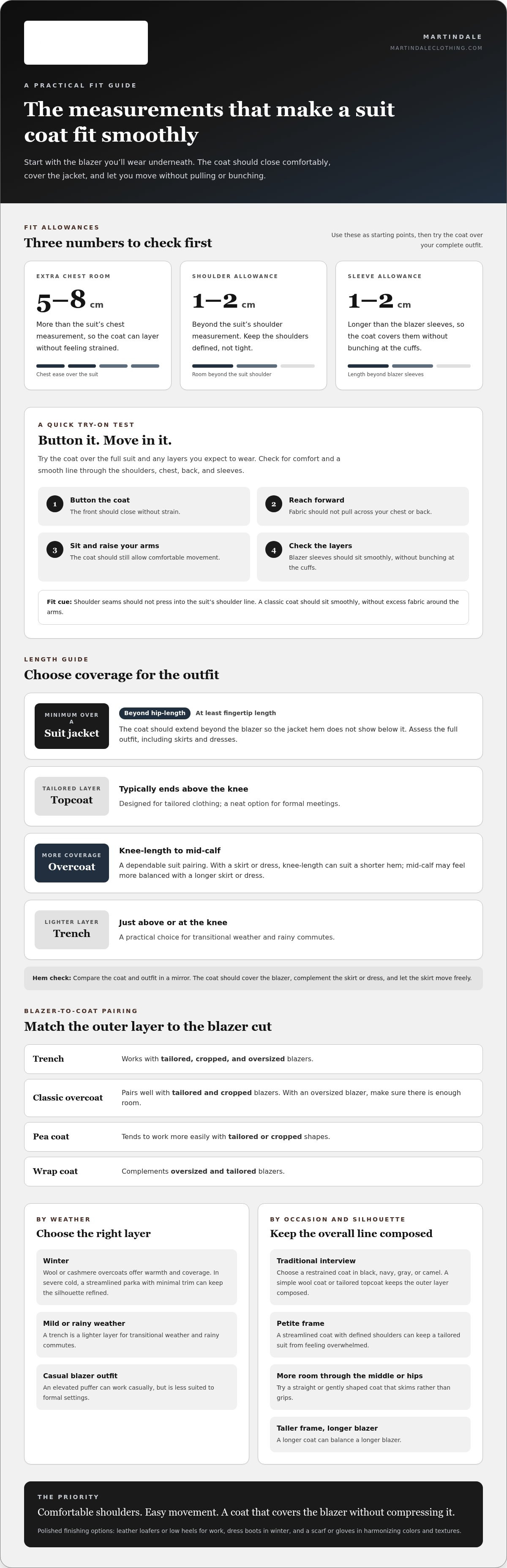
Start with the blazer you’ll wear underneath, not the coat’s label size. A coat over a suit should have 5–8 cm more chest room than the suit, with defined shoulders that don’t feel tight. Allow 1–2 cm beyond the suit’s shoulder measurement, and choose sleeves 1–2 cm longer than the blazer sleeves. These measures help preserve ease without creating a bulky silhouette.
Try the coat over your complete outfit, including the layers you expect to wear. Button it and reach forward: the fabric should not pull across your chest or back. Check that the blazer sleeves sit smoothly beneath the coat sleeves without bunching at the cuffs. Button the coat again before leaving and make sure you can move comfortably.
For an interview, choose a restrained, formal coat in black, navy, gray, or camel. The goal is to keep attention on your qualifications rather than a statement-making outfit. Even an expensive puffer may feel out of place at a traditional interview; reserve it for casual blazer outfits. A simple wool coat or tailored topcoat creates a more composed outer layer.
Let proportion guide your choice, but treat general fit suggestions as starting points, not rules. If you’re petite, a streamlined coat with defined shoulders can keep a tailored suit from feeling overwhelmed. If you prefer more room through the middle or hips, try a straight or gently shaped coat that skims rather than grips. A longer coat can balance a longer blazer on a taller frame. Above all, prioritize shoulder comfort and easy movement.
Match the coat to the occasion as well. A neat topcoat suits formal meetings, while a trench provides a lighter layer for a rainy commute. For everyday wear, consider the suit’s structure and the weather. Black, navy, gray, and camel work with many suit colors, creating a considered look without competing with the outfit.
2. Which Coats Can You Wear Over a Suit?
Wool or cashmere overcoats provide warmth and coverage over a women’s suit in winter. In severe cold, a streamlined parka with minimal trim can offer protection while keeping the silhouette refined.
A topcoat is designed for tailored clothing and typically ends above the knee. An overcoat usually provides more coverage, often falling from the knee to mid-calf. A trench is a lighter layer for transitional weather and rainy commutes, and typically ends just above or at the knee when worn over a suit.
Choose a coat that works with the blazer’s cut. A trench can suit tailored, cropped, and oversized blazers. A classic overcoat pairs well with tailored and cropped blazers; for an oversized blazer, make sure there is enough room. Pea coats tend to work more easily with tailored or cropped shapes, while wrap coats complement both oversized and tailored blazers.
For a plus-size winter interview outfit, choose a coat that closes comfortably over the full suit and leaves room to move. A structured wool overcoat can create a composed, formal line without needing to fit tightly. Keep details restrained for a traditional interview, and look for a silhouette that follows the blazer rather than compressing it.
For transitional weather, wear a trench over a suit when conditions are mild or rainy. In colder weather, choose wool or cashmere. An elevated puffer can work with a casual blazer outfit, but is less suited to formal settings. A three-quarter-length coat is another practical option over a suit.
Complete the outfit with polished shoes suited to the occasion: leather loafers or low heels for work, and dress boots in winter. A scarf or gloves add warmth; choose colors and textures that harmonize with the suit and coat. For a refined outer layer, consider a wool coat or trench.
3. Coat length over skirts and dresses
With a skirt suit or dress, choose a coat that extends beyond hip-length and covers the blazer. At minimum, aim for fingertip length. This keeps the tailored jacket hem from showing below a shorter outer layer. The guideline works with a pencil skirt, a flowing skirt, or a sheath dress. In every case, assess the coat over the complete outfit, not the skirt or dress alone.
An overcoat worn over a suit typically falls between knee-length and mid-calf. This creates a continuous line over a skirt suit and adds coverage for evening wear. A knee-length coat can suit a shorter skirt, while mid-calf may feel more balanced with a longer skirt or dress. Compare the hemlines in a mirror: the coat should complement the outfit, not hide its proportions.
Match the coat length to the blazer before considering the skirt hem. The coat should clearly extend beyond the blazer so the jacket does not peek out below it. If your blazer covers your hips, for example, choose an outer layer that falls past its hem. A coat that stops at the blazer’s hem can make the layers look compressed, especially over a dress with a longer skirt.
Length also affects warmth and formality. A coat reaching the knee or mid-calf covers more of a skirt or dress than a hip-length style, making it a considered choice for colder commutes. For an evening event, a longer coat can maintain a composed line over a formal dress. Check the full silhouette while standing and walking: the skirt should move freely, and the coat should still cover the blazer.
4. Coat fit over a suit jacket
Try the coat over the suit jacket you plan to wear. Check the shoulders and sleeves: the shoulders should be defined but comfortable, the sleeves should cover the blazer sleeves, and the front should close without strain. A classic coat should sit smoothly over your layers, without pulling across the back or leaving excess fabric around the arms.
Use measurements as a guide, then test the coat in motion. Allow 5–8 cm more chest room than the suit, 1–2 cm beyond the suit’s shoulder measurement, and coat sleeves 1–2 cm longer than the suit sleeves. These allowances help accommodate the blazer while keeping the outer layer’s shape composed.
Try the complete outfit: button the coat, reach forward, sit, and raise your arms. Start with the shoulder seams; they should not press into the suit’s shoulder line. Then check the sleeves and chest for pulling or bunching. If the coat feels tight when buttoned, it will not be comfortable as an outer layer.
Fit also depends on the blazer’s silhouette. A tailored blazer usually layers neatly beneath a classic overcoat, while an oversized blazer needs more room through the shoulders and body. A cropped blazer leaves more space below the jacket, but the coat still needs enough length to cover it. For casual outfits, a less structured layer can work as long as it does not restrict your arms or shoulders.
Don’t rely on the size label alone. A winter coat worn over a blazer may need to be one or three sizes larger than your usual coat, so compare the actual fit over your suit. The takeaway is simple: prioritize shoulder ease, smooth sleeves, and comfortable closure over a familiar number on the tag. A small portion of the suit jacket sleeves can peek below the coat sleeves for a polished finish.
Martindale: Women's Coats
Martindale offers women’s coats for building a considered outerwear wardrobe around tailored pieces. For a polished suit ensemble, a wool coat provides a classic direction; for a more relaxed blazer outfit, The Amelia Bomber Jacket in Mulberry Satin or Midnight Satin brings a softer, more casual note. Choose according to the setting and the silhouette you want to carry through the day, whether that means a formal meeting or an off-duty occasion. Each option offers a distinct approach to wearing outerwear with intention, rather than treating a coat as an afterthought. If you’re ready to consider a coat or jacket for your wardrobe, visit Martindale’s collection.
Choose an Outer Layer You’ll Reach For Again
Choose a coat that will work beyond a single meeting. Consider the settings you move between, the suits in your wardrobe, and whether you want the outer layer to add structure or a softer contrast. For women deciding what coat to wear with a suit, thinking about the wider wardrobe can be more useful than following a passing trend.
Before choosing, picture the coat with the suit you wear most often, then consider whether it also fits your other daily outfits. A versatile piece earns its place through repeated wear and a silhouette that feels like your own. Martindale offers considered options for building that relationship with outerwear. Contact Martindale to discuss your options, and take the next step toward a coat that feels right for your wardrobe.
Frequently Asked Questions
How To Choose the Right Coat to Complement Your Suit?
Choose a coat that suits both the setting and the suit’s overall shape. If you’re deciding what coat to wear with a suit, consider whether it’s for an interview, a client meeting, or a less formal day. A restrained wool coat suits formal settings, while a trench offers a lighter finish. Try it with the shoes and bag you plan to carry, since these details affect the outfit’s balance.
The Peacoat Debate: Can It Work with a Suit?
Yes, a peacoat can work with a suit, particularly with a tailored or cropped blazer. Its shorter, more compact shape can complement a streamlined outfit for a commute or business-casual day. Try a dark peacoat with a simple suit and understated shoes. An oversized blazer can be harder to layer under its structured shape, so consider the proportions of the complete outfit.
Which Coats Can You Wear Over a Suit?
Overcoats, trench coats, wrap coats, and peacoats can all work over a suit, depending on the blazer’s shape and the occasion. For a client presentation, a classic overcoat creates a composed finish; for a rainy commute, a trench is practical. A wrap coat adds a softer line, while a peacoat suits a more compact outfit. Match the coat’s formality to where you’ll wear the suit.
What coat styles look best over a women's suit?
A tailored overcoat is a natural match for a formal suit, while a trench or wrap coat offers a softer silhouette. A camel trench, for instance, can soften a dark suit for daytime, while a black overcoat keeps a meeting outfit understated. A satin bomber creates a distinctly casual contrast, so save it for relaxed settings rather than traditional formal occasions.
How should a women's coat fit over a blazer?
A women’s coat should layer over the blazer without pulling, twisting, or restricting your reach. Wear the blouse and jacket you plan to pair with it, then sit and move your arms as you would during the day. Check that the fabric lies smoothly across your back and underarms. If a handbag strap catches the coat or shifts its shoulder line, try the outfit with your usual bag before deciding.
What coat length works best with a women's suit?
A knee-length to mid-calf coat is a versatile option over a women’s suit, while a shorter style can suit a compact blazer outfit. With a skirt or dress, check how the coat falls as you walk and sit, not just how it looks when you stand still. Try the outfit with your intended shoes, since heels or flats can change the visual balance between coat, jacket, and skirt.


