

A coat should be a sanctuary, not a temporary convenience. While the modern market is flooded with synthetic blends that lose their shape within months, a true investment piece relies on the integrity of its fibers. Identifying the best wool for women's coats requires looking past the label and understanding the heritage of the weave itself. You've likely experienced the frustration of a garment that looks beautiful online but fails to provide actual warmth when the wind picks up. It's time to reject the cycle of disposable fashion.
This guide will help you identify high-quality materials and select a perfect American-made coat that balances enduring warmth with sophisticated style. We'll explore the superior thermal properties of English wool and the architectural stability of wool gabardine. By understanding the difference between various wool types, you can invest in a piece like the Patrice or the Maggie with confidence. You're not just buying outerwear; you're supporting a movement toward slow, intentional craftsmanship and finding a coat that will remain a cornerstone of your wardrobe for decades.
What Defines the Best Wool for Women's Coats?
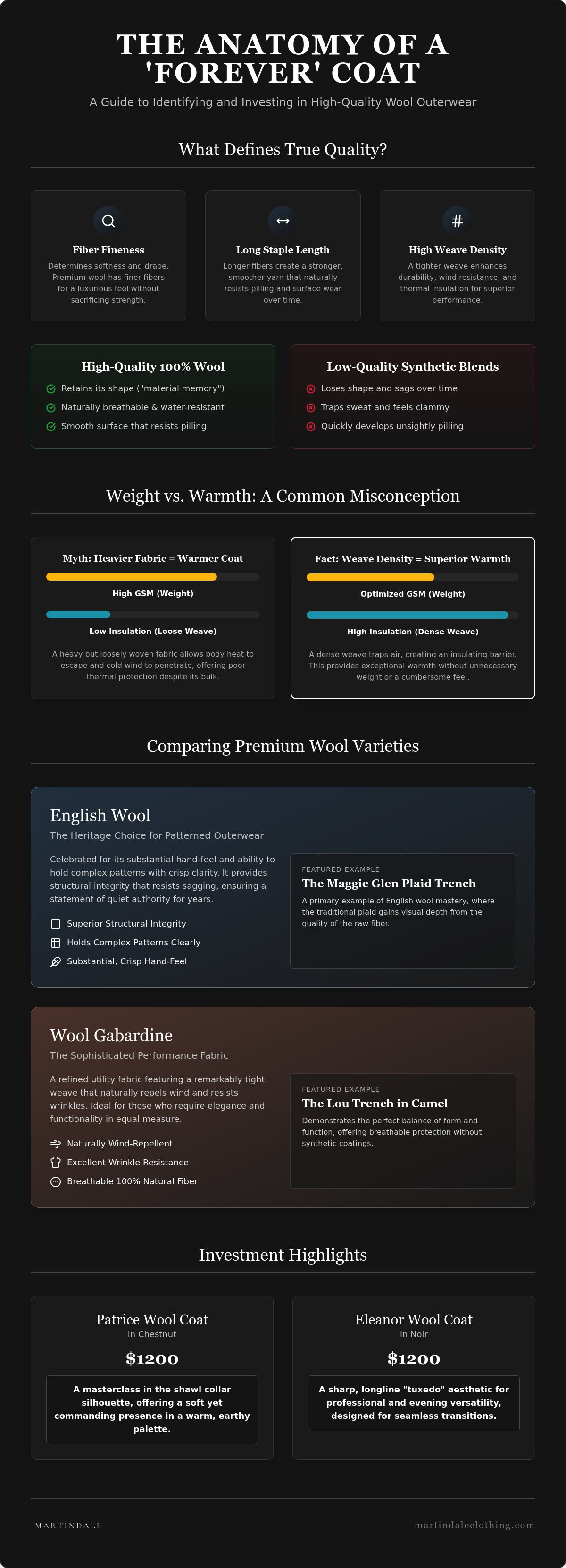
True quality in outerwear is an invisible metric. It exists at the intersection of fiber fineness, staple length, and weave density. While mass-market brands prioritize production speed and cost, a premium garment relies on long staple fibers that naturally resist surface wear. Gaining a deeper understanding of What is Wool? at a molecular level reveals why 100% natural fibers are the non-negotiable baseline for performance. Pure wool offers innate breathability and natural water resistance that a synthetic blend simply cannot replicate. This structural integrity is the first step in identifying the best wool for women's coats.
Selecting a 'forever' piece requires a rejection of the temporary. High-density luxury wools don't just feel substantial; they possess a material memory. They return to their original shape even after a long day of movement. In contrast, low-quality blends rely on acrylic or polyester fillers that break down quickly, leading to the unsightly pilling that plagues disposable fashion. When you shop our collection for pieces like the Eleanor or the Patrice, you're investing in a material designed for a lifetime of wear. These coats embody the slow fashion movement, where the focus remains on permanence rather than fleeting trends.
The Difference Between Wool Weight and Warmth
Warmth is a function of trapped air, not just sheer mass. While GSM (grams per square meter) measures the fabric's weight, the weave structure dictates its insulating power. A heavier fabric doesn't always translate to a warmer experience if the weave is loose and allows heat to escape. Conversely, a dense English wool, like that used in the Maggie Glen Plaid, provides exceptional protection against the wind without unnecessary bulk. The best wool for women's coats balances weight with a sophisticated drape, ensuring the garment feels intentional and protective rather than heavy or cumbersome.
Comparing Premium Wool Varieties: English Wool vs. Wool Gabardine
While the market often prioritizes generic softness, true longevity requires a fiber with character and resilience. English wool and wool gabardine stand as the twin pillars of high-end outerwear. Each serves a specific architectural purpose. English wool provides the crisp, definitive structure required for tailored heritage pieces. In contrast, wool gabardine offers a fluid, performance-driven protection that excels in transitional weather. Understanding these nuances is essential when seeking the best wool for women's coats. Martindale selects these weaves not just for their aesthetic, but for how they interact with the human form over time.
English Wool: The Heritage Choice for Patterned Outerwear
Traditional English wool is celebrated for its substantial hand-feel and its ability to hold complex patterns with startling clarity. The Maggie Glen Plaid Trench in English Wool serves as a primary example of this mastery. This weave isn't merely decorative; it provides a structural integrity that resists the sagging common in lesser materials. The traditional plaid pattern gains visual depth from the quality of the raw fiber, ensuring the coat remains a statement of quiet authority for years. It's a choice for those who value the story of the weave as much as the physical warmth it provides.
Wool Gabardine: The Sophisticated Performance Fabric
If English wool is about heritage, wool gabardine is about refined utility. This fabric features a remarkably tight weave that naturally repels wind and resists wrinkles without the need for synthetic coatings. The Lou Trench in Camel demonstrates this balance perfectly. By utilizing 100% natural fibers and a biodegradable cupro lining, this piece offers a breathable alternative to mass-produced, sweat-trapping synthetics. It's an ideal weight for those who require elegance and functionality in equal measure, proving that the best wool for women's coats is one that adapts to its wearer. You might explore our curated outerwear to see how these purposeful weaves transform a simple silhouette into a lifetime investment.
Selecting Your Silhouette: The Martindale Wool Collection
A coat's silhouette is the structural framework for its longevity. While the fiber provides the physical substance, the cut determines how the garment integrates into a life lived with intention. Choosing the best wool for women's coats is only half the journey. The other half is selecting a form that transcends seasonal whims and fleeting industry trends. A well-considered silhouette ensures that the material's integrity is matched by its aesthetic relevance, turning a simple purchase into a permanent partnership.
Investment Highlights: Standout Pieces for 2026
The Patrice Wool Coat in Chestnut ($1200) is a masterclass in the shawl collar silhouette. This piece offers a soft yet commanding presence, utilizing a warm, earthy palette that feels both grounded and premium. For those seeking professional and evening versatility, the Eleanor Wool Coat in Noir ($1200) provides a sharp, longline "tuxedo" aesthetic. Its definitive structure is designed for the woman who requires a garment that transitions seamlessly from a high-stakes boardroom to a formal evening engagement. These aren't just seasonal additions; they are essential investment pieces for a women's wardrobe that prioritize substance over profit.
For a more dynamic approach to layering, a tailored wool cape ($800) offers a sophisticated alternative. It prioritizes mobility and dramatic lines, allowing for a freedom of movement that traditional sleeves cannot provide. Deciding between a longline coat and a cape depends on your daily rhythm. Longline styles like the Eleanor provide maximum thermal protection for sustained exposure to the cold. Alternatively, a cape offers a fluid silhouette that excels in urban environments where frequent transitions between temperatures are common. Every piece in our collection is Made in the USA, ensuring that the best wool for women's coats is paired with the highest standard of American craftsmanship. Browse our complete collection of wool outerwear to find your definitive winter silhouette.
The Longevity of High-Quality Fabric: Care and Investment
A coat is a partnership between the maker and the wearer. While identifying the best wool for women's coats is the beginning of the journey, its ultimate lifespan depends on intentional care. Unlike synthetic blends that deteriorate with every cleaning, premium wool thrives with minimal, thoughtful intervention. It's a material that rewards respect with decades of service, maintaining its luster and shield-like properties through years of winter weather.
To preserve the integrity of your investment, follow a methodical care routine:
- Brushing: Use a natural bristle brush after each wear to lift surface dust and prevent fibers from matting or pilling.
- Steaming: Avoid the abrasive chemicals of frequent dry cleaning. Gentle steam relaxes the fibers and restores the natural bounce of the weave.
- Storage: Use wide, structured hangers to maintain the shoulder line. Store in breathable garment bags with cedar to deter pests while allowing the fiber to breathe.
Consider the financial logic of cost-per-wear. A $1,200 investment in a piece like the Patrice or Eleanor, spread over a conservative ten-year lifespan, equates to just $120 per year. If you wear your coat sixty times each winter, your cost-per-wear is only $2. Compare this to a $300 synthetic alternative that requires replacement every season. The latter is a recurring expense; the former is a permanent asset. Building a capsule wardrobe around a single, high-quality wool coat simplifies your life while elevating your presence.
Why American Craftsmanship Matters for Wool
Our commitment to Manhattan-based production isn't just about heritage; it's about oversight. Being Made in Manhattan allows for a level of quality control that mass production can't match. Every seam is scrutinized, ensuring the garment's durability matches the fiber's excellence. This proximity to the craft fosters a sense of responsibility toward both the worker and the wearer. For a deeper look at how these standards define a Professional Women's Wool Coat, we invite you to explore our perspective on career-defining investments. It's the ultimate rejection of the temporary.
Embracing a Legacy of Permanence
Choosing the best wool for women's coats is a definitive rejection of the transient and a commitment to the enduring. By prioritizing high-density English wool or refined gabardine, you're selecting a garment that respects both the wearer and the craft. Quality isn't merely found in the fiber; it's forged in the ethical, Manhattan-based production that ensures every seam holds the promise of a decade. A coat like the Patrice or the Eleanor isn't just outerwear. It's a cornerstone of a considered wardrobe. When you move away from the frantic cycle of disposable fashion, you embrace a partnership with a piece that gains character with every winter. This is the logic of true luxury: finding stability in craftsmanship and grace in longevity. We invite you to step into a world where style is as permanent as the materials themselves. Browse the Martindale Wool Collection to discover your next lifetime investment. Your journey toward a more intentional wardrobe begins with a single, perfect choice.
Frequently Asked Questions
Is 100% wool or a wool blend better for winter coats?
100% wool is the superior choice for warmth and longevity. While blends often incorporate synthetics to lower production costs, these fillers compromise the fabric’s natural breathability and insulating power. Pure wool offers innate temperature regulation and water resistance. It remains a stable investment that won't break down or lose its structural integrity after a single season of wear.
What is the warmest wool for a women's coat?
Dense, high-weight varieties like traditional English wool provide the greatest warmth for winter. The best wool for women's coats relies on a tight weave structure to trap heat and block cold winds effectively. While fiber type matters, the density of the fabric ensures a protective barrier. A pure wool garment with a high fiber count offers reliable insulation that synthetic alternatives simply cannot replicate.
How can I tell if a wool coat is high quality?
Assess the fabric’s density and its ability to return to its original shape. High-quality wool feels substantial and resilient when squeezed, while lower grades often feel thin or limp. Look for a consistent texture and the absence of synthetic fillers. Premium outerwear also utilizes superior components, such as biodegradable linings and reinforced stitching, which indicate a garment designed for a lifetime of use.
Does a premium wool coat pill over time?
Premium wool is naturally resistant to pilling because it's crafted from long-staple fibers. Pilling typically happens when short, weak fibers break and tangle, which is a hallmark of inexpensive blends. A high-density weave maintains its smooth surface even with regular use. By utilizing superior raw materials, high-end coats avoid the fuzzy surface degradation that plagues disposable, mass-produced fashion items over time.
Why are American-made wool coats more expensive than imported ones?
American-made coats reflect the honest cost of ethical labor and meticulous craftsmanship. Producing garments in Manhattan ensures fair wages and direct oversight, which are rarely found in high-volume imported fashion. This investment supports local artisans and guarantees a higher standard of durability. While the initial price is higher, it covers the physical and moral integrity of a piece built to last for decades.


