


A higher purchase price doesn’t automatically mean poorer value. A cost per wear calculator for clothing makes that comparison clear, while about $1 to $3 per wear is a useful guide for regular pieces, not a universal rule.
It’s easy to focus on the price tag, but a garment’s value also depends on how often it fits into your routine and how long it remains wearable. An optimistic wear estimate can make almost any purchase look worthwhile, so a realistic calculation matters.
This guide shows how to estimate total wears and judge the result in context. You’ll also see how care, tailoring, resale value, and durability affect the calculation, and why a thoughtful wardrobe decision involves more than reaching the lowest number.
Table of Contents
What Makes a “Good” Cost Per Wear?
A good cost per wear depends on the garment’s purpose and your actual use. Online calculators may be free or paid; the calculation needs the purchase price and estimated wears, plus care costs and resale value for an adjusted result.
Basic and Adjusted Cost-per-Wear Formulas
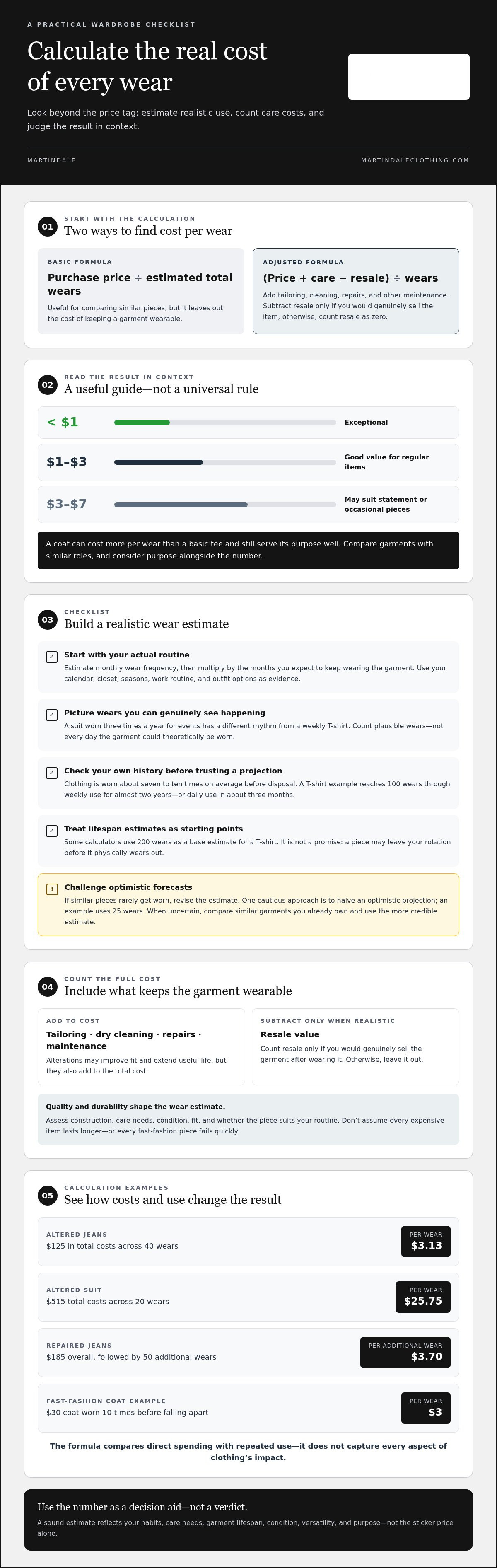
The basic formula divides a garment’s purchase price by its estimated total wears. This figure helps compare similar pieces in your closet, but it doesn’t include the cost of keeping them wearable.
For a fuller estimate, add care costs to the purchase price, subtract realistic resale value, then divide by total wears. Include expenses such as dry cleaning, repairs, or other maintenance. Subtract resale value only if you would genuinely sell the garment after wearing it; otherwise, count it as zero.
Cost-per-Wear Calculation Examples
For an altered pair of jeans, $125 in total costs across 40 wears comes to $3.13 per wear. Each formula uses actual costs and a realistic wear estimate.
As a guide, under $1 per wear is exceptional, while $1 to $3 can represent good value for regular items. A $3 to $7 result may suit statement pieces or occasional wear. These ranges are not universal: a coat can cost more per wear than a basic tee and still serve its purpose well.
A cost per wear calculator for clothing is a decision aid, not a substitute for tracking what you wear. If you expect to wear an item 25 times, use that estimate rather than an aspirational closet plan. The final number reflects your habits, garment lifespan, and care needs, not the sticker price alone.
Estimating total wears from monthly wear frequency and lifespan
Clothing is worn about seven to ten times on average before disposal. Estimate future wears from your routine and the garment’s likely lifespan, rather than assuming every piece will become a favourite.
Wear Frequency and Garment Lifespan
Total wears depend on how often you use a garment and how long it remains wearable. Multiply a realistic monthly frequency by the months you expect to keep wearing it. A piece worn eight times per year for several years can accumulate meaningful use, but only if its condition, fit, and place in your wardrobe support continued wear.
Use your calendar and closet as evidence. A dark suit worn three times per year for events has a different rhythm from a T-shirt worn weekly. Seasons, work routines, and outfit options all affect your estimate. Count wears you can genuinely picture, not every day the garment could theoretically be worn.
Estimating Future Clothing Wears
For a purchase, estimate frequency first, then consider the garment’s expected years of use. One T-shirt example reaches 100 wears through weekly use for almost two years; daily use reaches that total in about three months. These examples show why the same garment can produce very different estimates across different routines.
Some calculators use 200 wears as a base lifespan estimate for a T-shirt. Treat that as a starting point, not a promise for every garment or brands. Compare the estimate with your actual habits: a special-occasion piece may be worn only a few times yearly, while a dependable everyday layer may return to rotation often.
Risks of Optimistic Wear Estimates
An optimistic estimate can make a purchase appear better value by enlarging the total-wear count. If you project regular use but rarely reach for similar pieces, revise the forecast to match your routine. One cautious approach is to halve an optimistic projection; an example uses 25 wears. That adjustment helps keep the calculation grounded.
A garment’s lifespan also depends on whether it remains wearable and suits your needs. A T-shirt that loses its place in your rotation may stop earning wears before it physically wears out. Compare similar pieces already in your closet, then use the lower, more credible estimate. When comparing your wardrobe more broadly, consider versatile pieces alongside your actual wearing habits.
Accounting for tailoring, resale, quality, and durability
Include the purchase price, tailoring, repairs, dry cleaning, and other ongoing care in a clothing cost-per-wear calculation. Subtract resale value only when you would realistically sell the garment; otherwise, leave it out. These inputs reveal more of the true cost than the sticker price alone.
Alterations can improve fit and extend a garment’s useful life, but they add to its cost. For example, an altered suit with total costs of $515 and 20 wears comes to $25.75 per wear. A repair can also change the calculation: jeans costing $185 overall, followed by 50 additional wears, work out to $3.70 per additional wear. Count the expense and the use gained.
Quality matters because durability determines whether a projected wear count is plausible. A $30 fast-fashion coat worn 10 times before falling apart costs $3 per wear. Neither result captures every aspect of fashion’s impact, but the comparison shows how garment lifespan changes the financial calculation.
For wardrobe staples, assess construction, care needs, and whether the piece suits your routine. A durable coat may earn more wears than an occasional statement garment, even if its purchase price is higher. Don’t assume every expensive item lasts longer or every fast-fashion piece fails quickly. Base your estimate on the garment’s condition and expected use.
Cost per wear compares direct spending with repeated use; it doesn’t represent the full cost of clothing. Material choices, production, and disposal also matter, though they don’t fit neatly into the formula. Use durability to estimate a realistic lifespan, then include tailoring and care expenses. A sound wardrobe decision considers both the calculation and the garment’s likely lifespan.
Auditing cost per wear in an existing wardrobe
Cost per wear can help you decide whether to buy, keep, or replace clothing by comparing actual use with total cost. A high figure may signal an underused piece, while repeat wear can make an expensive staple worthwhile. Consider the garment’s condition, versatility, and purpose alongside the calculation.
Start with a wardrobe audit. Record each garment’s purchase cost, estimated wears, and care or repair expenses. A digital wardrobe app can organize those details and help track wear over time, but the record is only useful when it reflects real use. A calculator supports your decision; it doesn’t replace wardrobe tracking.
Compare similar pieces before buying another version. If two coats fill the same role, consider which one you reach for and why. A cheaper garment that stays unworn may offer less value than a more expensive piece that works with several outfits. If an item you own gets little wear, ask whether it needs repair, a styling change, or a new place in your rotation.
Capsule wardrobe planning also benefits from repeat-wear evidence. A considered collection of 30-40 versatile, high-quality pieces can encourage deliberate outfit combinations. Compare those pieces with a wardrobe of 100 or more fast-fashion items, where duplicates may compete for the same occasions. The relevant measure isn’t simply how many garments you own, but whether each serves a distinct purpose and earns regular use.
Review your audit periodically, then group garments by role: frequent essentials, occasional pieces, and items rarely worn. This pattern can guide future purchases and help identify replacements when a well-used garment no longer serves you. Treat the figures as context, not a universal threshold: a formal outfit and a daily layer have different jobs. Consider which wardrobe pieces deserve a place in your rotation.
Martindale: Women's Coats
Martindale offers women’s coats and wool coats for readers considering a lasting outerwear piece. Once your cost-per-wear estimate reflects realistic use, choose a garment that suits your routine, wardrobe, and climate.
For a different take on outerwear, consider The Amelia Bomber Jacket in Mulberry Satin or The Amelia Bomber Jacket in Midnight Satin. Compare each option by likely wear occasions, versatility, and care needs, not purchase price alone. A garment that fits your life is more likely to earn repeat wears.
Martindale’s garments are ethically produced, designed, and sewn in America. Explore the women’s coats and outerwear at Martindale’s website.
Make your next wardrobe choice with intention
Give your next purchase a clear role in your wardrobe. Consider what it needs to pair with, where you expect to wear it, and whether it fills a genuine gap. A cost per wear calculator for clothing can inform your decision, but your priorities matter too: comfort, versatility, care, and how naturally a piece fits into everyday life.
If you’re considering outerwear, Martindale offers women’s coats and wool coats, as well as The Amelia Bomber Jacket in Mulberry Satin. Think about which garment would see regular use in your routine instead of choosing by calculation alone. The most considered purchase is one you can imagine wearing often and confidently.
Explore Martindale’s clothing and take your next wardrobe decision at your own pace.
Frequently Asked Questions
How do you calculate cost per wear for clothing?
Divide the garment’s total cost by its total wears. Count occasions when you actually wear it, not times you consider an outfit or try the garment on. Apply the same method to every item you compare, so the results reflect consistent tracking.
What is a good cost per wear for everyday clothing?
About $1 to $3 per wear is a useful benchmark for regularly used clothing. Treat it as a reference, not a pass-or-fail score: a work shirt worn often and a formal dress worn rarely serve different purposes. Compare items with similar roles and wearing patterns, then consider fit, comfort, and whether each piece continues to suit your routine over time.
How can you estimate future wears when using a cost per wear calculator?
Estimate how often you’ll wear the item, then multiply by the years you realistically expect to use it. Base your estimate on your current schedule, not a hoped-for change in habits.
How does cost per wear compare clothing across different prices and quality levels?
It compares each item’s cost with its expected use, so a lower purchase price doesn’t automatically mean better value. Lifespan changes the comparison.
How should laundry, repairs, and alterations affect cost per wear?
Add garment-specific laundry, repair, and alteration expenses to the purchase cost before calculating. For routine laundry, include a reasonable share of the expense rather than the cost of an entire household load. If a repair restores the garment, assess its cost against future wears, separately from past use. This helps show whether extending the garment’s life makes sense.
What are the limitations of cost per wear for clothing purchases?
Cost per wear reduces value to spending and estimated use. It doesn’t measure comfort, fit, versatility, or whether a garment suits your changing needs. It also depends on projected wears, which can shift with lifestyle, damage, or changing preferences. Use the result alongside the item’s condition, care demands, role in your wardrobe, and fit with your budget.


