


Pilling alone doesn't prove that a wool coat is poorly made; friction can loosen fibers and draw them into small pills. To learn how to depill a wool coat, lay it flat and lift pills from the dry fabric with a fabric shaver or wool comb, using short, light strokes. A razor needs an especially light touch because pressure can nick the weave.
It’s understandable to wonder whether a bobbled surface means a coat won’t last. The practical task is removing pills without thinning or snagging the fabric, then reducing the rubbing that encourages more to form. This guide explains how to choose between a shaver, comb, and razor, work gently across the coat, and identify friction-prone areas such as cuffs and places where a bag rests. You’ll also learn when home maintenance is appropriate and when widespread pilling or thin fabric may signal deeper wear.
Table of Contents
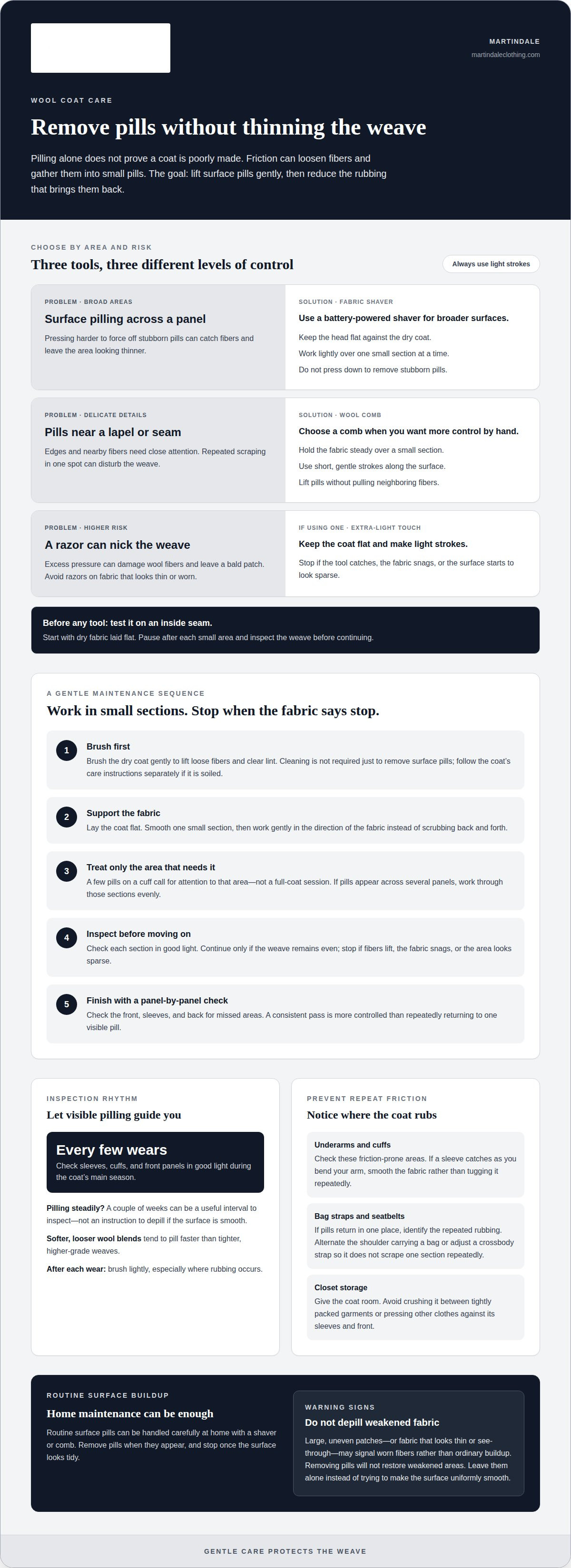
Fabric shaver versus comb versus razor
- To depill a wool coat safely at home, start with the dry coat laid flat. Test a fabric shaver or wool comb on an inside seam before treating visible areas, then work with short, light strokes.
- To remove pills by hand, guide a wool or sweater comb gently over a small section. Hold the fabric steady and lift surface pills without pulling neighboring fibers. This gives you close control around details such as lapels and seams.
- Depilling can damage wool fibers or leave a bald patch if a tool catches the weave. Test the tool on an inside seam, use light pressure, and stop if the fabric snags or starts to look thinner.
- Choose a battery-powered fabric shaver for broader areas with surface pilling. Keep its head flat against the coat and move it lightly over one small section at a time. Don’t press down to force off stubborn pills.
- Choose a wool comb when you want more control by hand, especially near a lapel or seam. Use short strokes along the fabric’s surface instead of repeatedly scraping one spot. This measured approach makes it easier to monitor the weave around delicate details.
- A razor is the riskiest choice because excess pressure can nick the weave and leave a bald patch. If you use one, keep the coat flat and make light strokes. Avoid razors on fabric that looks thin or worn.
To depill a wool coat without overworking it, pause after each small area and inspect the weave. A shaver suits broader surfaces; a comb offers closer control. Either can lift pills from dry wool when used with light strokes. Choose the tool that suits the area, and stop if the surface starts to look sparse.
Gentle coat brushing technique
- Brush a dry wool coat before using a depilling tool. Cleaning isn’t required to remove surface pills; brushing first lifts loose fibers and clears lint, making raised pills easier to see. If the coat is soiled, follow its care instructions for cleaning separately.
- A tailor or dry cleaner isn't necessary for routine surface pills, which can be addressed with careful home maintenance. Large, uneven patches or thin, see-through fabric may indicate worn fibers rather than ordinary buildup, and removing pills won't restore weakened areas.
- Lay the coat flat on a table so the fabric stays supported while you work. Smooth one small section with your hand, then brush gently downward, following the direction of the fabric. This controlled movement helps lift loose fibers without dragging them across the weave.
- Use light, even passes rather than pressing hard or scrubbing back and forth. Repeated friction can catch fibers and make an area look thinner. At a cuff, for example, steady the edge with one hand and brush from the sleeve toward its opening.
- Move to the next section only after checking the first in good light. If the surface looks smooth and the weave remains even, continue. If fibers lift or the area looks sparse, stop there. Take extra care around lapels and seams, where the edges can catch a brush.
- After each wear, brush the coat lightly to lift loose fibers before they tangle into pills. Pay particular attention to areas that rub during wear, such as underarms and cuffs. Keep the motion gentle: brushing is routine care, not a reason to repeatedly work one spot.
- Finish by checking the coat’s front, sleeves, and back for missed areas. A consistent pass over each panel is more controlled than repeatedly returning to one visible pill. If the fabric itself looks worn, leave that area alone rather than trying to brush it smooth.
How often to de-pill a coat
- Check your coat every few wears during the season you use it most. Look at the sleeves, cuffs, and front panels in good light. Removing pills when they first appear is more controlled than waiting until they cover a broad area. Let visible pilling, rather than the calendar alone, guide each treatment.
- If your coat pills steadily, a couple of weeks can be a useful interval for checking it. Treat that as a prompt to inspect, not an instruction to shave the fabric regardless of its condition. If the surface remains smooth, put the tool away; unnecessary passes can disturb fibers that don’t need attention.
- Adjust how often you inspect the coat to its fabric. Looser, softer wool-blend fabrics tend to pill faster than tighter, higher-grade weaves, so check a soft blend more closely with frequent wear. A tightly woven coat may need less attention, especially if its surface stays even through the season.
- Match the treatment to the amount of buildup. A few small pills on a cuff call for attention to that area, not a full-coat session. If pills appear across several panels, work through those sections evenly and stop once the surface looks tidy. Don’t repeatedly return to one patch.
- Reassess the coat before each session. Large, uneven areas of pilling, or fabric that looks thin or see-through, can signal worn fibers rather than routine surface buildup. More frequent depilling won’t restore the material. Leave weakened areas alone instead of trying to make them look uniformly smooth.
- Keep a simple seasonal routine: inspect after several wears, remove pills when they appear, and reassess after each pass. If a coat stays smooth through several outings, wait before treating it. If friction brings pills back on one panel, focus on that area at the next inspection.
Preventing friction-related pilling
- Notice where your coat rubs during ordinary wear. Wool pills through abrasion, so inspect the underarms, cuffs, and areas touched by bag straps or seatbelts. If pills repeatedly appear in one place, identify the daily source of friction before treating the surface again.
- Alternate the shoulder that carries your bag. A strap pressing against the same panel concentrates friction; switching shoulders spreads contact across the coat. With a crossbody bag, adjust how it sits so the strap doesn’t repeatedly scrape one section as you walk.
- Reduce rubbing at cuffs and underarms by noticing how the coat moves over your layers. If a sleeve catches as you bend your arm, smooth the fabric rather than tugging it repeatedly. Identify which movements create contact, then adjust how you wear the coat or carry items.
- Give wool room in the closet. Storing a coat crushed between tightly packed garments can encourage faster pilling than leaving space around it. Hang it without pressing other clothes against its sleeves or front, and let the fabric rest freely between wears.
- Turn the coat inside out before washing to reduce friction on its outer surface. Choose a cleaning method that follows the coat’s care instructions, and avoid rubbing the outside as you handle it. This can help limit pilling and damage, though it won’t remove existing pills.
- After wearing the coat with a shoulder bag or seatbelt, inspect the area that was in contact. A quick look can show whether the strap or belt repeatedly rubs one panel. Adjust the strap or your carrying position next time, rather than waiting for pills to spread.
- Keep prevention practical: reduce repeated rubbing, avoid cramped storage, and turn the coat inside out for washing. These small changes address the conditions that create pills; they don’t require treating smooth fabric with a depilling tool.
Martindale: Women's Coats
Martindale offers women’s coats, including wool coats, as part of a considered outerwear wardrobe. Gentle depilling and friction-conscious care can help maintain a coat you already own. When choosing another piece, consider the material and style that suit how you dress. For a different texture, The Amelia Bomber Jacket in Mulberry Satin and The Amelia Bomber Jacket in Midnight Satin offer alternatives to wool outerwear.
Explore Martindale’s women’s coats to find a piece that suits your wardrobe, then visit martindaleclothing.com to browse the collection.
Make thoughtful care part of your wardrobe
Knowing how to depill a wool coat gives you a practical way to care for a garment already in rotation. Let that care inform what you choose next: consider the role a coat will play in your wardrobe, the material you enjoy wearing, and whether its style suits more than one season. A considered purchase starts with how you expect to wear and maintain it.
Martindale offers women’s coats and wool coats, alongside The Amelia Bomber Jacket in Mulberry Satin. Each provides a different direction for building a wardrobe around pieces you can return to, rather than treating outerwear as a passing choice. Take time to consider which style complements the garments you already wear.
Explore Martindale’s women’s outerwear and choose a piece that feels right for your wardrobe. Careful choices, followed by gentle upkeep, can make getting dressed feel more considered.
Frequently Asked Questions
Does pilling mean my wool coat is low quality?
No, pilling alone doesn’t establish that a wool coat is poorly made. Fiber content, yarn structure, fabric construction, and everyday wear all influence how pills form. Look beyond the surface: consider whether the fabric remains even and substantial, and whether pilling is concentrated in areas that experience regular contact. A few pills aren’t, by themselves, a reliable measure of overall quality.
When should I stop trying to fix pilling and replace the coat?
Stop depilling if the fabric is visibly thinning, becoming see-through, or developing widespread uneven patches. Those signs suggest the material itself is worn, not simply covered with loose pills. A tool can remove surface buildup, but it can’t restore missing or weakened fibers. Consider whether the coat still feels sound and serves its purpose; replacing it is a personal decision based on its condition and use.
Will pilling come back after I remove it?
Yes, pills can return because removing them clears existing buildup, not the conditions that produce it. A coat worn frequently under a bag strap may develop new pills in that contact area while less-used panels remain smooth. Treat recurrence as useful information: notice where pills appear, then consider what repeatedly rubs against that section during wear or storage.
What tools are best for removing pills from a wool coat: fabric shaver, sweater comb, or pumice stone?
A fabric shaver is practical for broad, relatively even panels, while a sweater comb gives you more control around details. A pumice stone isn’t designed specifically for depilling wool, so its rough surface may be less predictable on a coat’s weave. For controlled maintenance, choose a shaver or wool comb, and test it discreetly before working on visible fabric.
How do you use a fabric shaver on a wool coat without damaging it?
Start with a dry coat and a clean shaver head, then test the tool on an inside seam. To depill a wool coat, keep the head level against the fabric and move it over a small area without pressing down. Pause before seams, buttons, or edges, where the surface changes shape. Inspect each patch and stop if the weave looks disturbed.
How do you prevent a wool coat from pilling again?
You can reduce, but not eliminate, the friction that leads to new pills. Knowing how to depill a wool coat is useful, but preventing repeated rubbing matters too. Notice how bags, seatbelts, and layers contact the fabric, then adjust their position if one panel experiences frequent friction. Avoid compressing the garment in storage, and handle it gently during cleaning.


