


Heat and rough handling can shorten a garment’s life; gentler care helps preserve it. To learn how to make clothes last longer, air-dry when practical, wash in cold water, measure detergent carefully, and fold pieces that could lose their shape on a hanger. These small choices can reduce wear while keeping clothes ready to be worn again.
It’s easy to focus on how a garment is made and overlook what happens after it comes home. Repeated washing, drying, and storage all affect how a piece looks and feels over time. A thoughtful routine needn’t be complicated: match care to the fabric and garment.
Here are practical ways to dry clothes carefully, wash them gently, measure detergent, and store delicate or heavy knits folded. These habits help limit unnecessary wear and keep the pieces you value in your wardrobe longer.
Table of Contents
1. Air-drying clothes
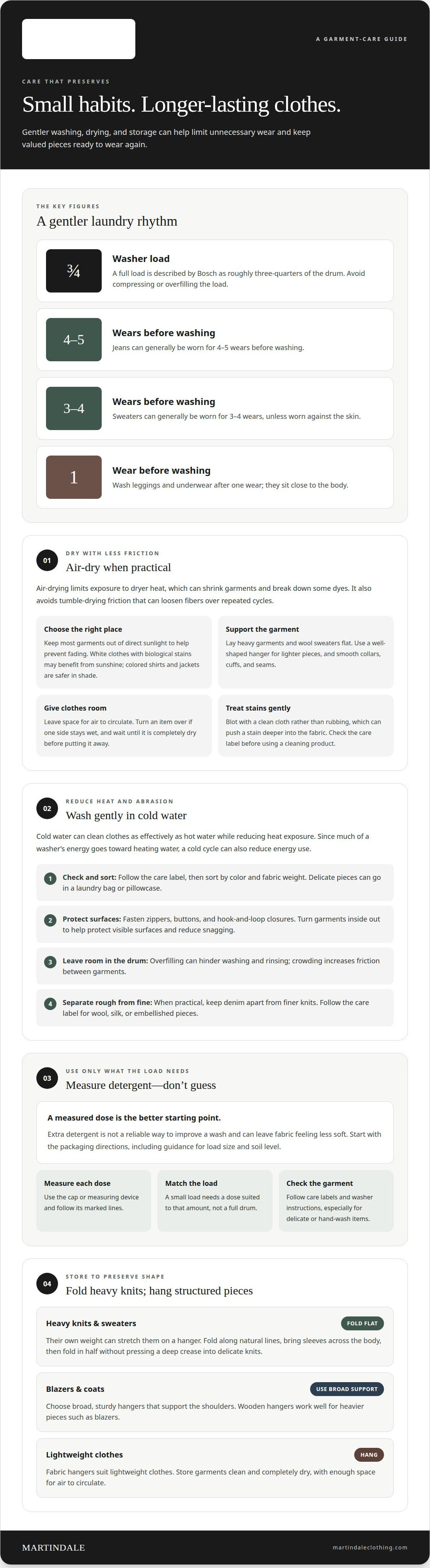
Air-drying limits exposure to dryer heat, which can shrink garments and break down some dyes. When the wash is done, gently shake each piece to release folds, then hang it on a sturdy hanger or place it on a drying rack. This also avoids the friction of tumble-drying, which can loosen fibers over repeated cycles. Dryer lint consists of tiny clothing fibers shed during drying, so using the dryer less can reduce fiber loss through this route.
Choose a drying spot with the fabric and color in mind. Keep most garments out of direct sunlight, as strong light can fade colors. White clothes with biological stains may benefit from sunshine, but colored shirts and jackets are safer in the shade. Lay heavy garments flat on a clean surface so their weight doesn’t pull them out of shape. Use a well-shaped hanger for lighter pieces, and smooth collars, cuffs, and seams before drying.
Leave room for air to circulate around each item. A crowded rack slows drying and can leave damp patches near seams or pockets. Turn a garment over if one side remains wet, and wait until it’s completely dry before putting it away. Dry wool sweaters flat to help preserve their shape; hang light shirts to reduce creasing.
Treat common stains promptly by blotting with a clean cloth rather than rubbing. Blotting lifts the stain, while rubbing can push it deeper into the fabric. Check the care label before applying a cleaning product, especially on delicate fibers.
Repair small holes and loose seams before they spread. Match the thread to the fabric, secure the edges with small stitches, and sew a loose button through its existing holes. A firm knot on the inside helps hold the repair in place. These simple fixes can return a favorite piece to regular wear instead of letting a minor flaw end its useful life.
2. Washing clothes in cold water
Cold-water washing can clean clothes as effectively as hot water while reducing heat exposure. Warm water can shrink garments, and heat may weaken fibers or break down some dyes. Because much of a washer’s energy goes toward heating water, a cold cycle can also reduce energy use.
Start with the care label, then sort items by color and fabric weight. A delicate blouse, sturdy cotton shirt, and dark denim don’t necessarily belong in the same cycle. Cold water is a gentler default, but follow the garment’s care instructions for cycle and handling. Place fragile pieces in a laundry bag or pillowcase to reduce friction with other items.
Before starting the machine, fasten zippers, buttons, and hook-and-loop closures. Turn garments inside out to protect their visible surfaces and reduce snagging. This is especially useful for printed shirts, dark jeans, and clothes with decorative details. Keep the load full but not compressed. Bosch describes a full washer load as roughly three-quarters of the drum. Overfilling can hinder washing and rinsing, while crowding increases friction between garments.
Washing less often also reduces repeated friction. Jeans can generally be worn for 4-5 wears before washing, and sweaters for 3-4 wears unless worn against the skin. Leggings and underwear sit close to the body, so wash them after one wear. Airing a lightly worn sweater between uses can refresh it without another wash.
To limit fading, pilling, and stretching, wash dark colors inside out, place delicate fabrics in a protective bag, and avoid packing the drum tightly. Separate rough fabrics, such as denim, from finer knits when practical. These steps reduce abrasion, the friction that can roughen fibers and distort a garment’s surface. For wool, silk, or embellished pieces, follow the care label rather than assuming they can go in the machine.
Fastening closures and turning garments inside out can help prevent them from catching on the drum or other items. An overloaded washer can damage clothes and rinse them poorly.
3. Choosing and measuring detergent
Detergent should clean clothes without leaving heavy residue. Extra detergent isn’t a reliable way to improve a wash, and too much can leave fabric feeling less soft. Start with the amount stated on the packaging, then follow its directions for load size and soil level. A lightly worn blouse and muddy gardening clothes need different treatment.
Measure each dose instead of pouring by instinct. Use the detergent cap or measuring device, and follow its marked lines rather than filling it automatically. If your washer instructions specify a detergent type or placement, follow those directions too. Careful measuring helps avoid using more product than the load needs, which can leave fabric feeling less soft after washing.
Consider the garment as well as the detergent. A delicate silk blouse, sturdy cotton shirt, and wool sweater have different care needs. Check each care label before choosing a wash cycle or detergent, and use a laundry bag for delicate pieces when appropriate. If an item is marked for hand-washing, follow its label rather than putting it through a regular machine cycle.
For a mixed load, sort clothes by color and fabric weight before adding detergent. Separating dark denim from pale cotton helps protect their appearance. Keep bulky pieces from crowding delicate garments, since close contact can increase friction during washing. For a small load, measure a dose suited to that amount rather than using the dose intended for a full drum.
After washing, check how fabrics feel and smell before putting them away. If a shirt feels soapy or stiff, review the detergent measurement and washer directions before the next load. Don’t add detergent to address a lingering odor; instead, check the garment’s care label and wash settings. A measured dose matched to the load makes laundry care more deliberate and helps preserve the feel of valued pieces.
4. Folding garments that may lose shape on hangers
A hanger isn’t right for every garment. Heavy knits can stretch under their own weight, leaving shoulders elongated and hems uneven. Fold sweaters and other weighty knitwear, then store them flat in a drawer or on a shelf. This supports the garment along its shape instead of concentrating its weight at the shoulders.
Fold a sweater along its natural lines, bringing the sleeves across the body before folding it in half. Avoid pressing a deep crease into delicate knits. For structured blazers and coats, use broad, sturdy hangers that support the shoulders. Fabric hangers suit lightweight clothes; wooden hangers work well for heavier pieces such as blazers.
Store clothes clean and completely dry, with enough space for air to circulate. Damp fabric and tightly packed shelves can encourage mildew, while crowded drawers may crush knits and leave hard creases. A breathable garment bag can protect seasonal pieces from dust; don’t seal away anything damp. Lavender sachets in a wardrobe may help deter clothes moths.
Fabric shavers and cashmere combs can remove pills and refresh a sweater’s surface. Use a fabric shaver carefully on suitable fabrics, and choose a cashmere comb for delicate knitwear. Mesh laundry bags hold small or delicate pieces during washing and reduce contact with other garments. Each tool serves a different purpose: storage, washing protection, or surface care.
Before putting a garment away, inspect its shoulders, seams, and surface. Fold a stretched knit rather than hanging it again, and place the heaviest folded pieces at the bottom of a stack. Keep frequently worn items accessible so pulling out one sweater doesn’t disturb the whole shelf. This simple arrangement helps preserve shape and makes each piece easier to find.
Choose between a hanger and a drawer based on what will best preserve a garment’s shape. Heavy knits are better folded and stored in a drawer than hung, which can help preserve their shape and knit.
When deciding where a piece belongs, consider whether hanging could affect its form. A drawer is a good alternative for heavy knitwear; folding helps preserve the garment’s shape and knit.
Martindale
Martindale offers thoughtfully made outerwear for a wardrobe built around enduring pieces. If you’re choosing a coat to wear and care for over time, its wool coats provide an alternative to passing trends. The Amelia Bomber Jacket in Mulberry Satin or Midnight Satin offers another considered option.
Care habits matter, but so does choosing garments intended for lasting wear. Martindale creates and sews its garments in America, with an emphasis on quality and ethical production. Pair that considered approach with gentle washing, careful drying, and shape-conscious storage to give each piece attentive care throughout its life.
If you’re considering a lasting outerwear piece for your wardrobe, explore Martindale’s collection.
Choose pieces with a longer story ahead
A wardrobe becomes more personal when each garment earns its place through years of wear. That relationship begins with a considered choice and grows through the care and attention given to every piece. Learning how to make clothes last longer isn’t about preserving every item at all costs; it’s about valuing what serves you and making thoughtful decisions about what comes next.
As you build a wardrobe around lasting style, look for garments you can imagine wearing across seasons and occasions. Martindale’s collection includes women’s coats and considered pieces such as the Amelia Bomber Jacket in Mulberry Satin. Choose what feels enduring to you, then make thoughtful care part of wearing it.
For a thoughtful next step, contact Martindale today. Build a wardrobe with intention, one well-loved piece at a time.
Frequently Asked Questions
How often should clothes be washed to make them last longer?
A useful principle for how to make clothes last longer is to wash according to how close a garment sits against your skin and how much soil or sweat it collects. Underwear and leggings generally need washing after one wear, while jeans can usually be worn 4-5 times and sweaters 3-4 times if they aren’t worn against the skin. Spot-cleaning a small mark can help avoid washing an otherwise fresh garment.
Should clothes be washed in cold water or hot water?
Choose cold water for routine loads, and let each garment’s care label guide any exception. Heat can shrink fabric and weaken some fibers or dyes, making it a less gentle default. For example, wash a dark printed shirt inside out in cold water to reduce wear on its visible surface. Separate colors before washing to help preserve their appearance.
What is the best way to dry clothes without damaging them?
Air-drying is a gentle choice for most garments and a practical way to make clothes last longer. Arrange pieces so air can circulate around them, and smooth seams and collars before they dry to reduce creasing. Dry heavy knits flat to support their shape. Keep colored clothing out of strong direct sunlight, and put garments away only when fully dry. If you use a dryer, follow the care label’s instructions.


