


Building a confidence-boosting wardrobe starts with choosing clothes that feel like you, not following rules about what you should wear. Notice the pieces you reach for because of their fit, color, texture, or ease, then use those preferences to guide your choices. To try a bolder look, begin with one standout piece and pair it with familiar basics.
It’s understandable to want clothes that feel appropriate and help you feel at ease. But dressing well doesn’t have to wait until your body, job, or life changes, and “flattering” rules don’t have to decide what you wear. This guide will help you identify your personal style, move past habits that make getting dressed feel limiting, and choose clothes that support how you want to show up now. You’ll also find a gradual way to try new looks, so confidence can grow through considered choices rather than a complete wardrobe overhaul.
Table of Contents
1. Choosing clothes for personal expression rather than flattery
Choose clothes for who you are, not rules about which shapes supposedly flatter you. Start with pieces you wear often, then notice their cut, color, and fabric. A softly structured jacket, for example, may feel more like you than a close-fitting top, even if a style guide recommends the latter. Those preferences reveal what supports your confidence and daily life. They’re more useful than labels that suggest you need to disguise your shape.
Color can affect how your face looks and how you feel in an outfit. Hold two shirts near your face in natural light and compare which shade makes your complexion look brighter. A clear blue might create a fresh look, while muted green may feel more in keeping with your taste. Choose a color you enjoy wearing, not a supposedly universal “best” shade.
At work, clothing can help you feel capable while respecting the culture around you. A doctor described wearing business clothes so patients would see her as the doctor she had trained to be; she was sometimes mistaken for a nurse when wearing scrubs. Consider the setting, your role, and the comfort you need to do your work. A polished blazer with comfortable trousers, for instance, can feel composed without copying every colleague’s uniform. Explaining a clothing choice can also open a conversation about workplace expectations and personal expression.
Set aside clothes that feel too tight, don’t fit, or make you feel as though you’re hiding. To find a comfortable fit without expensive tailoring, check that shoulder seams sit near your shoulders, closures lie flat, and you can sit and reach without pulling. Try different cuts, such as a relaxed jacket instead of a narrow one, and assess how they feel in motion. For practical workwear, look for pieces that allow ordinary movement and are clean and presentable. Keep what helps you feel steady; let go of what turns getting dressed into daily criticism.
2. Identifying personal style beyond self-imposed rules
Separate body image from style by asking what you enjoy, not what you think you must conceal. A preference for loose sleeves, strong colors, or simple lines is a style clue, not a judgment about your shape. Look for a style role model who shares a feature you feel self-conscious about. Notice how their outfits express character, then adapt a detail, such as a vivid scarf or relaxed silhouette, to suit your own taste.
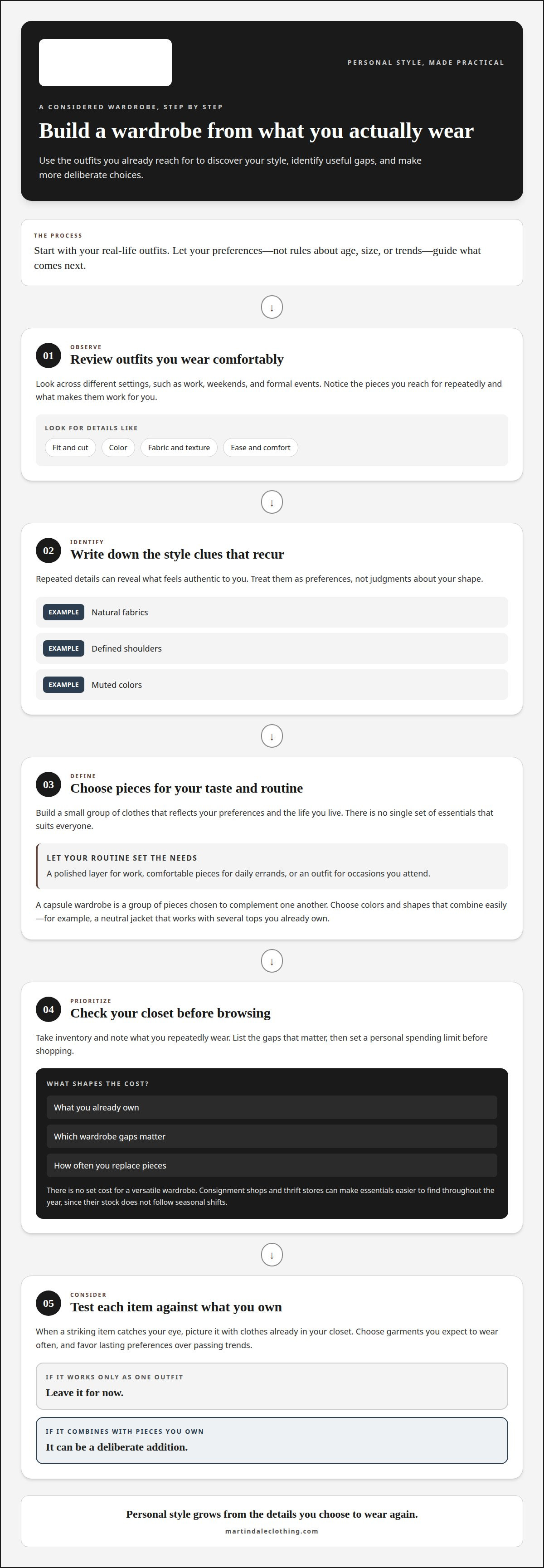
To identify your style, review outfits you’ve worn comfortably in different settings, such as work, weekends, and formal events. Write down the details that recur: perhaps natural fabrics, defined shoulders, or muted colors. Then choose a small group of pieces that reflect your taste and lifestyle, rather than rules about age, size, or trends. Authenticity comes from wearing those details consistently, not reproducing someone else’s entire look.
There’s no set cost for a versatile wardrobe. Spending depends on what you already own, which gaps matter, and how often you replace pieces. Set a personal limit, list items you’ll wear in several settings, and prioritize the gaps. Consignment shops and thrift stores can make essentials easier to find throughout the year, since their stock doesn’t follow seasonal shifts.
No single set of wardrobe essentials suits everyone. Start with the clothes your routine requires: a polished layer for work, comfortable pieces for daily errands, or an outfit for occasions you attend. A capsule wardrobe is a group of pieces chosen to complement one another, so select colors and shapes that combine easily. One neutral jacket, for example, may work with several tops you already own.
For more considered shopping, take inventory of your closet before browsing and note what you reach for repeatedly. When a striking item catches your eye, pause and picture it with clothes you own. If it works only as one outfit, leave it for now. Choose garments you expect to wear often, and favor lasting personal preferences over passing trends. That makes each purchase a deliberate addition, not an impulse.
3. Dressing well without waiting for life goals
Your wardrobe belongs to the life you’re living, not a future version of yourself. Don’t save a favorite jacket for after a promotion, a move, or a change in body shape. Wear it to the meeting you have now, or pair it with familiar trousers for a weekday lunch. Clothes that suit your present routine can make ordinary days feel more considered. A future milestone may change what you need, but it doesn’t have to decide what you wear today.
Clothing can also help communicate your role in a particular setting. One doctor reported wearing a suit and tie to build trust with older patients while discussing high-risk but necessary treatments. That example isn’t a universal dress code; it shows how a deliberate choice can support the conversation and professional identity someone wants to convey. At work, consider the day’s responsibilities, the people you’ll meet, and the impression you intend to make. Then choose a level of polish that still feels like you.
Fit matters in motion, not just in a mirror. Before wearing an outfit for a full day, sit at a desk, reach for a shelf, and walk at your usual pace. If a waistband digs in or a sleeve restricts movement, try a different cut or layer. Choose clothes that let you move comfortably and keep your attention on the task, rather than adjusting a hem during a meeting. For a practical finish, check that garments are clean and pressed, without holes, frayed threads, or distracting wrinkles.
Small changes can refresh an outfit without a new wardrobe. Try a pressed shirt with trousers you already wear, or add a jacket to a familiar work outfit. Notice how the adjustment affects your mood and readiness for the day. If a goal is still in progress, dress for today’s appointment, commute, or dinner instead of postponing self-expression. A useful wardrobe supports real routines now; it doesn’t make confidence depend on reaching a particular milestone.
4. Expanding a fashion comfort zone gradually
A new look doesn’t need to replace your wardrobe. Start with one unfamiliar detail and keep the rest of the outfit familiar. If bright color feels bold, try a vivid scarf with a neutral jacket and trousers. If you usually wear soft shapes, add a structured layer over a familiar shirt. Pairing one bolder piece with basic clothing lets you try the change without feeling as though your whole outfit is a costume.
Make the experiment specific. Choose one item you’re curious about, such as a patterned blouse or a different silhouette, and wear it in a low-pressure setting first. Notice whether you feel comfortable sitting, walking, and speaking with others. If one feature feels distracting, adjust that element next time rather than dismissing the entire look. A different shoe or a quieter color pairing can make the same new piece feel more like your own.
The free Closet Confidence Challenge offers thirty mini assignments to help participants expand their comfort zone and identify clothes that make them feel their best. Use that gradual structure as a model: focus on one small choice at a time instead of demanding an immediate transformation. For example, try a new color one day, then a different accessory another day. Keep the experiments that feel authentic; let the rest go.
Reflect briefly after each trial. Note the piece, where you wore it, and what felt comfortable or unfamiliar. “The patterned shirt felt easier under a plain jacket” gives you a clear next step: keep the jacket pairing and try the shirt again. This turns confidence into an observation, not a pass-or-fail test. The aim isn’t to wear every trend; it’s to discover which new details deserve a lasting place in your style.
Martindale
Martindale offers considered outerwear for women who want lasting personal style, not passing rules. When you’re ready to add a piece that works with clothes you already wear, explore women’s coats, wool coats, or satin bomber jackets in Mulberry or Midnight. Each can bring a distinct texture or shape to familiar outfits, giving you room to express yourself without rebuilding your wardrobe.
Martindale’s garments are ethically produced and sewn in America, with an emphasis on quality and longevity. The collection is a natural next step when you’re choosing fewer, more deliberate additions to your closet. Consider which color, fabric, and silhouette best reflect your style, then choose a piece that fits your everyday life.
Contact Martindale to learn more about its women’s outerwear.
Let your next choice reflect who you are now
Make your next wardrobe decision an expression of intention, not a test you have to pass. Before adding something new, name the feeling or quality you want it to bring to your day: ease, presence, color, or a sense of polish. That small pause can help building a confidence-boosting wardrobe feel personal rather than prescriptive. You don’t need a complete reinvention; one thoughtful choice can set a more honest direction.
Give yourself room to refine that direction as your routines and tastes change. Keep what feels natural, let go of what no longer serves you, and let curiosity guide your next experiment. Style isn’t a finish line. It’s a relationship with the clothes you choose and the life you wear them for.
If you’re considering an enduring outerwear piece as part of that next step, contact Martindale to talk. Choose at your own pace, and let your wardrobe grow with you.
Frequently Asked Questions
How do you build a confidence-boosting wardrobe?
Build a confidence-boosting wardrobe around real routines and reliable outfit combinations. Identify what you wear for work, errands, and occasions, then remove pieces that create friction or go unworn. Photograph outfits that feel right so you can see which combinations work without relying on memory. Before adding a garment, decide which existing pieces it will accompany. That keeps purchases intentional and makes getting dressed easier.
What is a capsule wardrobe, and how do you create one?
A capsule wardrobe is a deliberately limited selection of garments that can be combined in different ways. To create one, choose a color palette you enjoy, then select pieces for your actual calendar: work layers, casual tops, and event clothing. Lay possible outfits together before removing anything. If a needed combination depends on an item you rarely wear, note that gap for a considered purchase later.
How much does it cost to build a versatile wardrobe on a budget?
There’s no fixed cost; it depends on what you already own, which gaps matter, and how often you replace pieces. Set a personal spending limit, prioritize items you’ll wear in several settings, and consider consignment or thrift stores.
What wardrobe essentials should everyone own?
There’s no single set of essentials for everyone. Choose pieces your routine requires, such as a polished layer for work, comfortable everyday clothes, or an outfit for occasions you attend.


