


Classic American style isn’t a patriotic costume reserved for summer holidays. Its appeal lies in ease, utility, and considered pieces that work well beyond seasonal prints. The phrase classic american style women's clothing can describe everything from timeless tailoring to red, white, and blue motifs, so it’s easy to mistake a lasting approach for a passing Americana look. The difference is in how a garment works in your wardrobe: it earns its place through wearability, thoughtful construction, and a silhouette that doesn’t depend on the moment.
If trend-driven outfits feel difficult to wear beyond a single season, a more enduring wardrobe can offer welcome clarity. This guide explains what defines classic American style and how to distinguish it from seasonal Americana. You’ll also learn how to assess silhouettes, materials, and details, then use pieces such as wool coats, trench coats, and linen blazers to bring balance to everyday outfits. Craftsmanship and ethical production can also inform your choices when you’re building a wardrobe with care.
What Defines Classic American Style in Women's Clothing?
Classic American style pairs ease and practicality with polished, enduring design. It favors clothes that support everyday life without looking careless: clean lines, comfortable movement, and useful layers. Classic American style is a flexible way of dressing that balances function, ease, and understated polish. The phrase classic american style women's clothing describes an approach, not a checklist of required garments or a fixed palette.
Its references are broad and adaptable, shaped by changing influences rather than one uniform. For a wider view of those influences and periods, explore this History of American Fashion. The aim isn’t to recreate a specific decade. It’s to choose pieces that feel natural together and suit more than one occasion.
Classic American style versus seasonal Americana
Seasonal Americana often makes its point through patriotic colors, flag motifs, or nostalgic prints, especially at summer celebrations and holiday gatherings. These clothes can be an enjoyable expression of the moment, but they’re only one part of a much broader style vocabulary. Year-round dressing relies more on utility and proportion: a practical coat, a well-balanced blazer, or simple separates that work beyond a single event. The two can overlap without being interchangeable.
The qualities that make the look feel timeless
Start with ease. A garment should let you move comfortably and suit the way you actually spend your day. Then consider function: useful layers, adaptable shapes, and details that serve a purpose help an outfit earn repeat wear. Clean lines lend polish without making the result feel formal. A wool coat can bring structure to everyday clothes; a linen blazer can sharpen a simple combination.
Fit matters more than copying a trend or a particular decade. Check that the shoulders sit comfortably, sleeves allow movement, and the overall proportions work with the clothes you already wear. Build around your regular outfits, then add character through color, texture, or a seasonal motif when it feels personal. The result can be distinctive without feeling like a costume, and versatile without becoming uniform.
The Clothing Details That Give Classic American Style Its Character
The character of classic american style women's clothing comes from balance, not a rigid checklist. Relaxed pieces bring ease; tailored layers give an outfit definition. Denim, Oxford cloth, and workwear references can all inform the look, but a single nod is often enough. Try a denim piece with a clean blazer, or an Oxford shirt beneath a wool coat. The influence feels personal rather than costume-like.
Silhouettes and materials: from relaxed to tailored
Start with a shape that feels comfortable, then add structure where it helps. A relaxed shirt and straight-leg trousers can feel composed beneath a tailored linen blazer. For a more casual combination, wear simple separates with a satin bomber jacket; a wool coat can bring a clear outline to either look. Wool, linen, and satin each have a distinct texture and finish, so consider how the fabric’s weight and feel suit the outfit and the conditions in which you’ll wear it. Versatility, clear silhouettes, and considered materials give personal style the foundation to last.
Color and detail beyond red, white, and blue
Patriotic colors and motifs can suit a celebration, but they aren’t required for a classic wardrobe. Neutrals create a quiet foundation, while stripes add definition and plaid introduces pattern with restraint. A single accent color can bring warmth without dominating the outfit. Consider how details relate: a plaid outer layer, for example, can sit comfortably alongside solid, understated pieces. This visual rhythm lets texture and proportion carry the look.
For a practical starting point, choose one relaxed element and one more structured layer, then keep the remaining pieces simple. A trench over an easy outfit, or a linen blazer with a softer shirt, creates contrast without complication. Martindale’s women’s outerwear and tailored separates show how considered layers can lend polish across everyday settings and more formal occasions. Options include the Maggie Glen Plaid Trench in English Wool, the Lou Trench in Camel, and the Josephine Linen Blazer in Ink or Slate.
How to Wear Classic American Style in Everyday Outfits
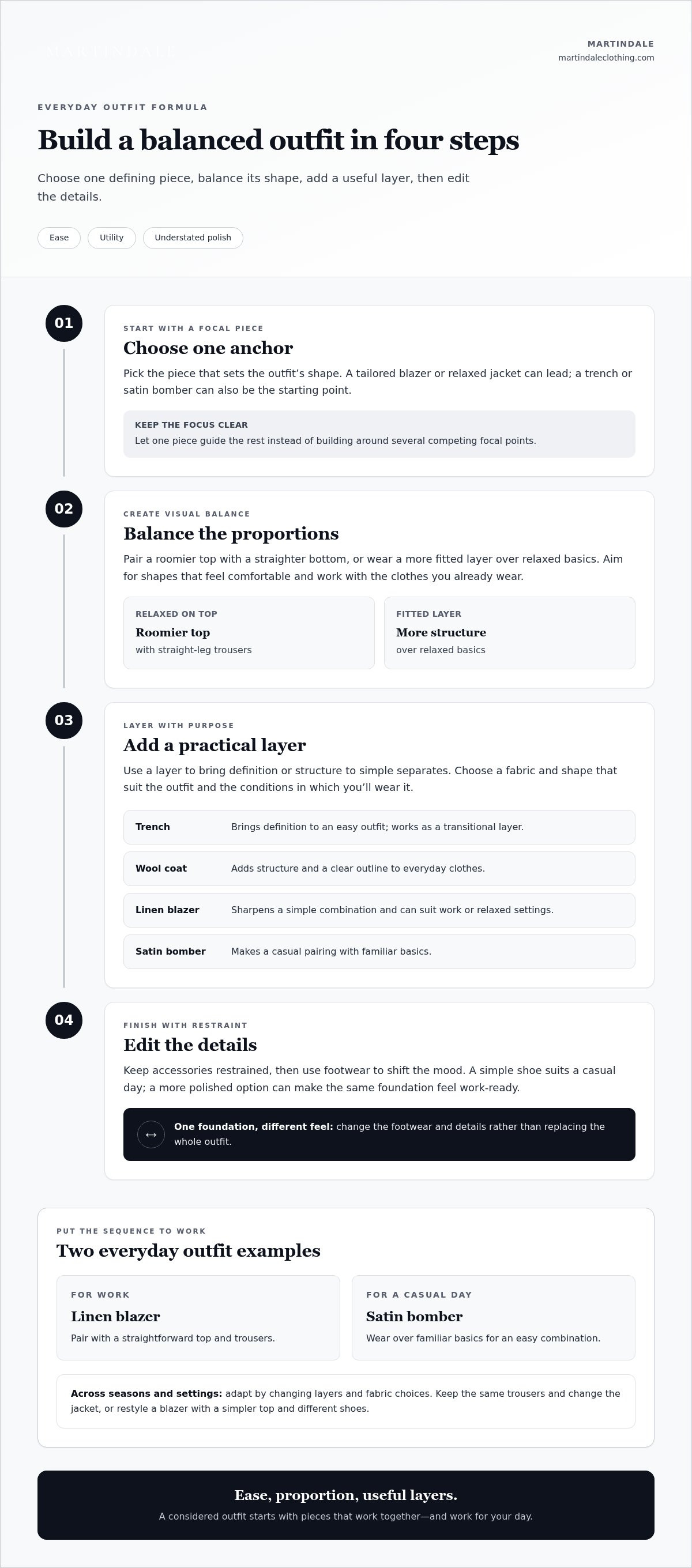
Use a simple sequence to turn familiar pieces into a considered outfit: choose an anchor, balance its proportions, add a practical layer, then edit the details. For classic american style women's clothing, the anchor might be a blazer, a trench, or a satin bomber. Let that piece guide the rest rather than building an outfit around several competing focal points.
A simple formula for building a balanced outfit
- Choose one anchor. Start with a piece that sets the outfit’s shape, such as a tailored blazer or relaxed jacket.
- Balance the proportions. Pair a roomier top with a straighter bottom, or let a more fitted layer sit over relaxed basics.
- Add a practical layer. A trench can bring definition to simple separates; this classic women's trench coat guidance explores why it works as a versatile outer layer.
- Edit the details. Keep accessories restrained, then use footwear to shift the mood. A simple shoe suits a casual day, while a more polished option can make the same foundation feel work-ready.
For work, try a linen blazer with a straightforward top and trousers. On a casual day, wear a satin bomber over familiar basics. The pieces differ, but the balance remains easy and intentional. If you’re choosing between them, think about which layer fits more of the settings you regularly dress for.
Adapting classic pieces across seasons and settings
Adapt an outfit by changing the layers and fabric choices, not by replacing everything. A trench over lighter separates can serve as a transitional layer; a wool coat offers a more structured outer layer, while a blazer can move between a work setting and a relaxed one. For a tailored outfit built around a lasting separate, explore these American-made women's blazer insights.
Repeat garments with different combinations: keep the same trousers and change the jacket, or restyle a blazer with a simpler top and different shoes. To build around considered outerwear and separates, explore Martindale’s women’s clothing, including wool coats, trench coats, satin bomber jackets, and linen blazers.
Choose Classic American Clothing for a More Considered Wardrobe
A considered wardrobe doesn’t require formal dressing or a closet full of expensive pieces. Start with clothes that suit your life and work with what you already own. A coat or tailored layer can anchor many combinations, while familiar separates keep the result relaxed. Explore Martindale’s women’s clothing collection for outerwear and tailored pieces designed to be worn as part of a versatile wardrobe.
What to consider before adding a garment
Before choosing a piece, picture where you’ll wear it and how it will work with your existing wardrobe. Check whether the fit allows comfortable movement, look at the fabric and visible construction, and consider whether you can style it with pieces you already reach for. Think through a few real outfits rather than relying on a vague promise of versatility. A design can feel enduring when you can see how it fits into your daily life.
These questions help clarify what classic american style women's clothing means for your own wardrobe:
- Fit: Does the shape feel comfortable and work with the layers you wear?
- Material and construction: Do the fabric and visible details suit your preferences?
- Use: Can you name the settings where you expect to wear it?
- Versatility: Does it coordinate with pieces you already reach for?
American craftsmanship as part of the style story
Where and how a garment is made can be part of a thoughtful choice, alongside fit, design, and personal taste. Martindale’s women’s clothing is designed and sewn in America, with an emphasis on ethical production and lasting quality. Those commitments add context to a garment; fit and personal preference still matter when deciding whether it belongs in your wardrobe. For a closer look at American production and outerwear, explore American-made women’s outerwear.
Make Your Next Wardrobe Choice With Intention
A more personal wardrobe begins with a useful question: what do you want your clothes to make possible in your everyday life? Let the answer guide your next choice. Before adding a piece, picture it alongside garments you already wear and consider whether it reflects your taste beyond a passing moment. That small pause can make classic american style women's clothing feel less like a set of rules and more like a practice of choosing well.
The story behind a garment can matter, too. Martindale’s commitment to ethical production and enduring design, with clothing designed and sewn in America, offers another perspective to consider as you shape your wardrobe. Let fit, purpose, and personal connection lead. You don’t need to transform your closet all at once; begin with one piece that feels genuinely yours and works with the clothes you already own.
Explore Martindale’s thoughtfully made women's clothing and choose an outerwear or tailored piece to start building a wardrobe that feels lasting, versatile, and distinctly your own.
Frequently Asked Questions
Is classic American style the same as preppy style?
No. Preppy dressing is one recognizable influence within classic American style, but the broader approach also includes practical, relaxed, and workwear-inspired references. A button-down shirt might read as preppy with polished trousers, or feel more casual beneath a utility-inspired jacket. Treat these labels as useful points of reference, not strict categories. American fashion has many influences, so there’s no need to assign one definitive origin to the style.
Can classic American style be worn without red, white, and blue?
Yes. Red, white, and blue often signal seasonal Americana, but classic dressing doesn’t depend on those colors. You might build an outfit around denim, a neutral base, and a striped or plaid detail instead. If you prefer a brighter accent, let it appear in one piece rather than coordinating every element. The right palette is the one that feels like you and lets the outfit’s proportions sit comfortably together.
What makes an outfit look classic rather than dated?
An outfit tends to feel classic when its proportions look intentional and its pieces work together, not because it recreates a decade exactly. For example, a familiar collared shirt can feel current with a clean-fitting jacket and simple accessories, while several period-specific details together may read as costume. Consider the setting, too: what feels polished for work may feel overly formal elsewhere. Personal taste and context help determine whether an outfit feels right to wear.
How can I make classic American style feel more modern?
Choose one familiar reference, then let the rest of the outfit stay simple. Pair a denim piece with a streamlined top, or wear a tailored layer over contemporary basics already in your closet. Pay attention to how the clothes sit on your body and whether you can move comfortably. Restraint helps the outfit feel personal rather than like a complete reproduction of a past look.
Does classic American style have to be made in America?
No. Style describes how clothing looks and comes together; the place where a garment is made is a separate consideration. You can weigh origin alongside fabric, construction, and the production practices that matter to you. Martindale clothing is designed and sewn in America, with an emphasis on ethical production. Consider origin as one part of your decision, alongside fit, material, and the garment’s place in your wardrobe.


