


What if the right coat for three seasons isn’t the warmest one, but the one that works with what you wear beneath it? Choosing a three season coat for women can feel uncertain: the phrase might describe a modular jacket or a single, adaptable layer, and neither promises comfort in every climate. Spring rain, autumn wind, and a mild winter day all place different demands on fabric and fit.
A more useful approach is to match a coat to your routine: the temperatures you encounter, how long you spend outdoors, and the layers you tend to wear. This guide compares materials, silhouettes, weather protection, and fit so you can make a considered choice. You’ll also see how wool coats and trench coats can serve different wardrobe needs, including options from Martindale, whose outerwear is ethically produced and sewn in America. The aim is a lasting piece suited to your personal style, not a coat expected to handle every forecast.
What Makes a Three-Season Coat for Women Truly Versatile?
A three-season coat is a shopper’s shorthand for an adaptable outer layer, not a standardized performance rating. It suggests a coat may suit spring, fall, and some milder winter days, but it doesn’t promise warmth or protection in every condition. Comfort depends on temperature, wind, precipitation, how active you are, and what you wear underneath. No single coat suits every climate or forecast.
Think of the category as sitting between a winter parka built for substantial cold and a lightweight layer intended for warmer days. To judge a specific coat, consider the conditions you’ll wear it in and whether its fit leaves room for layers. As the history of the coat suggests, coats and jackets take many forms; the label alone doesn’t explain how a particular garment will perform.
Which seasons can a three-season coat cover?
Spring and fall are common use cases, when temperatures can shift through the day and a coat may be worn over lighter or warmer layers. Milder winter days may also suit the right coat, depending on the weather and your personal comfort. A brisk walk, time spent outdoors, and a mostly indoor commute each place different demands on warmth and ease of movement. The coat’s practical range depends on both the wearer and the day.
Three-season versatility versus all-weather protection
Seasonal versatility doesn’t establish that a coat is waterproof, insulated, or wind-resistant. Those qualities depend on its materials and construction, not the “three-season” label. Before choosing, match your expectations to the garment’s stated details. Consider the fabric, closures, seams, and care guidance, and think about whether your routine involves rain, wind, or colder temperatures. A wool coat or trench may be a considered wardrobe option, but neither should be assumed to suit every weather condition.
Wool or Trench: How to Compare a Three-Season Coat
When choosing a three season coat for women, compare the garment’s actual fabric, construction, and fit rather than relying on its category name. A trench often has a defined, structured silhouette; a wool coat offers a different material and look. Either may work across changing conditions, depending on its details and the layers you plan to wear.
| Consideration | Wool coat | Trench coat |
|---|---|---|
| Feel and structure | Assess the specific fabric’s weight, texture, and drape. | Consider its shape, fabric, and how its structure feels in motion. |
| Layering | Check whether the cut allows room for the layers you expect to wear. | Try it over your usual mid-layer and note how closures sit when fastened. |
| Wardrobe use | May suit outfits where a more substantial or tailored presence feels right. | May suit a polished, versatile silhouette for everyday dressing. |
How fabric and construction affect comfort
Fabric name alone cannot tell you whether a coat will suit a season; weight, lining, construction, fit, and conditions all shape how it feels. Compare fabric weight and lining, then check the closures and how much room remains over a sweater or jacket. A wool label doesn’t specify warmth, and a trench silhouette doesn’t establish waterproof protection. The Maggie Glen Plaid Trench in English Wool shows that a trench silhouette and wool fabric can go together. Assess its stated details just as you would with any other coat.
Choosing for your wardrobe
Let your routine guide the choice. Consider a wool coat if its texture and structure work with the clothes you wear most; consider a trench if its silhouette and room for layers suit your daily style. Neither is universally better. For a closer look at the distinction, read this trench coat and wool coat comparison, then explore women’s coats and outerwear with your preferred fit and use in mind.
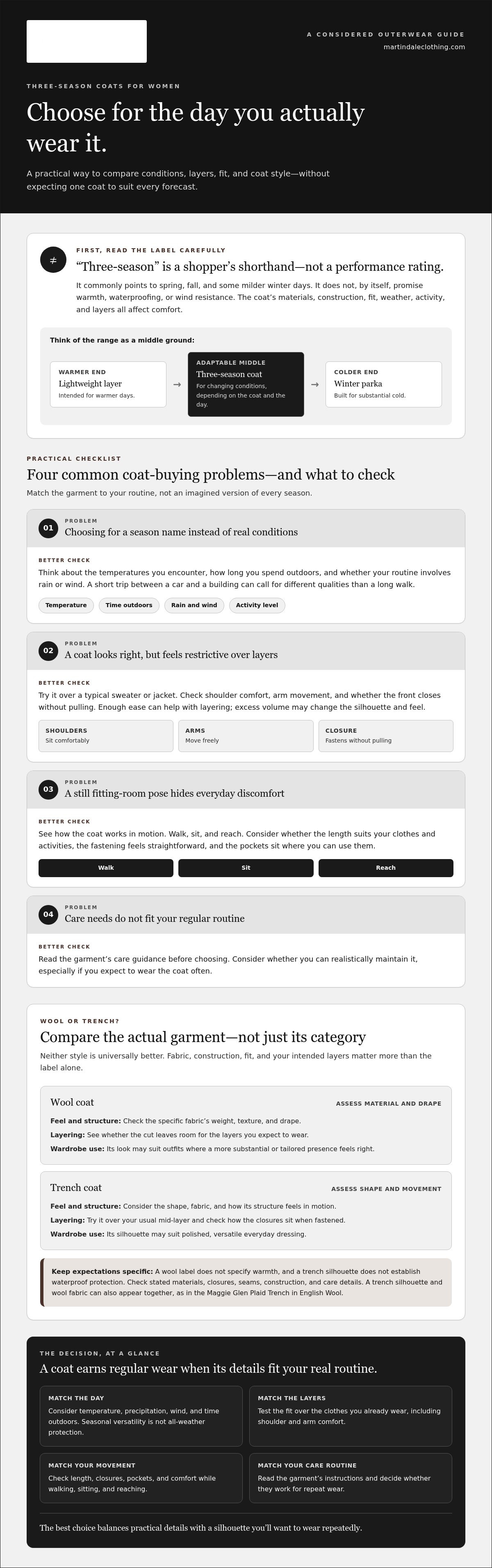
How to Choose a Three-Season Coat: A Practical Checklist
The best three season coat for women is the one that fits your actual routine, not an imagined version of every season. Use these steps to decide whether a coat is likely to earn regular wear.
- Start with your usual conditions. Think about the temperatures you encounter most, how often you walk or wait outdoors, and whether your commute involves rain or wind. A coat for short trips between a car and a building may need different qualities from one worn on long walks.
- Plan for the layers you already wear. Try the coat over a typical sweater or jacket. Check that the shoulders sit comfortably, your arms move freely, and the front closes without pulling. Enough ease for a mid-layer can make a practical difference; excess volume may change the silhouette and feel.
- Match the cut to daily tasks. Consider whether the length works with your usual clothes and activities. Check that fastening feels straightforward and pockets sit where you can use them. Walk, sit, and reach in the coat if trying it on; comfort should hold beyond a still pose.
- Read the care guidance. A coat intended for repeat wear should fit the care routine you can realistically maintain. Review the garment’s instructions before choosing, especially if you expect to wear it often.
Quick comparison checklist: Keep these questions beside you as you review coat descriptions.
- Does its intended use suit my typical temperatures, precipitation, and time outdoors?
- Can I layer comfortably, with enough room at the shoulders and through the arms?
- Does the length, closure, and pocket placement work for my everyday routine?
- Can I follow the care guidance as part of regular wear?
A considered choice balances these practical details with a silhouette you’ll want to wear repeatedly. Use this checklist as you compare women’s coats and outerwear.
Considered Three-Season Coat Options from Martindale
With your climate, preferred layers, and everyday needs in mind, assess individual coats without expecting one garment to suit every forecast. Martindale creates women’s outerwear that is ethically produced and sewn in America, with an emphasis on enduring design. When considering a three season coat for women, compare how a piece fits your wardrobe and whether its stated material and care details align with the way you plan to wear it.
Choose by material, silhouette, and the way you dress
The Maggie Glen Plaid Trench in English Wool and the Lou Trench in Camel offer two trench-coat examples to compare. Review each garment’s stated material and care details alongside your preferred silhouette, the layers you wear, and the conditions you expect to encounter. A product name or category alone can’t establish how a coat will perform in your climate. For more perspective on the silhouette, explore women’s trench coat styles, and read the American-made outerwear guide for more on considered production.
A longer view of craftsmanship and wardrobe use
A thoughtful purchase begins with a practical question: can you imagine reaching for this coat repeatedly, across outfits and changing days? Consider construction, fit, and care together, then weigh those details against your personal style. Choosing with regular use in mind is a quieter alternative to buying for a single moment, though no garment’s lifespan can be promised.
Martindale’s American-made outerwear brings that perspective to its coat collection. Compare the available styles and their stated details with the way you dress.
Choose a Coat You’ll Return to Season After Season
A three season coat for women is best understood through its adaptability, not a promise to handle every kind of weather. Consider how fabric, construction, fit, and room for layers match your routine, then weigh those details against care needs and personal style. A wool coat and a trench offer distinct looks, but neither is universally right; the better choice is the one that feels at home in your wardrobe and usual conditions.
That kind of decision rewards a longer view. Martindale’s women’s outerwear is designed and sewn in America, with an emphasis on ethical production and enduring design. Its wool coats and trench coats offer considered options for shoppers who value craftsmanship alongside everyday wearability.
Compare the details with the clothes and days you already know in mind. Explore Martindale’s coat collection and choose a piece that feels like a thoughtful next chapter in your wardrobe.
Frequently Asked Questions
What is a three-season coat for women?
A three-season coat for women is a versatile outer layer intended for spring, fall, and potentially milder winter days. The phrase is shopper shorthand, not a standardized rating, so it doesn’t specify a coat’s warmth or weather protection. Assess its fabric, lining, construction, fit, and care details, then consider whether those qualities suit your usual conditions and the layers you plan to wear.
Can one coat really work for spring, fall, and winter?
One coat may work across spring, fall, and some winter days, but no single garment suits every temperature or forecast. Your experience depends on local conditions, wind and precipitation, how long you spend outdoors, and what you wear beneath it. A coat that fits comfortably over a mid-layer can adapt to changing temperatures, though colder or harsher weather may call for different protection.
Is a wool coat or a trench coat better for three-season wear?
Neither is universally better; the right choice depends on your wardrobe and the coat’s individual details. Wool coats and trench coats vary in fabric, weight, lining, and construction, all of which affect how they feel and layer. Compare the garment’s stated material and care guidance, and consider its silhouette alongside your routine. Martindale offers both wool coats and trench coats, including the Maggie Glen Plaid Trench in English Wool.
How should a three-season coat fit over layers?
A three-season coat should allow the layers you expect to wear without restricting movement or pulling closed. Try it over a familiar sweater or jacket, then check that the shoulders sit comfortably and you can reach, bend, and move your arms freely. The fit should feel easy, not oversized. Pay particular attention to how the coat fastens over your usual mid-layer.
Are three-season coats waterproof?
No, the term “three-season” doesn’t mean a coat is waterproof. Water protection depends on its specific fabric and construction, so don’t infer it from a seasonal label, wool material, or trench silhouette alone. If rain protection matters for your routine, review the garment’s stated details and care guidance. Match your expectations to what’s documented rather than assuming every versatile coat performs the same way.


