


What if a more polished wardrobe has less to do with your age and more to do with how you actually live? Learning how to upgrade your wardrobe in your 30s doesn’t mean replacing everything or following a new set of rules. Start by noticing what no longer fits your routines, preferences, or sense of self.
If your closet is full but getting dressed still feels difficult, a focused wardrobe edit can show you what to keep, what might benefit from a tailor’s touch, and what’s genuinely missing. The aim is not to own more clothes, but to make better use of what you have and choose additions with a clear purpose.
This guide explores how to refine fit, identify your personal style, and build versatile combinations from your existing clothes. You’ll also learn how to add durable pieces with intention, choosing for real life rather than short-lived trends. If outerwear is a gap, a wool coat, trench coat, or linen blazer can be a considered place to start.
How to Upgrade Your Wardrobe in Your 30s Without Starting Over
A wardrobe upgrade is an edit, not a complete replacement. You don’t need to discard clothes that still serve you or buy a new uniform because you’ve reached a particular age. If you’re considering how to upgrade your wardrobe in your 30s, begin with what you already own and how you want to feel wearing it. Focus on fit, usefulness, and personal relevance rather than simply adding more.
Look at what you reach for in a typical week. Perhaps your workdays now involve more meetings, your social plans have changed, or home life calls for greater comfort. Notice where your clothes support those routines and where they create friction. A blazer you wear often may be worth keeping in rotation; an item that only suits a past routine may no longer earn its space.
Why your wardrobe may feel different now
Ask what has genuinely shifted: your schedule, responsibilities, preferred level of formality, or the way you like clothes to fit. Then name the actual gap. If you repeatedly need a layer for work or a reliable outfit for dinners, that’s useful information. Wanting a piece only because it’s prominent in a trend cycle or someone else’s wardrobe may signal outside pressure, not a need.
Fashion changes alongside culture and daily life, as a brief look at the history of fashion illustrates. Your wardrobe can evolve, too, without treating every change as a reason to shop.
Let personal style mature without becoming restrictive
Keep the colors, silhouettes, and details that still feel like you. A preference for relaxed shapes, bright accents, or simple layers doesn’t need to disappear with age. Instead, consider whether each piece fits comfortably and works with the rest of your closet. Polish comes from deliberate choices, such as a balanced silhouette or a well-kept coat, not an age-specific dress code. Let your style become clearer, not narrower.
Choose Wardrobe Upgrades That Fit Your Life, Style, and Comfort
A useful wardrobe choice should work for your day, not just look appealing on a hanger. To decide how to upgrade your wardrobe in your 30s, assess each piece against the way you dress, move, and care for clothing. A practical choice is one you can comfortably wear and maintain as part of your actual routine.
| Consider | Ask yourself |
|---|---|
| Daily use | Will I reach for it in an ordinary week? |
| Comfort | Can I sit, walk, and move with ease? |
| Fit | Does it sit well alone and over likely layers? |
| Versatility | Can it work in more than one setting I attend? |
| Care | Can I maintain it with the time and methods I have? |
Start with fit, comfort, and frequency of wear
Try a garment as you’d actually wear it. Reach forward, sit down, and raise your arms. Pulling across the shoulders, a waistband that digs in, or sleeves that restrict movement can explain why an item stays untouched. Check how it layers, too: a coat for cooler days should fit comfortably over the clothes you’d wear beneath it.
Some fit concerns may be straightforward to address; others point to a deeper mismatch. A hem that feels too long is different from a fabric you avoid or a silhouette you no longer enjoy. Keep what feels like you, and let go of pieces that repeatedly fail your comfort or preference test.
Build versatility around real-life settings
Consider the settings you actually move between: work, weekends, travel, or occasions on your calendar. A blazer already in your closet might serve at work and over a simple outfit on the weekend. A coat could earn regular wear if it suits your climate and the clothes underneath. If outerwear is a genuine gap, consider women’s coats and blazers as possible additions, not a required uniform.
Then name your own color and silhouette vocabulary. Perhaps you prefer soft neutrals, defined shoulders, or relaxed shapes. These preferences make combining clothes easier, but they’re guides, not rules. Choose what feels comfortable and coherent on you.
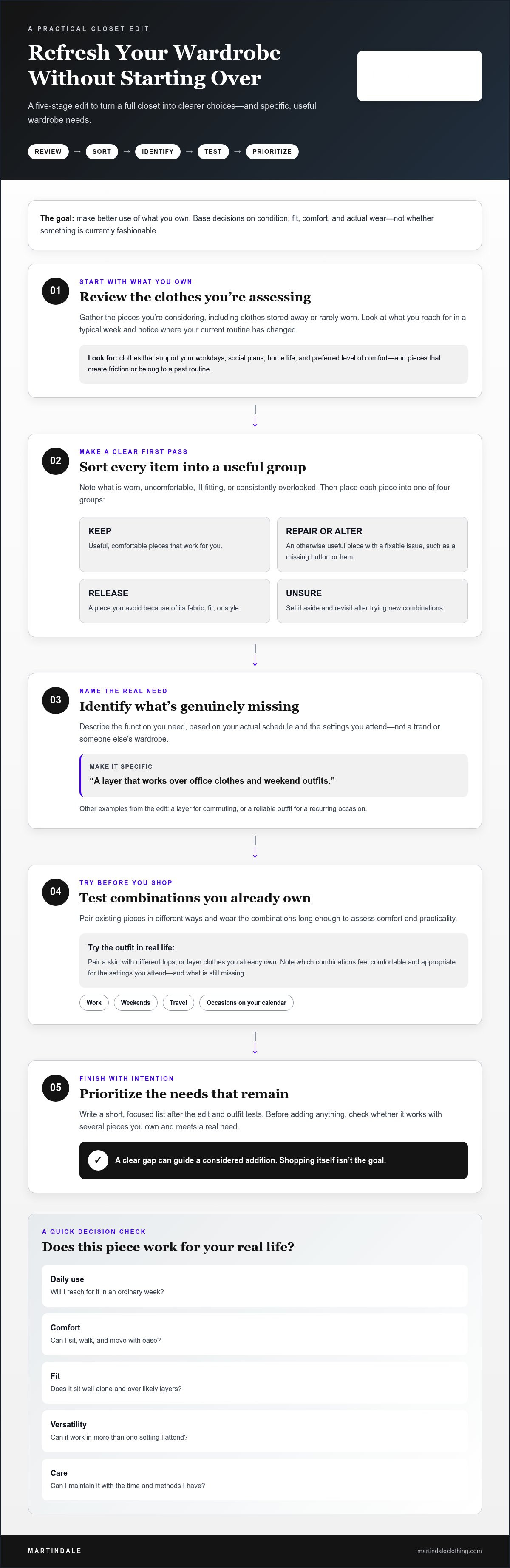
How to Refresh Your Wardrobe in Your 30s: A Practical Closet Edit
A clear closet audit turns vague shopping urges into specific wardrobe needs. As you consider how to upgrade your wardrobe in your 30s, work through your clothes in order. Base decisions on condition, fit, comfort, and actual wear rather than whether a piece is currently fashionable.
- 1. Review: Gather the clothes you’re assessing, including pieces stored away or rarely worn.
- 2. Sort: Group items into keep, repair or alter, release, and unsure. Note what’s worn, uncomfortable, ill-fitting, or consistently overlooked.
- 3. Identify gaps: Describe the function you’re missing, such as a layer for commuting or an outfit for a recurring occasion.
- 4. Test combinations: Pair existing pieces in different ways and wear the combinations long enough to assess comfort and practicality.
- 5. Prioritize: Write a short list of the needs that remain after the edit. Keep it specific and focused.
Decide what to keep, repair, alter, or release
For each garment, ask: Is it in good enough condition to wear? Does it fit comfortably? Have I worn it in my current routine? If a missing button or a hem affects an otherwise useful piece, a repair or alteration may extend its life. If the fabric, fit, or style makes you avoid it altogether, keeping it out of obligation won’t make it more useful. Set aside uncertain pieces and revisit them after trying new combinations.
Make a gap list before buying
Try outfits before shopping. Pair a skirt with different tops, or layer clothes you already own to see whether they work for the settings you attend. Record combinations that feel comfortable and appropriate, along with what’s missing. “A layer that works over office clothes and weekend outfits” is more useful than a trend-led product name. Before buying, consider whether a potential addition works with several pieces you own and meets a real need.
Once your list is clear, browse considered women’s clothing for a possible addition that aligns with your wardrobe priorities.
Make Considered Additions That Bring a Wardrobe Together
A clear gap can guide a purchase, but shopping isn’t the goal. Before adding anything, consider how it will work with the clothes you already wear. Ask what the garment is made from, how it’s constructed, what care it requires, and whether you can picture reaching for it repeatedly. These questions make how to upgrade your wardrobe in your 30s less about chasing novelty and more about choosing pieces with a place in your life.
If you’re looking for enduring outerwear, consider ethically produced women’s garments designed and sewn in the United States. Martindale’s collection includes English wool, mulberry satin, and linen. Compare the material, care needs, and style with your climate, routine, and existing wardrobe before deciding whether a new layer belongs.
Choose lasting pieces without losing your individuality
A wool coat can add a composed layer for cooler days; a trench coat can work across changeable weather and varied settings. A satin jacket offers a different texture, while a linen blazer can bring structure to lighter outfits. None is essential for everyone. Think about your actual needs, preferred colors, and the combinations you’d wear. If you’re weighing coat options, a women’s wool coat guide or classic women’s trench coat guide can help you consider the differences before choosing.
Take the next step at your own pace
Let your gap list, not a shopping calendar, set the pace. If an addition answers a recurring need, complements clothes you own, and feels right to wear and care for, it may earn a place. If the need isn’t clear, waiting is a sound choice. When a genuine gap remains, consider a well-made piece that works with what you already own.
Let Your Wardrobe Evolve With You
Your wardrobe doesn’t need a final form. Let it keep pace with the life you’re building, one useful decision at a time. As you consider how to upgrade your wardrobe in your 30s, give yourself permission to pause between additions. A thoughtful choice should feel relevant now and remain welcome as routines shift, rather than answer to pressure to look a certain way.
If a genuine gap points toward a new layer, consider the role you want it to play and how it might become part of your regular rotation. Martindale’s ethically produced, American-made women’s clothing includes wool coats, trench coats, satin bomber jackets, and linen blazers. Each offers a different possibility, not a prescribed wardrobe. Explore Martindale’s considered women’s clothing when you’re ready to find a piece that feels right for your life. Build with care, and let your style remain your own.
Frequently Asked Questions
Can I upgrade my wardrobe in my 30s without buying new clothes?
Yes. How to upgrade your wardrobe in your 30s can start with a no-buy week: choose a few pieces you rarely pair and try small styling changes, such as rolling sleeves or changing how you tuck a shirt. Photograph combinations you’d happily wear again. Cleaning or steaming a neglected garment may also restore its appeal. If it still feels wrong for you, release it without replacing it automatically.
How many clothes should a woman in her 30s own?
There’s no ideal number. A practical measure is whether your wardrobe supports your week without leaving you short of clean, comfortable options between laundry days. Someone who exercises often or works in a uniform may need fewer everyday outfits than someone dressing for varied settings. Consider seasonal storage, too: clothes you use only in certain weather don’t need to crowd the space you rely on daily.
What should I wear to work in my 30s?
Dress for your workplace’s expectations and the work you’ll do that day, not for an age-based formula. For a day that moves between a commute, desk work, and a presentation, choose pieces that stay comfortable in motion and feel appropriate in a more formal meeting. If your workplace is casual, a polished layer can be optional. Let the setting, tasks, and your own taste guide the level of formality.
Is it worth investing in timeless clothes in your 30s?
It can be, if the garment feels like a natural choice rather than an obligation. A piece called “timeless” won’t be useful if you avoid wearing it or can’t imagine it with your usual clothes. Think about whether you’d choose it again after the initial excitement fades. Lasting value is personal: it comes from enjoying and using a garment, not from a label declaring it a classic.
How do I stop buying clothes that I never wear?
Before buying, name the real occasion or problem the item is meant to address. “I need something for a formal dinner next month” is more actionable than “I want something new.” Then consider whether you already own an option that could work with a small styling change. If the new piece has no clear role beyond looking appealing in the moment, leave the decision for another day.


