


Looking polished doesn’t begin with buying more; it begins with making what you wear work well together. Learning how to look polished and professional can feel uncertain when expectations vary between workplaces, and comfort matters as much as appearance. A confident, work-ready outfit doesn’t require a strict uniform, an expensive wardrobe, or the latest trend. It starts with thoughtful choices and a few reliable habits.
This guide focuses on fit, workplace context, garment care, and the details that make an outfit feel considered. You’ll find practical ways to refine pieces you already own, build a simple getting-dressed routine, and choose versatile layers, such as a well-cut blazer, when they suit the occasion. The aim is a polished style that feels like you and works beyond one season.
What Does It Mean to Look Polished and Professional?
Polished dressing is less about formality than intention. Clothes look professional when they’re in good condition, fit comfortably, and suit the work you’re doing. You can look capable without feeling overdressed or setting aside your personal style. A neat knit and tailored trousers may suit a regular office day; a structured jacket can add definition for a client presentation.
Expectations can shift between a shared office, a video call, a client meeting, and a workplace where relaxed dress is the norm. A coat or blazer can add a considered finishing layer, but neither is essential. Learning how to look polished and professional starts with understanding the setting, then choosing clothes that let you move through it comfortably and confidently.
How to Read Your Workplace Dress Code
Formal environments may call for coordinated tailoring or a refined dress, particularly for client-facing meetings. Business-casual offices often make room for separates, blouses, knitwear, and a blazer. Business casual can mean different things across workplaces, so use your colleagues’ usual attire as a guide. In a relaxed professional setting, clean, well-kept everyday pieces may be appropriate. At home, consider whether your day includes video calls or in-person meetings.
Look at what people wear in roles and situations similar to yours, then account for your own comfort and workplace expectations. If you’re unsure how formal to dress for a particular meeting, choose a neat outfit that can be adjusted with a removable layer. The right clothes should feel appropriate and let you focus on your work.
Does Looking Professional Mean Buying Expensive Clothes?
No. Fit, condition, and thoughtful coordination matter more than a label or a crowded wardrobe. Check that hems sit neatly, buttons are secure, shoes are clean, and garments are free of obvious wrinkles or lint. A small, versatile set of pieces can be easier to wear well than a closet full of items that don’t work together.
A polished professional outfit is clean, well-fitting, thoughtfully coordinated, and appropriate to the work at hand. A linen blazer, such as the Josephine Linen Blazer, can be one useful layer, but it isn’t a dress-code rule. Choose pieces that feel like you and serve your everyday needs.
Build a Polished Outfit with Fit, Proportion, and Thoughtful Layers
A polished outfit comes together through balance, not a prescribed silhouette. Pair a fluid blouse with straighter trousers, for example, to create contrast without restricting movement. Or wear a relaxed top with a more structured skirt. The aim is ease and coherence, whatever your shape or preferred style. This thoughtful approach to presentation echoes the broader principles in Creating a Positive Professional Image.
Choose Fit and Proportion for Ease and Confidence
Check how each piece sits and moves before deciding whether it works. Shoulder seams should rest near your natural shoulder; sleeves should allow comfortable movement without covering your hands; trouser hems should fall cleanly rather than drag or bunch. Sit, reach, and walk in the outfit. If a small adjustment would improve comfort, function, or the garment’s intended shape, tailoring may help. The goal isn’t a perfect fit by a rigid standard. It’s clothing that feels at ease on you.
Use Colour and Layers to Create Cohesion
A restrained palette makes separates easier to combine. Start with a few complementary neutrals, such as navy, charcoal, cream, or camel, then add one point of interest through a muted colour, texture, or subtle pattern. For instance, a light blouse, dark trousers, and a softly patterned layer can feel connected without looking uniform.
Choose a layer for the setting and the outfit beneath it. A linen blazer can bring definition to simple separates; a wool coat or trench can complete the look outdoors or on the way to a meeting. Neither is essential. If you’re looking for a finishing layer, Martindale’s women’s coats and blazers include options such as the Josephine Linen Blazer, wool coats, and trench coats. Learning how to look polished and professional often comes down to considered coordination: each piece can stand on its own while still working with the whole outfit.
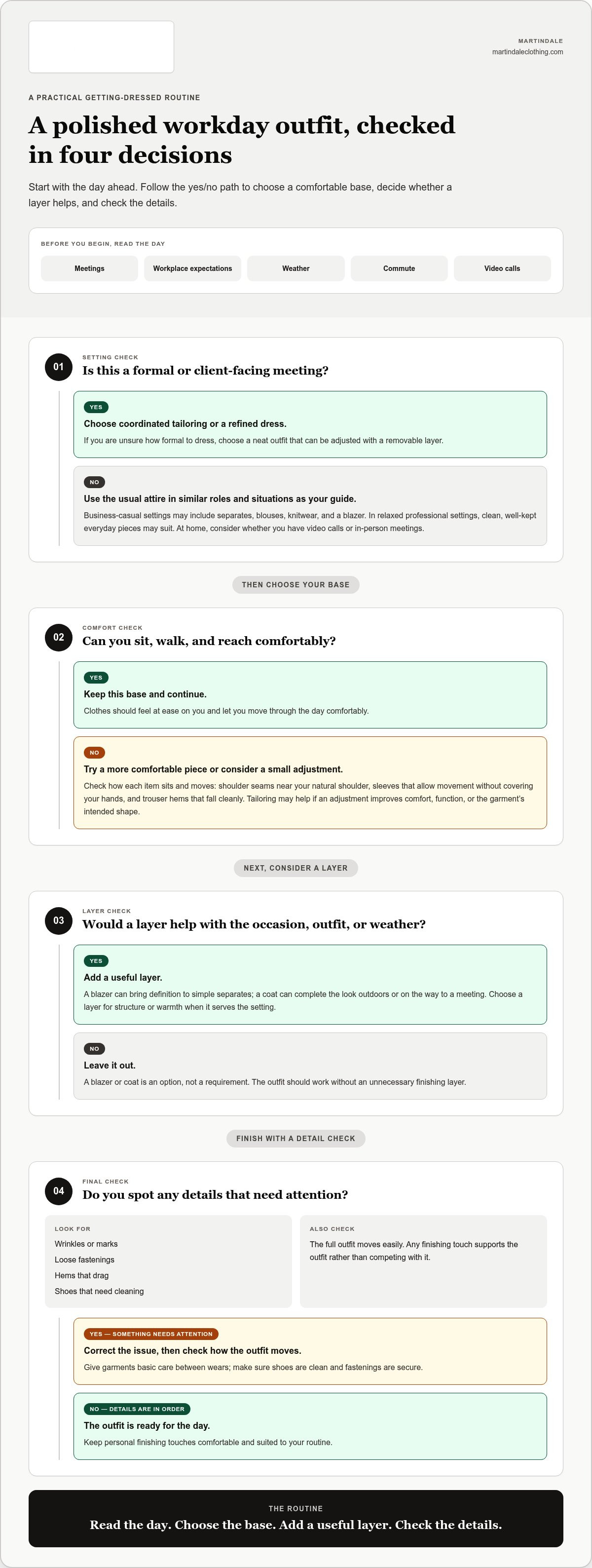
How to Look Polished and Professional: A Simple Getting-Dressed Routine
A repeatable routine makes getting dressed simpler, even when the day’s plans change. Begin with what you’ll be doing, not with a trend or a single “work” uniform. The same base outfit can suit different situations with a considered layer: add a blazer for a client meeting, keep the look lighter for a regular office day, or choose a camera-ready top for a video call. Make sure the outfit remains comfortable throughout the day.
A Four-Step Outfit Check Before You Leave
- Read the day. Consider meetings, workplace expectations, weather, and whether you’ll be commuting or on camera.
- Choose a base. Start with clothes that suit the setting and feel comfortable while sitting, walking, and reaching.
- Add a layer if it serves the occasion. A blazer or coat can provide structure or warmth, but leave it out if it doesn’t help.
- Review the details. Check for wrinkles, marks, loose fastenings, and hems that drag. Make sure shoes are clean and the full outfit moves easily.
Remember: read the day, choose the base, add a useful layer, and check the details. This short sequence turns how to look polished and professional into a practical habit rather than a morning guessing game.
Which Finishing Details Make the Difference?
Choose one or two finishing touches with a purpose, such as a simple accessory or a bag that suits what you need to carry. Keep shoes in good condition, and give garments basic care between wears. Hair and other personal details don’t need to follow one standard; aim for an approach that feels comfortable and fits your routine. The best finishing touches support the outfit rather than compete with it.
A versatile coat or blazer can complete a workday outfit when the setting or weather calls for an extra layer.
Maintain a Professional Wardrobe That Works Beyond One Workday
A dependable work wardrobe is built around the clothes you reach for in real life, not an imagined list of essentials. Notice what you wear often, which combinations already work, and where a practical gap appears. Perhaps you need a layer for client meetings or a coat that suits your commute. Add with intention; there’s no need to replace everything at once. A considered rotation makes how to look polished and professional easier to repeat.
Create a Small, Versatile Workwear Rotation
Start with familiar pieces that suit your workplace and feel comfortable throughout the day. Then look for additions that coordinate with more than one outfit. A neutral blazer might work over a dress, with a skirt, or alongside trousers; a simple top could pair with several existing layers. Choose according to your actual dress code and weekly routine, rather than short-lived trends. Before buying anything, identify the specific outfit or situation it would help complete.
Preparation helps, too. Set aside an outfit the evening before, especially when the next day includes a meeting or a change in setting. Follow each garment’s care instructions, and brush, steam, or air items as appropriate. Check for loose buttons and marks before returning clothes to the rotation. Regular care helps garments stay presentable between wears.
Choose Layers for a Considered Wardrobe
A purposeful layer can bring a work outfit together and serve beyond a single occasion. A linen blazer may suit an indoor meeting, while a wool coat or trench offers a composed outer layer for the journey to work. The right choice depends on your climate, routine, and personal style. Consider quality, craftsmanship, and care alongside versatility.
For women’s clothing designed and sewn in the United States, explore Martindale’s women’s clothing and outerwear collection. A considered addition can complement the wardrobe you already have.
Make Polished Dressing Your Own
Looking capable at work doesn’t require formal clothes or a new wardrobe. Start with pieces that fit comfortably, suit your workplace, and work together. Keep them cared for, then use a simple outfit check to make getting dressed feel more deliberate. That’s the heart of how to look polished and professional: choose with purpose, and let the details support your confidence.
A versatile layer can be a considered addition when it suits your day. Martindale’s women’s garments are designed and sewn in the United States, with offerings that include wool coats, trench coats, satin bomber jackets, and linen blazers. Ethical manufacturing and American craftsmanship are central to the brand’s approach.
Start with what you already own, then add a considered piece if it fills a real gap in your wardrobe. Explore Martindale’s considered wardrobe pieces and choose a coat, jacket, or blazer that suits your style and routine.
Frequently Asked Questions
How can I look polished and professional without buying new clothes?
You can look polished by making the clothes you already own feel intentional and cared for. Choose pieces that fit comfortably and coordinate, then check for wrinkles, stains, loose buttons, or scuffed shoes. Try familiar combinations in a fresh way, such as pairing a well-kept blouse with different trousers. A quick outfit check helps you look prepared without adding anything to your wardrobe.
What should I wear to look professional in a business-casual workplace?
Choose neat, comfortable separates that match your workplace’s expectations. Tailored trousers with a blouse or knit top can work for a typical office day; a skirt and simple top may suit your style just as well. Add a blazer if it fits the occasion, but let your role and colleagues’ everyday attire guide the level of formality. Keep the overall outfit coordinated and in good condition.
Can I look professional without wearing a blazer?
Yes. A blazer is one possible layer, not a requirement for looking professional. A neat dress, coordinated top and trousers, or a polished knit with a skirt can create a composed outfit without one. Consider your workplace, the day’s activities, and your comfort. If an outer layer is useful, a wool coat or trench may suit the weather or commute, while the outfit underneath can stand on its own.
How do I make a simple outfit look more polished?
Focus on fit, care, and coordination. Check that sleeves and hems sit neatly, garments are clean and cared for according to their instructions, and shoes are presentable. Keep colours complementary and choose one or two finishing details, such as a purposeful bag or simple accessory. Before leaving, move around in the outfit to make sure it feels comfortable as well as considered.
Does looking polished and professional mean dressing formally?
No. Professional style depends on the workplace and what your day involves, not on wearing formal tailoring every day. Some settings call for structured pieces, while others welcome neat, relaxed clothing. How to look polished and professional comes down to dressing with intention: choose clothes that suit the context, feel comfortable, and are well maintained. You can keep your personal style while respecting workplace expectations.


