


The most useful work wardrobe may be the one you stop rebuilding every season. Trend-led pieces can look polished at first, then prove difficult to wear often or rely on over time. If you’re weighing fast fashion alternatives for professionals, the challenge is finding options that fit your actual work routine, not just your values on paper.
Secondhand, rental, repair, and considered-new clothing each offer a different way to buy less impulsively. But quality and responsibility claims can be hard to judge from a product description. A higher upfront cost only makes sense when a garment earns its place through practical use.
This 2026 guide compares these alternatives and offers clear criteria for assessing materials, construction, provenance, versatility, and cost per wear. You’ll also see how Martindale’s wool coats, trench coats, satin bomber jackets, and linen blazers fit into the considered-new category, so you can make deliberate choices for a professional wardrobe.
Why professionals are looking beyond fast fashion for workwear
Workwear has to meet more than a trend cycle. It needs to suit your workplace, commute, weather, and the rhythm of a working week. The fast fashion model is often associated with quickly changing styles and production, but the alternative isn’t one perfect brand or a wardrobe made entirely from new purchases.
A considered wardrobe meets professional needs through deliberate choices about what to buy, reuse, rent, repair, and keep. That might mean finding a well-fitting piece secondhand, renting for a short-term need, mending something you already own, or choosing a new item based on its materials and disclosed production details. The right mix depends on the person, the role, and the garment.
What professionals need from an alternative
Start with function. A client-facing dress code, a long commute, a changing climate, or a role that calls for frequent movement can all shape what works. Separate non-negotiables, such as fit, comfort, and suitability for your workplace, from preferences about materials or sourcing. Then assess each option against both.
For example, a coat or blazer may be a considered-new purchase if it fills a clear gap and suits the way you dress for work. Martindale offers women’s coats and blazers. Check the relevant product details against your needs rather than assuming one garment will suit every workplace.
Why buying less is not the only measure
Purchase count alone doesn’t show whether a choice is right for you. Wearing what you own, following its care instructions, repairing it when practical, and considering reuse can all contribute to a more deliberate wardrobe. Replacing a garment that no longer fits or functions may also be more sensible than keeping it unworn.
There’s no blanket impact claim that applies to every product or choice. Compare the specific garment, its disclosed details, how you expect to use it, and the alternatives available. This practical framework makes fast fashion alternatives for professionals easier to evaluate without turning wardrobe decisions into a test of virtue.
Fast fashion alternatives compared: resale, rental, repair, or buying new
There’s no single route to a more considered work wardrobe. Resale can make pre-owned garments accessible. Rental can serve a temporary need, while repair can extend the use of a piece that still fits your role. Buying new may make sense when a recurring gap calls for a garment you expect to wear regularly. The U.S. Government Accountability Office discusses how fast fashion can be costly for the planet, including through textile waste and pollution. That context is a reason to compare choices carefully, not to assume one option is right for everyone.
| Option | Best fit | Trade-offs and questions |
|---|---|---|
| Resale | Flexible preferences and time to search. | Check condition, measurements, fit notes, and return rules. |
| Rental | Occasional events or a short-term wardrobe need. | Confirm access, care requirements, cleaning terms, and returns. Will you use it enough to justify the arrangement? |
| Repair or alteration | A garment that remains suitable but needs attention. | Ask whether the issue can be fixed and whether the result will restore useful fit or function. |
| Considered new | A recurring gap that existing pieces cannot fill. | Review fit, design, materials, construction, and available sourcing details before deciding. |
Choosing what fits your working life
Resale suits professionals willing to search across sizes and listings. Rental may be practical for a one-off presentation, event, or temporary change in routine, but less convenient for a staple you wear repeatedly. Repair is worth considering if the garment still meets workplace expectations and the work required is feasible.
A considered-new garment is one option, not an automatic best choice. If outerwear or a blazer fills a consistent gap, compare its fit and product information with your needs. Martindale’s women’s coats and blazers offer examples to assess. Review the relevant details before deciding whether to browse further. These fast fashion alternatives for professionals work best when the choice suits both the garment’s purpose and your routine.
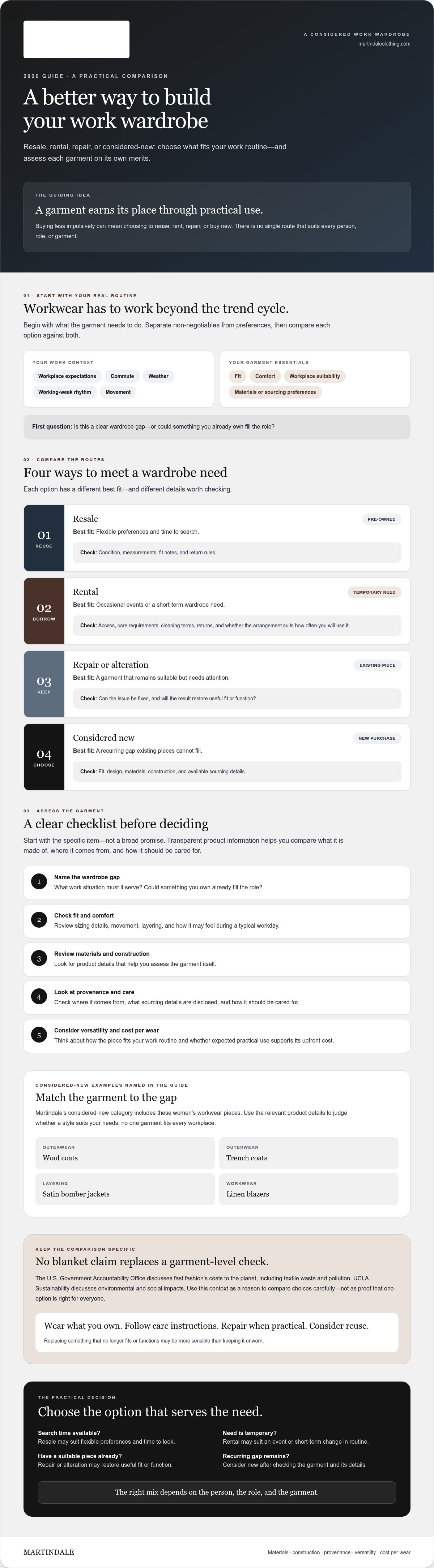
How to evaluate a professional clothing alternative before buying
A useful comparison begins with the garment, not a broad promise. UCLA Sustainability discusses the environmental and social impacts of fast fashion. For an individual purchase, look for details that help you judge the specific item rather than relying on general language.
Transparent product information lets you compare what a garment is made of, where it comes from, and how it should be cared for. Use this checklist to assess fast fashion alternatives for professionals before deciding:
- 1. Name the wardrobe gap. Identify the work situation the item needs to serve, and whether you already own something that could fill the role.
- 2. Check fit and comfort. Review sizing details, then consider movement, layering, and how the garment feels during a typical workday.
- 3. Inspect construction where possible. Look at seams, lining, closures, and finish. For online purchases, check whether product images show these details clearly.
- 4. Read the material and care information. Look for precise fabric composition and practical care guidance. Missing information is a reason to ask questions, not to guess.
- 5. Verify provenance and responsibility claims. Seek clear, product-specific wording about origin and production. Treat labels and certifications as claims to verify, and don’t assume a certification applies without evidence.
- 6. Make a deliberate decision. Consider versatility, expected use, care needs, and whether the garment addresses a recurring need.
Compare value on your own terms
Cost per wear is a personal estimate: divide the price you supply by the number of wears you realistically expect. It isn’t a promise of lifespan. Weigh that figure alongside fit, care, versatility, and possible replacement needs. If a coat or blazer addresses a clear gap, review the details of Martindale’s women’s coats and blazers against this checklist.
Build a considered professional wardrobe with pieces made to earn their place
Begin with one genuine gap, not a list of items you feel you ought to own. Consider what your current workwear doesn’t cover, how often you’d use the missing piece, and whether it would work with clothes already in your wardrobe. A thoughtful addition should answer a practical need as well as suit your preferences.
Choose a category around how you work
A coat may suit a formal commute or regular time outdoors. A trench may fit changing weather, while a blazer may help meet workplace expectations for polished layers. None is essential for every professional. Think about your dress code, climate, typical week, and the pieces you already reach for. The best category is the one that makes sense in your routine.
Martindale offers wool coats, trench coats, satin bomber jackets, and linen blazers, including garments made with English wool and mulberry satin. Its apparel is designed and sewn in America. Treat these as options to assess, not automatic recommendations. Check each product’s materials, origin details, care guidance, and fit information against your priorities.
Make the next purchase a considered one
Before buying, picture the garment alongside your existing workwear. Can you name the occasions you’d wear it? Does its cut suit your dress code and preferred layers? Are the product details specific enough to help you make an informed decision? If key information is unclear, pause and seek clarification rather than filling in the gaps yourself.
These fast fashion alternatives for professionals are not about replacing an entire wardrobe at once. They’re about making the next choice deliberately, whether that means repairing a useful piece or adding a considered-new garment. Once you’ve identified your needs, compare the details of Martindale’s women’s outerwear and blazers with your criteria.
Let your next workwear choice reflect what matters
The most useful fast fashion alternatives for professionals are the ones that fit the way you work and the standards you set for your wardrobe. Resale, rental, and repair can each serve a purpose. A new garment may make sense when it answers a real, recurring need. In every case, consider fit, care, versatility, and the product information available before deciding.
Martindale offers a considered-new option, with garments described as designed and sewn in America. Its range includes wool coats, trench coats, satin bomber jackets, and linen blazers, with materials such as English wool and mulberry satin. Review each piece against your own priorities rather than buying by category alone.
Explore Martindale’s American-made outerwear and consider whether a coat, trench, or blazer fills a genuine gap in your work wardrobe. Start with the product details and choose only if the piece fits your needs.
Frequently Asked Questions
What are the best fast fashion alternatives for professionals?
The best option depends on your work routine and the garment you need. Resale can suit shoppers willing to search for a particular size or style, while rental may work for occasional events or short-term needs. Repair is worth considering if an existing piece remains appropriate and functional. For a new purchase, check fit, material details, care guidance, and how well it coordinates with your current workwear.
Is buying secondhand better than buying new?
Not automatically. A pre-owned garment may be a practical way to reuse an existing item, but its condition, fit, care needs, and likely frequency of wear still matter. A new garment may better address a specific wardrobe gap if its details meet your needs. Compare the actual pieces and your realistic use of them, rather than assuming either secondhand or new is always the better choice.
How can I tell whether a clothing brand is ethical?
Look for specific information about where and how garments are made, their materials, and any standards or certifications the brand cites. Check whether each claim applies to the product you’re considering or only describes the company generally. A label or certification is not proof on its own if its scope is unclear. Treat vague or unsupported statements as unverified, and seek more detail before relying on them.
Can a professional wardrobe be sustainable without buying expensive clothes?
Yes. You can make considered choices at different price points by rewearing clothes you own, repairing suitable garments, looking for secondhand options, or selecting new pieces carefully. Focus on whether an item fits, serves your work needs, and provides clear product information. A higher price alone doesn’t establish quality or responsibility, just as a lower price alone doesn’t tell you how useful a garment will be.
How do I calculate cost per wear for work clothes?
Divide the amount you paid for a garment by the number of times you realistically expect to wear it. Use your own purchase price and estimated wears rather than relying on a general benchmark. The result is a personal estimate, not a guarantee of value or lifespan. Consider fit, care requirements, versatility, and whether the item fills a genuine gap alongside the calculation.


