


A coat can look polished in the mirror and still feel wrong once you move. The answer to how should a women's coat fit isn’t simply a matter of choosing your usual size. Labels vary, and a coat may appear composed while pulling across the back or feeling restrictive over a sweater.
A good fit balances comfortable movement, room for the layers you actually wear, and the silhouette the coat was designed to create. Too little room can restrict you; too much can hide the shape. Neither is a flaw in your proportions. It may be a sign to try a different size or coat shape.
This guide shows you how to assess the shoulders, body, sleeves, and length, with practical checks to use when trying on a coat. You’ll learn how to spot pulling and excess volume, test movement, and assess a coat over your usual layers. The result is a more considered choice you can wear comfortably and confidently.
How Should a Women’s Coat Fit Through the Shoulders and Body?
A coat should sit comfortably, look balanced, and allow ordinary movement. To judge how should a women's coat fit through the shoulders and body, start with the shoulder seams, then check the chest and front closure. These areas show whether the coat follows your frame or feels restrictive.
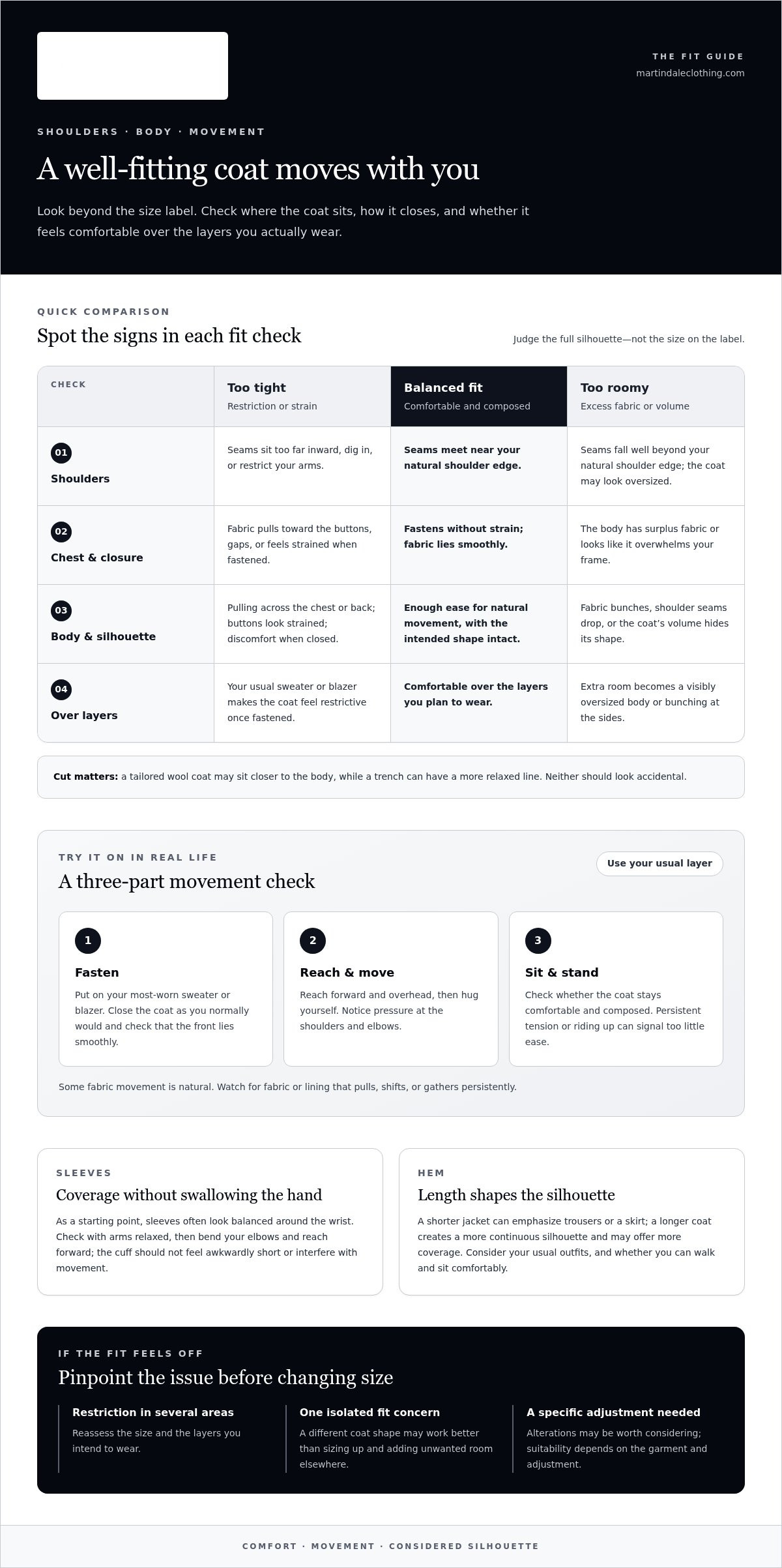
A well-fitting coat aligns at the shoulders, closes without strain, and leaves enough ease for natural movement. The right amount of room depends on the cut. A tailored wool coat may sit closer to the body, while a trench can have a more relaxed shape by design. The history and types of coats offer context for why silhouettes vary, but the coat’s intended shape should still look deliberate on you.
What should the shoulder seams and chest feel like?
Look for shoulder seams that meet near your natural shoulder edge. A seam that falls well beyond it can make the coat look oversized; one that sits too far inward may dig in or restrict your arms. Fasten the coat and check the chest in a mirror. The fabric should lie smoothly, without gaping or pulling toward the buttons. The body needn’t be snug, but it shouldn’t look strained.
How can you spot a coat that is too tight or too loose?
Check for tension as well as excess. Pulling across the chest or back, displaced seams, strained buttons, or discomfort when the coat is fastened can signal that it is too tight. On the other hand, surplus fabric that bunches, dropped shoulder seams, or a body that overwhelms your frame may indicate too much room. Judge the full silhouette, not the size label alone. Sizing varies, and another size or cut may sit more naturally.
How Should a Women’s Coat Fit Over Layers and During Movement?
A coat should make room for the layers you plan to wear, not just look right over a thin top. To judge how should a women's coat fit in real life, try it with a typical sweater or blazer, fasten it as intended, and move through ordinary actions. It should accommodate your usual layers without losing the shape you want.
What is the best way to test coat fit at home?
Put on the layer you reach for most often, then close every button or fasten the coat as you normally would. Check that the front lies smoothly before moving. Reach forward as if taking something from a shelf, raise your arms overhead, hug yourself, then sit down. Notice pressure at the shoulders and elbows, and whether the lining or outer fabric pulls, shifts, or gathers. Some fabric movement is natural; persistent tension or a coat that rides up can point to insufficient ease.
Use this simple sequence:
- Fasten the coat over your usual layer.
- Reach forward and overhead, then hug yourself.
- Sit and stand, checking whether the coat stays comfortable and composed.
Should a winter coat feel loose enough for a sweater?
It should feel comfortable over the sweater you actually wear, but extra room isn’t automatically better. A visibly oversized body, fabric bunching at the sides, or a dropped shoulder line may make the coat look unbalanced rather than ready for layering. The intended cut matters: a tailored wool coat and a relaxed trench won’t sit alike. Your regular layering habits matter too. If you often wear a blazer, test the coat over one; if you prefer fine knits, assess it with those instead.
Consider both movement and the silhouette you want to keep. If you’re comparing shapes, explore the women’s coat selection with your typical layers in mind. A different cut may solve persistent restriction more effectively than simply choosing a larger size.
How Should Coat Sleeves and Length Fit Different Women’s Coat Styles?
Once the body feels comfortable, consider how the sleeves and hem work with the coat’s purpose and proportions. The answer to how should a women's coat fit varies by style. A tailored wool coat, a trench, and a relaxed jacket create different silhouettes, so they won’t share one exact ideal length or fit.
Where should women’s coat sleeves and hems fall?
As a starting point, sleeves often look balanced when they reach around the wrist, providing coverage without swallowing the hand. The right endpoint depends on the design and how you plan to wear the coat. Check the sleeves with your arms relaxed, then bend your elbows and reach forward. The cuff shouldn’t feel awkwardly short or interfere with movement.
Hem length shapes the whole outfit. A shorter jacket can emphasize the line of trousers or a skirt, while a longer coat creates a more continuous silhouette and may offer more coverage. Consider where the hem lands in relation to your usual clothes, and whether you can walk and sit comfortably. A length that feels composed on one wearer may feel different on another. Personal preference and proportion matter as much as convention.
Does a trench coat fit differently from a wool coat?
It can. A trench and a wool coat may be chosen for different settings and worn with different layers, so compare each with its intended use rather than expecting them to hang alike. A tailored wool coat may have a cleaner, closer outline, while a trench may suit a more relaxed line. Neither should look accidental. The trench coat versus wool coat guidance offers a broader comparison of their roles and silhouettes.
Assess the sleeves and hem with the outfits you expect to wear most. Martindale’s collection includes wool coats such as the Patrice Wool Coat and trench styles such as the Maggie Glen Plaid Trench in English Wool, each with a distinct silhouette.
What to Do If a Women’s Coat Does Not Fit Quite Right
A coat that feels wrong doesn’t always call for a larger size. Repeat the fit check over the layers you intend to wear, then pinpoint where the discomfort or imbalance appears. Ask yourself, “how should a women's coat fit for the way I dress?” Your answer can help distinguish a size issue from a silhouette that doesn’t suit your proportions or preferences.
Should you size up, choose another silhouette, or consider alterations?
If the coat restricts movement in several areas or feels uncomfortable once fastened over your usual layers, reassess the size and the layers you plan to wear. If the concern is isolated, such as the shoulder line or overall proportions, another coat shape may be a better solution than sizing up, which could add unwanted room elsewhere. Alterations may be worth considering for a specific issue, but their suitability depends on the garment and the adjustment.
Use this sequence to decide what to try next:
- Retest the coat over the layers you expect to wear.
- Identify whether the issue is restriction, excess room, or an unbalanced proportion.
- Compare another size or silhouette before deciding whether an alteration could address the problem.
How can you choose a coat fit you will wear for years?
Choose a coat that feels comfortable in motion, suits the layers you reach for, and has a silhouette you feel at ease wearing. A label alone can’t make that decision. Look for a balance that feels natural now and works across the settings where you’ll wear it.
Martindale’s women’s coats include wool and trench styles, designed and sewn in America with an emphasis on craftsmanship and enduring wear. These qualities describe how a garment is made, not a guarantee of fit, so assess each coat on its own. Compare the silhouettes and consider which feels right for your wardrobe.
Choose a Coat You’ll Feel at Home In
A coat earns its place in your wardrobe through repeated wear, not a size label or a moment in front of the mirror. Let comfort and confidence guide your choice. The right fit should feel natural with the outfits and in the settings that make up your life. If a coat keeps asking you to adjust it, consider whether another silhouette would serve you better.
So, how should a women's coat fit for the long term? It should feel like a considered companion, with a shape you’re glad to wear and room for the way you dress. Martindale’s women’s outerwear includes wool coats and trench coats, designed and sewn in America with an emphasis on craftsmanship and enduring pieces.
Explore Martindale’s thoughtfully made women’s outerwear to compare silhouettes and choose a coat that feels comfortable and natural in your wardrobe.
Frequently Asked Questions
Should I buy a women’s coat in my usual size?
Your usual size is a starting point, not a promise of fit. To judge how should a women's coat fit for you, try it over the layer you expect to wear most. Check that the shoulders feel comfortable, the front fastens without strain, and you can move naturally. A tailored style and a relaxed coat may fit differently, so trust how the garment sits over its label.
How much room should a coat have for a sweater?
A coat should close comfortably over your sweater without pulling across the chest or restricting your arms. Try it with the knit you wear most, not only a thin shirt. You should be able to reach forward and bend your elbows without feeling trapped. At the same time, excess room that drops the shoulders or obscures the coat’s shape may mean the cut or size isn’t right.
Where should a women’s coat sleeve end?
With your arms resting naturally, the sleeve should provide comfortable coverage near the wrist without swallowing your hand. The ideal point varies with the sleeve design, the layers underneath, and how you prefer to style the coat. Check the sleeve both with your arms relaxed and extended; a cuff that seems right at rest may feel short when you reach or bend your arms.
Can a coat that pulls when buttoned still fit properly?
Persistent pulling when a coat is buttoned can signal too little ease or a mismatch between the cut and your proportions. Look for strained closures, gaping, or fabric that looks distorted, then try the coat over your planned layers and move naturally. A slight change in how fabric lies may be a matter of preference, but ongoing tension or discomfort shouldn’t be dismissed as a style detail.
Should a women’s trench coat fit differently from a wool coat?
Yes, their intended silhouettes and the layers you wear beneath them may differ. Assess each coat according to its purpose. For example, consider whether you’ll wear a trench over lighter outfits or reach for a wool coat with warmer layers. Both should feel comfortable and sit coherently at the shoulders, but one fit standard won’t suit every outerwear style. Judge each garment on its own design.


