


A high price doesn’t make a coat an investment. An investment wool coat earns its place through repeated wear, thoughtful construction, and a style that still feels like yours beyond one season. Those qualities can be difficult to judge from product photos, especially when claims about durability and responsible production are easy to blur together.
It’s reasonable to want more than a beautiful silhouette from a considered purchase. You want to know whether the materials and construction suit the way you dress, and whether the coat works with the clothes you already reach for. This guide explains how to assess wool, construction, fit, versatility, and care, and how production information can add context. Martindale’s women’s wool coats, including the Patrice Wool Coat in Chestnut and the Eleanor Wool Coat in Noir, are designed and sewn in America with ethical production and enduring wardrobe design in mind.
What Makes an Investment Wool Coat Worth Wearing for Years?
An investment coat is defined less by its price than by the role it can play in your wardrobe. Think about how often you reach for a coat, what you usually wear beneath it, and whether its shape and colour work for everyday plans as well as more formal occasions. A piece that fits your real routine is more likely to earn repeat wear than one chosen for a single event.
An investment wool coat is a coat whose materials, construction, and place in your wardrobe make repeated wear meaningful, not simply a purchase with a high price tag.
Value isn’t a promise of permanence. Even a well-made garment can show wear, need care, or eventually stop suiting your needs. Cost per wear is one way to compare a coat with other wardrobe choices: divide its purchase price by the number of wears you realistically expect. The result won’t predict the future, but it can help you decide whether the coat feels worthwhile based on how you expect to use it.
How Is an Investment Wool Coat Different from an Expensive Coat?
Cost alone can’t establish quality, versatility, or personal value. Before committing, picture the coat with several pieces you already own. Consider whether the fit leaves room for the layers you usually wear, whether the colour works with your everyday wardrobe, and whether you can imagine wearing it for more than one kind of occasion. Then look beyond appearance to the garment’s materials and how it’s made. This overview of Wool explains the fiber’s types and history.
Responsible production belongs in the same assessment. Where and how a garment is made can matter alongside how often you’ll wear it. Martindale’s women’s wool coats are designed and sewn in America, with ethical manufacturing and enduring wardrobe design at the core. The Patrice Wool Coat in Chestnut and Eleanor Wool Coat in Noir are examples of considered pieces. Choose the coat that aligns with your values and feels at home with the clothes you already own.
How Wool, Construction, and Craft Shape a Coat’s Long-Term Value
A fiber label is a useful starting point, not a verdict. Read the listed composition to see which fibers make up the fabric and, where stated, their proportions. Wool comes in different types, and a blend’s name alone doesn’t reveal how the whole coat is made or whether it suits your needs. When assessing an investment wool coat, consider the fabric information alongside the garment’s construction and the transparency of its maker.
Fiber composition describes the cloth; construction describes how the whole garment is assembled. Neither tells the full story on its own. A high wool content doesn’t automatically tell you about seam finishing, closures, lining, fit, or how those elements come together.
What Should You Look for in Wool-Coat Construction?
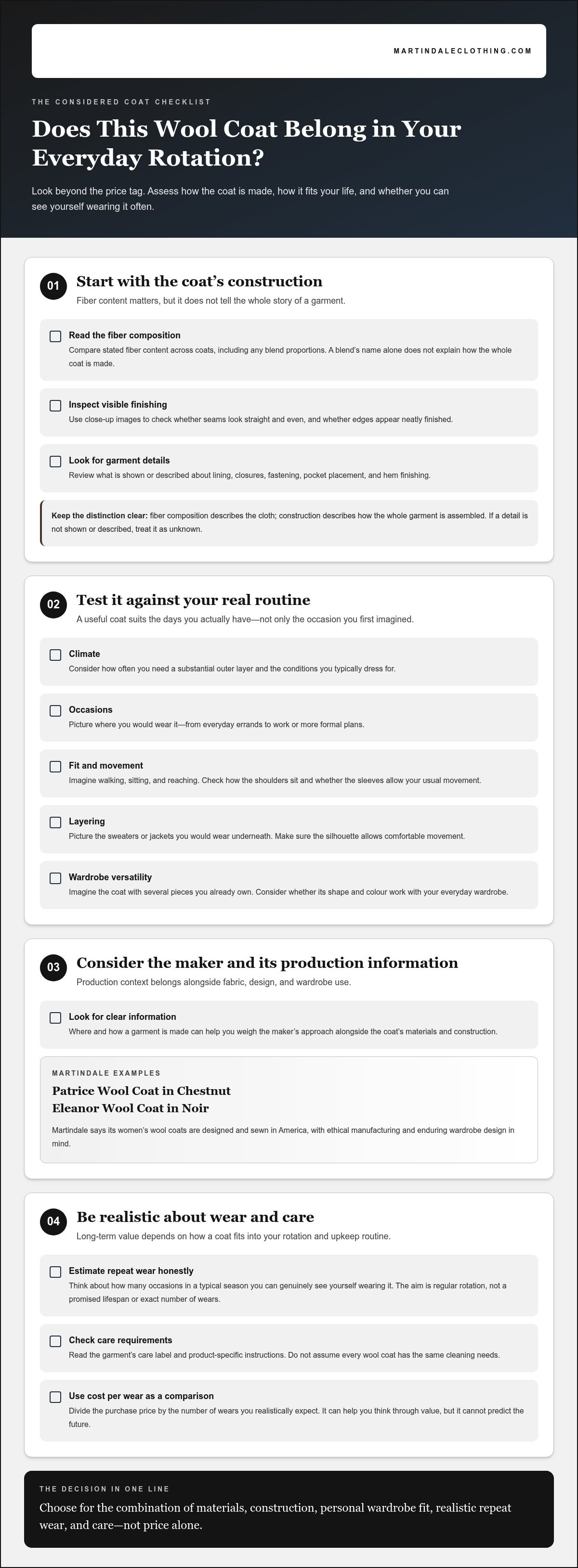
Product details and clear images can help you assess visible finishing before you buy. In close-up views, look for straight, even seams and neatly finished edges. Check whether the description identifies the lining and closures, and note how the coat fastens. Look at pocket placement and hem finishing as well. If a detail isn’t shown or described, treat it as unknown rather than assuming a particular construction method.
- Compare the stated fiber content across coats, including any listed blend proportions.
- Review available images around seams, pockets, hems, and fastening points.
- Read the garment description for lining and closure details, without inferring details it doesn’t provide.
Why Production Choices Matter to a Considered Purchase
Knowing where and how a garment is made adds context to its craftsmanship. Clear production information can help you weigh a maker’s approach alongside fabric, design, and wardrobe use. Martindale garments are designed and sewn in America, and the brand prioritizes ethical manufacturing and slow-fashion principles. These choices are part of the story behind its women’s wool coats, including the Patrice Wool Coat in Chestnut and the Eleanor Wool Coat in Noir. Considering that story can help make a purchase deliberate, not simply well-presented.
How to Decide Whether an Investment Wool Coat Fits Your Wardrobe
The right coat should work for your days, not just look compelling on a hanger. Before choosing an investment wool coat, think about the weather, routines, and clothes it needs to suit. Use this checklist to turn a broad preference into a practical decision:
- Climate: Consider how often you need a substantial outer layer and the conditions you typically dress for.
- Occasions: Think about where you’ll wear it, from everyday errands to work or more formal plans.
- Fit: Consider the shape you feel comfortable wearing and how it works with your usual proportions.
- Layering: Picture the sweaters or jackets you’d wear underneath, then check whether the silhouette allows comfortable movement.
Which Silhouette and Fit Will You Reach for Most?
Imagine walking, sitting, and reaching in the coat, not only standing still. A close, defined shape may feel right with streamlined outfits, while a roomier cut may suit thicker layers. Check how the shoulders sit and whether the sleeves allow your usual movement. Consider how formal your regular routine is, too. If you’re weighing a tailored wool coat against a trench, compare their shape, coverage, and how each works with the clothes you own. That can clarify which style better suits your climate and wardrobe.
How Can Care Habits Support Longer Use?
Care is part of the commitment. Read the garment’s care label and any product-specific instructions before deciding whether its upkeep fits your routine. Don’t assume every wool coat has identical cleaning needs. Once you own it, follow those directions rather than relying on broad advice; appropriate care depends on the garment and its materials.
Finally, estimate how many occasions in a typical season you can genuinely see yourself wearing the coat. You don’t need to predict an exact lifespan or promise yourself a certain number of wears. The point is to test whether it can join your regular rotation rather than wait for rare occasions. Explore Martindale’s women’s wool coats with your checklist in mind.
Choosing an Investment Wool Coat with Martindale
A considered choice brings together the questions raised throughout this guide: Does the coat suit your wardrobe, and does its maker’s approach align with what you value? Martindale creates women’s outerwear in the United States, with garments designed and sewn in America. Ethical production and enduring wardrobe design are central to the brand. That context belongs in the decision alongside the coat’s appearance, fit, and place in your daily life.
How Do Martindale’s Wool Coats Fit a Considered Wardrobe?
The Patrice Wool Coat in Chestnut and the Eleanor Wool Coat in Noir offer two distinct colour options to consider alongside your existing wardrobe. Chestnut may appeal if you’re drawn to warmer tones; Noir may suit a preference for a darker palette. Compare each with the colours and outfits you wear most, and let your own style guide the choice. Neither shade is right for everyone. Both coats are part of Martindale’s wool-coat offering.
Where Can You Explore Martindale’s American-Made Outerwear?
Comparing options in context can help you see which piece feels most at home in your wardrobe. Browse Martindale’s women’s wool coats alongside its other outerwear, keeping your preferred palette and everyday needs in mind. The brand’s American-made approach adds context as you weigh not only what you’ll wear, but also the production values behind the garment.
An investment wool coat should feel like a thoughtful choice, not a hurried one. Take time to consider which option reflects your style and the principles you want your wardrobe to express. Explore Martindale’s outerwear and compare the coats with your everyday needs in mind. A closer look can help you decide which piece belongs in your rotation.
Let Your Next Coat Earn Its Place
The useful question isn’t whether a coat can last forever, but whether you can imagine choosing it again as your life and wardrobe evolve. An investment wool coat should feel like a natural extension of how you dress, while reflecting the care you want to take with what you bring into your closet. Confidence comes from a deliberate choice, not a label or a passing idea of what a wardrobe should contain.
Let that sense of fit guide your decision. Think about the piece you’ll be glad to reach for, not only this season but as familiar routines return. If you’re ready to consider which coat belongs in your rotation, explore Martindale’s considered outerwear. A well-chosen coat needn’t make a grand statement every time you wear it. Its quiet value may lie in becoming the one you reach for with ease, season after season.
Frequently Asked Questions
Can a wool coat be worn with casual outfits?
Yes. A wool coat can work with casual clothes if its shape and formality feel natural beside them. Picture it over the jeans, knitwear, and everyday shoes you already wear, rather than building an entirely new outfit around it. A relaxed coat can soften a polished look, while a more structured one may lend definition to simple layers. Let your usual proportions guide the choice.
Does a higher wool content automatically mean a better coat?
No. Fiber content is one detail, not a complete quality measure. Two coats with similar stated compositions can differ in fabric, finishing, fit, and intended use. For an investment wool coat, read the label alongside the product description, noting what each does and doesn’t tell you. A composition percentage can help you compare materials, but it can’t independently predict how the finished garment will suit your needs.
Can a wool coat be tailored?
Sometimes, but whether an alteration is practical depends on the coat and the change you have in mind. Adjusting a hem is different from changing the shoulders or overall shape; seams, lining, and available fabric can affect what’s possible. Before buying, assess the fit in the areas that matter most to you. For a particular garment, a qualified alterations professional can evaluate the construction and likely result.
What causes pilling on a wool coat?
Pilling can form as fibers rub against one another or other surfaces during wear. Repeated contact from a shoulder bag, seat back, or adjacent layers may contribute, though the amount varies by fabric and use. Check the coat’s care instructions before removing pills. Choose a method suited to that garment, since an unsuitable tool or technique may affect the fabric’s surface.
How should you store a wool coat between seasons?
Follow the coat’s care label before putting it away. If its instructions call for cleaning, complete that care and allow the garment to become fully dry as directed. Store it in a cool, dry place with enough room to retain its shape, rather than compressing it among tightly packed clothes. Check the label for product-specific guidance, since storage needs can differ between garments.


