


A beautiful garment isn’t automatically a lasting investment. The slow fashion brands worth investing in are those whose values show in how their clothes are made: through responsible materials, transparent production, thoughtful craftsmanship, and designs you can picture wearing for years.
Look beyond sustainability claims and compelling brand stories. A considered purchase should work in daily life, suit your wardrobe, and reflect production practices you can understand. Longevity matters, but so do the people and processes behind each piece.
This guide explains how to assess a clothing brand’s sustainability, production, and heritage, then weigh those qualities against a garment’s lasting value. You’ll learn what to look for in a brand’s disclosures, how to consider cost per wear without treating a higher price as proof of quality, and why a versatile, well-made piece may be a more considered choice than a passing trend.
Table of Contents
How can you tell if a clothing brand is truly sustainable?
Look beyond sustainability claims: examine construction, material choices, and the brand’s care and repair support. These details can help show whether a piece is intended for repeated wear rather than a brief stay in your closet.
Garment Construction and Material Integrity
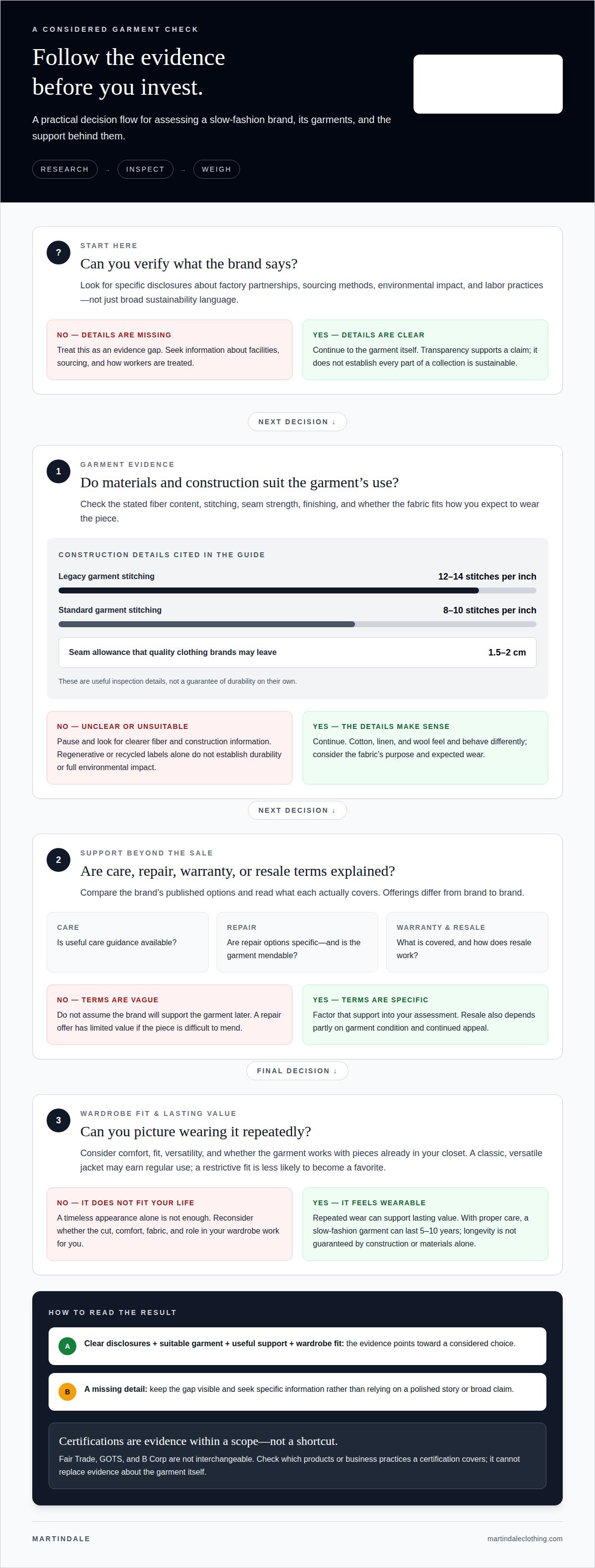
Garment construction is how a piece’s fabric, seams, and finishing are assembled, shaping how well it withstands wear. For a practical assessment, inspect stitching, seam strength, and whether the fabric suits the garment’s use. A legacy garment may have 12 to 14 stitches per inch, while a standard garment might have 8 to 10. Seam allowance matters too: quality clothing brands may leave 1.5 to 2 centimeters for future adjustments.
Durable fibers and careful construction support longevity, but neither guarantees it alone. With proper care, a slow-fashion garment can last 5-10 years. Classic jackets in versatile colors can earn regular use because they work with more pieces already in a closet. Comfort also matters: a jacket that restricts movement is less likely to become a favorite.
Natural, Regenerative, and Recycled Materials
Material choices describe the fibers and processes behind a garment, from conventional natural fabrics to recycled textiles. They matter because the fabric affects comfort, care, and how a piece performs over time. Compare the stated fiber content: cotton, linen, and wool each feel and behave differently, so match the fabric to how you’ll wear the garment.
Regenerative materials are presented as supporting practices intended to renew agricultural ecosystems; recycled materials reuse existing fibers or textiles. Neither label alone establishes a garment’s durability or full environmental impact. Look for clear material descriptions and explainers, then consider whether the fabric suits the garment’s purpose. A jacket meant for frequent wear needs materials that can handle its expected use.
Durability, Repair, Resale, and Warranties
Durability, repair, resale, and warranty terms show how a brand supports a garment beyond its first sale. They matter because mending can extend use, while resale gives a piece another life. Compare the brand’s published repair options, warranty coverage, and resale arrangements; these offerings differ, so read what each actually covers.
Consider care guidance and construction alongside those policies. A repair offer has limited value if a garment is difficult to mend, while resale depends partly on its condition and continued appeal. Look for specific information about working conditions and production, too. Sustainability includes how garments are made, not only how long they remain wearable.
Certifications and Value for Quality
Certifications assess defined aspects of a brand or product, while value for quality weighs a garment’s performance against its lasting usefulness. Fair Trade, GOTS, and B Corp are not interchangeable labels. Treat each as evidence for a claim within its scope, not proof that every part of a collection is sustainable. Read the stated scope and identify which products or business practices it covers.
Which slow fashion brands offer the best value for quality and durability? Look for clear material and production disclosures, sturdy construction, useful care guidance, and meaningful repair or resale support. A certification can strengthen that assessment, but it can’t replace evidence about the garment itself. Choose pieces that suit your closet and that you expect to wear repeatedly.
Researching a brand’s mission and production
A brand’s mission matters when its production practices support its stated values. Look for clear disclosures about factory partnerships, sourcing methods, and environmental impact reports. These details connect broad commitments to the clothes you bring into your wardrobe.
Production transparency should explain where garments are made and how workers are treated. Local production can make a supply chain easier to describe, but location alone doesn’t establish ethical working conditions. Look for specific information about facilities, sourcing, and labor practices rather than relying on words such as “responsible” without context.
Artisan production and slow-produced knitwear offer another perspective. A brand might describe who makes a garment, the techniques involved, and how natural fibers are sourced. For knitwear, information about fiber content, construction, and care helps show whether a piece is intended for regular wear. Specific details are more useful than a polished story without production information.
What are the price ranges for popular slow fashion brands? Prices vary by garment and brand; on the market, dresses typically range from $40 to $110, with a median of about $78. Treat that as a dress-market reference, not a measure of ethical production or quality.
Which slow fashion brands are highly rated in the United States? Market examples include Farm Rio, Eileen Fisher, and Jenny Kayne as luxury slow-fashion brands, but the examples provide no ratings for comparison. Assess each brand’s published production details and values rather than treating recognition as proof of ethical practices.
Where can shoppers in the United States buy slow fashion brands, and what are the return policies? Shoppers can buy through a brand’s own retail channels, while return terms depend on the seller and purchase channel. Check the return window, garment condition requirements, and refund or exchange options as part of your purchase decision.
Quiet luxury and brand heritage
Quiet luxury is a design approach built on restraint, material presence, and enduring form rather than prominent logos. A tailored coat in a neutral shade, for example, can work across changing trends. Its value depends on cut, comfort, and durability, not simply an understated appearance.
Brand heritage can explain how design choices developed, but age alone doesn’t prove quality or responsibility. Look for specific evidence, such as named craft techniques, a documented production history, or an explanation of why a garment’s design remains in the collection. A founder’s story is useful when it connects to actual materials and making practices.
Consider a jacket with clean lines and functional pockets. It may work over workwear, knitwear, or a simple dress, giving the garment a lasting role in a wardrobe. Assess its fit and fabric against the outfits you already wear. A timeless design is only useful if you reach for it.
Transparency also distinguishes considered heritage from atmosphere-driven branding. Compare a brand’s production descriptions with its environmental commitments. Specific information about sourcing and manufacturing gives those values practical meaning; evocative language alone doesn’t explain how a garment is made. Prioritize consistent details over claims that rely on heritage imagery.
Quiet luxury can also be assessed through continuity. If a brand maintains recognizable shapes while refining construction or materials, its collection may reflect a deliberate design point of view rather than a short-lived trend. That doesn’t guarantee durability, so weigh the style against care guidance and construction details. The strongest investment is a garment whose design, use, and production story make sense together.
Slow fashion and investment dressing
Investment dressing means prioritizing regular wear, considered craftsmanship, and ethical production over fast fashion’s short-lived appeal. The slow fashion brands worth investing in offer garments suited to real routines, not just an idealized wardrobe. Value comes from use and relevance, not a promise of resale profit.
Cost per wear can help make that value tangible. These examples show why the purchase price alone doesn’t define value. How often you expect to wear a garment matters just as much.
Before buying, picture the garment with at least five items you already own. A jacket that works with office trousers, denim, and a dress may suit more occasions than a statement piece reserved for one event. Ask whether it fits your actual calendar, climate, and habits. This practical test can help distinguish a wardrobe staple from an impulse.
Then weigh expected use against care requirements, fit, and construction. A piece that needs impractical upkeep may spend more time in the closet, even if its design appeals. Slow fashion brands worth investing in make sense when their production practices align with how you’ll use and care for the garment. A label or higher price alone can’t settle the question.
Treat that as a way to think about use, not a guaranteed outcome. The clearest investment is a garment you’ll reach for repeatedly and care for thoughtfully.
For a considered addition to your wardrobe, explore thoughtfully made clothing and choose a piece that fits your everyday life.
Martindale
For a considered outerwear purchase, MARTINDALE offers women’s coats and wool coats designed as enduring wardrobe pieces. Its garments are Ethically Made and Made in America, giving shoppers a clear starting point when weighing production, craftsmanship, and lasting style.
The collection includes The Amelia Bomber Jacket in Mulberry Satin and The Amelia Bomber Jacket in Midnight Satin. Choose between them based on your wardrobe, the materials, silhouette, and the occasions you’ll wear the jacket, rather than treating a higher price as proof of value.
If you’re considering a lasting addition to your wardrobe, contact Martindale to discuss your choice.
Make your next purchase a considered one
Choose a garment that belongs in your actual life, not simply one that reflects an ideal wardrobe. When weighing slow fashion brands worth investing in, let regular use, personal comfort, and production values guide your decision. A thoughtful purchase starts with what you’ll reach for, then considers how it was made.
If outerwear is on your list, MARTINDALE offers women’s coats and wool coats, including The Amelia Bomber Jacket in Mulberry Satin. Let the piece’s role in your everyday wardrobe, rather than the language of investment alone, shape your choice. A lasting relationship with clothing starts with buying intentionally and wearing each garment with care.
Contact Martindale to discuss your options and take the next step toward a wardrobe chosen with care.
Frequently Asked Questions
Does an investment piece have to be synonymous with expensive?
No. An investment piece earns its place through regular use, not its price tier. A well-kept secondhand coat or a modestly priced garment can be a sound choice if it fits comfortably, works with clothes you already own, and suits your routine. Set a spending limit before shopping; a higher price alone doesn’t prove better materials or more responsible production.
Is it worth investing in designer clothing brands in 2026?
It can be, but a designer label alone doesn’t establish value. Consider whether the design suits your routine, whether its care needs fit your habits, and whether the maker explains how and where it was produced. A recognizable name may carry a distinct design history, but practical fit and credible production details matter more than status when choosing a garment to keep.
Is slow fashion worth the higher price tag compared to fast fashion?
Sometimes, but not automatically. A slow-fashion garment may justify a higher outlay if it meets your needs and stays in regular rotation. Fast fashion can cost less upfront, but a poor fit or disappointing construction may lead to replacement. Compare specific garments rather than categories. If a purchase strains your budget, waiting or choosing secondhand can also be a considered choice.
What defines quality clothing brands that last in 2026?
Look for garments that fit as intended, have neatly finished seams and secure fasteners, and use fabric suited to their purpose. When assessing a coat, examine its lining and buttons, then move your arms to assess comfort and fit. Clear care instructions matter, too. A garment is easier to keep in regular use when its upkeep fits your habits.
What does slow fashion mean, and how can shoppers identify genuinely sustainable brands?
Slow fashion favors considered design and production over rapid trend turnover and disposable buying. To assess a sustainability claim, compare product-level fiber and care details with information about production and labor. Read the scope of any certification carefully: a label may support a particular claim, but it doesn’t automatically describe every material, factory, or business practice.
Which slow fashion brands use ethical labor and publish supply-chain information?
A credible match should describe its labor commitments and provide specific production information, such as named manufacturing locations or partners. MARTINDALE describes its garments as Ethically Made and Made in America. Those statements address ethical production and origin; a slow-fashion or luxury label alone doesn’t demonstrate detailed supply-chain disclosure. Look for clear, garment-relevant information rather than broad values language.


