


Officewear doesn’t have to stay inside the office. The corporate core aesthetic brings professional pieces such as blazers and tailored trousers together with casual staples, creating outfits that feel polished without looking like a uniform. Corpcore draws on familiar workplace dress, then leaves room for personal expression.
That contrast is part of its appeal: structure meets ease, and the expected becomes more individual. Understanding the look means recognizing its roots and the choices that shape it today. This guide explains what defines corpcore, how earlier fashion influences shaped it, and how to balance formal and relaxed pieces. It also offers ideas for making the aesthetic feel wearable and intentional, rather than like a workday costume.
Table of Contents
1. Balancing professional and casual clothing
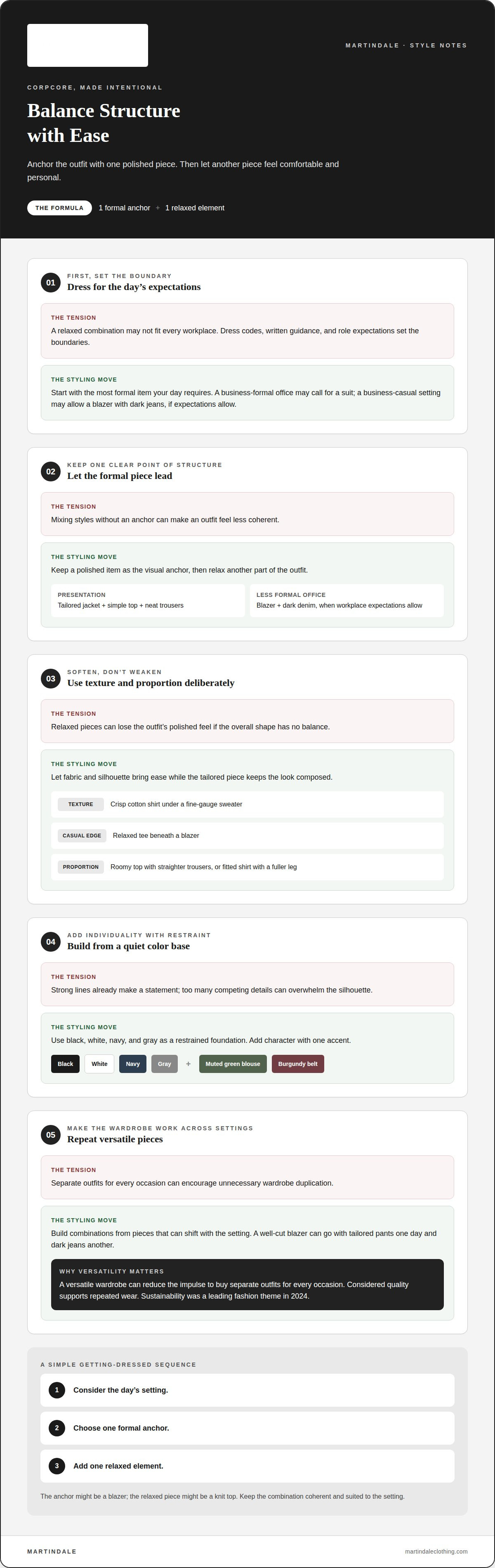
The corporate core aesthetic depends on contrast: a structured blazer can sharpen relaxed denim, while a soft knit can temper tailored trousers. The aim isn’t to dress halfway between two styles. Let one polished piece anchor the outfit, then give another piece room to feel comfortable and personal.
Workplace dress codes and policies set the boundaries for these combinations. A business-formal office may call for a suit, while a business-casual setting may allow a blazer with dark jeans. Written guidance and role expectations help determine what fits.
Start with the most formal item your day requires, then build around it. For a presentation, pair a tailored jacket with a simple top and neat trousers. For a less formal office, keep the jacket and swap the trousers for dark denim if workplace expectations allow. The outfit still has a clear point of structure.
Use texture to soften, not weaken, that structure. A crisp cotton shirt under a fine-gauge sweater feels composed, while a relaxed tee beneath a blazer adds a casual edge. Keep proportions deliberate: balance a roomy top with straighter trousers, or pair a fitted shirt with a fuller leg.
Color offers another way to add individuality with restraint. Black, white, navy, and gray create a quiet base; a muted green blouse or burgundy belt can add character without overwhelming the silhouette. One accent is often enough when the jacket or trousers already have strong lines.
Build combinations from pieces that work across settings. A well-cut blazer can accompany tailored pants on one day and dark jeans on another. A versatile wardrobe can reduce the impulse to buy separate outfits for every occasion, while considered quality supports repeated wear. Sustainability was a leading fashion theme in 2024, making versatility a practical style choice as well as an aesthetic one.
Before getting dressed, consider the day’s setting, choose one formal anchor, then add one relaxed element. This simple sequence keeps the outfit coherent, whether the anchor is a blazer or the relaxed piece is a knit top.
2. Definition and characteristics of corpcore
Corpcore turns officewear’s visual language into a deliberate fashion choice. Think crisp shirt, tailored trousers, narrow belt, and structured jacket, styled as an outfit rather than simply worn as a uniform. The corporate core aesthetic draws on familiar professional details, then reframes them through personal styling.
Its purpose and emphasis set it apart from old money style and business casual. Old money style favors understated, traditional clothing associated with inherited refinement; business casual describes a flexible workplace dress code. Corpcore makes the corporate image itself the subject, whether the outfit feels authentic, exaggerated, or knowingly ironic.
That image can feel highly standardized. Corporate art often uses similar styles across companies and artists, creating a uniform look. It may seem to feign friendliness or distract from a company’s negatives. Corpcore borrows from this familiar visual vocabulary, including clean lines, neutral colors, and polished presentation.
Fit and finish make the references clear. A buttoned shirt, straight-leg trousers, and compact handbag suggest office formality; a loosened tie or unexpected accessory shifts the mood. Black, white, gray, and navy can reinforce restraint, while a brighter detail makes the outfit more individual.
The aesthetic also plays with the idea of fitting a mold. Corporate dress can leave little room for variety or self-expression, so corpcore may turn repetition into a style statement. Matching separates and carefully coordinated accessories can look precise, while one contrasting piece interrupts the uniformity.
To recognize the effect, consider both the garment and its styling. A blazer alone may simply be practical; paired with office-coded accessories and a deliberately formal silhouette, it makes a stronger corporate reference. Decide whether you want a polished or more playful interpretation, then choose details accordingly. This keeps the look intentional rather than merely conventional.
3. Historical influences on corpcore
Corpcore’s roots reach back to the late aughts and early 2010s, when officewear already carried cultural meaning. The corporate core aesthetic revisits those references, mixing workplace silhouettes with contemporary styling. Its appeal comes partly from recognition: viewers know these visual codes, even outside an office. A tie, pencil skirt, or neat blouse can evoke professional life immediately.
Rachel Green’s wardrobe in season 5 of Friends offers an early reference point. Her fitted tops, skirts, and tailored layers made professional polish feel wearable beyond a conventional boardroom. The details matter more than copying an outfit: a clean silhouette and deliberate styling create the effect.
Paris Hilton’s 2008 style adds another strand. Polished accessories and coordinated outfits brought a visible, celebrity-led sensibility to office-inspired dressing. Together, these references show that corpcore isn’t a strict return to workplace uniforms. It can borrow professional codes while making them expressive, playful, or nostalgic.
A broader cultural shift in recent years has renewed interest in corporate imagery. The corporate core aesthetic can evoke routine, ambition, hierarchy, or authority, depending on how an outfit uses its visual language. A coordinated look may appear sincere; an exaggerated suit or conspicuous badge can make the same setting feel theatrical.
Hybrid work gives this contrast a practical dimension. A video meeting may frame a polished jacket and shirt while the rest of the outfit stays relaxed. For an in-person day, the same jacket can work with different layers and accessories. These choices adapt professional signals to the setting instead of letting them dictate every part of an outfit.
To draw on corpcore’s history without dressing like a period recreation, choose one reference at a time. Take Rachel Green’s tailored proportions, Paris Hilton’s coordinated finish, or a contemporary office staple, then style it for your routine. The corporate core aesthetic can acknowledge its influences without treating an earlier decade as a fixed uniform.
4. Outfit inspiration
Build a corpcore outfit around a recognizable office garment, then adjust its formality. A suit, blazer, or tailored trousers provide a clear foundation; a relaxed shirt or simple knit softens the result. A corporate core aesthetic relies on deliberate styling, not a fixed shopping list. Treat the pieces as a framework you can reinterpret.
The cost of a capsule wardrobe depends on what you already own and which pieces you add. Reworking existing clothes or buying secondhand can reduce new purchases; fabric, construction, and garment condition also affect spending. Start with a short list of wardrobe gaps instead of replacing everything at once.
In the United States, corporate-inspired clothes are available through thrift and consignment shops, resale platforms, mid-range retailers, and premium labels. These options suit different budgets. Assess fit, condition, and how easily each piece works with your current wardrobe. That approach makes a corporate core aesthetic feel personal, not assembled from a checklist.
For warm weather, try a lightweight blazer over a breathable shirt, with tailored shorts or trousers suited to your setting. In cold weather, layer a fine knit under a structured jacket and add a wool coat. Keep the outline clean so extra layers don’t obscure the office-inspired shape.
Thrifted clothing can help create a considered outfit. Look for a blazer with sound seams, comfortable trousers, or a crisp shirt that works with clothes you already wear. Recombining these pieces supports a more sustainable wardrobe without requiring a complete refresh.
Use color and accessories with restraint. Black and white are predominant in corporate outfits; other colors generally appear in ties or accessories rather than dominating the look. A muted scarf or simple belt can add character. For a corporate core aesthetic in spring or summer, adapt the silhouette with lighter layers and seasonal fabrics.
Martindale
Martindale offers considered outerwear for readers building corporate-inspired outfits around distinctive layers. A wool coat can bring polish to a workday look, while a satin bomber adds a more relaxed note to tailored clothing. The collection includes women’s coats and wool coats, as well as The Amelia Bomber Jacket in Mulberry Satin and Midnight Satin.
These pieces can serve as the defining layer, balancing office-ready structure with personal style. Choose a coat for a composed finish, or a bomber for a softer take on corpcore. Start by considering the role you want the garment to play and how it will work with clothes already in your wardrobe.
Explore women’s outerwear for a considered layer to shape your look. Contact Martindale to discuss your questions about finding a piece that suits your style.
Make the look your own, one considered choice at a time
Let your version of the corporate core aesthetic begin with how you want to feel in your clothes. Choose pieces that serve your daily life instead of assembling an outfit around a passing trend. One thoughtful addition can give familiar garments a more polished direction, while the way you wear them makes the style your own.
Martindale offers women’s coats and wool coats, along with The Amelia Bomber Jacket in Mulberry Satin. Each brings a distinct finish to workwear-inspired dressing, from composed to relaxed. Consider what your wardrobe needs most, then choose a piece that works with more than one outfit or occasion.
When you’re ready to explore a considered addition, contact Martindale to discuss your needs. Build a look that feels like yours, and let it develop with time.
Frequently Asked Questions
What Is Corpcore?
Corpcore is a fashion style built on recognizable office clothing. A fitted vest, button-front shirt, or neatly carried document folder can suggest the workplace without requiring a formal office outfit. The key is to style these references intentionally, so the result reads as personal fashion rather than clothing chosen solely to meet a work requirement.
What does “corporate core” aesthetic mean?
The corporate core aesthetic treats corporate dress as a style language, not simply a workplace dress code. A pencil skirt with unexpected flat shoes, for example, keeps a professional reference while shifting its mood. The phrase describes the overall impression created by the clothes and their presentation, from convincingly polished to deliberately exaggerated.
What are the key clothing pieces in a corporate core wardrobe?
Useful foundations include a button-front shirt, tailored trousers, a clean-shaped skirt, a vest, and a structured jacket. Choose pieces that combine easily: a shirt should work under a jacket and on its own, while trousers should pair with more than one top. A simple dress can also serve as a foundation when layered with a vest or belt.
How do you style a corporate core outfit for women and men?
Start with a tailored foundation and adjust the proportions to suit your taste. For example, combine a vest and trousers with a relaxed shirt, or wear a crisp shirt under a jacket with straight-leg pants. Fit, comfort, and setting matter more than gendered rules; details such as sleeve length or a tucked shirt can refine the result.
What colors, fabrics, and silhouettes define corporate core?
Choose a restrained palette, then add depth with texture. A smooth cotton shirt beside a ribbed knit creates contrast without a loud print. Straight or gently tapered trousers and a defined shoulder give an outfit a composed outline. Matte fabrics tend to feel quieter, while satin can make one item a deliberate focal point.
What shoes, bags, and accessories work with the corporate core aesthetic?
Loafers, simple flats, and clean-lined heels can complement tailored clothing; choose a pair that suits your day and comfort. A structured tote or compact shoulder bag reinforces the office reference. Keep accessories purposeful: a narrow belt, understated watch, or small earrings can finish an outfit. If the clothes already have strong details, keep accessories quiet.


