


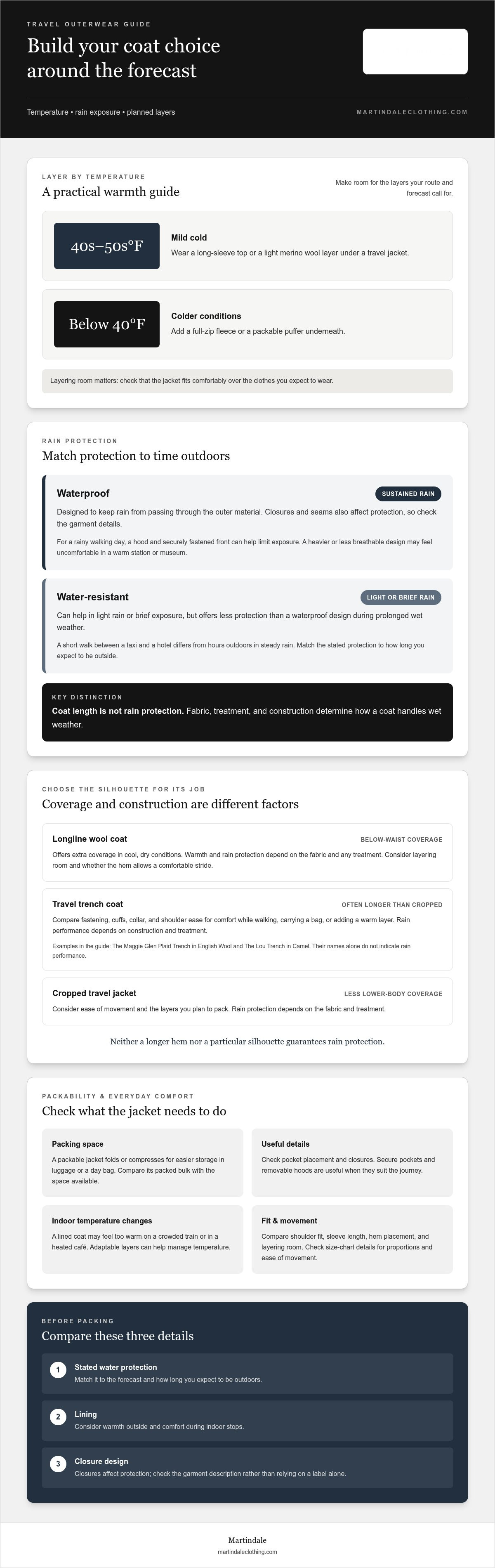
The best women’s coat for travel isn’t always the most weatherproof one. The right choice depends on what your itinerary calls for: longline coverage or water protection when rain is likely. In mild cold in the 40s-50s°F, wear a long-sleeve top or light merino wool layer under a travel jacket; below 40°F, add a full-zip fleece or packable puffer underneath.
Choosing the best women's coat for travel means finding one that feels polished, suits your destination, and earns its place in your luggage. Start by separating warmth and coverage from rain protection, then consider how the coat will fit over the layers you expect to wear.
This guide compares longline and weatherproof coats, explains what to consider when choosing between them, and shows where wool coats and trench coats can fit into a travel wardrobe. Use your destination, forecast, and planned layers to narrow down the right option.
Table of Contents
Longline travel coats
A longline coat extends below the waist, offering extra coverage in cool, dry conditions. Its length can cover more of an outfit than a cropped jacket, and a clean silhouette works with trousers, skirts, or a travel dress. For days with plenty of walking, check that the hem allows a comfortable stride and that the coat layers smoothly over your usual clothes.
Length alone does not make a coat weatherproof. A longline wool coat can provide warmth and coverage, but rain protection depends on its fabric and any treatment. If your itinerary includes wet streets or changeable forecasts, assess water protection separately from coat length. A longer hem may cover more clothing, but it cannot replace a weatherproof outer layer.
A trench coat offers a structured alternative when you want a layer that works over office clothes or casual outfits. Compare the collar, fastening, cuffs, and room through the shoulders, since these affect comfort when walking, carrying a bag, or adding a warm layer. The Maggie Glen Plaid Trench in English Wool and The Lou Trench in Camel illustrate different trench styles. Their names alone do not indicate rain performance, so look for specific details about fabric and water protection.
Compare silhouettes by the job they do. A longline wool coat offers extended coverage, while a trench’s weather performance depends on its construction and fabric treatment. Neither shape guarantees rain protection.
| Option | Coverage | Rain protection | Travel consideration |
|---|---|---|---|
| Longline wool coat | Below-waist coverage | Depends on fabric and treatment | Consider warmth and layering room |
| Travel trench coat | Often longer than a cropped jacket | Depends on construction and treatment | Compare fastening, cuffs, and shoulder ease |
| Cropped travel jacket | Less lower-body coverage | Depends on fabric and treatment | Consider ease of movement and pack layers |
Choose a longline coat for extra coverage in cooler, drier conditions. Choose a trench when its cut and stated weather protection better suit your route.
Travel jacket use in different weather
Choose a travel jacket based on expected temperatures, rain exposure, and layering needs. A single coat may not suit every stop on a changeable itinerary.
For mild cold in the 40s-50s°F, wear a long-sleeve top or light merino wool layer under a travel jacket. Below 40°F, add a full-zip fleece or packable puffer underneath. A lightweight UV-protection jacket serves a different purpose: look for clear UV-protection labeling, then consider whether its coverage and weight suit your route.
Packable Travel Jackets
A packable travel jacket is designed to fold or compress for easier storage in luggage or a day bag. Portability does not necessarily mean warmth or rain protection. Compare its packed bulk with the space available, then check pocket placement, closure, and room for your planned layers. A thin jacket, for example, may pack neatly but need a fleece in colder conditions.
Women's Travel Jacket Recommendations
For a variable forecast, prioritize a jacket that layers comfortably and provides the protection you need for the expected rain. On a mild, dry trip, a lighter option may be easier to carry. For colder stops, leave room for a full-zip fleece or packable puffer. The best choice depends on the destination and daily activities, not on one feature or rating.
Comfort, durability, and versatility depend on fit, fabric, and construction. Room for layers can make a jacket useful across a wider range of temperatures, while sturdy materials and secure closures matter for frequent wear.
Secure pockets and removable hoods are useful when they suit the journey. Check that pocket closures keep small essentials secure, and consider a removable hood if you want the option to adjust coverage.
For petite or plus-size shoppers, compare shoulder fit, sleeve length, hem placement, and layering room with the garment’s size chart. These details help you assess proportions and ease of movement across different coat cuts.
Highly rated women’s travel coats vary in cost according to materials, construction, and features. Compare coats with similar fabrics and functions, since a rating alone doesn’t explain the price.
Waterproof and water-resistant protection
Rain protection depends on a coat’s materials and construction, not its length. Common trade-offs include overheating indoors and limited protection in sustained rain. A warm lining or water-resistant finish may not suit every stop.
Waterproof Protection
A waterproof coat is designed to keep rain from passing through its outer material. Construction, including closures and seams, also affects protection, so read the garment description rather than relying on the label alone. For a rainy walking day, a hood and securely fastened front can help limit exposure. A heavier or less breathable design, however, may feel uncomfortable in a warm station or museum.
Water-Resistant Protection
A water-resistant coat can help in light rain or brief exposure, but provides less protection than a waterproof design during prolonged wet weather. A short walk between a taxi and a hotel is different from hours outdoors in steady rain. For a city itinerary with mixed conditions, match the stated protection to how long you expect to be outside.
Overheating is another trade-off. A lined coat that feels comfortable outdoors may become too warm on a crowded train or in a heated café. Think about your route: frequent indoor stops favour adaptable layers, while long stretches outdoors call for more dependable rain coverage. Unfastening the coat or removing a middle layer can help regulate warmth.
Before packing, compare three details: stated water protection, lining, and closure design. Match them to the forecast and your activities. A water-resistant coat may suit short errands in light showers, while a waterproof option is better for sustained rain. If your trip includes both, a breathable layer beneath your coat can help manage temperature changes without relying on one garment for every condition.
What features make a women's coat ideal for travel?
A travel coat should suit your itinerary, not just look right at departure. Start with three considerations: expected conditions, planned layers, and how often you will carry the coat indoors. On a city trip with museums and outdoor walks, easy fastening and comfortable movement can matter as much as warmth.
Fit affects both comfort and usefulness. Try the coat over the thickest layer you expect to wear, then reach forward as if lifting a carry-on. Check that your shoulders move freely, sleeves cover your wrists, and the hem does not restrict your stride. A coat that fits only over a thin top may limit your options when temperatures change.
- Pockets: Check whether they close securely and sit where you can reach them while wearing a shoulder bag.
- Fastenings: Test buttons, zippers, or snaps with the layers you plan to wear underneath.
- Collar and hood: Consider whether the neckline feels comfortable, and whether a hood suits your expected conditions.
- Weight and care: Compare how the coat feels to carry and what its care instructions require.
A versatile coat works with several outfits. A neutral shade, for example, can pair with travel trousers and a dress, while a distinctive pattern may become the focal point. Review the clothes you plan to pack, then choose a coat that complements them without requiring extra accessories.
Construction matters when a coat will see repeated wear. Examine the seams, buttons, and lining, and consider whether the fabric suits your destination and routine. A coat worn for daily walks faces different demands from one reserved for occasional evenings. For a practical final check, wear it while walking, sitting, and carrying your usual bag. These movements reveal whether the design suits your journey.
Look for easy-to-reach pockets that close securely, even when you are wearing a shoulder bag. Choose a comfortable hood suited to the conditions you expect.
Martindale: Women's Coats
Martindale offers women’s coats for travelers choosing a structured outer layer or a more distinctive silhouette. Its wool coats suit cooler, drier itineraries, while The Amelia Bomber Jacket in Mulberry Satin and The Amelia Bomber Jacket in Midnight Satin offer alternatives to a traditional coat. Match your choice to the forecast, planned layers, and outfits you will pack. A wool coat may suit a trip where warmth and a classic shape matter; a satin bomber brings a different profile to travel dressing. The right piece depends on your route and how you want to wear it, rather than on expecting one coat to suit every condition.
Explore Martindale’s women’s coats to find a piece for your travel wardrobe.
Choose a coat for the journey ahead
Choosing the best women's coat for travel depends on your route, preferred layers, and the silhouette you want to wear beyond this trip. Let those priorities guide your choice instead of expecting one coat to suit every weather condition. Compare options with your planned outfits and consider how each will serve you after you return.
Martindale offers women’s coats and wool coats, alongside The Amelia Bomber Jacket in Mulberry Satin. These styles offer different possibilities for a travel wardrobe, from a classic outer layer to a satin jacket. Choose according to the style and role you want your garment to play.
Explore the collection and contact Martindale about your travel coat. May the piece you choose become a lasting part of many journeys.
Frequently Asked Questions
What are the best women's travel coats for different climates and seasons?
Choose a coat for the coldest and wettest conditions on your itinerary. In warm, dry weather, a lighter layer avoids carrying unnecessary insulation; for a cool city break, a structured coat can work from daytime plans to dinner. For a trip across different climates, build adaptable layers underneath. The best women's coat for travel suits your destinations, not just the season.
Which women's travel coats are lightweight, packable, and wrinkle-resistant?
Lightweight, packable, and wrinkle-resistant are separate qualities, so assess each independently. A jacket may compress neatly but crease after hours in a suitcase. Before packing, fold it as you would for travel and review its care guidance. A garment that needs careful pressing may be inconvenient on a multi-stop trip. A travel pouch can keep a compact layer separate from shoes and toiletries.
What are the best waterproof and windproof women's coats for travel?
For sustained rain, choose a coat whose description explicitly states waterproof protection, and distinguish that from a water-resistant finish. Wind protection is a separate feature: a close fastening, covered front, and secure cuffs can reduce drafts, but these details alone do not establish waterproofing. For a coastal walk or exposed platform, prioritize stated rain protection, then consider weight and ventilation for the rest of your day.
Which women's travel coats are warm without being bulky?
Warmth without bulk comes from balancing insulation and fit. A thin thermal base and compact midlayer can add warmth without requiring an oversized coat. Check that the shoulders and sleeves remain comfortable with those layers and that the front closes without pulling. A high collar and close cuffs can limit gaps, while a lighter outer layer may feel easier indoors between outdoor activities.
What are the best women's travel coat brands and models in 2026?
No single brand or model suits every itinerary. For a polished wool option, The Patrice Wool Coat in Chestnut has a shawl collar and double-breasted front. It has a tailored fit, so choose one size up from your usual. The Eleanor Wool Tuxedo Coat in Noir is a slim-fit, double-breasted tuxedo-style design. Choose one size up from your usual. Neither silhouette is a technical rainwear recommendation. Compare fabric, cut, and intended use with your travel plans before choosing a model.
How should I choose a travel coat for air travel and carry-on packing?
For carry-on packing, consider the coat’s volume alongside your other garments. If space is limited, wear it through transit and take it off once seated. Otherwise, fold it over softer items to avoid crushing delicate pieces. Keep the fastenings closed and place it near the top of your bag for easy access after arrival. A coat you can carry comfortably matters during transfers.


