


A coat wardrobe is measured by use, not by how many hangers it fills. For most women, four to seven coats provide practical coverage, so how many coats a woman needs depends on climate, daily routine, and the occasions she dresses for. In a temperate climate, a minimalist may manage with three; colder weather or a varied schedule can call for more.
A dependable coat for cold commutes, wet days, and in-between seasons is a sensible starting point. The goal isn’t to own a coat for every passing trend, but to choose pieces that earn their place and work with the clothes you already wear.
Build a balanced wardrobe by considering your lifestyle, the weather, coat lengths, colors, and materials. A small, considered collection can cover everyday needs while leaving room for a distinctive piece you genuinely enjoy wearing.
Table of Contents
1. Choosing coat lengths, colors, and materials
A useful coat wardrobe might include a lightweight jacket, a trench or raincoat, a midweight coat, a warm winter coat, and a dress coat. Start with the categories your climate and routine call for, then choose lengths and materials that work with your existing clothes. One well-chosen coat can serve several occasions.
For a versatile long coat, choose a hem below the knee, around the calf. Wool or cashmere suits this shape when your budget allows, and the longer line pairs naturally with jeans, dresses, trousers, and suits. A medium-weight wool or wool-blend car coat, usually ending at mid-thigh, is another option. That length can feel practical for driving, errands, or wearing over chunky sweaters.
Match shorter outerwear to your proportions and daily outfits. A short puffer can end at the hip or cover the seat; choose a length that feels balanced and allows comfortable movement. Choose a color that works with most of your wardrobe, not just one outfit. A neutral shade, for example, can coordinate with several trouser and skirt colors, while a brighter hue makes the coat a deliberate focal point.
Choose a raincoat for the weather you regularly face. A water-resistant or waterproof finish can suit different levels of rain, and a hem reaching the knee or calf offers broader coverage. A traditional trench without a hood won’t keep your head dry, so plan for that on wet days. Length matters, but weather protection matters just as much.
Finally, weigh material quality against how often you’ll wear each piece. A well-made coat in natural materials can last 10 to 20+ years with proper care. That longevity makes fit, repairability, and compatibility with your clothes more useful criteria than a passing color trend. Before buying, imagine the coat with four outfits you already own; if it works across them, it has a clear role.
Lifestyle and daily activities
Your routine shapes your coat wardrobe. A woman commuting on foot through wet weather needs different coverage from someone who drives between indoor destinations. In a cold climate, a coat may be the most visible part of an outfit for up to half the year, so daily comfort and wearability matter as much as appearance.
For work and everyday dressing, prioritize a coat suited to your commute, a raincoat if your local weather calls for one, and a smarter layer for formal settings. A midweight coat can bridge office mornings and errands; a raincoat earns its place where wet days are common. Match each choice to your usual outfits, from tailored trousers to casual denim.
There’s no single number of coats to pack for every trip. Choose outerwear according to the destination’s forecast, planned activities, and outfits; a city itinerary with indoor stops differs from a hiking break with long hours outside. If one coat handles the expected conditions and works with your travel clothes, extra coats add weight without adding much use.
City life can expand the wardrobe: a fashion-forward city dweller may have 6-8 coats for varied outfits and occasions. That range isn’t a requirement. A dog walker, public-transit commuter, and driver encounter different exposure to wind, rain, and cold. Consider which situations recur, then choose coats that serve more than one of them.
Before adding another piece, map out your regular commute, outdoor time, work dress code, and social occasions. If the same coat works for the train ride and a weekday dinner, for example, it earns more use than one reserved for rare events. Keep specialist outerwear only when an activity genuinely requires it. That way, your wardrobe reflects real days, not imagined ones.
3. Coat versatility and temperature range
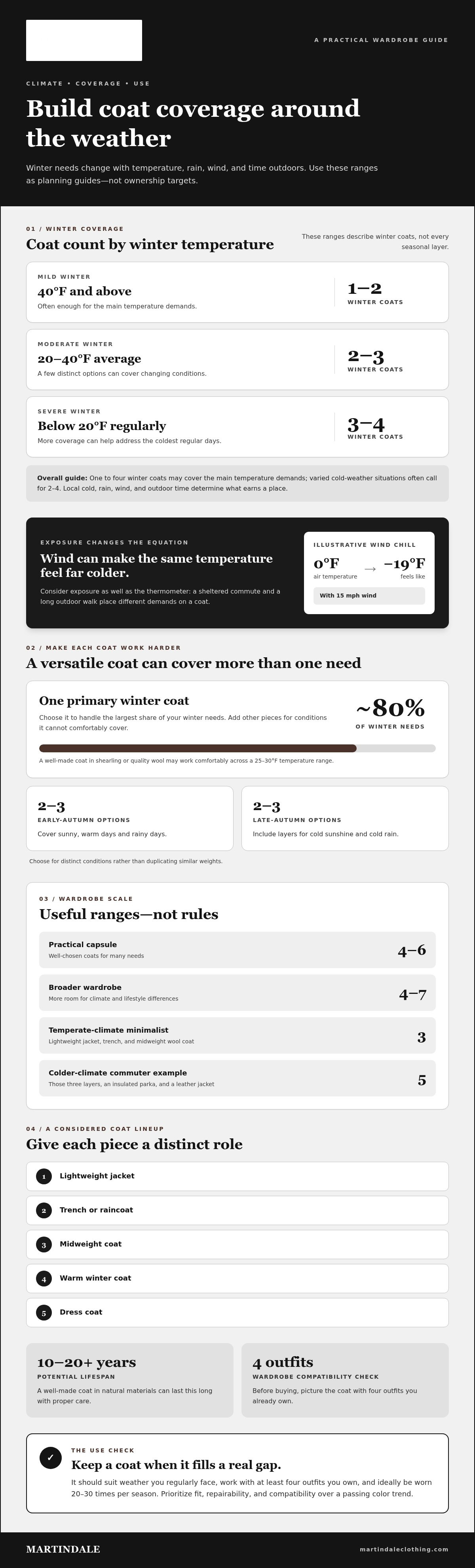
The answer to “how many coats does a woman need” depends on climate. In mild, moderate, and severe winters, one to four winter coats can cover the main temperature demands. The deciding factors are local cold, rain, wind, and time spent outdoors.
For places with mild winters of 40°F and above, one to two coats often suffice. In moderate winters averaging 20-40°F, two to three coats serve most needs. Where winter temperatures regularly fall below 20°F, three to four coats can be practical. These ranges describe winter coverage, not every seasonal layer.
Season changes create their own gaps. In early autumn, two to three coats can cover sunny, warm days and rainy days. Late autumn may call for another two to three options, including layers for cold sunshine and cold rain. Rather than duplicating similar weights, choose pieces suited to distinct conditions.
Wind can make a temperature feel markedly colder. A 0°F day with 15 mph wind can feel like -19°F, so consider exposure alongside the thermometer. Wind can make cold weather feel more uncomfortable, especially in exposed places. A sheltered commute and a long walk outdoors place different demands on the same winter coat.
A well-made coat in materials such as shearling or quality wool can perform comfortably across a 25-30°F temperature range. That flexibility can reduce overlap, especially when layering helps one coat serve changing conditions. Still, most people need 2-4 winter coats for varied cold-weather situations. Let the primary winter coat handle roughly 80% of winter needs, then add pieces for conditions it cannot comfortably cover.
So, how many coats does a woman need when winter brings several kinds of weather? Compare your coldest regular days with your wettest and windiest ones. Note which conditions overlap, such as cold rain during a daily walk. Choose for the common combination first, then reserve another coat for a distinct need, such as severe cold. This gives each piece a clear purpose throughout the season.
4. Minimalist, balanced, and curated coat wardrobes
There’s no single correct number of coats for every woman. A practical capsule wardrobe of 4-6 well-chosen coats covers many needs, while a broader 4-7 coat wardrobe allows more room for climate and lifestyle differences. Treat these as useful planning ranges, not a measure of how much anyone should own.
In a temperate climate, a minimalist wardrobe can begin with three pieces: a lightweight jacket, a trench, and a midweight wool coat. Each has a distinct role as conditions change. In a colder climate, a commuter might build toward five: those three layers, an insulated parka, and a leather jacket. Let your daily exposure to the weather guide what you add.
Before buying, make a simple use check. Choose a coat only if it fills a real gap, works with at least four outfits already in your wardrobe, and suits the weather you regularly face. A coat should ideally be worn at least 20-30 times per season before buying another. If an existing piece already does its job, a new one may add duplication rather than useful coverage.
- Keep the dependable pieces: retain coats that serve work, errands, and weather needs.
- Review the rarely worn: note whether an unusual color or occasion limits an item’s use.
- Leave room for delight: include one coat that brings you joy, alongside practical layers.
A curated wardrobe can still have character. Add one or two distinctive pieces after covering the essentials, rather than collecting several coats for the same conditions. A patterned coat, for example, can add personality when it coordinates with clothes you already wear. Aim for practical coverage, regular use, and a little individuality.
Use the next season as a quiet wardrobe audit: note which coats you reach for and which stay untouched. If a coat hasn’t served its intended role, adjust your collection to suit your actual routine. This keeps your choices considered, rather than letting unused pieces determine what comes next.
Martindale: Women's Coats
Martindale offers women’s coats for those building a considered wardrobe around enduring outerwear. Its selection includes wool coats and satin bomber jackets for distinct roles, from a refined layer to a more relaxed jacket. Each garment is ethically produced and sewn in America, with a focus on quality and longevity rather than fast-changing trends.
If your wardrobe needs a dependable wool layer, explore the women’s coat collection and consider which piece best complements the clothes and occasions you already wear. A considered choice should earn its place through regular use and a clear purpose.
Explore Martindale’s collection to choose a coat that suits your wardrobe.
Choose the Coat That Earns Its Place
How many coats a woman needs is a personal wardrobe decision, but the next step is simple: identify the piece that would add the most purpose to what you already own. Consider the coat you reach for most often, then notice where your wardrobe still feels incomplete. A thoughtful addition should suit your routine and feel at home with clothes you’ll continue to wear.
For a considered starting point, Martindale offers women’s coats and wool coats, alongside The Amelia Bomber Jacket in Mulberry Satin. Each offers a different way to shape a wardrobe around enduring personal style rather than fleeting trends. Choose the layer that feels most useful, whether that’s a refined wool coat or a distinctive satin bomber.
Explore the options at your own pace, and let your everyday wardrobe guide the decision. Contact Martindale for help choosing a considered next piece, and take the next step toward a wardrobe that feels distinctly yours.
Frequently Asked Questions
How Many Winter Coats Do You Need?
Two to four winter coats can cover a range of cold-weather situations. The right mix depends on whether you need separate protection for wet weather, severe cold, or formal occasions. For example, a primary coat can handle ordinary days, while a second serves a distinct need, such as freezing rain. Choose for the conditions you encounter, rather than building a fixed set.
Is it better to have one expensive coat or several cheaper ones?
One well-made coat may be the better choice if it suits your climate, fits comfortably over your usual layers, and works for frequent occasions. Several less costly coats make sense when your routine calls for different functions, such as rain protection and formal wear. Compare construction, care requirements, and expected use, then choose the option that fills real wardrobe gaps without creating unworn duplicates.
What is a practical budget for buying a women's coat wardrobe in the US?
A practical budget depends on the coats you need and what you can comfortably spend, not on a universal dollar figure. Start by identifying your most urgent gap, such as inadequate rain protection or a coat for professional settings. Set a spending limit before shopping, then prioritize fit, material, and expected wear. Add other coats only as needs arise.
How can women choose versatile coats that work for multiple occasions?
Try each candidate with complete outfits for work, errands, and an evening occasion. Check that the shoulders allow movement over a sweater, the sleeves work with your usual layers, and the hem suits the clothes you wear most. Pockets and closures should also feel practical for your routine. A coat that looks composed indoors and feels comfortable outdoors can serve more than one role.


