


What if a dependable work wardrobe came from repeating the right outfits, not owning a prescribed number of pieces? Building a minimalist professional wardrobe starts with your real workdays: what your role requires, how often you’re in the office, and what feels appropriate for your climate and workplace.
A full closet can still leave you unsure what to wear. Generic capsule lists don’t account for your routines, dress expectations, or the clothes you already rely on. The goal isn’t to discard everything or buy a matching set of basics. It’s to identify what earns its place, what needs replacing, and which gaps make getting dressed harder.
This guide will help you map your work outfits, identify repeatable formulas, and make considered choices about fit, versatility, and lasting quality. From a linen blazer that suits your setting to outerwear that works across seasons, each piece should serve a purpose. The result is a more coherent wardrobe shaped around your life, not a rigid item count.
Why a Minimalist Professional Wardrobe Should Fit Your Real Workdays
A minimalist professional wardrobe is a considered rotation of work clothes chosen to meet the demands of your schedule. It isn’t a closet reduced to an arbitrary number. A smaller wardrobe is useful only when its pieces make getting dressed easier and suit the occasions you actually face.
Working definition: A professional wardrobe is a considered rotation of clothes that meets your workplace’s expectations and everyday routines. A generic capsule is simply a small group of pieces designed to mix and match.
The general idea of a capsule wardrobe offers a helpful starting point, but professional dressing adds specific considerations. Your role, client meetings, commute, climate, and laundry routine all affect what earns a place. A linen blazer may be a useful layer in one workplace and unnecessary in another. A coat that suits your regular commute may matter more than another indoor outfit.
Start with your working life, not a universal checklist
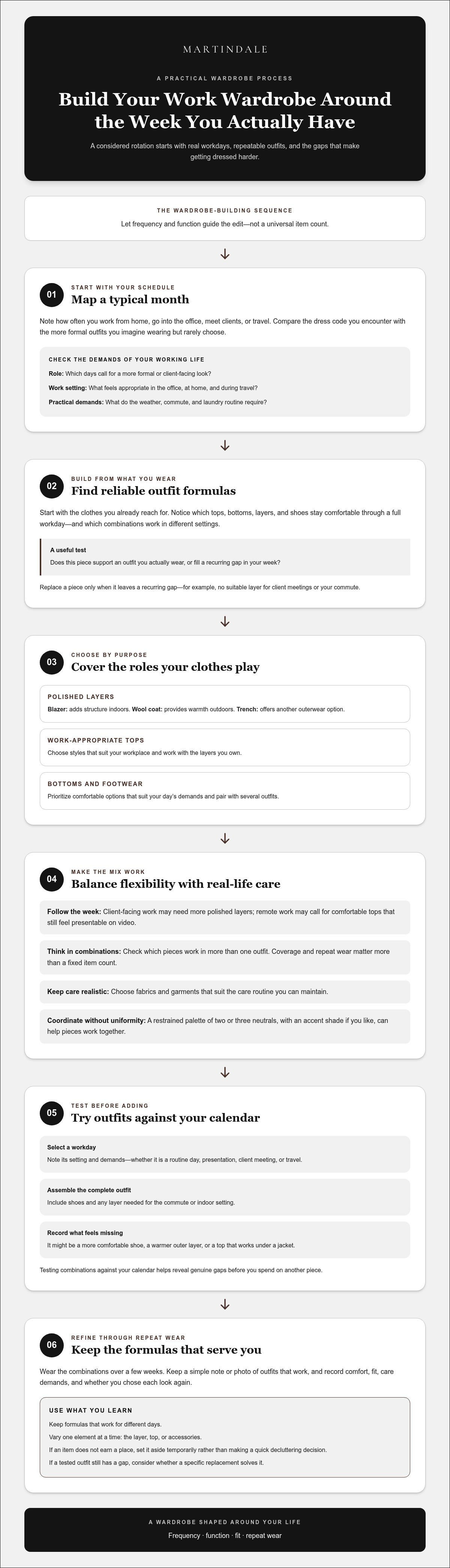
Before sorting or shopping, map a typical month. Note how often you work from home, go into the office, meet clients, or travel. Then compare the dress code you encounter with the more formal outfits you imagine wearing but rarely choose. Build for your real pattern first.
- Role: Identify the days that call for a more formal or client-facing look.
- Work setting: Record what feels appropriate in the office, at home, and during travel.
- Practical demands: Consider the weather, commute, and how often you do laundry.
These details reveal which outfit formulas are worth repeating and which gaps genuinely disrupt your week. They also make decisions about keeping, repairing, or replacing a garment more deliberate. When building a minimalist professional wardrobe, let frequency and function guide the edit, not a universal checklist. A well-chosen wool coat or trench can complement work clothes across seasons, while a considered replacement can help you avoid impulse purchases.
Choose the Core Pieces for a Minimalist Professional Wardrobe
Build from clothes you already reach for. Note which tops, bottoms, layers, and shoes feel comfortable through a full workday, then identify combinations you can wear in different settings. Replace a piece only when it leaves a recurring gap, such as having no suitable layer for client meetings or your commute.
Think in functions rather than a fixed shopping list:
- Polished layers: A blazer can add structure indoors; a wool coat or trench serves as outerwear.
- Work-appropriate tops: Choose styles that suit your workplace and work with the layers you own.
- Bottoms and footwear: Prioritize comfortable options that suit your day’s demands and pair with several outfits.
Build a flexible framework instead of copying a set number
Your weekly schedule determines the balance. A client-facing role may call for more polished layers, while remote work may place greater emphasis on comfortable tops that still feel presentable on video. Start with the outfits you need for a typical week, then check which pieces work in more than one combination. There’s no universal item count; coverage and repeat wear matter more.
Choose layers for the settings you actually encounter
A blazer is an indoor layer for a more structured look, while a wool coat provides warmth outdoors and a trench offers another outerwear option. Choose by setting and climate, not trend status. For a closer look at a blazer’s role in professional dressing, see The American-Made Women’s Blazer: A Study in Ethical Tailoring and Wardrobe Permanence.
Keep fabric and care in view, too. A garment you wear often should suit the care routine you can maintain. A restrained palette of two or three neutrals, with an accent shade if you like, can help pieces coordinate without making every outfit identical. For a considered layer, explore women’s coats and linen blazers. When replacing a worn piece, weigh its versatility, construction, and how it fits with clothes you already own.
Create Repeatable Work Outfits Without Making Your Wardrobe Feel Repetitive
Reliable outfits come from testing clothes in context, not simply arranging pieces by color. A blazer, familiar top, and tailored trousers might suit a presentation; the same trousers with a softer layer may feel right for an ordinary office day. Changing one piece can shift the look without requiring an entirely different wardrobe.
Test combinations against your actual calendar
Choose outfits for the days you really have, including routine workdays and any presentations, client meetings, or travel. Follow your workplace’s expectations rather than an imagined professional uniform. Use this simple method:
- Select a workday from your calendar and note its setting and demands.
- Assemble a complete outfit, including shoes and any layer needed for the commute or indoor setting.
- Record what feels missing, such as a more comfortable shoe, a warmer outer layer, or a top that works under a jacket.
Testing outfits against your calendar helps reveal genuine wardrobe gaps before you spend on another piece.
Use a short trial period to refine the wardrobe
Wear the combinations over a few weeks and keep a simple note or photo of outfits that work. Record comfort, fit, care demands, and whether you chose each look again. This can make rushed mornings easier and show which clothes stay unworn despite seeming versatile. If an item doesn’t earn a place, set it aside temporarily rather than making a quick decluttering decision. You may understand its usefulness better after trying other combinations.
Building a minimalist professional wardrobe is an ongoing edit. Keep the formulas that serve different days, then vary one element at a time: change the layer, top, or accessories while retaining a dependable base. If outerwear is the missing piece in a tested outfit, explore women’s coats and jackets and consider which style suits your routine.
Make Thoughtful Additions That Support a Lasting Professional Wardrobe
A new garment should solve a specific problem, not simply promise a fresh start. Before buying, name the outfit that’s incomplete and consider how often you need it. If your rotation lacks a layer for client meetings, for example, ask whether a blazer would serve that need regularly or whether something you own already works.
Replace deliberately rather than rebuilding everything at once
Prioritize what’s worn out or consistently unsuitable before adding a new category. Replace a coat that no longer serves your commute before buying a second layer for an occasional event. A gradual approach gives you time to understand each gap, respect your budget, and avoid unnecessary wardrobe turnover. Building a minimalist professional wardrobe is less about starting over than making each replacement count.
Let craftsmanship and ethics inform the choice
Look beyond first impressions. Consider fit and comfort across a full workday, the material’s suitability for your climate, the care it requires, and how many existing outfits it can join. Think about how often you expect to wear it, without assuming any garment has a guaranteed lifespan. Ethical production and the way a piece is made are also meaningful considerations when replacing something you rely on.
A linen blazer may be useful in a workplace that welcomes a lighter professional layer; a wool or trench coat may better answer an outerwear need. Neither is a universal capsule requirement. Martindale’s women’s garments are designed and sewn in the United States, with an emphasis on ethical production and enduring design. The collection includes options such as the Josephine Linen Blazer, the Patrice Wool Coat, and the Maggie Glen Plaid Trench in English Wool. For more on the professional role of wool outerwear, read The Professional Women’s Wool Coat: Why Made in USA is the Ultimate Career Investment for 2026.
Let the wardrobe you’ve tested guide your next choice. If a considered layer fills a genuine gap, explore the women’s clothing collection at your own pace.
Let Your Next Wardrobe Choice Earn Its Place
Make your next step small and deliberate: choose one dependable outfit that already works, then consider what would make it more useful for the days ahead. Building a minimalist professional wardrobe isn’t a finished project or a test of restraint. It’s a practice of noticing what serves you and choosing with care when something no longer does.
A considered addition should fit your routine, not require you to build a new one around it. Martindale’s women’s garments are designed and sewn in the United States, with ethical production at their center. Materials include English wool, linen, and mulberry satin, each offering a different texture and use in a wardrobe.
When a genuine gap appears, choose a piece that fits your work life and values. Explore Martindale’s women’s clothing collection and find a considered layer for your wardrobe. Your next addition can be a wool coat, trench, satin bomber jacket, or linen blazer, chosen to work with the clothes you already wear.
Frequently Asked Questions
How many pieces should a minimalist professional wardrobe have?
There’s no ideal number; count the pieces that cover your work needs, not a target set by someone else. Decide what you’re counting first: some people include shoes and outerwear, while others count clothing only. Then check whether your rotation includes enough clean, appropriate options between laundry days. A wardrobe that fits your schedule may have more pieces than a strict capsule and still feel minimal.
Can a minimalist professional wardrobe work for a business-casual office?
Yes. Business casual leaves room to repeat comfortable foundations while adjusting polish for the day. For example, a top and trousers might work for a regular office day, with a blazer added for a presentation if that suits your workplace. Pay attention to what colleagues wear in comparable roles and to any expectations for meetings. Building a minimalist professional wardrobe can support business casual without making every outfit formal or identical.
How do I build a work wardrobe without replacing all my clothes?
Keep wearing what fits your current work life, then test it with the pieces already in your closet. If an outfit feels incomplete, write down the exact problem before shopping: perhaps the shoes don’t suit a long walking commute, or a top feels too casual for a scheduled meeting. Address one recurring gap at a time. This lets useful clothes remain in rotation while you make gradual, purposeful changes.
What colors work best in a minimalist professional wardrobe?
Choose colors you enjoy wearing and can combine with several items you already own. Navy, charcoal, cream, brown, and muted green can form a calm base, but you don’t need to use them all. Lay your most-worn pieces together in natural light and see which shades coordinate easily. A favorite accent color can add distinction; the aim is a palette that supports outfits, not a rule that every piece must match.


