


What if the first step in building a professional wardrobe wasn’t shopping, but looking closely at the workweek you already have? If you’re unsure what your workplace considers appropriate, a long list of supposed essentials can make getting dressed feel more complicated, not less. Learning how to build a professional wardrobe from scratch starts with your routine, dress code, and the outfits you’ll reach for repeatedly.
You don’t need a closet full of new clothes to look polished. You need a practical way to choose pieces that work together, suit your environment, and feel comfortable through the day. Build gradually, using fit, fabric, and repeat wear to guide each decision instead of impulse or arbitrary rules.
This guide will help you identify the level of formality your workplace calls for, plan around the days you work in person, and prioritize versatile foundations. You’ll also learn when a blazer or coat can serve as a useful finishing layer, rather than treating either as a mandatory purchase.
Start a Professional Wardrobe by Understanding Your Workweek
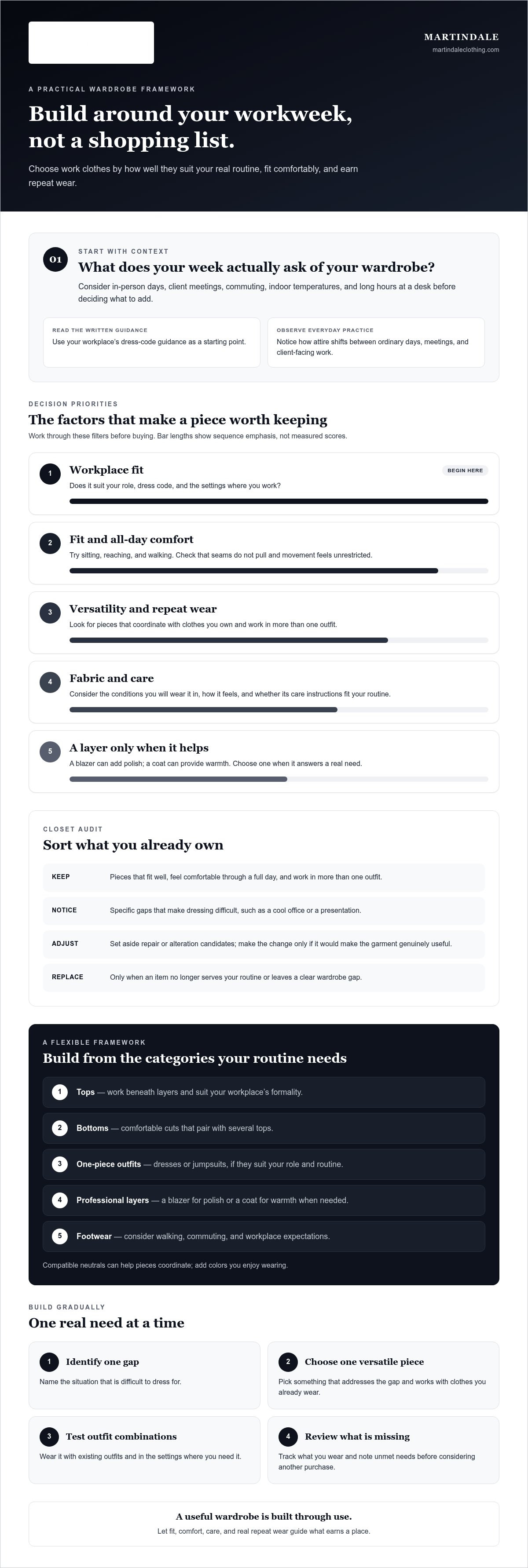
Starting from scratch might mean a new role, a changed dress code, or a reset after realizing your closet no longer serves your workdays. Before buying anything, map the week you need to dress for. Daily client meetings call for different options than occasional office days. Commuting, indoor temperatures, and long hours at a desk also affect what you’ll actually wear. That context is the foundation of how to build a professional wardrobe from scratch without accumulating pieces that stay on the hanger.
Begin with a quick closet audit. Write down what you own, what you reach for, and what gets in the way. Note:
- Work-appropriate pieces you wear often and feel comfortable in.
- Specific gaps that make outfits difficult, such as a layer for a cool office or a polished option for presentations.
- Fit issues, repairs, or pieces that could become more useful with an adjustment.
- Items that no longer suit your role, routine, or workplace expectations.
Then observe your workplace before shopping. Review written guidance, notice common outfit patterns, and compare everyday attire with what people wear for meetings or client-facing days. This helps you distinguish a real wardrobe need from an item that only seems essential on a shopping list.
How to read a workplace dress code before shopping
Dress-code labels aren’t universal. A formal workplace may expect tailored suits or structured dresses; business casual often allows polished separates; a creative office may welcome more individual expression. The Business casual dress code overview offers useful context, but daily practice matters most. Notice what colleagues wear across different settings, then consider your own role. A client presentation may call for a sharper layer than an internal workday.
What to keep, tailor, or replace in your current closet
Keep garments that fit well, feel comfortable through a full day, and work in more than one outfit. Set aside pieces that need a simple alteration, then ask whether the change would make them genuinely useful. Replace something only when it no longer serves your routine or leaves a clear gap. You don’t need to discard personal clothes wholesale. A blazer or coat can finish an existing outfit when your workday calls for one.
Choose Professional Wardrobe Essentials for Versatility and Fit
Once you understand your workweek, build a flexible framework rather than following a fixed shopping list. Consider five categories: tops, bottoms, one-piece outfits, professional layers, and footwear. You might rely on separates for daily office wear or prefer dresses on presentation days. Start with the categories your routine requires, then choose pieces that coordinate with what you already own.
- Tops: Choose options that work beneath layers and suit your workplace’s level of formality.
- Bottoms: Prioritize comfortable cuts that pair with several tops.
- One-piece outfits: Dresses or jumpsuits can simplify dressing if they fit your role and routine.
- Professional layers: A blazer can add polish, while a coat can provide warmth when needed.
- Footwear: Consider how much you’ll walk, your commute, and your workplace’s dress expectations.
A cohesive palette makes this framework easier to use. Choose a few compatible neutrals, then add colors you enjoy wearing. Check silhouettes as well: a structured layer should fit over the tops you own, and each bottom should pair with more than one option. Before buying, weigh workplace fit, comfort, care requirements, and realistic repeat wear. No single color, garment, or number of pieces works for everyone. This practical approach is central to how to build a professional wardrobe from scratch.
How to choose a blazer or professional layer
A layer can bring a familiar outfit into focus, whether you’re heading to a meeting or handling an ordinary office day. Try it over the tops you wear most often. Check that it sits comfortably, allows you to move freely, and coordinates with clothes already in your closet. A linen blazer may suit some work settings and seasons; a wool coat can serve as an outer layer in cooler conditions. For more on considered construction, explore this American-made women’s blazer guide.
How to assess fit and fabric before committing
Try sitting, reaching, and walking in a garment. Notice whether seams pull, fabric drapes comfortably, or the piece feels restrictive over the layers you’d wear to work. Consider the conditions you’ll wear it in, including indoor temperatures and travel, and read the care instructions before deciding. The U.S. Office of Personnel Management’s professional guidance offers a reference point for attire in federal workplaces, though expectations vary by role and organization.
Repeat wear depends on both a comfortable fit and care you can realistically maintain. A finishing layer can be one useful part of a work wardrobe. Choose one when it addresses a specific need and works with the outfits you already wear.
Build Your Professional Wardrobe Gradually with Repeatable Outfits
A considered wardrobe takes shape through use, not a single shopping trip. Let each purchase answer a real need, then give it time to prove its place. This staged approach to how to build a professional wardrobe from scratch keeps choices connected to your actual workdays.
- Identify one gap. Name the situation that’s difficult to dress for, such as a client meeting or a cool commute.
- Choose one versatile piece. Select an item that addresses the gap and works with clothes you already wear.
- Test outfit combinations. Wear it with several existing outfits and in the settings where you need it.
- Review what’s still missing. Track what you wear and note unmet needs before considering another purchase.
A few compatible garments can create distinct looks. Pair a familiar top and trousers with a simple layer for a routine office day; wear the same base with a more structured blazer for a presentation; for a formal meeting, choose the sharpest combination your workplace expects. Changing a layer or accessory can shift the impression without requiring a separate outfit for every occasion. Photograph combinations that work or keep a brief outfit note to make weekday dressing easier.
How to create outfit formulas for different workdays
Think in repeatable formulas, not rigid uniforms. For example, wear a top, trousers, and a comfortable layer for an ordinary day; choose a polished one-piece outfit with a blazer for a presentation; or use your most formal work-appropriate base with a refined finishing layer for a significant meeting. Adapt each formula to your role, climate, and dress expectations, then note which combinations feel right.
How to make each new purchase earn its place
Before adding an item, try matching it with several pieces already in your closet. Ask whether it suits your work, feels comfortable for the hours you’ll wear it, is manageable to care for, and is likely to be worn often. A blazer or coat can be a useful finishing layer when it works with your outfits, but it isn’t an obligation. Martindale’s women’s outerwear and apparel includes wool coats, trench coats, and linen blazers. Gradual purchasing gives you room to assess what you actually wear before deciding what comes next, without imposing a fixed wardrobe size.
Make a Professional Wardrobe More Lasting with Considered Layers
A professional layer earns its place by answering a real need, not by appearing on a universal checklist. A coat may matter if your commute involves cold or wet weather; a blazer may be useful if you often need a more formal finish. If neither fills a gap in your workweek, there’s no need to prioritize one. A thoughtful choice supports the clothes you already wear rather than creating a new outfit problem.
When a coat or blazer adds practical value
Start with your conditions: consider the climate, commute, indoor temperature, and whether you need room for layers. A wool coat can be a useful outer layer in colder weather, while a trench coat may suit transitional conditions. A linen blazer can add a composed finish to work outfits in settings where its formality and feel are appropriate. For guidance on choosing a classic option, see this classic women’s trench coat guide. Compare any layer with your existing wardrobe and workplace expectations before deciding.
Ethical production and American craftsmanship can also inform a purchase. They offer context about how a garment is made, but don’t automatically determine how well it will suit your needs over time. Fit, care, frequency of wear, and suitability for your routine all matter. A considered purchase solves a real wardrobe need; a higher price alone doesn’t make a garment a better choice.
A thoughtful next step for building your wardrobe
Keep the process simple: understand your workweek, assess your closet, fill one genuine gap, then review how your outfits perform. That sequence makes how to build a professional wardrobe from scratch less about buying a prescribed set of essentials and more about choosing deliberately. Martindale’s ethically made American outerwear and apparel includes wool coats, trench coats, and linen blazers. When a layer is right for your wardrobe, it can complement the clothes you already own. Explore Martindale’s collection to find a considered layer that suits your needs.
Let Your Work Wardrobe Take Shape with Intention
Your wardrobe doesn’t need to be finished all at once. Let the way you work and dress guide its next chapter: notice which outfits make you feel prepared, then build on them with patience. That is the lasting lesson in how to build a professional wardrobe from scratch. Thoughtful choices are not measured by how quickly a closet fills, but by how naturally each piece becomes part of your working life.
If a coat or blazer is the layer your wardrobe needs, consider how it will work with the clothes you already wear and the settings you dress for. Martindale’s garments are ethically manufactured in the United States and include wool coats, trench coats, satin bomber jackets, and linen blazers. Choose a layer that complements your wardrobe and routine. Explore thoughtfully made women’s clothing and take your next step with care. Your professional style can grow steadily, one well-considered choice at a time.
Frequently Asked Questions
How many outfits should a professional wardrobe have?
There’s no universal number of outfits for a professional wardrobe. Your needs depend on how often you work on-site, laundry routines, dress-code expectations, and how comfortable you are repeating looks. Count workable combinations rather than garments: a blazer worn with two different bottoms creates more options than two pieces that only match each other. Add something only when a real gap appears.
Can you build a professional wardrobe without wearing a suit?
Yes, a suit isn’t required in every workplace. Polished separates, such as tailored trousers with a neat top, can suit many professional settings; a dress or coordinated layers may work just as well. For example, an office with a relaxed daily dress code may call for a sharper combination only on presentation days. Follow your workplace’s expectations and choose clothes that feel appropriate and comfortable.
What should you wear to a job interview if you don’t know the dress code?
Choose a neat, slightly more polished version of what people in the role are likely to wear day to day. Look at the organization’s public-facing materials and staff photos for clues about its culture, then consider the position’s responsibilities. Well-fitting, comfortable clothes help you focus on the conversation. A blazer or other professional layer can add polish when it suits the setting, but formal businesswear isn’t always necessary.
How can you dress professionally in a creative workplace?
Professional presentation can make room for personal style. Observe how people in your team dress, then use a cohesive outfit and a comfortable fit as steady foundations. You might express yourself through color, pattern, or a distinctive layer, adjusting the balance for your role and the day’s work. Creative workplaces differ, so context matters more than following a fixed uniform or assuming every expressive choice will suit every setting.
Is it better to buy a professional wardrobe all at once or gradually?
For most people, gradual purchasing makes it easier to avoid rushed choices and notice what’s genuinely missing. Start with the work situations you encounter most, then see how your current clothes perform through regular wear. If an outfit works for a routine day but not a client presentation, that points to a clearer need. Learning how to build a professional wardrobe from scratch doesn’t require a complete closet before you can look prepared.


