

The most expensive garment in your collection is often the one you only wear for a single season before it loses its shape. You likely seek a silhouette that offers both a calm authority and a shield against the elements. It is a common struggle to decide whether the biting wind requires the dense warmth of sheep's wool or if a lighter, water-resistant layer is more appropriate for the shifting 2026 climate. High-quality outerwear should be a partnership that lasts for years, not a temporary fix for a single winter.
In the debate of trench coat vs wool coat, the right choice depends on a deep understanding of material heritage and your local environment. This guide provides the clarity you need to invest in a piece that aligns with slow-fashion values and commands respect. We will compare the architectural structure of the Eleanor Wool Coat against the versatile grace of the Lou Trench, ensuring your next purchase is a definitive statement of intent. By focusing on garments designed for a lifespan exceeding eight years, you choose stability over the frantic cycles of the modern industry.
Defining the Icons: The Heritage and Purpose of Trench vs. Wool Coats
The choice between a trench coat vs wool coat isn't merely a matter of aesthetics. It's a decision about how you interface with your environment. Both garments serve as protective armor, yet they speak different dialects of utility. While one prioritizes fluid movement through the rain, the other offers a steadfast sanctuary against the cold. In a 2026 market flooded with disposable layers, choosing heritage is a quiet revolution. It's an embrace of slow fashion that views a coat as a decades-long partnership rather than a fleeting transaction.
The Trench Coat: Sophistication in Motion
The trench coat represents a legacy of disciplined utility. Features like epaulets and storm flaps weren't designed for style; they were engineered for survival in the elements. Understanding the History of the Trench Coat reveals a garment that moved from the battlefield to become a cornerstone of the modern professional wardrobe. Our Lou Trench and Maggie Glen Plaid Trench honor this lineage. They offer a lightweight, water-resistant barrier that maintains a sharp silhouette during the nuanced shifts of spring and autumn.
The Wool Coat: A Masterclass in Permanence
If the trench is about motion, the wool coat is about architectural presence. The weight and density of high-quality wool provide a structural permanence that lighter fabrics simply cannot replicate. Pieces like the Patrice and Eleanor Wool Coats serve as the ultimate thermal barrier against biting winter winds. They rely on the natural integrity of premium English wool to retain heat while resisting the pilling that plagues low-grade alternatives. Investing in these ethically crafted wool coats ensures your wardrobe remains grounded in substance and moral discernment for years to come. It's a commitment to a garment that grows more meaningful with every winter it weathers.
Performance and Material Science: Gabardine vs. English Wool
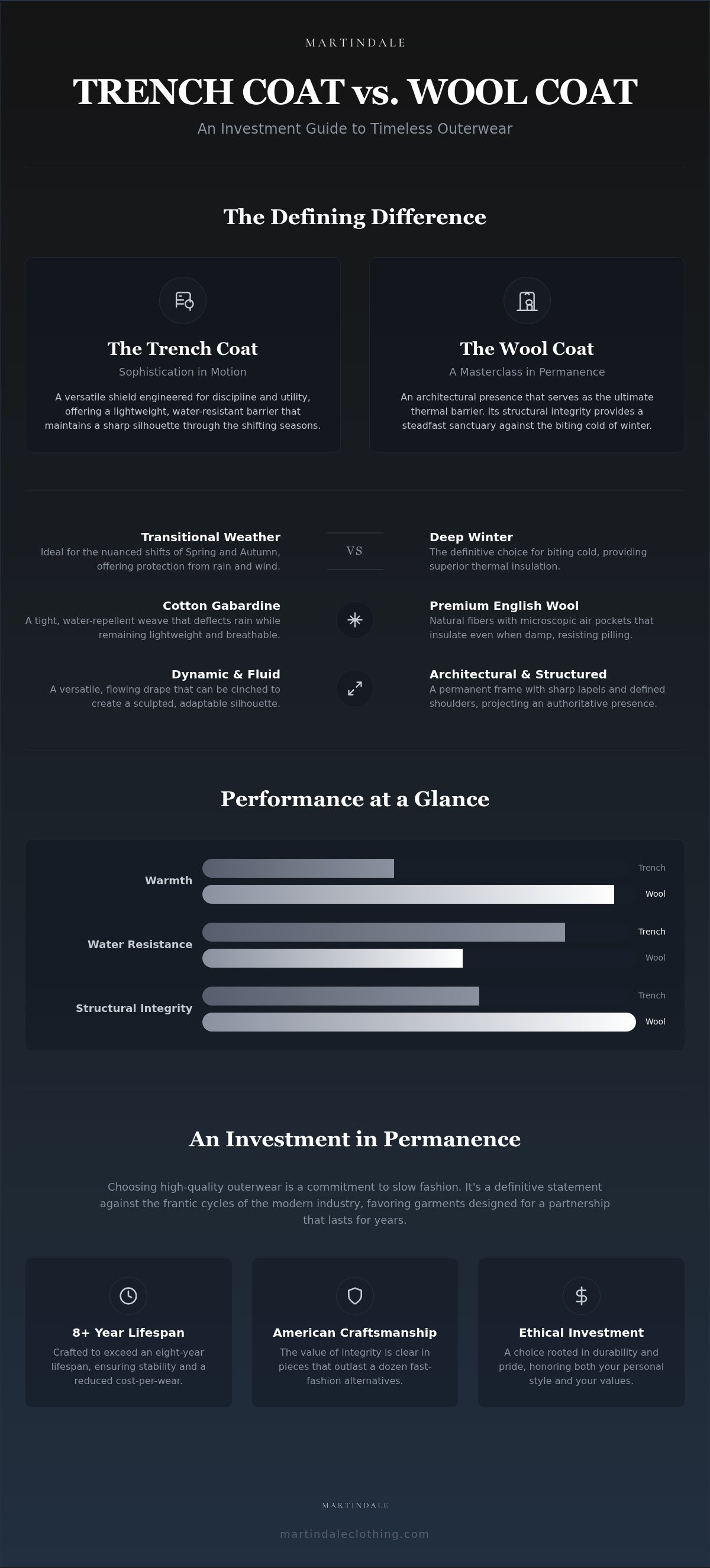
The physics of a garment dictates its longevity. While traditional cotton gabardine relies on a tight, water-repellent weave to deflect rain, wool offers a more complex biological solution. Its natural crimp creates microscopic air pockets that insulate even when damp. Understanding the material science of a trench coat vs wool coat allows you to select a piece that truly masters your local climate. It's a choice between surface protection and internal thermal regulation.
The Science of Warmth and Weather Resistance
Wool is a living fiber. It manages moisture by absorbing vapor into its core while the outer layer remains dry. This makes it an ideal choice for the unpredictable humidity and shifting temperatures of 2026. For those seeking a lighter shield during autumn, the Lou Trench in Camel provides the perfect weight. It offers significant wind resistance without the structural weight of a heavy winter layer, acting as a sophisticated transition piece for the professional woman.
English Wool: The Martindale Differentiator
We refuse to accept the industry standard that a trench must be cotton and a wool coat must be heavy. The Maggie Glen Plaid Trench in English Wool bridges this divide. It combines the sophisticated silhouette of a trench with the thermal integrity of high-density English wool. This premium material resists pilling and maintains its luster far longer than the synthetic blends found in mass-market retail. It's a choice rooted in durability and ethical pride.
Choosing between a trench coat vs wool coat is ultimately an investment in your future self. When you evaluate the cost-per-wear of American-made pieces, the value of integrity becomes clear. A single, well-crafted investment outlasts a dozen fast-fashion alternatives that lose their shape after a few months. You can shop the full collection of American-made outerwear to find a piece that honors both your style and your values.
Architectural Tailoring: Silhouette, Drape, and Professional Presence
The aesthetic impact of a trench coat vs wool coat is defined by the tension between structure and movement. A wool coat acts as a permanent frame. Its natural stiffness supports sharp lapels and defined shoulders that won't sag after a morning commute. Conversely, a trench offers a dynamic fluidity. By cinching the belt, you transform a utilitarian shield into a sculpted silhouette that moves with a rhythmic grace. Choosing between them is a choice between architectural stability and versatile motion.
Structured Sophistication: The Patrice and Eleanor
In high-stakes professional environments, your outerwear is the first indicator of your standards. The Eleanor Wool Coat in Noir serves as a definitive benchmark for this presence. It utilizes the architectural density of wool to maintain a crisp, authoritative line. While the Patrice in Chestnut offers a rich, textural depth, both pieces provide the structural permanence required for a serious career. You can read why American-made wool is the ultimate career investment for the modern leader.
The Versatile Drape of the Lou and Maggie
The trench coat thrives on its ability to adapt. The Lou Trench in Camel excels at elevating casual evening attire, providing a polished edge without the rigidity of winter-weight fabrics. For those who desire the pattern of a heritage weave, the Maggie Glen Plaid Trench offers a visual complexity that remains grounded in tradition. A proper fit is essential here. The garment must drape without drowning the wearer, ensuring you remain the master of the silhouette. To build a wardrobe that commands respect, explore our full collection of investment outerwear and choose a piece designed to last a lifetime.
The Investment Perspective: Why American Craftsmanship Outlasts the Trend
True luxury is often invisible. It exists in the tension of a seam and the ethical treatment of the hands that sew it. Choosing between a trench coat vs wool coat is an exercise in discerning quality from mere consumption. While mass production favors speed, American craftsmanship prioritizes the human element. Every garment designed and sewn in the USA undergoes a level of scrutiny that global factories simply cannot replicate. It's a difference you can feel in the weight of the drape and the longevity of the fiber.
The Ethics of Domestic Manufacturing
Our commitment to domestic production creates a superior final product. It's a rejection of the disposable. In 2026, the cultural trend has shifted toward total transparency. Slow fashion isn't just a niche choice anymore; it's the hallmark of modern luxury. You aren't just buying a layer. You're entering a partnership with a brand that values permanence over profit. This ethical alignment ensures your wardrobe reflects your principles as much as your aesthetic.
Curating a Lifetime Wardrobe
Before you commit to a purchase, evaluate three specific metrics: fiber provenance, construction integrity, and design origin. Look for high-density English wool that resists pilling. Check for reinforced seams that hold their shape through years of wear. A coat should be as relevant in a decade as it is today. High-quality construction is the only true antidote to the frantic cycles of modern retail.
The final verdict depends on your climate and professional needs. Choose the Patrice Wool Coat in Chestnut if you require a definitive winter shield with architectural permanence. Select the Maggie Glen Plaid Trench in English Wool if you value seasonal versatility and the heritage of a classic weave. Both represent a peak in the trench coat vs wool coat debate. They aren't just purchases. They are legacies.
Investing in a Legacy of Style and Substance
The choice between a trench coat vs wool coat ultimately rests on the specific demands of your lifestyle and the climate you inhabit. You now possess the clarity to distinguish between the versatile drape of a trench and the steadfast insulation of structured wool. True value is found in the integrity of the fiber and the ethics of the production line. It's a commitment to permanence over the temporary.
Our collections are ethically produced in the United States and crafted with premium English wool to ensure every piece meets the highest standards of durability. Whether you choose the presence of the Patrice or the heritage weave of the Maggie, you are making a definitive statement about your standards. We invite you to Shop Martindale's Collection of Premium American-Made Coats and secure a garment that will endure for decades. Your journey toward a more intentional, ethically crafted wardrobe begins with a single, considered choice.
Frequently Asked Questions
Is a trench coat warm enough for winter?
A traditional cotton trench coat is designed for wind and rain resistance rather than thermal insulation. It lacks the dense fiber structure required for sub-zero temperatures. However, pieces like the Maggie Glen Plaid Trench in English Wool provide a significant bridge. They offer the sophisticated silhouette of a trench with the natural heat retention of premium wool. For deep winter, a dedicated wool coat remains the definitive choice for warmth.
Should I choose a wool coat or a trench coat for professional environments?
Both garments command respect, but they serve different professional atmospheres. A structured wool coat like the Eleanor in Noir provides an architectural presence that feels definitive and stable in high-stakes meetings. The trench coat offers a more dynamic, versatile sophistication for the daily commute and transitional seasons. In the debate of trench coat vs wool coat, the choice depends on whether you value structural permanence or fluid, adaptable grace.
Do wool coats require more maintenance than trench coats?
Quality wool is remarkably resilient and naturally resists odors and stains, often requiring less frequent cleaning than cotton alternatives. While a trench coat may require specialized reproofing to maintain its water-repellent finish, a wool coat simply needs a sturdy hanger and an occasional brush to maintain its luster. Both investments thrive when treated with the care appropriate for a lifetime partnership rather than a single season of disposable wear.
Why is American-made outerwear considered a better investment?
American-made outerwear represents a commitment to ethical luxury and superior quality control. By sewing our garments in the United States, we ensure that every Patrice or Lou coat meets rigorous standards that mass production cannot replicate. This transparency in the production cycle guarantees a more durable final product. It's a rejection of the temporary in favor of a garment designed to be a permanent and meaningful fixture in your collection.
Can I wear a wool trench coat in the rain?
Wool is naturally water-repellent due to the crimp of its fibers, allowing it to handle light drizzle or damp conditions with ease. It retains its thermal properties even when moisture is present, unlike many synthetic blends that lose their shape. While a heavy downpour still requires the specialized weave of a traditional trench, our English wool pieces provide a sophisticated shield against the gray, humid days typical of early spring or late autumn.


