


A premium wool coat is not a seasonal purchase. It is a decade-long dialogue between the weaver's craft and the wearer's stewardship. Understanding how to care for a wool coat is essential for anyone who chooses heirloom pieces like the Patrice or Eleanor over the fleeting cycles of fast fashion. Yet, the quiet fear of moth damage or the sight of surface pilling can make the most confident owner feel a sense of hesitation. It's natural to feel protective of such a significant investment, especially when labels offer little guidance beyond generic cleaning instructions.
Mastering these intentional rituals is the final act of craftsmanship that transforms a garment into a lifelong legacy. This guide provides the knowledge needed to maintain the resilience of English wool and the sharp lines of traditional tailoring. You'll gain the confidence to handle minor stains at home and implement seasonal storage techniques that keep your outerwear pristine for decades. We're moving beyond basic maintenance into the realm of considered preservation.
The Daily Ritual: Brushing and Airing for Fiber Recovery
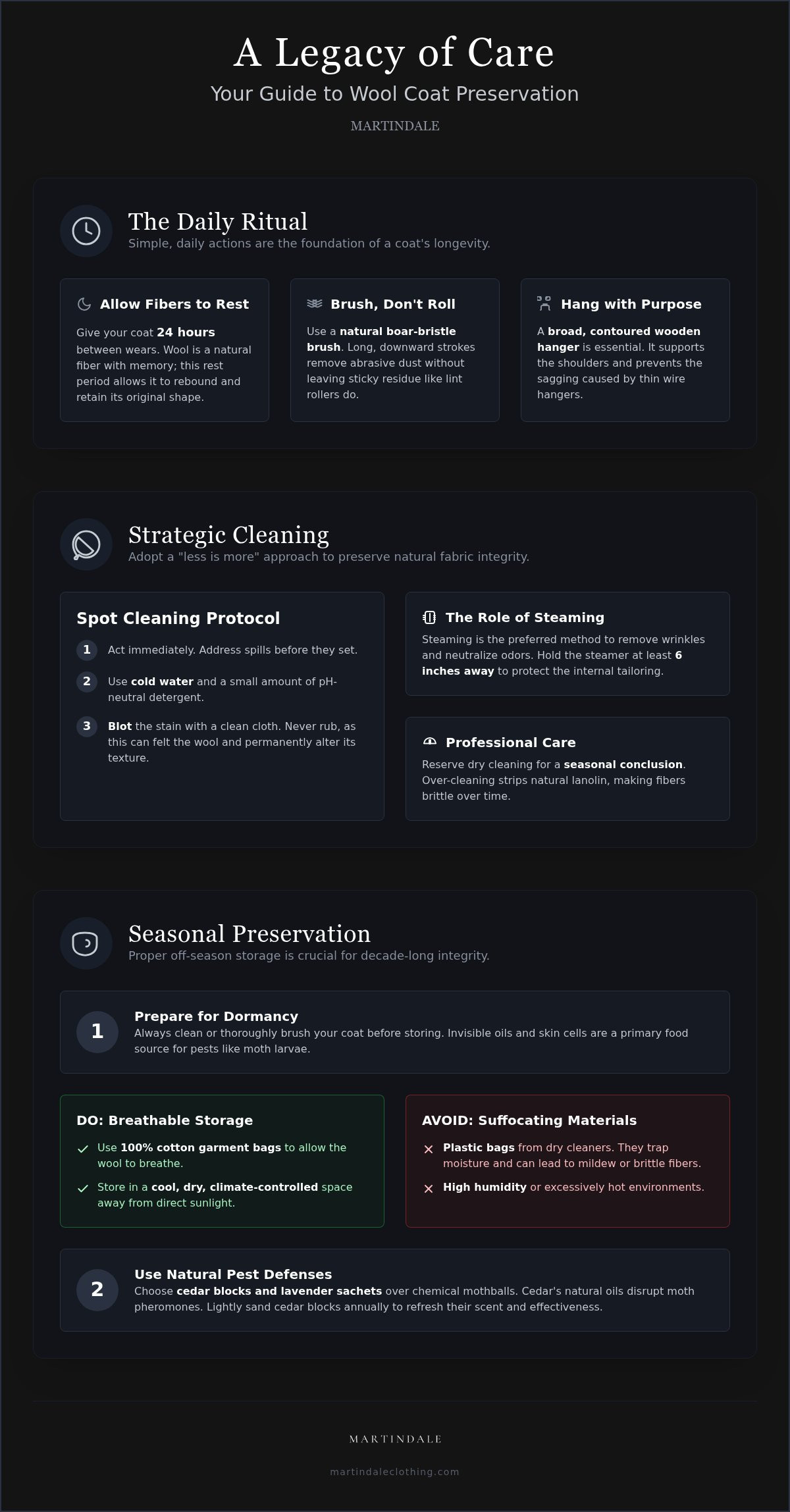
The most overlooked aspect of how to care for a wool coat is the concept of rest. Wool is a protein-based fiber. It has an inherent memory. When you wear a piece like the Patrice or Eleanor from our outerwear collection, the fibers stretch and compress. Giving your coat 24 hours between wears allows the properties of wool fiber to naturally rebound. This rest ensures the garment retains its architectural silhouette for years rather than months.
During this recovery period, brushing is your primary defense against wear. Microscopic dust particles settle into the yarns daily. These act as tiny abrasives that saw away at the fibers. While it's tempting to reach for a sticky lint roller, these leave a synthetic residue that attracts even more debris. A proper garment brush is a more considered choice for preserving the fabric's integrity.
The Art of the Garment Brush
Select a natural boar-bristle brush for your maintenance kit. Synthetic bristles are often too stiff; they can snag the delicate nap of a Maggie Glen Plaid Trench. Use long, rhythmic strokes in a single downward direction. This aligns the fibers and lifts away grit before it becomes embedded. It's a meditative practice that honors the craft behind the coat.
Hanging for Longevity
Gravity can be a slow saboteur. Wire hangers are the enemy of tailored shoulders. They concentrate the coat's weight onto a thin line, eventually causing the fabric to peak or sag. Using a broad, contoured wooden hanger is a fundamental part of how to care for a wool coat properly. These hangers mimic the human form, supporting the shoulder pads and maintaining structural balance. If the coat is damp from a light mist, air it out in a room with good circulation. This simple act neutralizes odors naturally, bypassing the need for aggressive chemical interventions.
Strategic Cleaning: Navigating Spot Removal and Professional Care
Stewardship of a premium garment requires a philosophy of intentional neglect. Understanding how to care for a wool coat means recognizing that less is often more. Traditional dry cleaning relies on perchloroethylene, a harsh solvent that strips the natural lanolin from the yarns. This process makes the fabric brittle over time, compromising the soft hand-feel of pieces like the Patrice or Eleanor. Professional care should be a seasonal conclusion, reserved for when the fabric feels heavy or loses its natural luster. Beyond cleaning, storing your coat carefully during the off-season prevents the need for aggressive restoration.
The Spot Cleaning Protocol
Immediate action is the key to managing spills without permanent damage. Learning how to care for a wool coat at home allows you to address life's small accidents without the stress of an immediate trip to the cleaner. Use cold water and a small amount of pH-neutral detergent to treat localized stains. Blotting is superior to rubbing, which can felt the wool and permanently alter its texture. The blotting method is the only safe way to treat a liquid spill on a Glen Plaid weave. This technique lifts the pigment away from the surface without driving it deeper into the English wool fibers.
The Role of Steaming
Steaming is the preferred method for removing wrinkles and neutralizing surface bacteria without the destructive pressure or dry heat of an iron. It refreshes the fabric by opening the fibers slightly, allowing them to release odors. Hold the steamer at least six inches away from the surface. This distance ensures you don't saturate the inner canvas or weaken the internal tailoring that gives our coats their shape. A well-maintained coat remains a cornerstone of a considered wardrobe, rewarding those who prioritize preservation over the convenience of modern chemicals.
Seasonal Preservation: Shielding Your Legacy Pieces
When the season shifts, the way you store your outerwear determines its lifespan for the next decade. Knowing how to care for a wool coat involves preparing it for a period of dormancy with the same intention used during daily wear. Never store a coat without a thorough deep clean or, at the very least, a comprehensive brushing. Invisible skin cells, perfume, and natural oils act as a silent magnet for pests. These organic residues are the primary food source for moth larvae, which can devastate the integrity of a piece like the Patrice or Eleanor in a single dormant season.
Breathable Storage Solutions
Avoid the trap of non-breathable plastic bags provided by many cleaners. These synthetic barriers trap ambient moisture, creating a suffocating micro-climate that invites mildew and eventually makes natural protein fibers brittle. Transition to 100% cotton garment bags to allow your English wool to breathe. Your storage environment should be a stable, climate-controlled space; high humidity levels can be just as damaging to wool health as direct sunlight or excessive heat. It's about maintaining a consistent, dry atmosphere that respects the fabric's organic nature.
Natural Pest Defenses
Create a sanctuary using the science of cedar and lavender rather than the invasive, chemical odor of traditional mothballs. Cedar wood contains natural oils that disrupt the pheromones of moths, effectively discouraging them from nesting in your Glen Plaid weaves. To maintain this defense, sand your cedar blocks annually with fine-grit sandpaper to reactivate the protective oils that naturally dissipate. For structured garments, hanging on a wide wooden hanger within a cotton bag is essential. This prevents the weight of the coat from creating permanent creases that are difficult to steam out later. Invest in a legacy that rewards your stewardship. Explore our collection of American-made wool coats to find your next cornerstone piece.
The Martindale Philosophy: Care as an Ethical Choice
At Martindale, we believe the longevity of a garment is a shared responsibility. While you master how to care for a wool coat, we focus on engineering pieces that reward your attention through superior material selection. This partnership is the foundation of a slow fashion movement that values stability over transience. It's a deliberate rejection of the temporary. By choosing a coat built for permanence, you effectively remove yourself from the cycle of waste that defines the modern apparel industry. A single, well-maintained investment saves more than just money; it preserves the craftsmanship and raw materials that disposable fashion squanders.
Quality That Rewards Care
The English wool we select for our trenches possesses a natural resilience that standard blends simply lack. Most mass-market wools rely on short-staple fibers and synthetic binders that degrade and pill with minimal friction. In contrast, the Eleanor Wool Coat in Noir is crafted with a specific, high yarn twist. This technical precision minimizes fiber migration. It ensures the coat resists pilling and maintains its deep, midnight luster through years of daily use. Our American-sewn seams provide the necessary structural backbone to support the weight of the wool, preventing the sagging often seen in inferior imports.
Your Role in the Ethical Cycle
Maintenance is a quiet rebellion against the frantic pace of modern retail. When you engage in the rituals of brushing or steaming, you're not just cleaning a garment. You're preserving a piece of heritage. This philosophy is at the heart of The Professional Women's Wool Coat, which explores why domestic construction is a vital career investment. Stewardship transforms a purchase into a partnership. It's a commitment to a lifestyle centered on mindfulness and moral discernment. By caring for your coat, you honor the hands that sewed it and the traditions that inspired its design.
Cultivating a Legacy of Quality
True quality is a long-term conversation between the maker and the owner. By adopting the rituals of daily brushing and providing your garments with necessary rest, you ensure the structural integrity of your wardrobe cornerstones. Mastering how to care for a wool coat isn't just about maintenance. It's an act of respect for the materials and the labor that brought them to life. When you prioritize gentle spot cleaning and breathable seasonal storage, you reject the cycle of disposable fashion. Our garments are ethically produced in the USA and crafted from premium English wool; they're designed to last for decades rather than seasons. This commitment to permanence rewards those who value depth and deliberation.
Explore the Martindale Collection of Timeless, American-Made Outerwear and begin your journey toward a more intentional wardrobe. Your stewardship ensures that excellence remains a permanent fixture in your life. We invite you to experience the quiet authority of a garment built to endure.
Essential Care Questions Answered
Can I wash my wool coat in the washing machine on a delicate cycle?
You should avoid washing a tailored wool coat in a washing machine; even a delicate cycle risks permanent damage. Professional tailoring relies on internal structures like canvassing and shoulder pads that can shift or shrink when saturated. While some knitwear tolerates machine washing, a structured coat requires a more considered approach to maintain its architectural form. Stick to spot cleaning and localized care to preserve the garment's integrity.
How often should a wool coat be dry cleaned?
A wool coat should typically be dry cleaned only once per year at the end of the winter season. Frequent exposure to harsh chemicals strips the natural lanolin from the English wool, making the fibers brittle and prone to breakage. If you follow a daily brushing ritual, you'll find that professional intervention is rarely needed more than once annually to refresh the fabric before seasonal storage.
What is the best way to remove pilling from a wool coat without damaging it?
The most effective way to remove pilling is by using a dedicated fabric comb or a high-quality electric pill shaver. Don't pull the pills off by hand; this action stretches the yarns and creates more surface fuzz. Gently glide your tool over the affected areas to lift away loose fibers. This process restores the smooth finish of the fabric without compromising the underlying weave of the garment.
Is it safe to use a steamer on a wool coat at home?
Steaming is the safest and most effective method for removing wrinkles from your outerwear at home. Unlike an iron, which uses direct heat that can scorch fibers, a steamer uses moist heat to relax the yarns naturally. This is a fundamental part of how to care for a wool coat properly. Keep the steamer head several inches away to prevent over-saturating the internal tailoring that defines the silhouette.
How can I tell if my wool coat has moth damage and how do I fix it?
Moth damage usually appears as small, irregular holes or localized thinning of the fabric's surface. If you discover damage, immediately isolate the garment and have it professionally cleaned to kill any remaining larvae. While minor holes can often be repaired by a skilled re-weaver, prevention is far more effective. Use cedar blocks and breathable cotton bags to ensure your investment remains protected during its period of dormancy.


