


Classic style isn’t a uniform; it’s a thoughtful mix of pieces that feel like you and work together. The best classic wardrobe essentials for women over 40 might include a well-cut blazer, versatile trousers, a dependable dress, and a coat you’ll reach for season after season. The point isn’t to dress by age, but to choose clothes that feel confident, comfortable, and enduring.
It’s easy to see why familiar staples appeal: they make getting dressed simpler. Yet a wardrobe needn’t be made entirely of classics. A new silhouette or a vintage find can bring fresh character to reliable pieces, without letting passing trends take over.
Track your outfits for two weeks to see what you actually wear and where your wardrobe feels unbalanced. Consider how each piece works across different settings and whether it reflects your personal style. This guide covers planning a capsule wardrobe, choosing trends with intention, finding versatile essentials, and blending classic, new, and vintage pieces into a wardrobe that feels distinctly yours.
Table of Contents
1. Using outfit tallies and mirror selfies to plan a capsule wardrobe
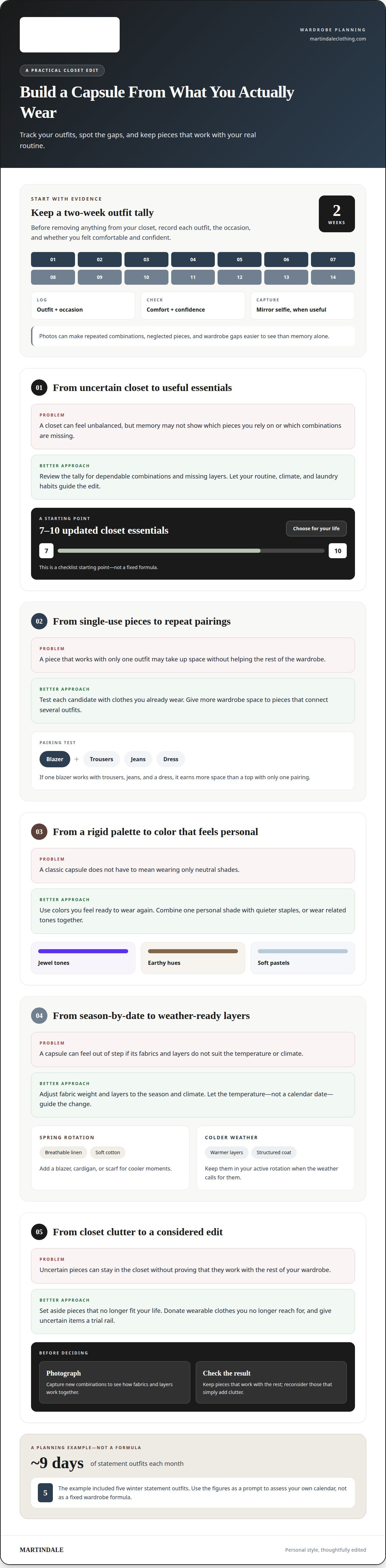
Before removing anything from your closet, keep a two-week outfit tally. Record each outfit, the occasion, and whether you felt comfortable and confident wearing it. Add a mirror selfie when useful: photos can reveal repeated combinations, neglected pieces, and gaps more clearly than memory. One planning example set aside statement outfits for about nine days each month, including five winter statement outfits. Treat those figures as a prompt to assess your own calendar, not as a fixed wardrobe formula.
Review the tally for dependable combinations and missing layers. A capsule wardrobe checklist can start with 7–10 updated closet essentials; the right selection depends on your routine, climate, and laundry habits. Test each candidate with pieces you already wear. If a blazer works with trousers, jeans, and a dress, it earns more space than a top with only one pairing.
A classic capsule wardrobe can also reflect personal color. Jewel tones, earthy hues, and soft pastels can brighten an outfit and complement your complexion. Combine one of these shades with quieter staples, or wear related tones together for a considered look. The best classic wardrobe essentials for women over 40 are colors and shapes you feel ready to wear again.
Adapt your capsule to the season and climate by adjusting fabric weight and layers. For a minimalist spring capsule, rotate in breathable linen or soft cotton, then add a blazer, cardigan, or scarf for cooler moments. In colder weather, keep warmer layers and a structured coat in your active rotation. Let the temperature, not a calendar date, guide the change.
Finish with a careful edit. Set aside pieces that no longer fit your life, then donate wearable clothes you no longer reach for. Keep a small trial rail for uncertain items, and photograph new combinations before deciding. This helps you see whether each fabric and layer works with the rest or simply adds clutter.
2. Wearing trends in a way that suits personal style
Take ten minutes to reflect on your style history. Recall the outfits you chose repeatedly, the colors you loved, and the pieces that felt like you. A favorite jacket or familiar sweater can reveal a stronger foundation than a trend-led purchase. Note what still feels right, then separate lasting preferences from details tied to a particular season.
Treat a trend as an addition, not the center of your closet. If you like a bold color, try it in a scarf or sweater before replacing reliable pieces. If a new silhouette interests you, wear it with familiar trousers or a skirt. This keeps the outfit grounded while your style evolves. Choose clothes according to your taste, not an age-based rule.
Fit matters as much as design. Notice whether the shoulder seam sits comfortably, the sleeve allows movement, and the hem works with your usual shoes. A short, easy-to-style sweater can layer over a dress or pair with high-waisted trousers. If a jacket fits well through the shoulders but its sleeves need refining, tailoring can improve the fit without changing its character.
Define timeless style through the pieces you genuinely wear, rather than a fixed list of essentials. Keep a closet note of favorite colors, preferred fabrics, and silhouettes that make dressing feel effortless. Then assess each trend against those choices: does it work with an existing outfit, highlight a feature you enjoy, or earn repeat wear? If not, admire it without making it part of your wardrobe. Personal style lasts through change because it rests on considered choices, not rules about what women over 40 should wear.
3. Choosing pieces for work-to-weekend versatility
Choose pieces that shift context without needing a full outfit change. A button-down blouse can sit beneath a blazer for work, then pair with jeans for a relaxed evening. A fine-knit sweater works with tailored trousers or a skirt, while a versatile dress can move from an office blazer to sneakers for errands. Keep a garment only when you can style it in 3–5 different ways.
For a polished work outfit, pair a structured blazer with a simple top and well-fitting trousers. At the weekend, wear the blazer over a T-shirt with vintage jeans. A blouse with three-quarter sleeves offers a refined finish, while distinctive buttons add character without limiting what it pairs with. These staples can work throughout a season when their colors and proportions coordinate with the rest of your wardrobe.
Timeless footwear might include loafers, sneakers, and block or kitten heels, chosen for the occasions you actually dress for. A silk scarf, belt, statement necklace, or structured handbag can change the feel of the same blouse and blazer. For example, a scarf can soften a work look, while a belt defines the waist of a simple dress.
Fabric and construction affect how a garment wears over time. Soft cotton, breathable linen, and stretchy knits support comfort and movement. Check seams, buttons, and hems for secure finishing. In the United States, secondhand and vintage shops can be sources of distinctive pieces, while new purchases can fill specific wardrobe gaps. Set a spending limit, assess each garment’s condition, and choose quality staples you’ll wear in several outfits rather than buying for a single occasion.
4. Mixing classic essentials with new and vintage pieces
A wardrobe feels personal when familiar foundations meet pieces with a past or a fresh point of view. Try a vintage silk blouse with tailored trousers, then add a newer belt to refine the outfit. The classic shape keeps the look grounded, while the older fabric brings character. This balance makes style feel individual rather than built around trends.
Start with one vintage piece and build around its strongest feature. A patterned skirt, for example, can pair with a plain knit and simple shoes. If its silhouette is full, choose a closer-fitting top; if it’s narrow, a relaxed sweater can soften the line. Check the garment’s condition and how it moves before styling it. A flattering outfit should feel comfortable in motion, not just in the mirror.
New pieces can refresh reliable classics without changing their identity. Wear a current color in a blouse or accessory alongside a familiar jacket instead of buying a complete trend-driven outfit. For winter, layer a vintage dress under a structured coat, then use a new scarf to tie its colors together. For a casual day, combine an older denim jacket with a simple dress and contemporary sneakers.
Use texture and proportion to make the mix feel deliberate. Pair smooth satin with sturdy denim, or a crisp cotton shirt with a softly worn cardigan. Keep one focal point, such as a vintage print or an unexpected sleeve, and let the other pieces support it. This creates a polished effect without making every item compete. Before adding something new, picture it with two pieces already in your closet. For considered outerwear to anchor these combinations, explore timeless coats and jackets.
Martindale: Women's Coats
Martindale offers women’s coats and wool coats for a wardrobe built around enduring layers rather than passing trends. If your capsule needs a defining outer layer, choose a coat that works with the outfits you already wear, from tailored workwear to casual weekend pieces.
The collection also includes The Amelia Bomber Jacket in Mulberry Satin and Midnight Satin. These distinct options bring a different texture and mood to classic combinations. Martindale’s garments are ethically produced and designed and sewn in America, with a focus on considered construction and lasting style.
If you’re refining your wardrobe with a dependable coat or distinctive jacket, explore Martindale’s collection.
Choose the next piece with intention
Let your next wardrobe decision begin with what you want to feel when you get dressed: at ease, distinctive, or quietly polished. The classic wardrobe essentials for women over 40 aren’t a fixed checklist; they’re the pieces that support your life and feel unmistakably yours. A new addition earns its place when it works with what you already value, rather than asking you to rebuild your style around it.
Outerwear can shape that decision. A coat or jacket brings an outfit together and gives familiar pieces a fresh presence. Consider the role you want it to play, then explore Martindale’s selection at your own pace.
Contact Martindale to learn more about choosing a considered layer for your wardrobe. Your style can keep evolving while remaining rooted in what feels right to you.
Frequently Asked Questions
What Does Classic Style Look Like?
Classic style pairs clean, enduring shapes with details that express personal taste. Think of a crisp button-down, straight-leg trousers, and a simple leather belt, finished with a distinctive color or piece of jewelry. The result feels composed rather than overly matched. A classic outfit can include a current or vintage accent, as long as the overall silhouette feels balanced and comfortable.
What is the Third Piece Rule?
The third-piece rule adds a layer or accessory to a basic top-and-bottom outfit for more depth and personality. For example, wear a blouse and trousers with a vest, structured coat, scarf, or statement necklace. Choose a piece that suits the setting and completes the outfit rather than competing with it. A lightweight layer can also make a simple combination feel more considered.
What are the essential classic wardrobe pieces for women over 40?
Useful essentials include a well-fitting blazer, button-down shirt, knitwear, versatile trousers, a simple dress, comfortable shoes, and a coat suited to your climate. The best classic wardrobe essentials for women over 40 are those that support your actual routine. For instance, someone who commutes may prioritize polished layers, while a largely casual week may call for adaptable knits and relaxed trousers.
Which jeans, trousers, and skirts are most versatile for women over 40?
Straight-leg jeans, tailored trousers, and a skirt with a comfortable, balanced silhouette are versatile starting points. Pair dark jeans with a blouse and blazer for a polished setting, or wear them with a knit for casual plans. Tailored trousers work with flats or heels. A simple skirt can shift from day to evening with changes in shoes, layers, and accessories.
How should women over 40 choose flattering cuts and fits for their body shape?
Choose fit by how a garment sits and moves, not by age-based rules or a single body-shape label. Check shoulder seams, waist placement, sleeve movement, and hem length while standing and sitting. A jacket should allow comfortable layering, and trousers should lie smoothly without pulling. Alterations can refine sleeve or hem length when the garment otherwise feels right.
How much does it cost to build a classic wardrobe, and which pieces are worth investing in?
There’s no single cost for building a classic wardrobe. Spending depends on what you own, what needs replacing, and the quality you choose. Build gradually around genuine gaps rather than buying a complete set at once. Consider investing in frequently worn pieces, such as a coat or everyday shoes, and use what you already own to test which colors and silhouettes you wear regularly.


