


A linen blazer can weaken with wear, but its natural creases aren’t a sign that it’s failing. To understand how to care for a linen blazer, focus on gentle handling: air and brush it between wears, clean it according to its care label, and avoid rough washing or drying that can strain the fibers.
Linen’s relaxed texture can be mistaken for fragility, or tempt you to press away every crease. But its character is part of its appeal. Thoughtful care helps preserve the fabric and the blazer’s shape without trying to make it look untouched.
This guide covers cleaning, ironing, brushing, airing, and storing a linen blazer, plus signs of genuine wear. You’ll find a simple routine to keep it fresh between wears, ease creases when needed, and store it so it’s ready for the next season.
Table of Contents
Storing a linen suit on a suitable hanger
- Choose a broad, sturdy hanger that supports the blazer across both shoulders. A narrow wire hanger won’t support the shoulder line well, while a shaped hanger helps the jacket hang straight. After wearing it, empty the pockets, fasten the front loosely, and hang it up instead of draping it over a chair.
- Store the jacket in a cool, dry wardrobe, away from direct sunlight and moisture. For longer storage, use a breathable garment bag rather than plastic, which can trap moisture. Let the blazer dry completely after wearing or cleaning it before covering it. Hang it freely, with space around the shoulders and sleeves.
- Choose a linen color for the occasion and the clothes already in your wardrobe. A darker shade can feel more composed for evening plans, while a lighter shade suits relaxed daytime settings. Before buying, measure the space between your existing garments and consider whether the chosen color works with shirts, trousers, and shoes you wear often.
- If a matching linen suit needs professional cleaning, take the jacket and trousers in together. Cleaning both at the same time helps reduce the chance of their colors fading at different rates. Store the pieces on suitable hangers, with enough room for air to circulate rather than pressed against a packed wardrobe.
- For travel, fold the linen suit loosely and place it near the top of your luggage. Keep shoes and heavier items below it so they don’t crush the jacket. A suit carrier can protect it from weather and friction in transit. When you arrive, take the suit out promptly and hang it up.
- Give the jacket time to settle before wearing it after travel. Hang it on a broad hanger in a ventilated space and let travel creases relax. Make sure the fabric is dry before returning it to the wardrobe. Hanging it straight between trips helps prevent deeper folds from forming while linen is compressed.
Dry cleaning and washing tailored linen
For tailored linen, follow the care label and avoid machine washing, which can disturb the lining and inner structure. Blot small marks with a clean, pale cloth, and reserve dry cleaning for stains or other cleaning needs that require more than surface care.
-
Choose Safe Cleaning Products and Tools
Blot small marks with a clean, pale cloth, and use a stain remover only if its label says it’s suitable for linen. Don’t apply detergent or water across a tailored blazer as you might with an unstructured linen shirt. Check the care label first, and avoid rubbing, harsh brushes, and products with brighteners or perfumes.
-
Spot-Clean Stains
Blot a fresh spill gently with a clean, pale cloth, working on the surface rather than rubbing the fibers. Rubbing can spread the mark and disturb the fabric’s texture. For a stain that goes beyond a small surface mark, take the garment to a professional dry cleaner and explain what caused it, such as food or an oily spill.
- Choose professional dry cleaning when the care label calls for it or a stain needs more than careful blotting. A tailored linen suit has lining and internal construction that can shrink, pucker, or lose shape through water and machine agitation. Dry cleaning uses solvent rather than substantial water, which helps protect the weave from distortion.
- Clean the blazer when needed, rather than too frequently. Linen doesn’t need dry cleaning after every wear; airing it between wears can help it stay fresh. If there’s a mark, address that area instead of cleaning the whole piece. Excessive cleaning exposes the fabric and color to unnecessary treatment.
- When cleaning a matching linen suit, take the jacket and trousers together. Treating both pieces at the same time helps reduce the risk of their colors fading at different rates. Tell the cleaner what caused the stain and mention any previous spot treatment so the fabric receives consistent care.
Can You Iron Linen?
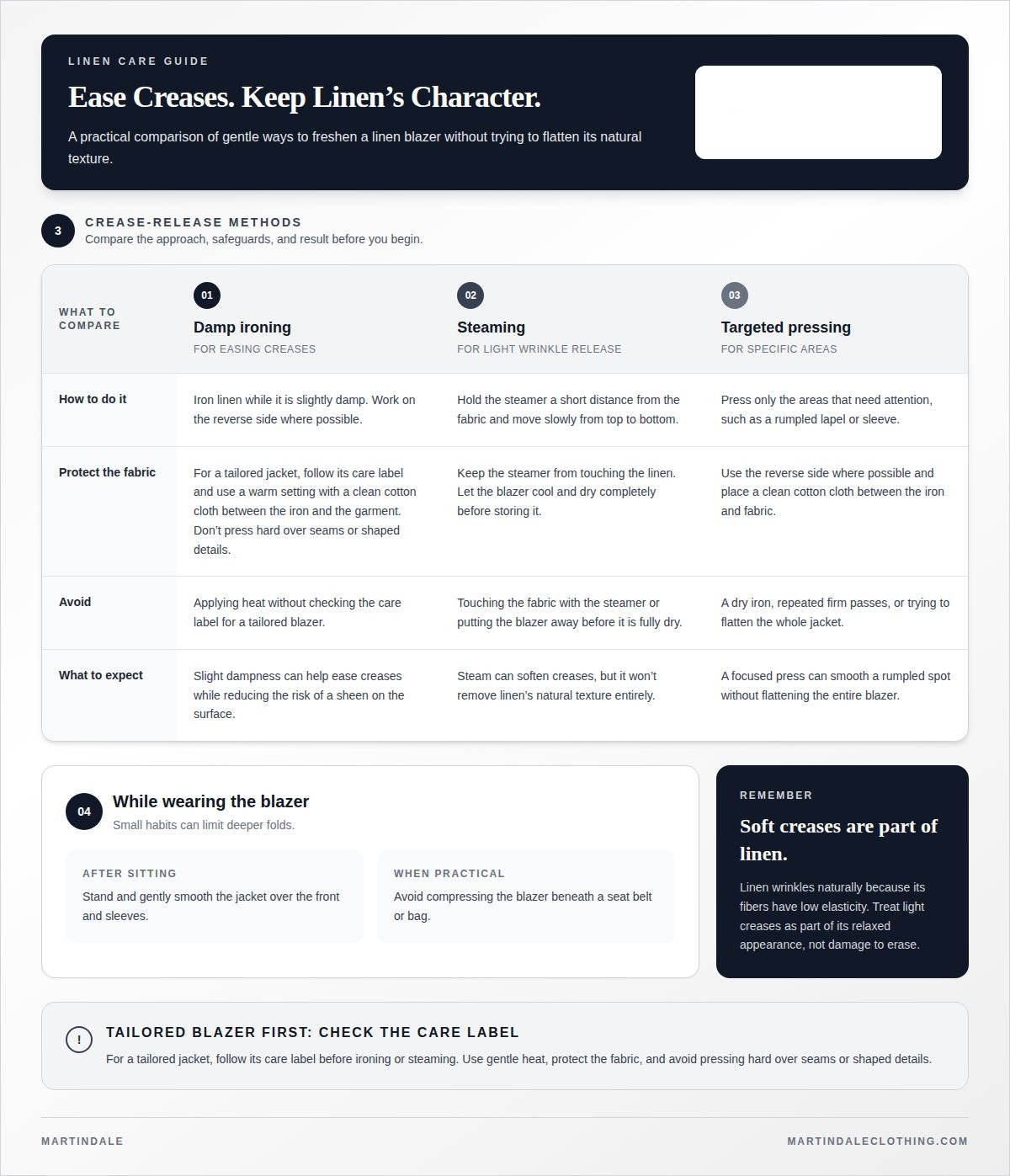
Yes. To iron or steam a linen blazer without damaging it, use gentle heat, protect the fabric, and follow its care label. When wearing it, accept light creases as part of linen’s breathable character; standing and smoothing the jacket can help limit deeper folds.
-
Dampen Linen Before Ironing
Iron linen while it’s slightly damp, using a medium-hot setting on the reverse side. This can ease creases while reducing the risk of a sheen on the surface. For a tailored jacket, follow its care label and use a warm setting with a clean cotton cloth between the iron and the garment. Don’t press hard over seams or shaped details.
-
Steam Linen Instead of Ironing
Steam the jacket between wears when it needs freshening or light wrinkle release. Hold the steamer a short distance from the fabric and move it slowly from top to bottom without touching the linen. Let the garment cool and dry completely before storing it. Steam can soften creases, but it won’t remove linen’s natural texture entirely.
-
Iron Linen Carefully
Press only areas that need attention, such as a rumpled lapel or sleeve, rather than flattening the whole jacket. Work on the reverse side where possible, and place a clean cotton cloth between the iron and fabric. A dry iron can flatten linen’s texture, so avoid repeated, firm passes over the same area.
-
Reduce Wrinkles While Wearing the Blazer
After sitting, stand and gently smooth the jacket over the front and sleeves. Sitting in a car can leave deeper creases, so where practical, avoid compressing the blazer beneath a seat belt or bag. Linen wrinkles naturally because its fibers have low elasticity. Treat soft creases as part of the garment’s relaxed appearance, not damage to erase.
Brushing and airing a linen blazer
After wearing a linen blazer, air it in a ventilated room and brush away surface dust. It doesn’t need dry cleaning after every wear. Follow its care label, especially if the garment is lined or blended.
- After wearing the jacket, hang it in a well-ventilated space, away from damp bathrooms and cooking smells. Leave it hanging between wears so air can circulate around it. Many wrinkles may relax after a couple of days, though linen’s natural creases won’t disappear completely.
- Brush the blazer after wearing it to lift dust before it settles into the fabric. Use gentle strokes over the sleeves, lapels, and shoulders, following the direction of the weave. For example, brush a dusty shoulder before returning the jacket to the wardrobe.
- Clean the blazer when it’s soiled or stained, not automatically after every wear. Between summer outings or regular office days, airing and brushing can refresh it without repeated cleaning. Blot small spills gently; for larger stains, follow the cleaning guidance above.
- Read the garment’s care label before choosing a cleaning method. Lining and fabric blends can affect how a blazer responds to moisture, heat, and washing, so don’t assume it can be treated like a linen shirt. A tailored jacket should not go in a washing machine, where agitation can disturb its inner structure.
- While the blazer airs or rests in the wardrobe, keep heavier clothing from pressing against it. Give the shoulders and sleeves room, and brush away any dust before the next wear. The routine is simple: air it after wearing, brush off visible dust, and clean it only when needed.
Before an event, shake out the linen jacket to help it look sharp. Leave it hanging as long as possible between wears, since many wrinkles may relax after a couple of days.
Martindale
If caring for a linen blazer has you thinking more deliberately about what you keep, Martindale offers women’s garments designed with considered style and lasting wear in mind. Its collection includes coats, wool coats, and satin bomber jackets. Choosing thoughtfully and caring for each piece can help build a wardrobe beyond passing trends.
Explore Martindale’s women’s outerwear as you consider what belongs in your wardrobe next. For more information about Martindale’s garments, contact Martindale.
Carry thoughtful care into your next choice
Let your linen blazer be a garment you live in, not one you preserve for perfect conditions. Knowing how to care for a linen blazer means accepting its natural character while making deliberate choices about upkeep. Apply the same care to what you add to your wardrobe: choose pieces you’ll value and wear repeatedly, rather than garments tied to passing trends.
Martindale offers women’s coats and wool coats, as well as The Amelia Bomber Jacket in Mulberry Satin. Each offers a different direction for a considered wardrobe, beyond linen alone. Think about the garments that suit your life and personal style, then take the next step at your own pace.
Contact Martindale about your next wardrobe choice, and keep building a collection with intention.
Frequently Asked Questions
Does Linen Weaken Over Time?
Linen can weaken over time, although its flax fibers are valued for tensile strength and resistance to tearing. Its condition also depends on construction, fit, wear, and maintenance. Watch high-friction areas, such as cuffs and underarms, for thinning or pulled threads. These signs call for gentler handling, not firmer pressing or more frequent washing.
Is it better to wash or dry clean linen?
For a tailored linen blazer, dry cleaning is generally safer than home washing because water and agitation can affect its lining and shape. The care label is the best guide for the specific garment. A loose linen shirt differs from a structured jacket, so don’t assume their washing instructions are interchangeable.
Can linen go in the dryer?
Keep a tailored linen jacket out of the dryer, where heat can cause shrinkage and affect its shape. After cleaning, let it air-dry on a suitable hanger or flat on a clean surface, following the care label. If a linen garment is tumble-dried, remove it while slightly damp and let it finish drying naturally.
Can you get stains out of linen?
Many surface marks can be treated, but the right approach depends on the stain and garment construction. For example, gently blot a small coffee spill with a clean, pale cloth rather than rubbing it into the weave. A larger or persistent stain on a tailored blazer calls for professional cleaning. Explain what caused the stain.
Does Linen Get Softer with Age?
Yes, linen can become softer and more supple with wear and gentle pressing. That change is different from damage: softness alone doesn’t mean the fabric has weakened. Check areas exposed to repeated friction, such as the elbows, and distinguish a relaxed feel from visible thinning, broken threads, or holes.
How Should a Linen Jacket Be Cared For?
Start with the jacket’s care label, since lining and construction affect which cleaning methods suit it. After wearing, let the garment air, remove surface dust with gentle brushing, and address marks promptly. Use steam or careful pressing with a protective cloth for pronounced creases. Before storing it for a long period, make sure the jacket is clean and completely dry.


