


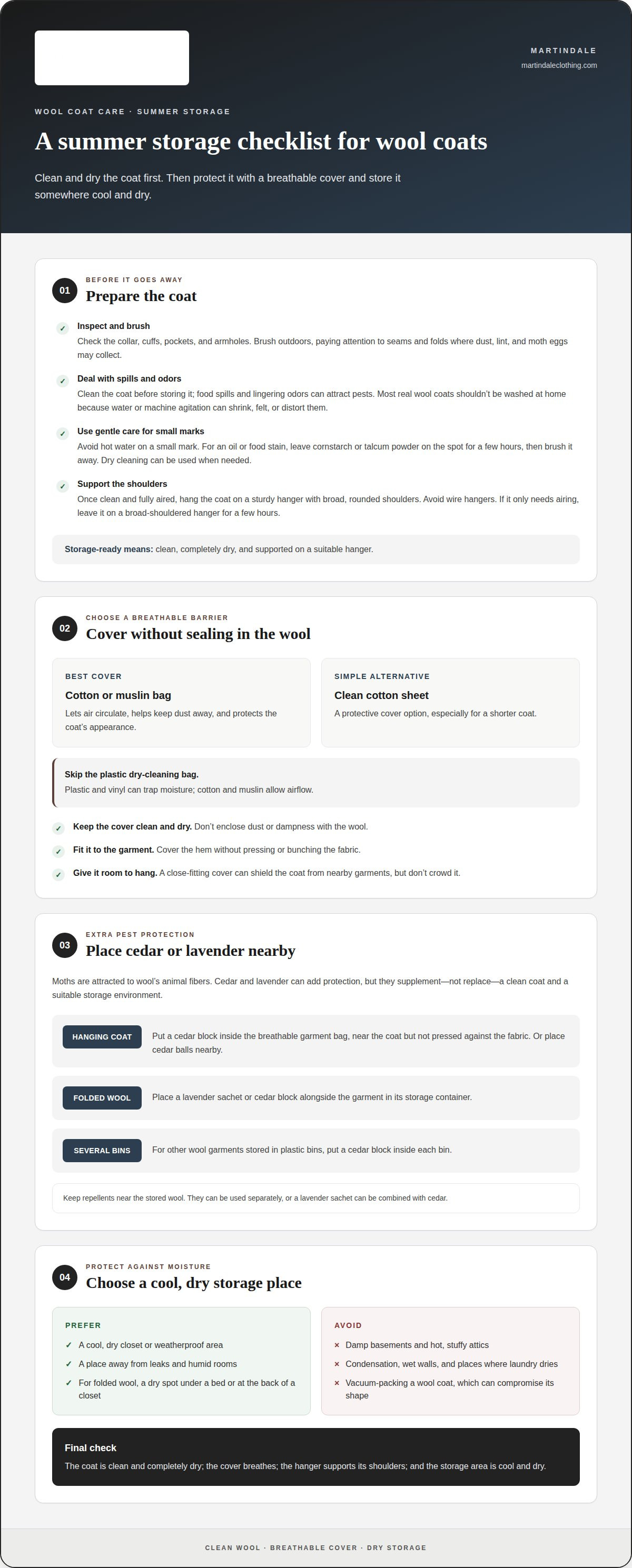
A breathable cover protects a wool coat better than a plastic dry-cleaning bag. When storing wool coats for summer, start with a clean, completely dry coat in a cotton or muslin garment bag, then keep it in a cool, dry place. A cedar block or lavender sachet can provide extra protection against moths, which are attracted to wool’s animal fibers.
Before a coat goes into storage for the season, take care of spills and dampness, and make sure it won’t be crowded in the closet. The routine is simple, but each detail matters. Prepare the coat, choose a breathable cover, use cedar or lavender thoughtfully, and keep moisture at bay. This helps the coat retain its shape and condition while it is stored.
A long wool overcoat can hang inside a breathable cotton bag, while a shorter coat can be covered with a sheet. The goal is a clean barrier, not a sealed container. Plastic dry-cleaning bags don’t offer the airflow of cotton or muslin. Choose a cover that fits the coat and lets it hang without crowding.
These choices make the cover part of a careful storage routine. Cotton muslin bags and old cotton sheets can help keep stored clothing clean and shield it from damage caused by nearby garments. After covering the coat, keep it in a cool, dry storage area. A breathable fabric cover protects its surface while allowing air to move around the wool.
2. Cedar and lavender moth repellents
Consider adding a repellent to summer storage to help protect wool from pests. Cedar blocks, cedar balls, and lavender sachets are simple options to place near a coat. They provide extra pest protection, but the coat’s clean condition and storage environment remain important.
For a hanging wool coat, place a cedar block inside its breathable garment bag, near the coat but not pressed against the fabric. Alternatively, position cedar balls in the storage area around the hanging garment. This keeps cedar close to the wool without attaching anything to the coat.
Lavender sachets can also sit inside a hanging bag or alongside a folded wool garment. Choose one approach, or combine a sachet with cedar if you prefer both materials. Keep each item near the stored wool, rather than placing it in a separate room. For other wool pieces stored in a plastic bin, add a cedar block inside each bin.
- Hanging coat: Put a cedar block in the breathable garment bag, or place cedar balls nearby.
- Folded wool: Add a lavender sachet or cedar block to the storage container.
- Several bins: Place a cedar block in each bin holding wool garments.
Before adding repellents, remove spills and odors from the coat, since residues can attract pests. Let the coat dry fully, then place cedar or lavender nearby. These materials supplement careful preparation rather than replacing it. Choose where to place them according to whether the coat is hanging in a bag or other wool items are stored in bins.
Other wool items can be stored in airtight plastic bins or bags, with a cedar block inside each bin for extra protection. Cedar balls can repel moths and silverfish.
3. What is the best way to store wool coats in the summer?
Inspect a wool coat carefully before putting it away. Check the collar, cuffs, pockets, and armholes, where dust, lint, and moth eggs can collect. Brush the coat outdoors, paying particular attention to seams and folds. Removing surface debris first helps keep residue from remaining hidden in the fabric.
Next, address stains and odors. Clean the coat before summer storage because food spills and lingering odors can attract pests. For a coat that needs a refresh, dry cleaning removes stains and pests, according to advice from a forum administrator. Dry-cleaning once or twice per season is a useful care rhythm for wool coats. Between cleanings, brushing away dirt and airing the garment can help maintain it without frequent washing.
Most real wool coats shouldn’t be washed at home. Immersion in water or machine agitation can cause shrinkage, felting, or loss of shape. For a small mark, avoid hot water, which can set stains. For an oil or food stain, leave cornstarch or talcum powder on the spot for a few hours to absorb grease, then brush it away.
Once the coat is clean, hang it on a sturdy hanger with broad, rounded shoulders. This supports the coat’s shoulder shape during storage. Avoid wire hangers, which are unsuitable for heavy coats. If the garment has an odor but doesn’t need cleaning, air it on a broad-shouldered hanger for a few hours before putting it away.
- Inspect and brush: Focus on pockets, cuffs, collars, and armholes.
- Clean thoughtfully: Use dry cleaning when needed, and avoid washing most real wool coats at home.
- Hang with support: Choose a sturdy, broad-shouldered hanger after the coat is clean and aired.
4. Preventing moisture and mildew
When storing wool coats for summer, choose a cool, dry space rather than a damp basement or hot, stuffy attic. Avoid dampness and strong temperature swings. A closet or weatherproof area away from leaks and humid rooms is more suitable for wool.
Make sure the coat is completely dry before putting it away. Damp fabric enclosed for a season can develop mildew and an unpleasant odor. Plastic or vinyl garment bags may trap moisture, so choose a breathable cover. Keep the coat away from condensation, wet walls, and places where laundry dries.
A dry location matters for folded wool, too. A plastic bin can protect clothing from pests, but keep it in an area without mould, damp, or humidity. Under a bed or at the back of a closet may be preferable to an uninsulated attic or basement. Avoid vacuum-packing a wool coat, since suction can compromise its shape.
Preventing moth damage also starts with a careful inspection. Brush the coat outdoors, including around pockets, armholes, cuffs, and collars, where moth eggs may be hidden. A cedar block or lavender sachet can provide extra protection, but neither replaces clean, dry storage. If the space becomes damp, move the garment before moisture reaches the wool.
- Before storage: Confirm the coat is clean and fully dry.
- For hanging: Use a breathable cover in a dry closet, away from damp walls.
- For folded wool: Place it in a bin and keep that bin in a weatherproof room.
- For moth prevention: Brush pockets, armholes, cuffs, and collars before storage.
A sound plan for storing wool coats for summer accounts for both the garment and its surroundings. Check the storage area for leaks or lingering dampness before putting the coat away.
Martindale
For a coat worth caring for season after season, Martindale offers women’s wool coats designed as lasting wardrobe pieces. Thoughtful storage protects the garment between winters; choosing a well-made coat is another part of a considered approach to keeping clothing in use.
Martindale’s collection includes women’s coats and wool coats, with timeless outerwear made and sewn in America. If you’re considering a wool coat to wear for years and store carefully each summer, explore the pieces with an eye toward enduring style rather than a passing trend.
Contact Martindale to continue the conversation about choosing a coat that suits your wardrobe.
Let your next coat earn its place
Summer storage is a useful pause to consider which garments you reach for and intend to wear again. A wool coat you care for can remain part of your wardrobe rather than being replaced. The same considered perspective can guide a future addition, whether you’re choosing a coat for cold-weather wear or another layer, such as The Amelia Bomber Jacket in Mulberry Satin.
Thoughtful storing wool coats for summer is one part of caring for clothing. Choose pieces that suit your life, then store them carefully between seasons. Martindale’s collection reflects a considered approach to women’s clothing.
Start a conversation with Martindale about finding a considered piece for your wardrobe.
Frequently Asked Questions
How do I keep moths away from wool coats?
Keep wool coats clean before putting them away, then place cedar or lavender nearby as an added deterrent. Moths are attracted to animal fibers such as wool, so inspect hidden areas like pocket linings and seams. If you’ve seen moths at home, take extra care with every wool item in the same closet or container, not only the coat you wear most.
What is the best way to store wool coats in the summer?
Store a clean, fully dry coat in a breathable cover, with enough room to hang without crowding. A sturdy hanger supports the shoulders, while a dry closet or protected space helps avoid dampness and excessive heat. Move the coat away from an exterior wall if the area feels damp, and don’t place it beside a steamy bathroom or laundry area.
How should you clean a wool coat before storing it for summer?
Follow the coat’s care label and avoid washing most real wool coats at home, since immersion or machine agitation can shrink or distort them. Dry cleaning is commonly recommended once or twice per season. For a small greasy mark, leave cornstarch or talcum powder on the spot for a few hours, then brush it away. Airing can help with odors between cleanings.
How do you store wool coats to prevent moth damage?
Start by brushing the coat outdoors, especially around pockets, cuffs, collars, and armholes, where eggs or debris may be hidden. Store the clean garment in a breathable hanging cover and place cedar or lavender nearby. For folded wool items, a sealed plastic bin can help protect against pests. Put a cedar block inside each bin rather than relying on one for several containers.
What is the best breathable garment bag for storing wool coats?
Choose a cotton or muslin garment bag that covers the coat without compressing it. These fabrics allow more airflow than plastic dry-cleaning covers, which shouldn’t remain around stored wool. A clean cotton sheet is another practical cover if a garment bag isn’t available. Before use, make sure the bag or sheet is dry and free of dust, so it doesn’t enclose debris against the coat.
Should wool coats be stored hanging or folded?
Hang a structured or heavy wool coat on a sturdy hanger with broad, rounded shoulders to support its shape. Avoid wire hangers. Folding may suit wool garments that could stretch on a hanger, especially when placing them in a bin with acid-free tissue. Don’t vacuum-pack a coat, since suction can compromise its shape. Choose a storage method suited to the garment’s weight and structure.


