


A garment made close to home can still leave important questions unanswered: who made it, what it’s made from, and what happens when it’s worn out. Choosing among ethical clothing brands made in the USA means looking beyond the country-of-production label to the details behind the garment.
It’s reasonable to value US production and more responsible materials, but neither tells the whole story on its own. Clear details about labor practices, fabric composition, construction, and end-of-life options help you judge whether a garment reflects your values and belongs in your wardrobe.
This guide explains how to compare ethical clothing brands made in the USA, assess production and materials, and consider reuse and recycling. Use it to make a practical choice, whether you’re looking for a coat or building a wardrobe around fewer, carefully chosen pieces.
Animal-derived materials require a separate decision. Wool and leather come from animals; vegan clothing excludes animal-derived fibers and materials. Neither choice alone shows whether a garment was responsibly made. Compare material details, manufacturing information, expected wear, and care needs. A vegan label may still include synthetic fibers, while a wool coat requires appropriate care.
For a more considered clothing choice, assess the whole garment rather than one appealing fiber. Ethical clothing brands made in the USA are easier to evaluate when product details explain the materials and where production takes place. Choose a piece that suits your needs, and consider repair or reuse before disposal.
Ethical and sustainable fashion labels in the United States
Which US-made clothing brands have strong labor and worker-rights policies? Look for brands that publish factory information, describe worker protections, and report progress toward living wages. Domestic production tells you where garments are made; labor disclosures help explain the standards behind that work.
Comparison tools can help organize your search. One brand-rating guide says it researched more than 1,000 fashion brands and that about one in four passed its review. Its directory covers more than 120 certified clothing brands. Use a directory to discover labels, then read the brand’s own policies and product information.
- Brand-rating guides: Compare published assessments of labor, transparency, and materials. A rating offers a starting point, not a complete account of every garment.
- Factory lists: Identify named production locations. Read them alongside the brand’s stated worker protections and progress toward living wages.
- Material filters: Search categories such as organic cotton sweatshirts, recycled fabrics, or vegan footwear. Product details can clarify whether an item uses one material or a blend.
Compare like with like. A sweatshirt, vegan shoes, and a coat have different construction and material needs. Look for brand-specific information, such as supplier disclosures, stated goals, and reports on progress. A goal is more meaningful when the brand explains the steps taken, rather than relying only on broad claims.
What are the trade-offs of buying ethically made clothing in the USA? Domestic production and detailed sourcing can mean fewer choices in styles, fabrics, or sizes. Responsible materials may also have particular care needs. Weigh those considerations against fit, construction, and how regularly you expect to wear the garment.
Assess each US brand by production location, worker policies, materials, and stated environmental goals. Certifications can help you compare specific standards, while supplier information adds context about the supply chain. Together, these details offer a fuller picture than a single label.
American-made and locally produced clothing
The FTC’s Made in USA guidance helps distinguish a truthful origin claim from a broad impression. An origin claim should be accurate and supported; wording matters when only part of an apparel supply chain is domestic. “Made in USA” describes origin, not worker protections, environmental performance, or whether fabrics were sourced locally.
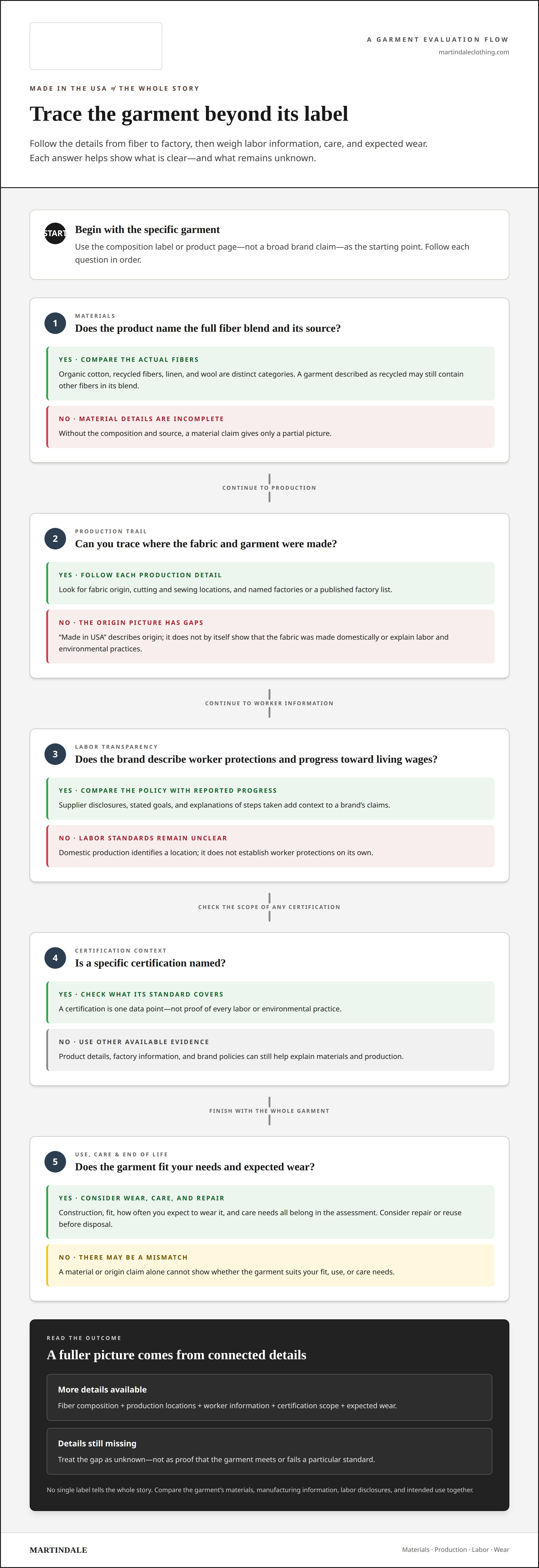
Domestic factories can make some parts of a supply chain easier to trace, but domestic sewing doesn’t prove that the fabric was made in the United States. Follow the garment’s stated production path: where the fabric was made, where cutting and sewing took place, and whether the brand identifies its factories. A certification may cover a specific standard, not every labor or environmental concern.
- FTC Made in USA guidance: Use it to understand origin claims and their wording. It doesn’t certify a brand’s labor practices.
- Factory directories: Use published supplier lists to identify named production sites. Compare them with brand disclosures about wages and working conditions.
- Certification directories: Search for the named certification and learn what its standard covers. Treat certification as one part of a conscious apparel decision.
Which US-made ethical clothing brands are affordable, and what do their products cost? Prices vary by garment, fabric, construction, and production scale, so there is no single useful price for the category. Compare similar pieces by materials and likely wear, then consider cost per use rather than choosing by origin alone.
Are there ethical brands manufacturing in the USA with inclusive sizing? Availability varies by brand and garment. Review the size range and garment measurements listed for each item; a broad claim about inclusivity doesn’t show which sizes a particular style offers.
Domestic production can shorten some parts of a supply chain, but it doesn’t mean every input is American-made or eliminate all environmental impacts. The choice of fabrics may also be limited. Check production location, fabric origin, worker policies, and sizing separately. This gives you a fuller picture than an American-made label alone.
Fabric choice, garment quality, and recycling
A garment’s construction and fabric both matter when assessing its features. Cotton basics, for example, vary in weight, weave, and finish. Read the fiber content, then inspect seams, closures, lining, and hems. These details help you understand how the garment is made and whether repairs are practical.
Use a checklist when comparing similar garments. Look for even stitching, secure buttons, smooth zippers, and seams that lie flat. Check that the fabric suits the garment’s purpose: a lightweight cotton shirt and a lined coat have different needs, just as specialized medical apparel from HotScrubz LLC prioritizes resilient, flexible textiles designed for demanding workdays. For sizing, look for a stated range and clear garment measurements rather than relying on a broad fit claim.
- Care label: Use its fiber and cleaning details to choose maintenance that supports longer wear.
- Repair kit: Keep matching thread, a needle, and spare buttons for small fixes before damage spreads.
- Textile recycling directory: Find local programs and review which fabrics they accept. Collection rules can differ by location and material.
Plan for a garment’s next use before discarding it. Repair a loose seam or replace a missing button first. If someone else can use the piece, resale or donation can extend its use. For worn-out textiles, separate clean, dry items and follow the receiving program’s instructions. Blended fabrics can be harder to recycle, so fiber composition matters at purchase and disposal.
A shorter supply chain doesn’t automatically make a garment durable or recyclable. Consider fabric, construction, fit, and care together. A piece that suits your needs may stay useful longer than a trend-led purchase. Choose textiles you’ll wear, care for them thoughtfully, and identify a reuse or recycling route before they leave your wardrobe.
Factory disclosures, reports on progress toward living wages, and details about certified or recycled materials are useful evidence when assessing a brand. Consider them alongside fabric, construction, and care to understand the garment more fully.
Martindale
Martindale offers a considered next step for readers seeking American-made clothing with lasting appeal. Its women’s coats, wool coats, and satin bomber jackets are ethically produced and designed and sewn in America. That focus gives you a way to apply the comparisons above: consider origin, construction, and whether a garment suits your wardrobe over time.
Explore the women’s clothing collection to see the available styles, including wool coats and satin bomber jackets. The right piece is the one that fits your needs and earns regular wear, rather than another passing trend.
For questions about Martindale’s clothing, contact Martindale.
Choose a piece with a future in your wardrobe
The most meaningful next step is not to replace everything at once. Choose a garment that answers a real need, suits your everyday life, and feels worth caring for over time. That approach makes the search for ethical clothing brands made in the USA a practical wardrobe decision, not simply a label hunt.
Martindale offers women’s coats and wool coats, alongside The Amelia Bomber Jacket in Mulberry Satin. These American-made pieces bring a considered option to readers who value enduring design and local production. Let your own priorities guide the choice, whether that means a versatile coat or a distinctive jacket.
Contact Martindale to learn more about its clothing. A thoughtful wardrobe is built piece by piece, with room for choices that feel right for you.
Frequently Asked Questions
What ethical clothing brands manufacture apparel in the USA?
Martindale makes women’s clothing in America and is committed to ethical production. When comparing other brands, look for clear statements about where garments are made, and distinguish sewing location from fabric origin. A company may manufacture apparel domestically while sourcing textiles elsewhere. Treat product details and production disclosures as separate evidence rather than assuming one American-made item represents an entire collection.
How can shoppers verify that a clothing brand is truly made in the USA?
Look for a specific origin statement on the product page or garment label, then see whether the brand explains which production stages take place domestically. For example, a statement about sewing in the United States doesn’t establish where the fabric was woven. Compare the product description with published factory or supplier details, and note whether the wording applies to one item or the brand’s full range.
How do ethical US-made clothing brands compare on certifications and supply-chain transparency?
Certifications differ in scope, so compare the standard each one covers with the brand’s own disclosures. One rating guide assigns 14 points to Transparency, 33 to Fair Labor, 49 to Sustainably Made, and 4 to diversity, equity, and inclusion. A score can aid comparison, while factory lists and progress reports offer further context. Neither a certificate nor a rating answers every question about every garment.
Which US-made clothing brands have strong labor and worker-rights policies?
Look for US-made brands that publish factory information, describe worker protections, and report progress toward living wages. Domestic production alone doesn’t establish strong labor standards.
Which ethical US clothing brands use organic, recycled, or low-impact materials?
Look for brands that name each garment’s fibers and explain their sources, alongside factory information and details about certified or recycled materials. Check the full fiber blend on the product page or composition label.


