


Hardware can reveal more about a garment’s construction than its label. Clear signs of a well-made garment include zippers that glide smoothly, securely sewn buttons, and trims that sit neatly without pulling or bunching. Give each fastener a careful test before you buy.
It’s easy to focus first on color, silhouette, and fabric. But a beautiful garment should also work as intended: its zipper should close cleanly, its buttons should feel secure, and its finishing should look considered inside and out.
This guide explains how to assess fasteners, seams, fabric, and other details that distinguish careful construction from common warning signs. Learn what to look for, what to test by hand, and how to judge whether a garment is likely to feel comfortable and hold its shape with wear. A few unhurried checks can help you choose a piece for lasting use, not one that only looks promising at first glance.
Table of Contents
1. Inspecting seam strength and stitch consistency
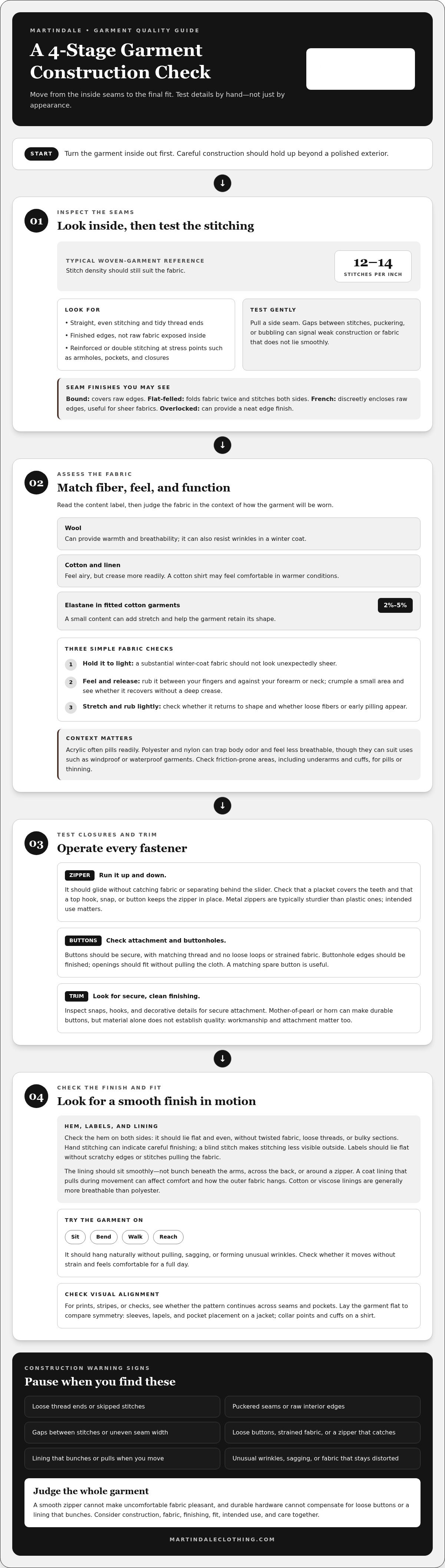
Turn the garment inside out and inspect its seams before judging its overall construction. Look for straight, even stitching, tidy thread ends, and finished edges rather than raw fabric exposed inside. A well-made woven garment typically has 12-to-14 stitches per inch, though stitch density should suit the fabric. Small, even stitches usually create a stronger seam than long, irregular ones.
Gently pull a side seam. Gaps between stitches can signal weak construction, while puckering or bubbling suggests the fabric may not lie smoothly. Check stress points, such as armholes, pockets, and closures, for reinforced or double stitching. Bound seams cover raw edges; flat-felled seams fold fabric twice and stitch both sides. French seams discreetly enclose raw edges, making them useful for sheer fabrics. Overlocked edges can also provide a neat finish.
Match the finish to the garment’s purpose. Denim and everyday cotton clothing benefit from sturdy seams in areas that take strain. Knitwear needs seams that move with the fabric, while suits should hang smoothly at the side seams and sleeves. In every category, neat interior finishing shows attention to detail beyond the polished exterior.
For prints, stripes, or checks, see whether the pattern continues across seams and pockets. Matching takes additional fabric and time, but a mismatch can interrupt the garment’s visual line. Try the garment on and assess its fit and drape by sitting, bending, walking, and reaching. It should hang naturally without pulling, sagging, or forming unusual wrinkles.
There is no universal fair price for a well-made garment in the United States. Fabric, construction, finishing, and design details all affect cost, so weigh value against workmanship and how often you expect to wear it.
To check for potential pilling, seam damage, or fading, rub the fabric gently and look for loose fibers or uneven color. A quick inspection cannot replicate repeated washing, but care instructions and sturdy, even seams offer practical clues about how a garment may hold up in your wardrobe.
2. Fabric composition, durability, and breathability
Read the fabric content label before judging a garment by touch. Wool, cotton, linen, and silk each behave differently, so match the fibers to the garment’s purpose. Wool can provide warmth while allowing breathability; cotton and linen feel airy but crease more readily. A small elastane content of 2% to 5% can add stretch and help fitted cotton garments retain their shape.
Next, assess the fabric. Hold it toward a light source: a winter coat fabric intended to feel substantial shouldn’t look unexpectedly sheer. Rub the surface gently between your fingers, then against your forearm or neck; notice scratchiness, rough patches, or an uneven feel. Crumple a small area and release it. Fabric that recovers without a deep crease may suit a polished piece you wear often.
Test stretch gently. Pull the fabric lightly and see whether it returns to shape rather than staying distorted. Rub an inconspicuous area to check for loose fibers or early pilling. Acrylic often pills readily, while polyester and nylon can trap body odor and feel less breathable. These fibers can still suit particular uses, including windproof or waterproof garments, so judge them in context.
Consider composition alongside fabric density and finish. Wool can provide warmth and resist wrinkles in a winter coat; a cotton shirt may feel comfortable in warmer conditions but crease. Check the fiber label or product details, then inspect the surface for consistent color and texture. Look at friction-prone areas, such as underarms and cuffs, for fuzzy pills or thinning.
Fabric should work with the garment’s construction, lining, and closures. A smooth zipper cannot make uncomfortable, clammy fabric pleasant to wear. Consider how the piece will feel through a full day, whether it moves without strain, and whether its care instructions suit your routine. Weigh fiber, feel, breathability, and intended use together, rather than treating one material as the answer for every wardrobe.
3. Zippers, buttons, and other fasteners
Test each closure instead of judging it by appearance alone. Run a zipper up and down: it should glide without catching fabric or separating behind the slider. Check that a placket neatly covers the teeth, and look for a top hook, snap, or button to keep the zipper in place. Metal zippers are typically sturdier than plastic ones, though the garment’s intended use matters.
Examine buttons on shirts, coats, and other garments. Each should be secure, with matching thread and no loose loops or strained fabric around its attachment. Check the buttonholes too: their edges should be finished, the openings should fit the buttons, and fastening should not pull the surrounding cloth. A spare button is useful, especially when it matches the attached buttons.
Trim should feel integrated, not like an afterthought. Inspect snaps, hooks, and decorative details for secure attachment and clean finishing. Natural materials such as mother-of-pearl or horn can make durable buttons. The material alone does not establish quality, however; workmanship and secure attachment matter just as much.
Check the hem on both sides. It should lie flat and even, without twisted fabric, loose threads, or bulky sections. Hand stitching can indicate careful finishing, while a blind stitch makes the stitching less visible outside. Labels should also lie flat, without scratchy edges or stitches that pull the fabric.
Finally, check the lining throughout the garment. It should sit smoothly, not bunch beneath the arms, across the back, or around a zipper. A coat lining that pulls when you move can affect comfort and how the outer fabric hangs. Cotton or viscose linings are generally more breathable than polyester. Consider closures, hems, trim, and lining together: durable hardware cannot compensate for loose buttons or a lining that bunches during ordinary movement.
4. Warning signs of poor construction
Look beyond the silhouette for signs of how the garment was assembled. Loose thread ends, skipped stitches, puckered seams, and raw interior edges deserve attention. Check the same seam at the shoulder and side: uneven width or a sudden change in stitching can create weak points. A smooth exterior should not conceal untidy construction inside.
Assess symmetry by laying the garment flat. On a jacket, compare the sleeves, lapels, and pocket placement; on a shirt, check whether the collar points and cuffs match. See whether the side seams hang straight or twist toward the front. Uneven hems, bubbling fabric, and mismatched panels can indicate careless cutting or assembly.
Fit offers another practical test. Put the garment on, then raise your arms, bend, and sit. Pulling across the back, sagging shoulders, or diagonal wrinkles around the hips can indicate a poor cut or unsuitable size. Styles vary, but a well-cut piece should sit naturally rather than distort when you move.
Inspect trim and fabric for damage that could worsen with washing. Broken thread around a button, a zipper straining the surrounding fabric, or a bunched lining can point to weak finishing. Rub an inconspicuous area gently and look for loose fibers, pills, or color transfer. Synthetic fibers are not automatically a flaw; judge the fabric by its intended use, feel, and condition.
Labels and care instructions add useful context when buying. Check whether the fiber information matches the fabric’s feel and whether the recommended care suits your routine. Quality clothing should be consistently constructed in visible and hidden areas. If several flaws appear together, such as crooked seams, uneven cuffs, and loose trim, treat them as stronger warning signs than a single loose thread.
Use these checks as you compare considered outerwear, then explore the clothing collection with construction details in mind.
Martindale: Women's Coats
After assessing fabric, seams, and finishing, consider MARTINDALE’s women’s outerwear, including wool coats and satin bomber jackets. The collection features The Patrice Wool Coat in Chestnut and The Eleanor Wool Tuxedo Coat in Noir, as well as The Amelia Bomber Jacket in Mulberry Satin and Midnight Satin. The coats are Made in America and Ethically Made, with construction details designed for lasting wear.
When comparing coats or jackets, apply the same checks: examine the construction, consider whether the material suits your needs, and choose a piece you can imagine wearing regularly. MARTINDALE offers a focused selection of women’s outerwear, including wool coats and satin bomber jackets, with a timeless approach to style.
Explore the collection and visit martindaleclothing.com when you’re ready.
Choose a piece with a place in your future wardrobe
A thoughtful purchase begins with more than spotting flaws. Consider what you want a garment to do: anchor everyday outfits, serve through changing seasons, or finish an outfit for a particular occasion. Let that purpose guide your choice, and make room to decide carefully rather than in a rush.
MARTINDALE offers women’s coats and wool coats, along with satin bomber jackets such as The Amelia Bomber Jacket in Mulberry Satin. Explore the collection with lasting use and personal style in mind.
If you’re weighing a garment’s quality and deciding what belongs in your wardrobe, contact Martindale to discuss garment quality. A considered choice can become a piece you return to season after season.
Frequently Asked Questions
Are the hardware and trims in good shape?
Closures and trim are in good shape when they work smoothly without distorting the garment. Fasten a coat while wearing it, not just while it lies flat; this reveals whether the closure pulls across the chest or catches its facing. Examine decorative trim from nearby and at a distance. Loose embellishments, sharp edges, or visibly uneven placement can affect comfort and finish.
But first… Why is the use of high-quality garments important?
Well-made clothing can serve your wardrobe longer and more reliably than a piece chosen only for a passing trend. That matters when a garment has a clear role, such as a coat for cold seasons or a jacket for work. Choosing carefully can also make it easier to care for and repair a valued piece instead of replacing it prematurely.
Do the patterns match up at the seams?
Patterns should align where they create a clear visual line, especially across a plaid jacket’s front closure or a pocket on a striped panel. Check both sides: a matched left pocket does not guarantee the other one aligns. Some designs use deliberate asymmetry, so look for consistent visual intent rather than assuming every print should mirror perfectly.
It’s the “perfect” dress, but is it well-made?
A flattering appearance is only part of the decision. Try a dress with the undergarments and shoes you expect to wear, then sit and walk naturally. Notice whether the fabric shifts, the closure presses against your body, or the bodice needs constant adjustment. A dress that looks compelling on a hanger should also feel composed and comfortable in ordinary movement.
So how do you identify quality?
Judge the garment as a whole, not by one premium-looking detail. Compare its material, interior finishing, closures, and care instructions with its intended purpose. A structured jacket, for example, should keep its shape on a hanger, while a soft knit should move without feeling rigid. Consistency across these details offers a more useful assessment than a brand label alone.
What are the signs of a well-made garment?
The signs of a well-made garment are coherent details: materials suited to its purpose, thoughtful finishing, dependable closures, and a shape that works for your body. Check whether its care requirements fit your routine and whether you can imagine wearing it in more than one setting. The strongest choice is not necessarily the most elaborate; it is the piece whose design and construction make sense together.


