


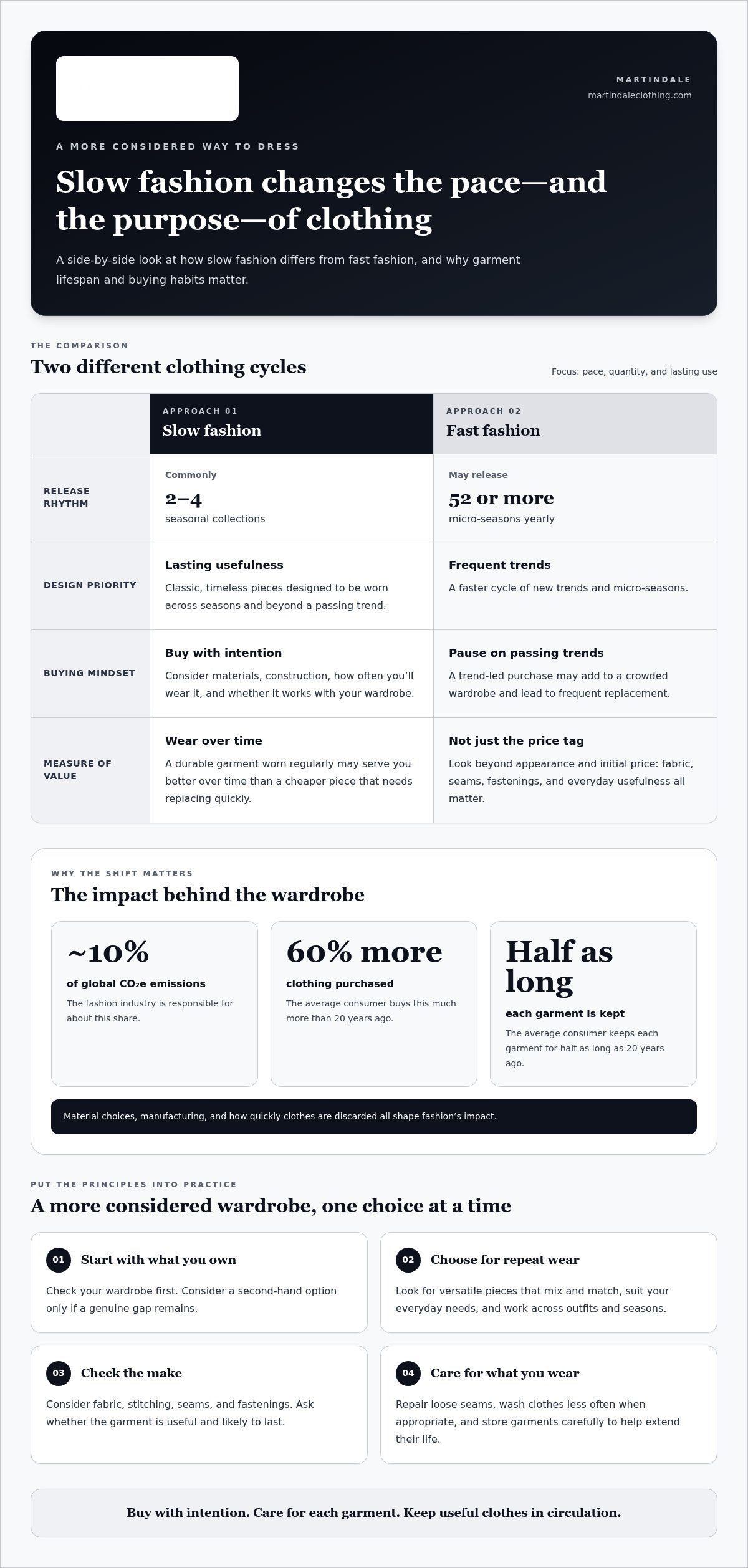
Buying fewer clothes can be a more considered choice, not a compromise. The question of what slow fashion is and why it is important has a practical answer: it means choosing well-made garments designed to last, buying less, and paying attention to how clothing is made. It matters because the fashion industry is responsible for about 10% of global CO2e emissions.
It’s understandable to associate slow fashion with high prices, strict rules, or a particular look. But the idea is broader than any one purchase or aesthetic: it means valuing a garment’s quality, lifespan, and production over how quickly it follows a trend.
This guide explains slow fashion’s core principles, how it differs from ethical and sustainable fashion, and which common myths deserve a second look. You’ll also find practical ways to make more considered choices, from selecting versatile pieces to helping the clothes you own last longer.
One label may not answer every question. Look for clear information about materials, production, and worker protections, then consider each claim on its own terms. This distinction keeps “ethical” and “sustainable” from becoming interchangeable words, while showing how slow fashion can connect both to longer-lasting clothing.
4. Common myths about slow fashion
Myth: Slow fashion always means buying expensive new clothes. Slow fashion is an approach to use and production, not a price category. A second-hand coat, a repaired shirt, or a garment already in your wardrobe can support longer use. Ask whether a purchase fills a real need and will serve you well.
Myth: You must replace your wardrobe to shop more responsibly. Starting over means buying more, not less. First, wear existing pieces in new combinations: a classic jacket, for example, can work with trousers or a dress. Mend a loose seam or replace a missing button before deciding a garment is finished.
Myth: Slow fashion is only about environmental materials. Fabric choices matter, but they don’t tell the whole story. Production methods, garment-worker conditions, durability, and how long clothes stay in use matter too. Recycled fabric alone doesn’t establish that a piece was ethically made or designed to last.
Myth: Timeless pieces must be plain or unfashionable. Classic design isn’t the absence of style. It means choosing shapes and colors that work with the rest of your wardrobe, rather than buying pieces only because a short-lived trend has made them prominent. Express your style through combinations, textures, and considered details.
Myth: Individual buying choices can fix the fashion industry alone. A more deliberate wardrobe can reduce demand for constant replacement, but production systems and brand decisions also shape emissions and landfill. Consumers can still make meaningful choices: buy with intention, care for clothes, and support transparent production practices. These steps aren’t a complete remedy, but they contribute to a wider shift.
Question broad claims, too. Look for specific information about materials, production, and garment care instead of relying on a “slow” label alone. To explore pieces designed for lasting wear, browse thoughtfully made clothing.
Martindale: Women's Coats
Martindale offers women’s coats for those looking to apply slow-fashion principles to a considered wardrobe. The collection includes wool coats and satin bomber jackets, including The Amelia Bomber Jacket in Mulberry Satin and The Amelia Bomber Jacket in Midnight Satin.
Choose a coat by considering how it fits your everyday wardrobe, the layers you’ll wear beneath it, and whether its style feels enduring rather than tied to a passing trend. A wool coat offers a classic outer layer; a satin bomber brings a different finish. In either case, the goal is not to buy more, but to choose a piece you’ll reach for over time.
When you’re ready to make a considered addition, explore Martindale’s women’s coats. Visit martindaleclothing.com to view the collection.
Make your next choice a considered one
The question of what slow fashion is and why it is important becomes most useful when you’re deciding what to buy. Before adding something to your wardrobe, consider the role it will play, how it fits your personal style, and whether you can imagine wearing it beyond this season. That pause can turn shopping from a reflex into a decision grounded in your needs.
You don’t need to transform your wardrobe all at once. Start with the next piece you genuinely need, and choose with care. A well-considered garment can become part of daily life instead of another item at the back of a closet. Let longevity guide your choice, while remembering that responsible fashion also includes how clothes are made and who makes them.
If you’re ready to explore a considered addition to your wardrobe, contact Martindale to discuss your needs. Each thoughtful choice is a meaningful beginning.
Frequently Asked Questions
What is slow fashion and why is it important?
Slow fashion matters because it brings a garment’s production and intended use into the buying decision, rather than focusing only on trend appeal. Before replacing a coat, consider whether it needs repair, whether another layer already serves the same purpose, and whether a new piece will work with clothes you wear often. This makes wardrobe choices more deliberate without requiring a complete closet overhaul.
What is slow fashion?
Slow fashion is an approach to clothing that values considered design, production, and use. It isn’t a special fabric or a label that automatically proves a garment’s impact. Imagine choosing a well-made skirt you can style for work and weekends, then caring for it so it stays in use. The key is the relationship between the garment, its maker, and the person who wears it.
What are the principles of slow fashion?
Its principles include thoughtful purchasing, durable construction, attention to materials, and respect for the people who make clothes. Put them into practice by checking the fabric and seams, considering whether a garment suits your routine, and reading production details before buying. Afterward, follow care instructions and mend small faults. Each step supports a more considered relationship with clothing.
Why is slow fashion important for the environment?
Clothing affects the environment through material choices, manufacturing, transport, care, and disposal. Keeping a useful garment in rotation can reduce the need to replace it with another new piece. For instance, repairing a split seam or passing a wearable item to someone who will use it can extend its life. Environmental impact reflects choices across a garment’s life, not one label alone.
How does slow fashion affect workers and garment makers?
Slow fashion draws attention to the people behind each garment and their working conditions. Ethical production considers worker protections, health and safety, fair treatment, and decent wages. Shoppers can look for specific information about manufacturing and supply-chain practices rather than relying on a broad ethical claim. This helps distinguish a garment’s design story from the conditions of its production.
What are the environmental impacts of fast fashion compared with slow fashion?
Fast fashion’s rapid product cycles encourage frequent purchasing and replacement, adding pressure across production and disposal. Slow fashion aims to counter that pattern through longer use and more considered demand. Neither label alone describes every impact: fibers, dyeing, manufacturing choices, garment care, and end-of-life handling all matter. Compare these factors, then consider whether a piece can be worn, repaired, reused, or recycled responsibly.


